
Cet article est également disponible en :
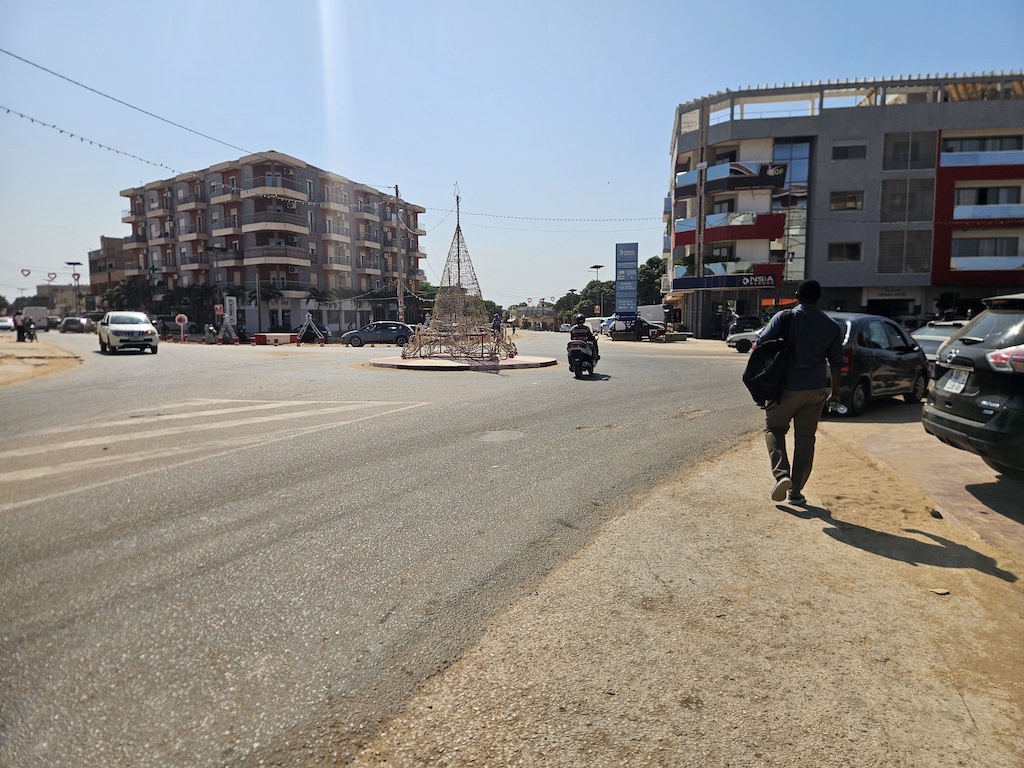
On arriving in Ngaparou, there is a roundabout.
Wide, open, uncluttered.
A clean circle bordered by recent buildings, where balconies project outward, bay windows gleam, and modern air-conditioning units cling to the façades like afterthoughts.
With its flawless asphalt, the roundabout is an anachronism in itself. Several eras converge here, overlap, sometimes collide.
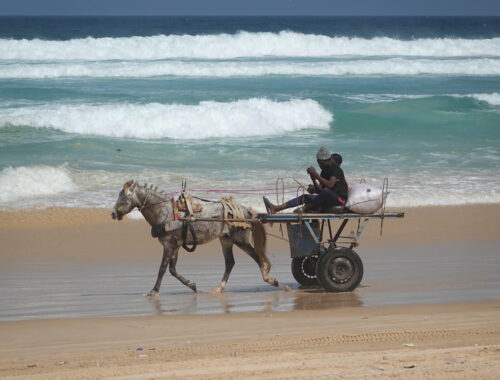
Brand-new SUVs brush past old wooden carts drawn by emaciated horses, while countless Jakartas — those ubiquitous motorcycle taxis — weave endlessly through the gaps.
At the center of this restless choreography, imperial and unbothered, the zebus impose their own law of the road. They alone have right of way. Everyone else waits.
This point that claims to be round is also a threshold: the crossing of two worlds that overlap without ever truly meeting.
Should you choose to continue straight ahead, the road leads you to the old fishing village by the sea.
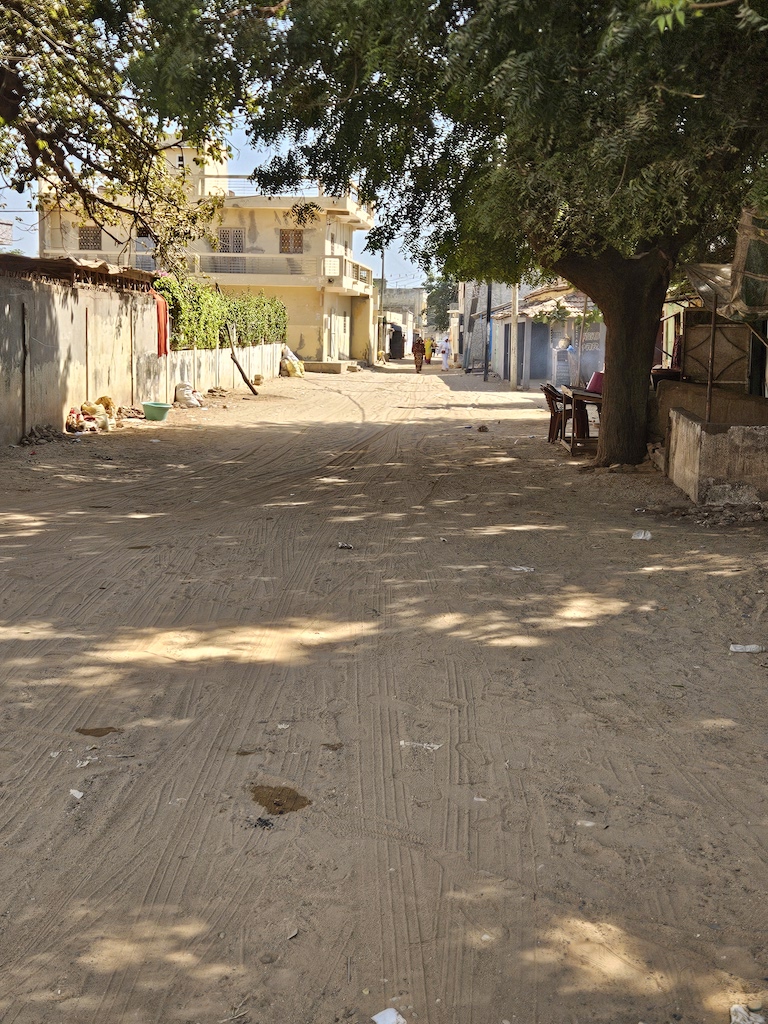
You move slowly there — not out of courtesy, but because the road leaves no alternative. Eroded by use and by time, it quickly disintegrates; fragments of asphalt surrender to naked sand.
The houses are old, the stalls wooden, the electrical wires hanging loose. Nothing is aligned; everything seems to stand by grace alone. Allah is never far. The ancient mosque bears quiet witness.
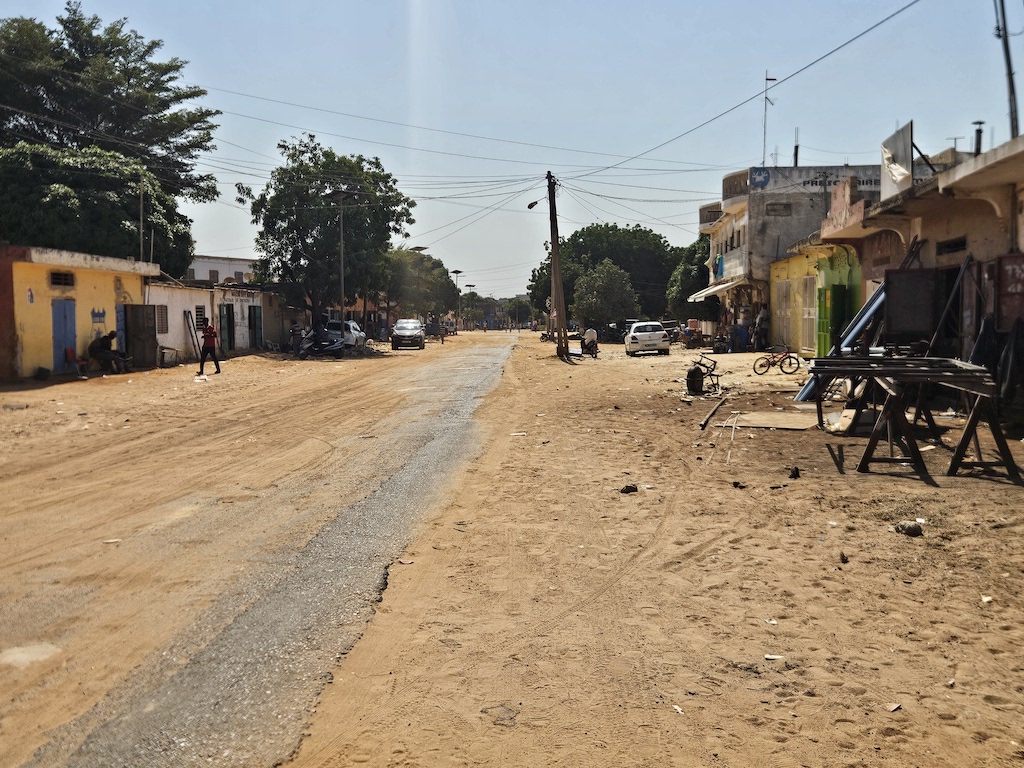
The neighborhood still breathes the scents of another age: grilled fish, the diesel of the pirogues, bissap made too sweet. Life unfolds slowly here, beneath the shade of flamboyant trees, with that Senegalese elegance which consists in knowing how to wait — without apology.
Turn left or right, however, and you enter the West in the making.
This is the domain of white expatriates and affluent Dakarois. Lebanese families too — though these have long since become Senegalese.
And because sand, admired from afar, becomes tiring up close, the road has been dressed in smooth asphalt — almost smooth. Speed bumps have been scattered along the way to restrain the impatient.
A telling symbolism: the Old World sinks into a thousand potholes, while the New rises on just as many standardized humps.
Modern commerce followed, as it always does — naturally, logically.
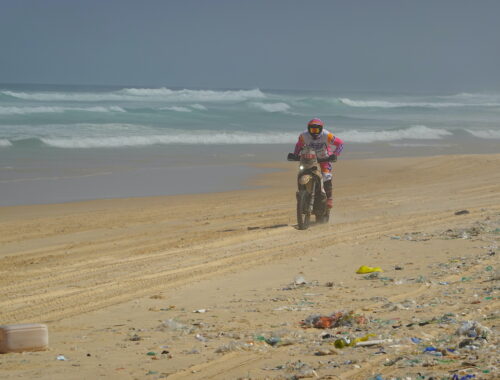
Shops selling quad bikes, motorcycles, buggies line the roadside. Senegal lends itself readily to loud, motorized adventure. Furniture stores and air-conditioned supermarkets complete the picture. The windows are spotless, the parking spaces carefully marked, the names echo a catalogued, international exoticism.
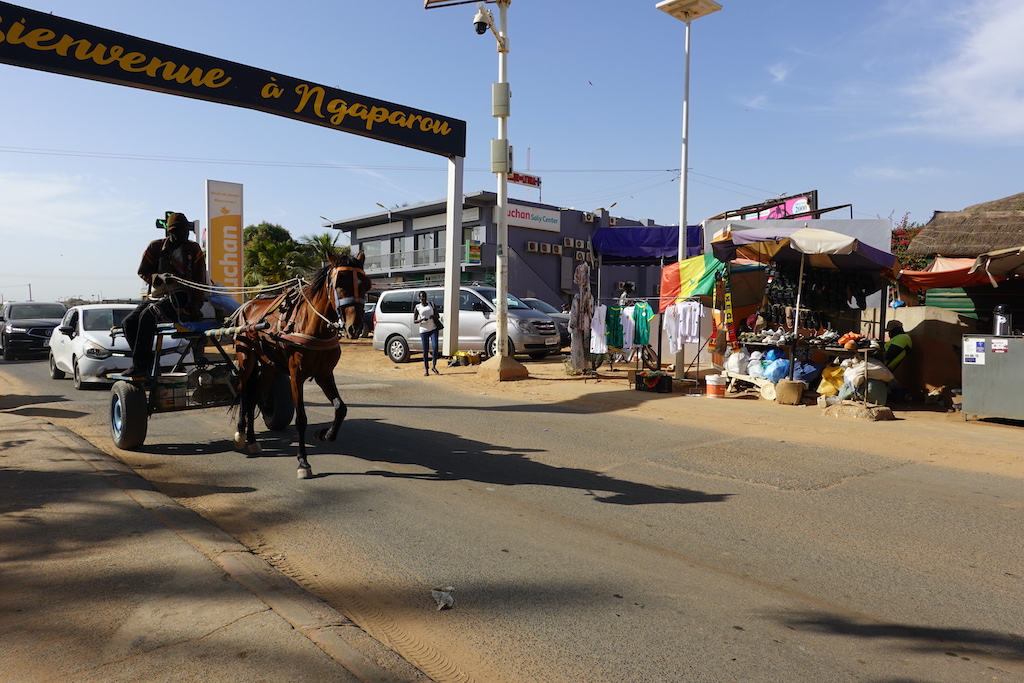
Between these recent blocks, a few older stalls persist.
Wooden. Tin. Sometimes even concrete.
They sell coffee, phone cards, practical things. Wedged between a showroom of motorized leisure and a promise of comfort, they still hold their ground. For now.
No one decided it should be this way.
There was no master plan.
Only a succession of choices.
Reasonable.
Practical.
Insidious.


No Comments