
Cet article est également disponible en :
March 9, 2026 – Dakar / Abidjan
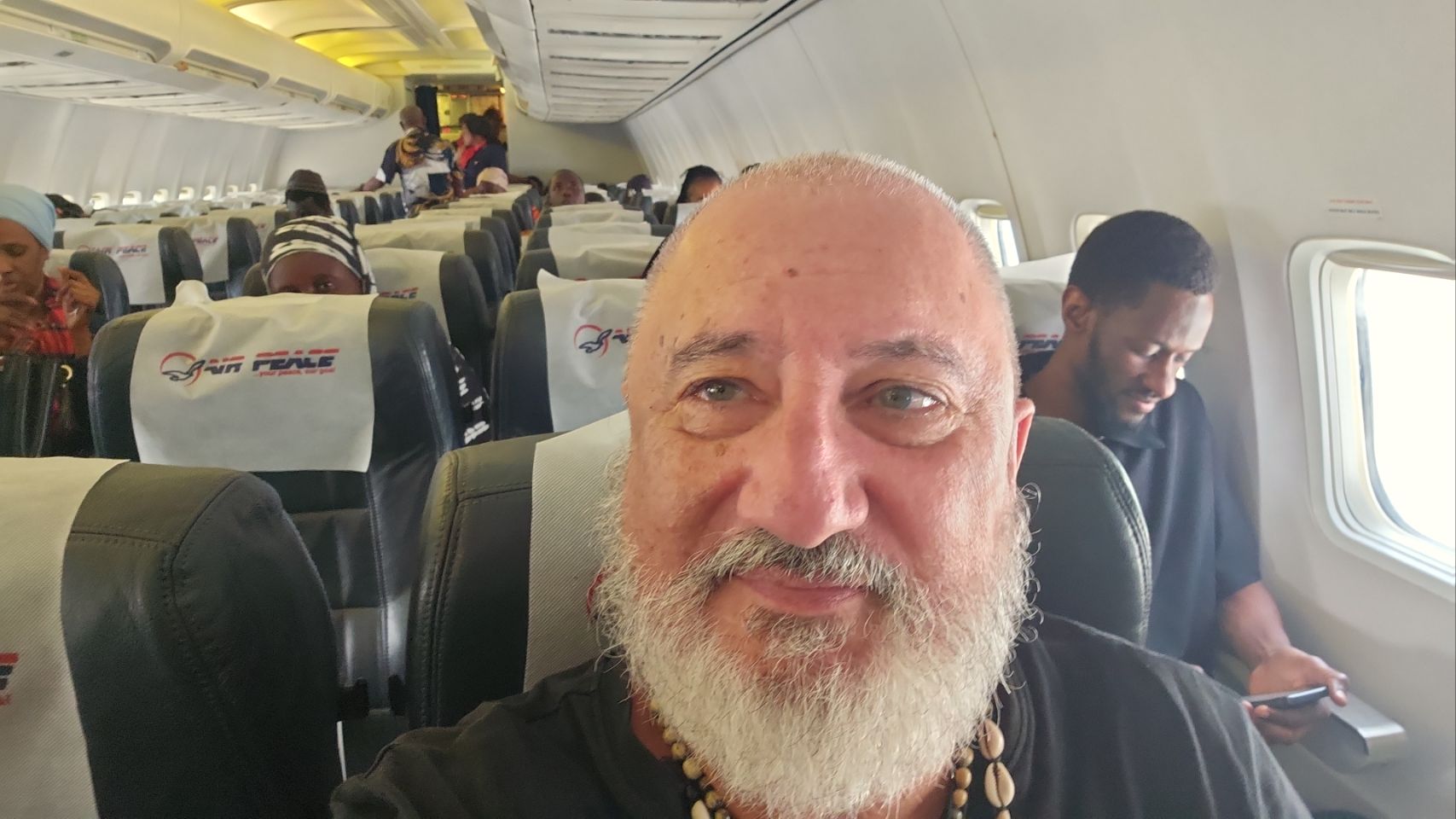
Arrived from Dakar. The only toubab on the plane.
Visa-on-arrival procedures: nearly two hours. Riad, a friend, came to pick me up… he almost fell asleep in his car, it took so long.
I met up with Samuel, the cyclist I had met in Senegal, who is stopping his journey for now and flying back tonight.
The heat here is much heavier and more humid than in Senegal.
March 10, 2026 – Abidjan
A quiet morning with Samuel over coffee — quite unusual for him. He has made his decision: to return to France and put his trip on hold. The solitude, and above all the now overwhelming heat, have drained his motivation. It must be said he has an extraordinary metabolism: I’ve never seen anyone eat and drink so much. The heat literally exhausts him.
Lunch: couscous at Riyad’s. Then I checked my gear: everything is there, but a proper cleaning is needed.
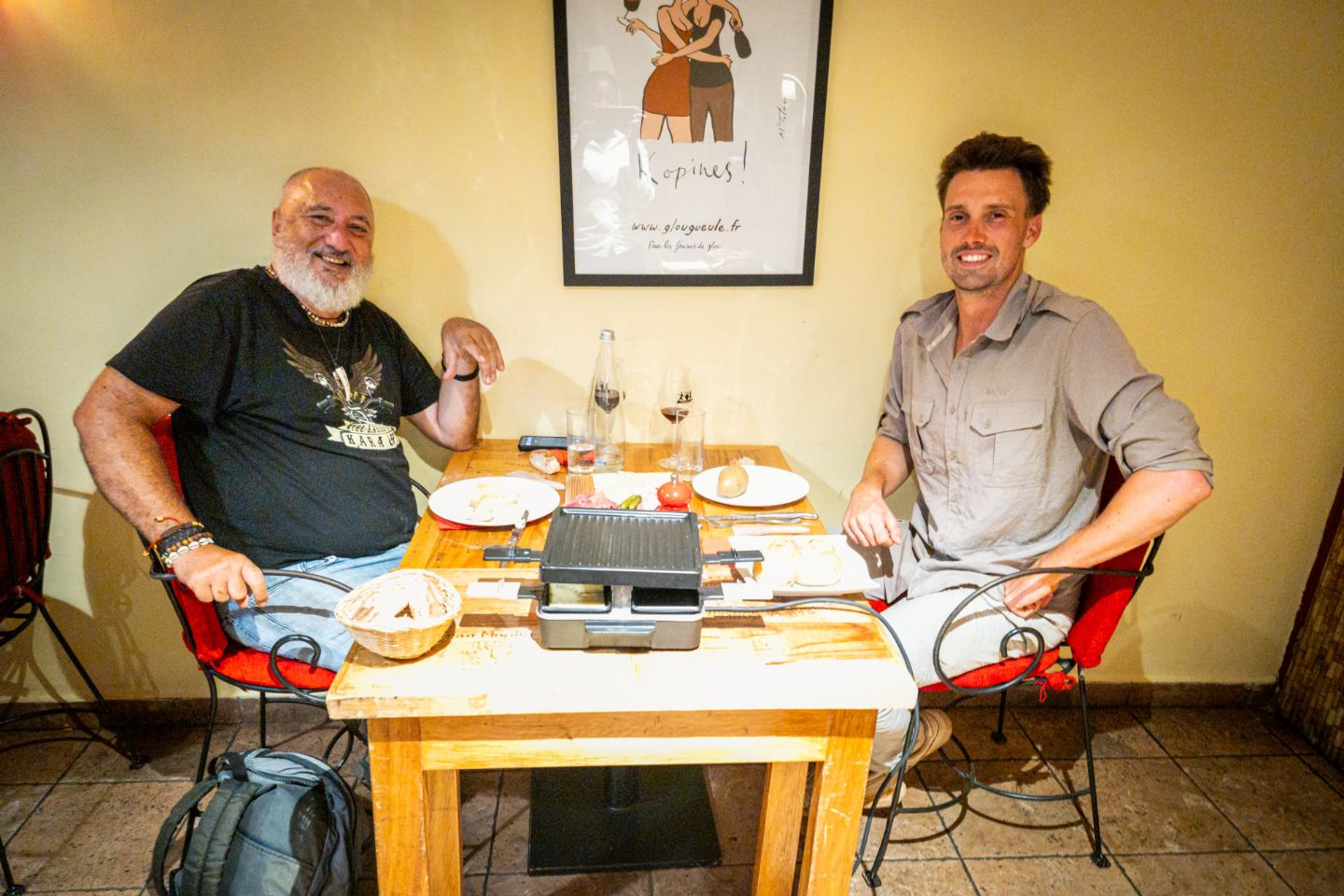
In the evening, raclette at “La Route des Vins.” I met Franck, the founder of the place. He tells me he just sold it. His wife, Rolande, who is Beninese, has already returned to Benin where they plan to open a new bar-restaurant, also called “En Route.” Opening soon. I’ll definitely go see them.
As for me, the plan is becoming clearer: get the bike back in shape and head back toward Senegal, slowly, over one to two months. Then stay there for a while depending on the rainy season.
March 11, 2026 – Abidjan
I spent a good part of the day emptying the boxes. I threw away quite a bit of food: instant noodles, pasta, rice, and made a full inventory: everything is there. Well… almost. I forgot the second solar panel.
Tomorrow: getting back on the road.
Plan: start the bike, replace a rubber grip, oil change, check the air filter, weld the luggage rack, check the fuel gauge (which seemed faulty), lube and tension the chain, check tire pressure, and finally give it a proper wash.
Then I’ll reload all the gear: the GoPro and its five batteries, the long-range headlamp, the booster…
Departure for Dakar is getting closer.
Saturday, March 14, 2026
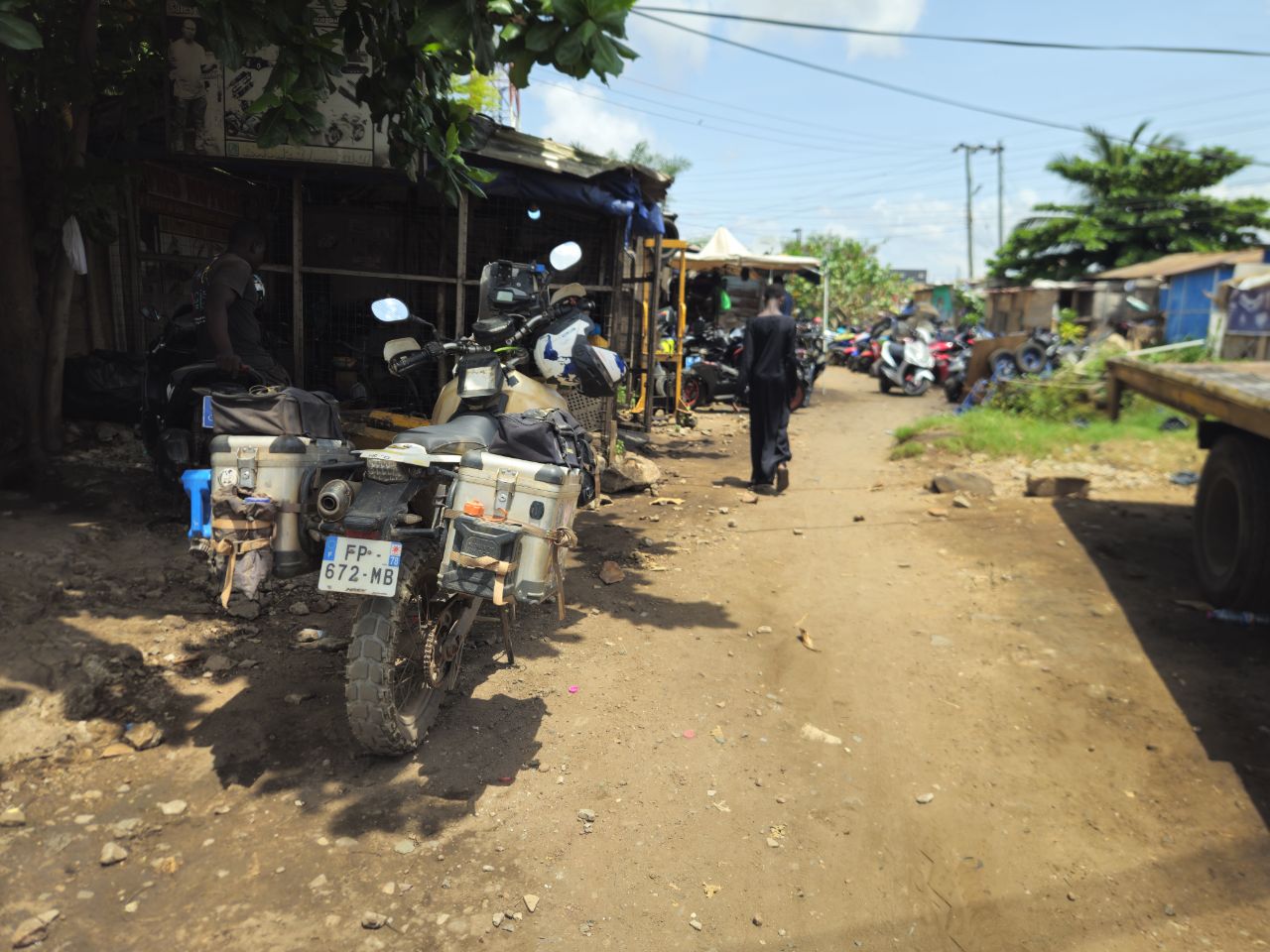
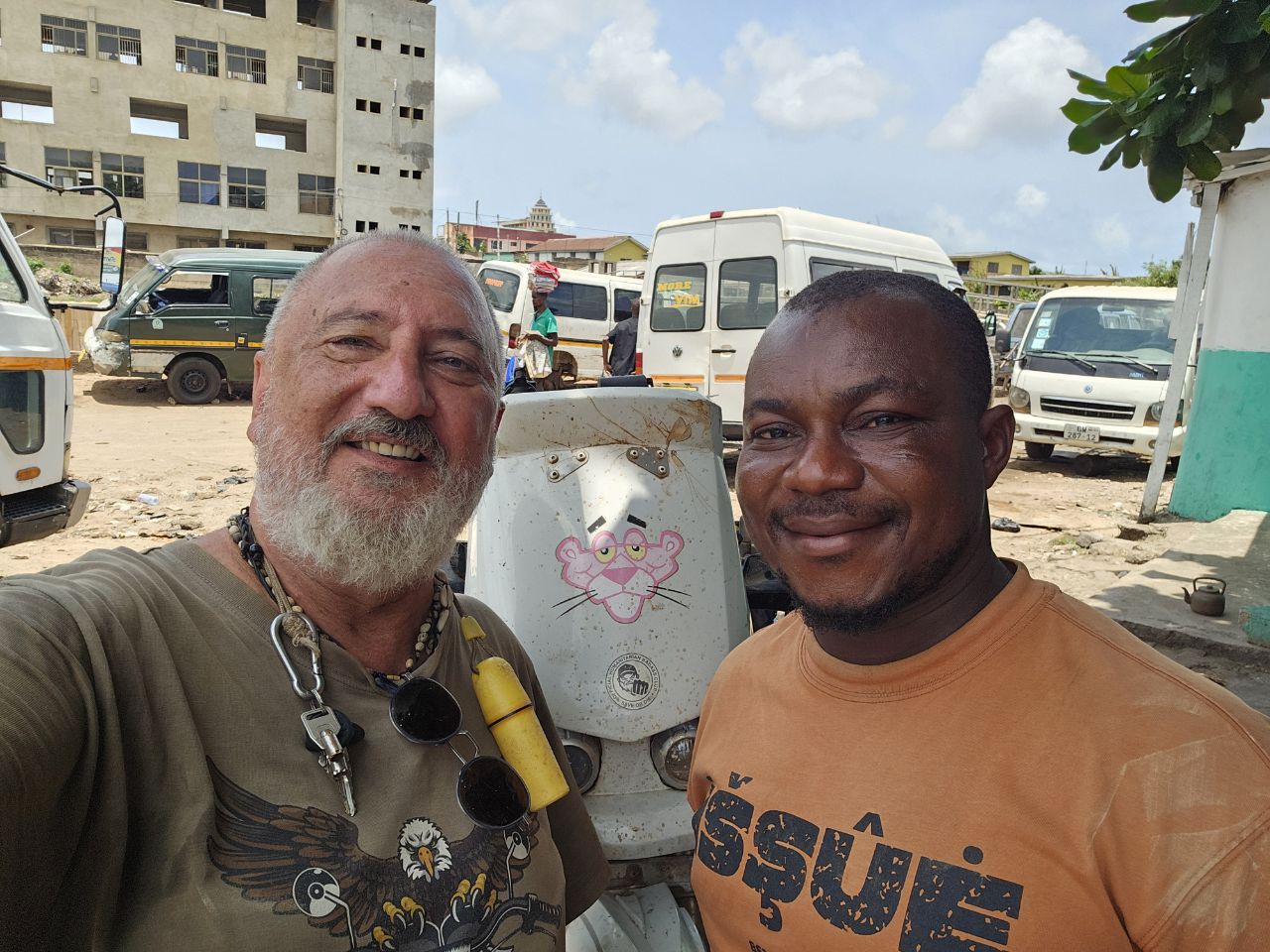
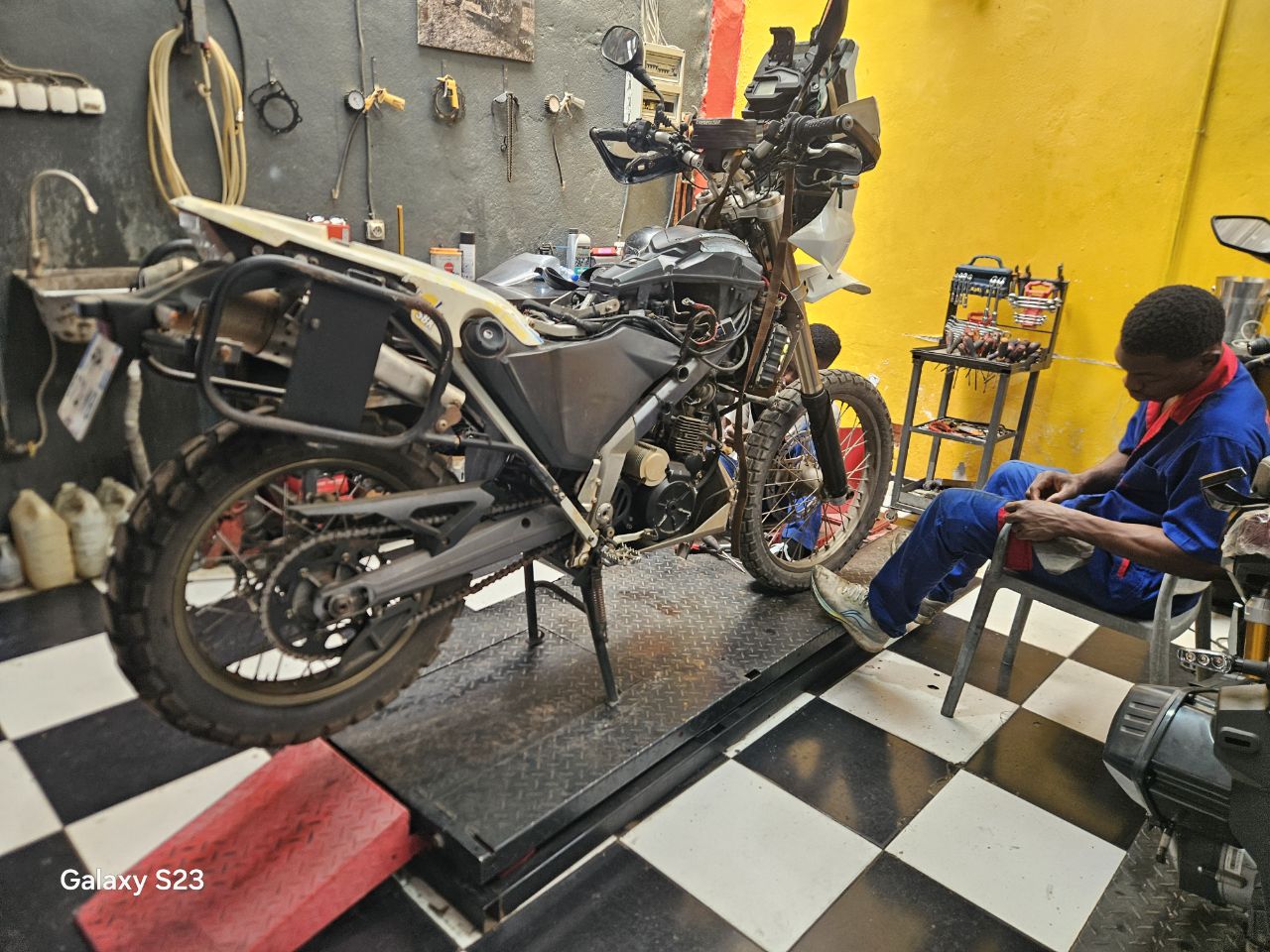
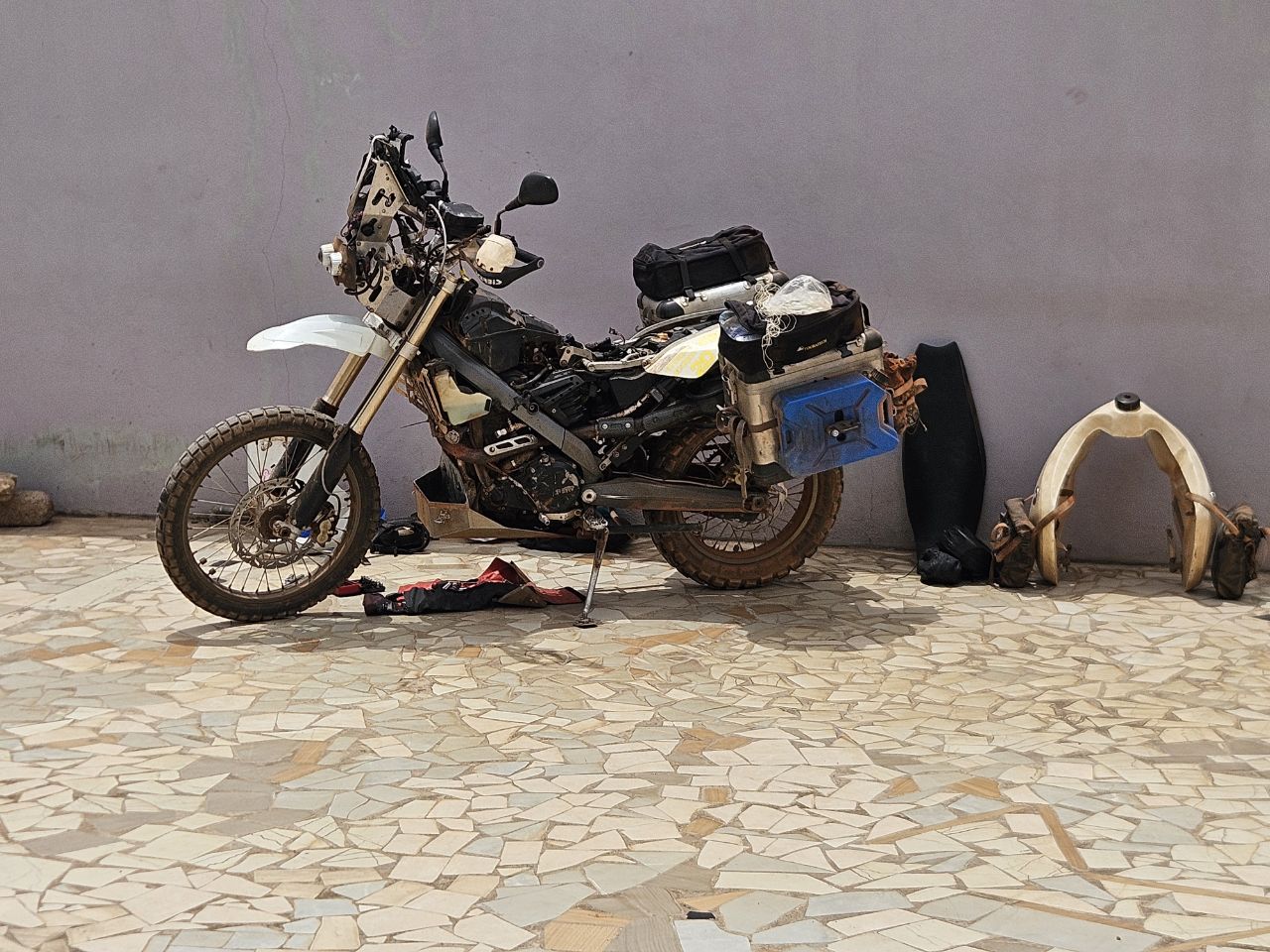
The week following Samuel’s departure went by quietly. I spent most of my time in Riad’s garage. The bike needed a full service and I took my time to go through everything carefully.
Program:
- freeing up the brake caliper
- bleeding the brakes
- checking the air filter
- cleaning the injector
- replacing the horn
- oil change and oil filter replacement
- welding the broken luggage rack
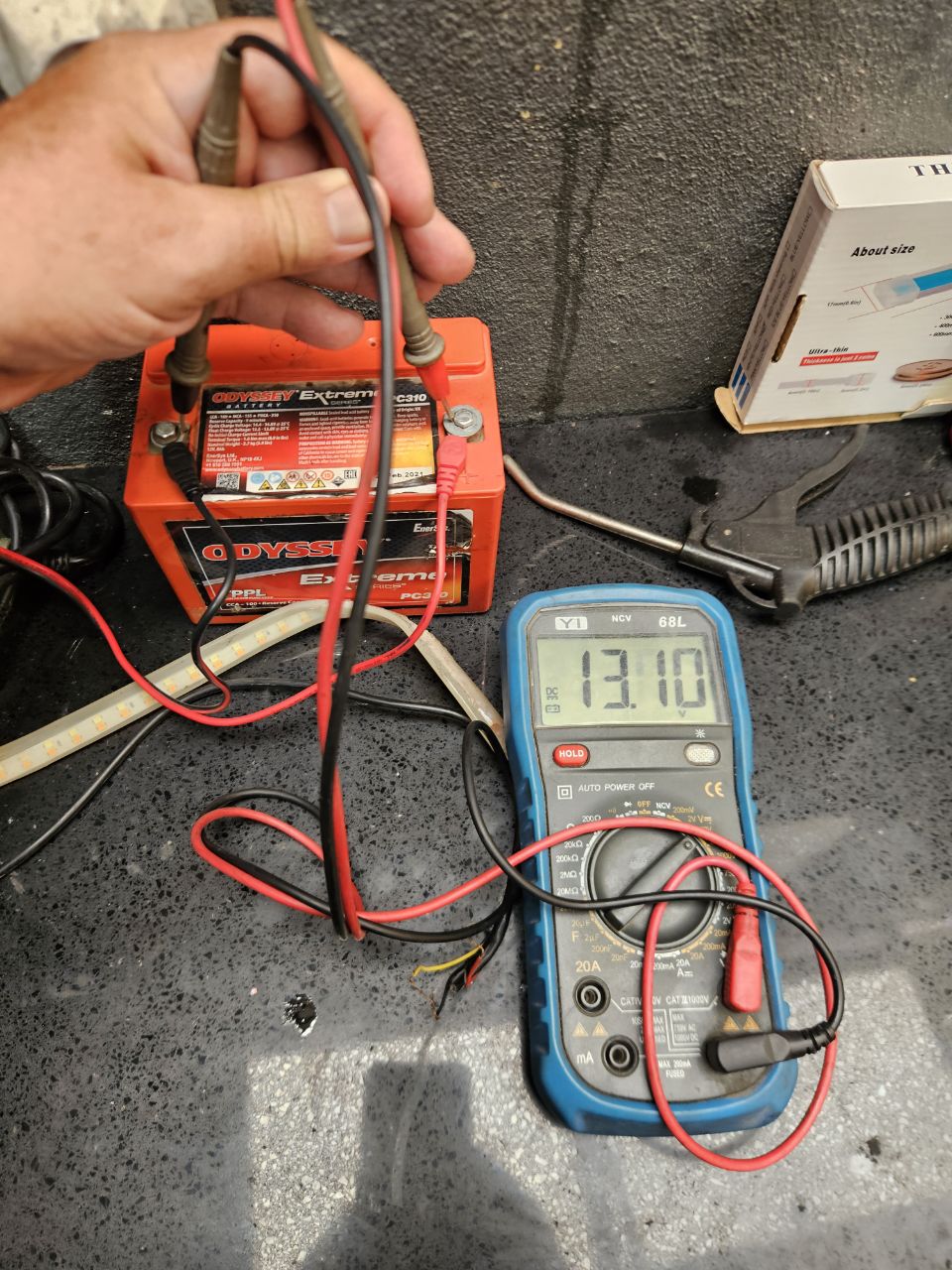
- recharging the battery
- polishing and greasing the chain (it had started to rust badly)
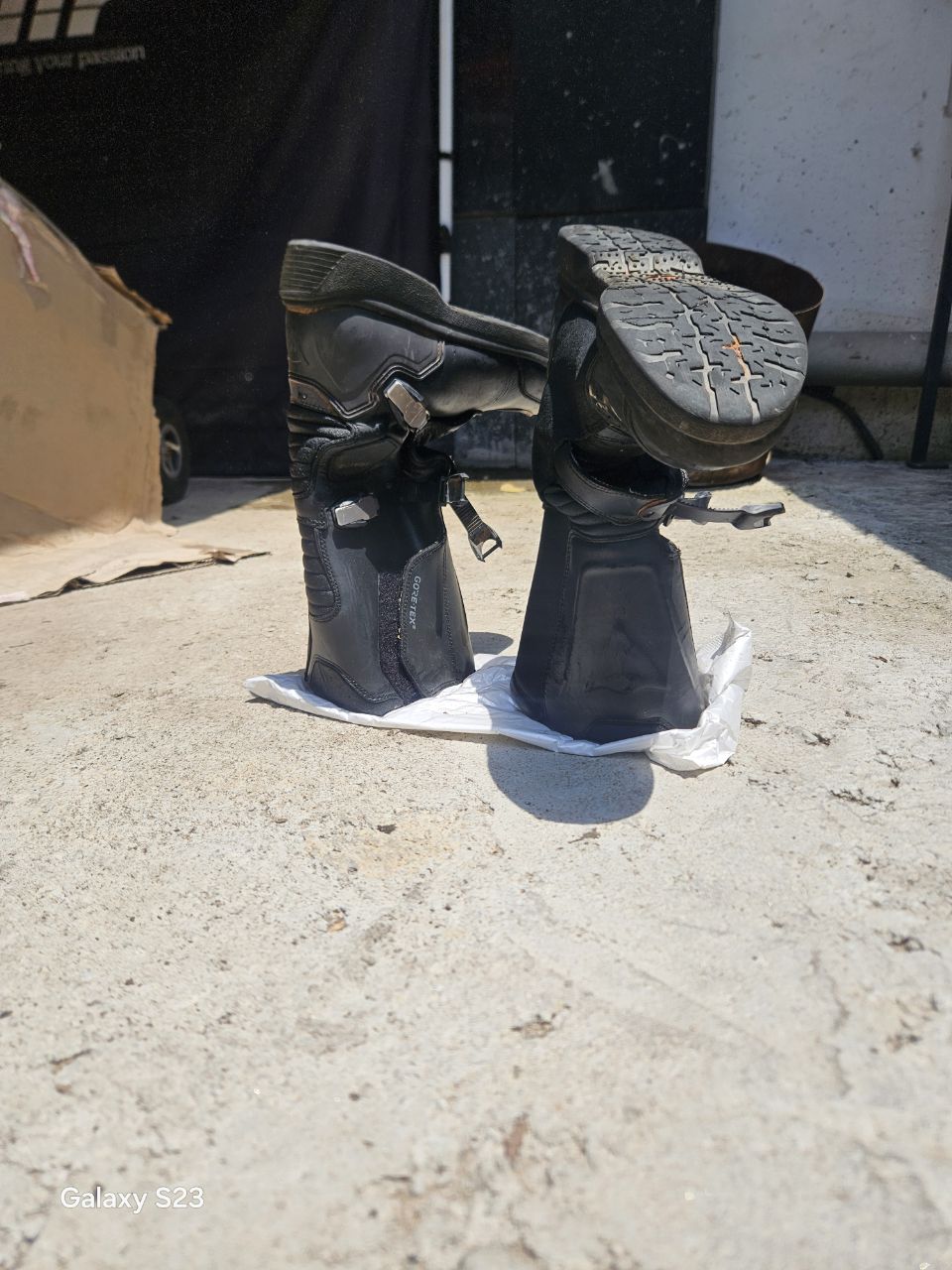
- cleaning the aluminum boxes and various gear, especially boots and body armor
In short, a proper mechanical session the way I like it (meaning: Yaya the mechanic did everything LOL).
All that’s left is to change the tires and test the fuel gauge that played tricks on me a year ago. But that will come after a short ride to make sure everything runs smoothly.
At lunch, I eat with Riad. It’s Irène, his housekeeper, who cooks. And she cooks… a lot. Gargantuan meals: couscous, chicken and rice, fish with fries, potatoes in sauce with cumin chicken breast…
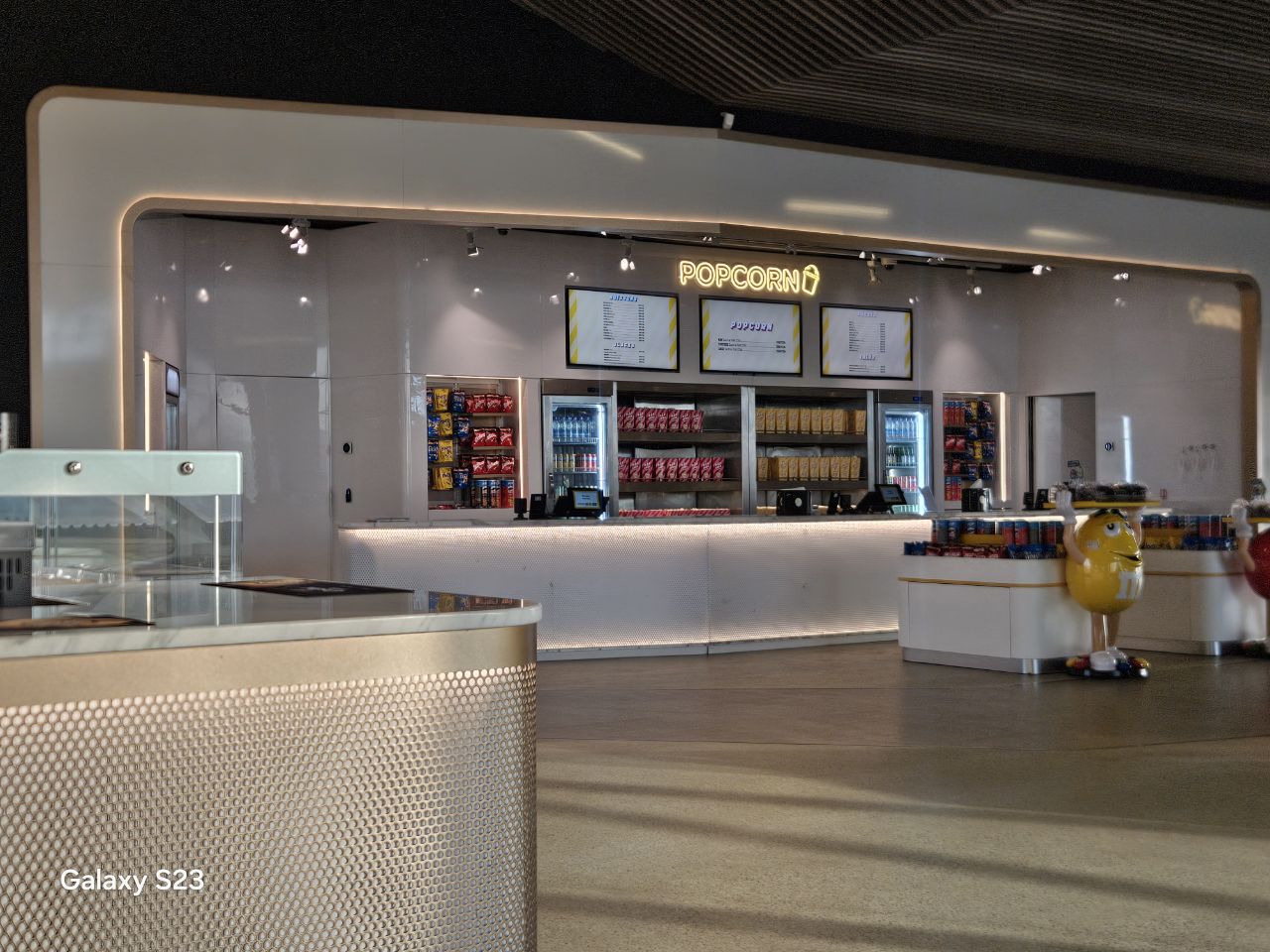
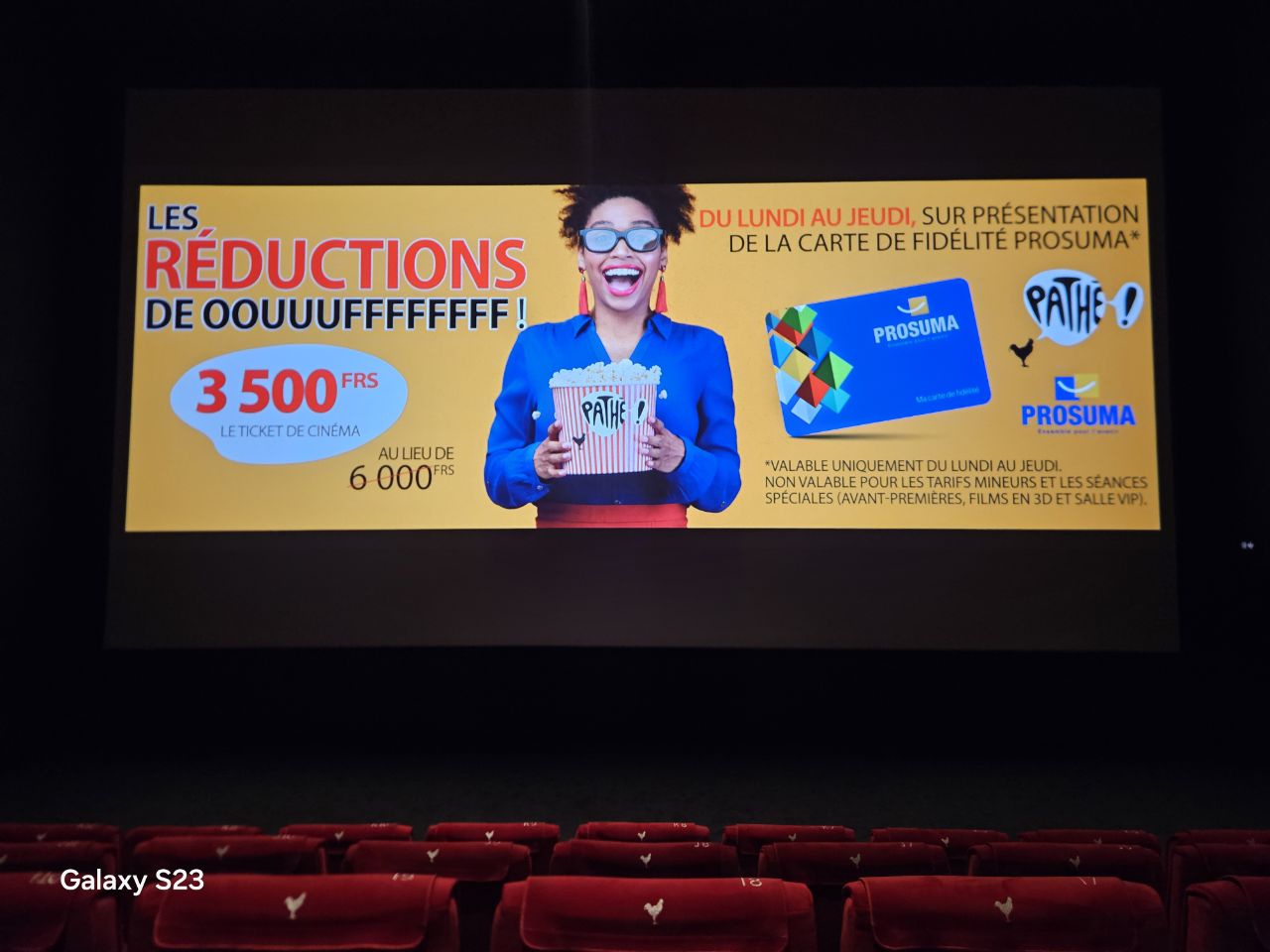
Thursday evening, I went to the cinema. It hadn’t happened in over ten years. I watched Avatar.
My first cinema experience in Africa dates back more than twenty years, in Tanzania…
For the record: the ticket cost 4000 CFA (senior rate — over 65… seriously?!), popcorn + Coke 2500 CFA.
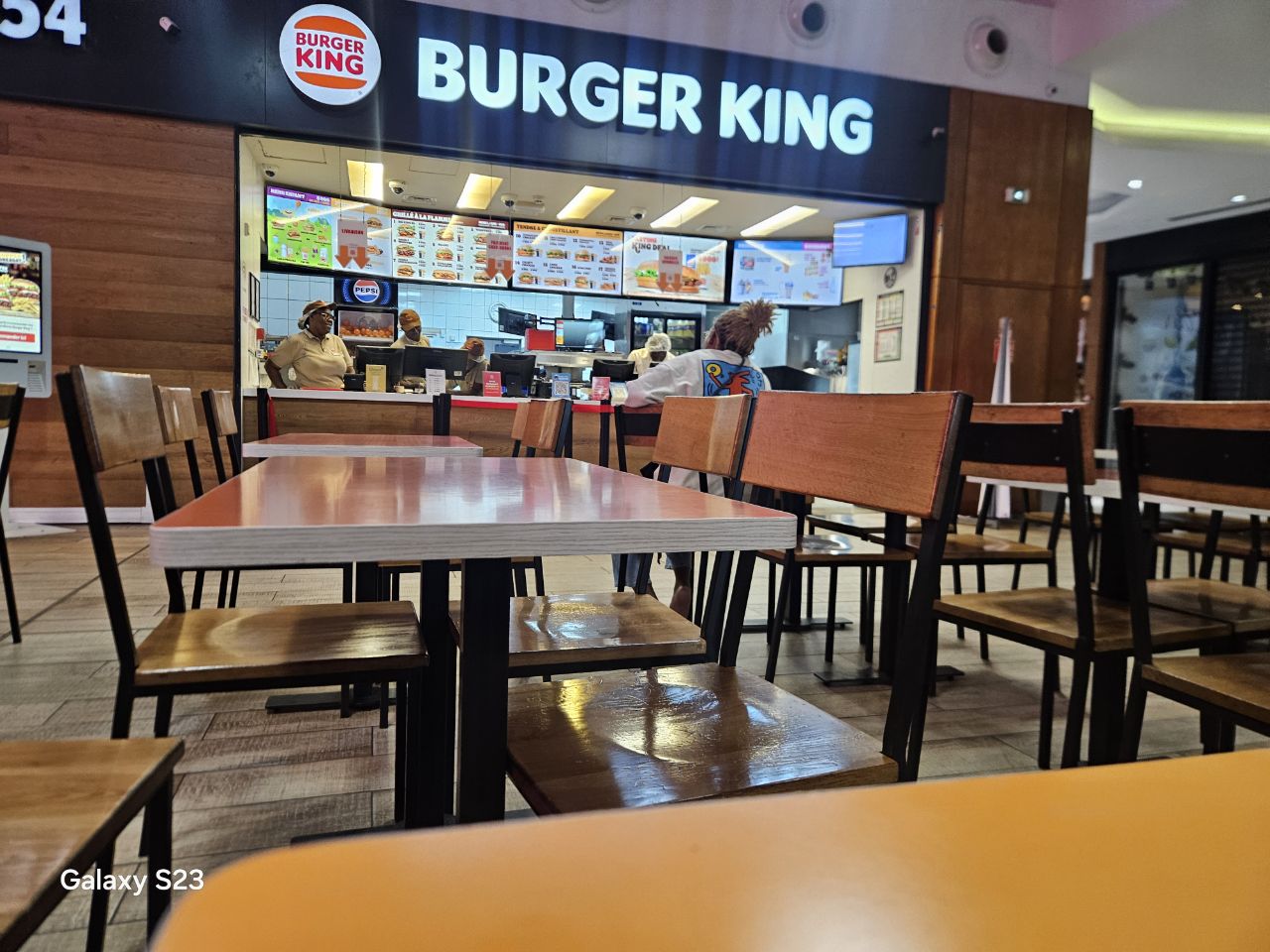
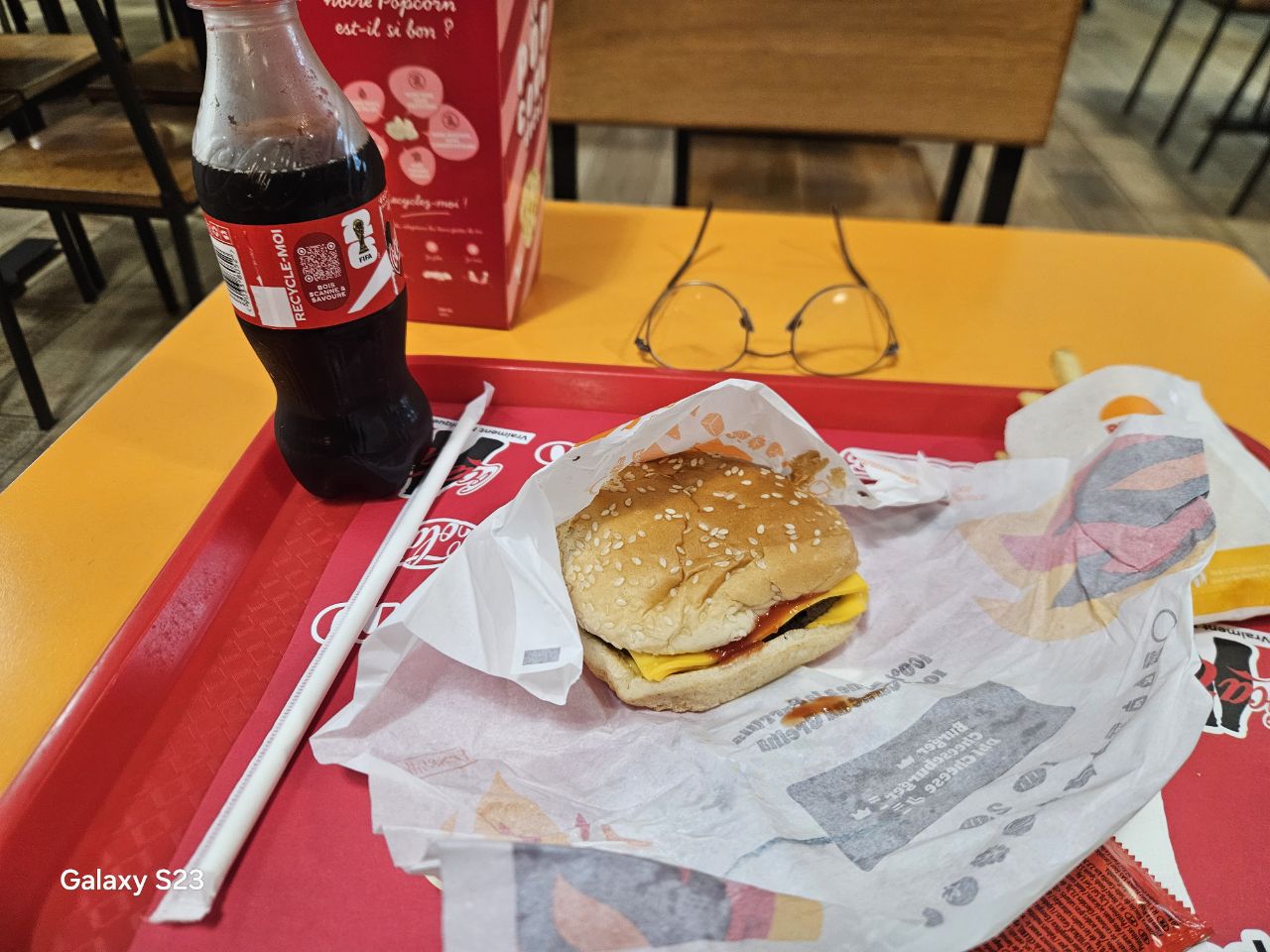
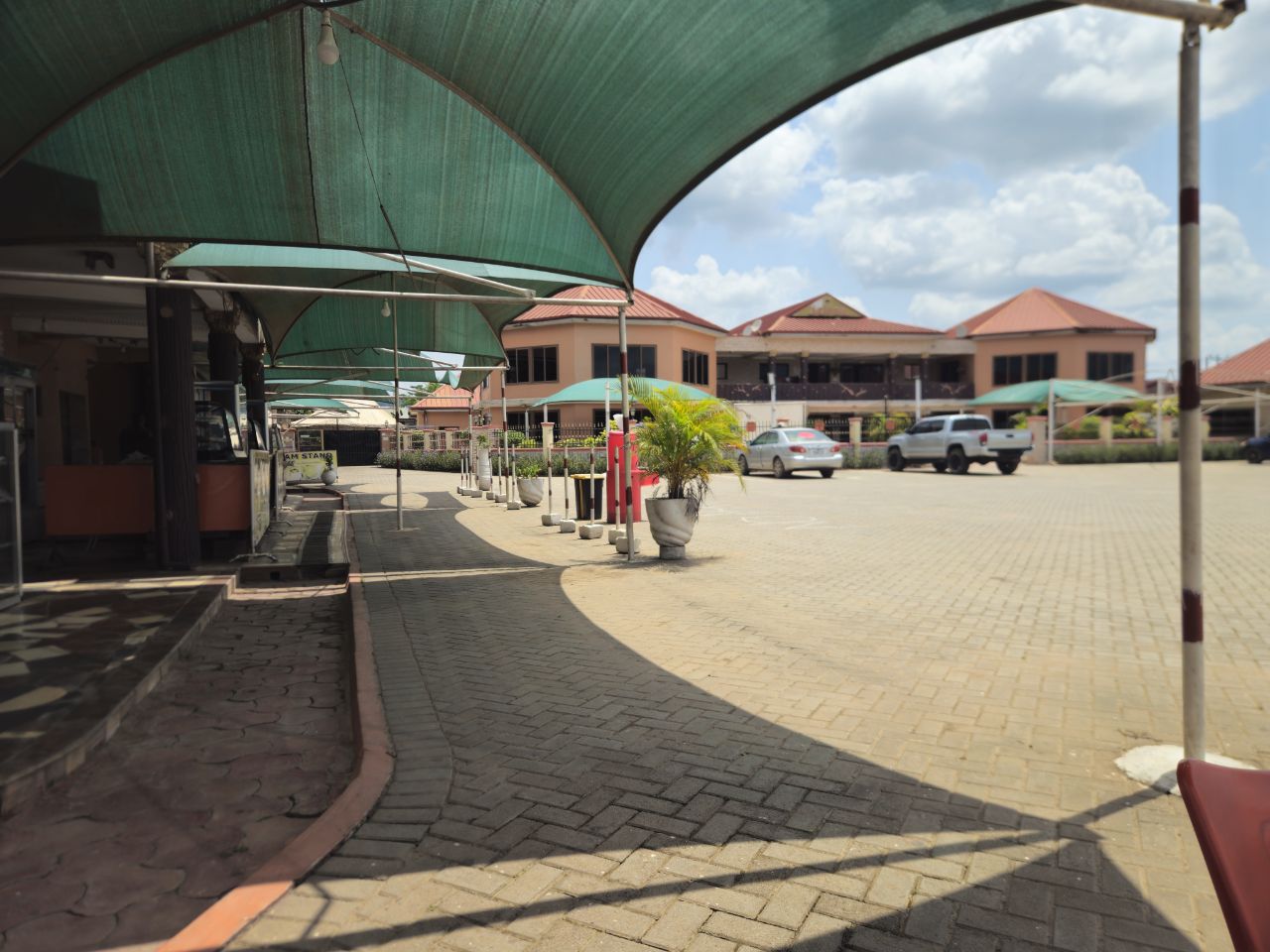
Afterward, I went to the shopping mall. Huge… and almost empty. Only Burger King was still open.
Cheeseburger, fries, Coke: 5500 CFA, a bit over eight euros. I don’t know how much a cheeseburger costs in France today, but overall life in Abidjan is expensive — more than Senegal anyway.
Friday evening, I had dinner with a French woman, Carole, who has lived here for about ten years. Very nice. We should meet again tomorrow.
Today I saw Khodor again. Big shock. He just had a stroke and underwent carotid surgery. The exact same thing happened to my friend Jean almost at the same time — about two weeks apart — makes you think. Khodor seems fine, but I’m not sure he fully realizes how close he came to the exit.
In theory, I could leave tomorrow.
But I feel like staying a bit longer, enjoying time with Riad and his family, this quiet pause.
So I postpone the departure.
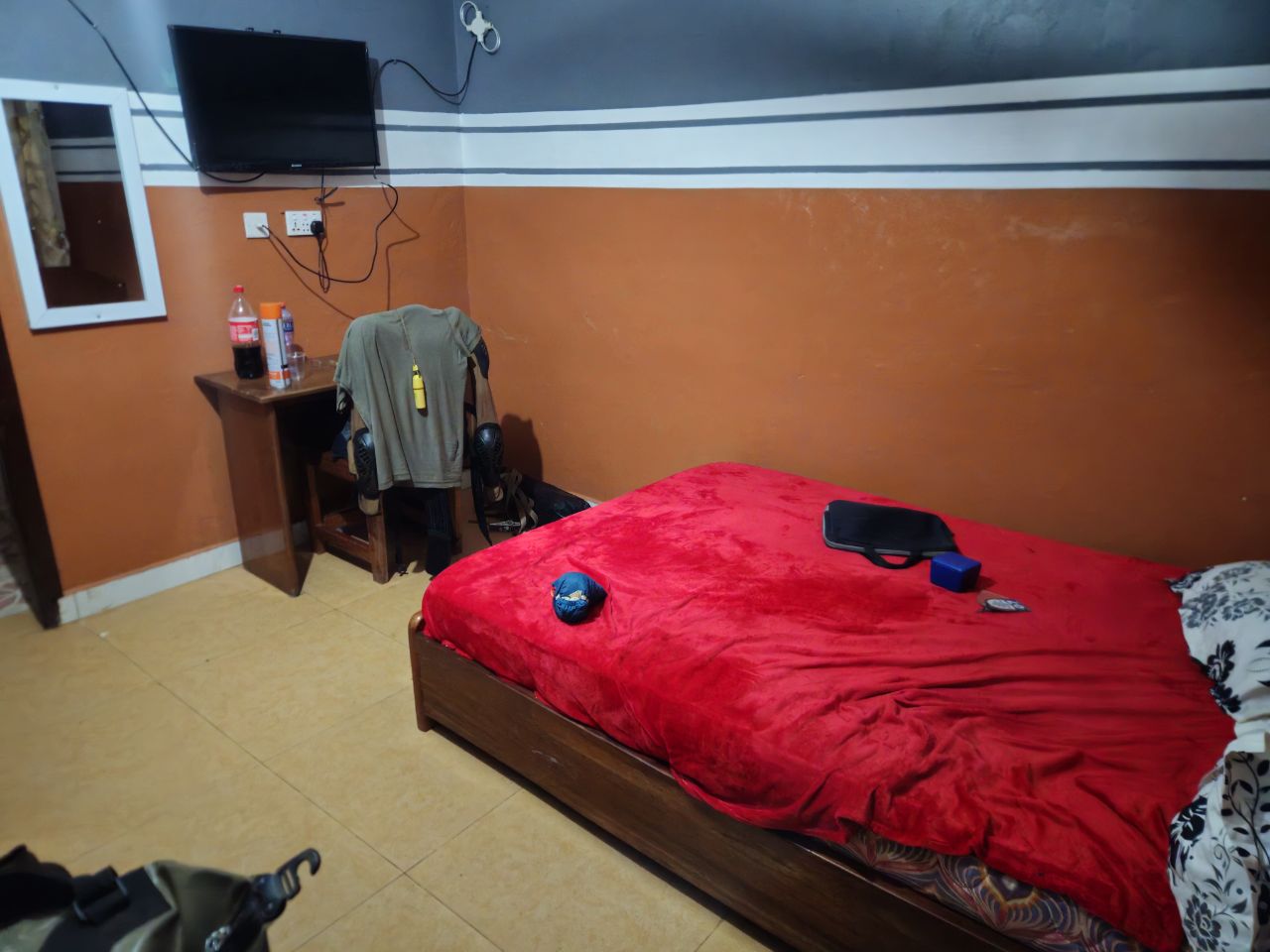
Since yesterday, I’ve been staying in a small, nice apartment. Only issue: no parking for the bike, so I have to leave it at Riad’s for the weekend.
On TV, some pretty funny reality shows: “Who Wants to Marry My Son”. Quite a program. LOL. You see young girls preparing fruit salad to seduce the mother-in-law. And of course, constant clashes between mom and son over which girl to eliminate.
March 15–27, 2026 – Abidjan and surroundings (summary)
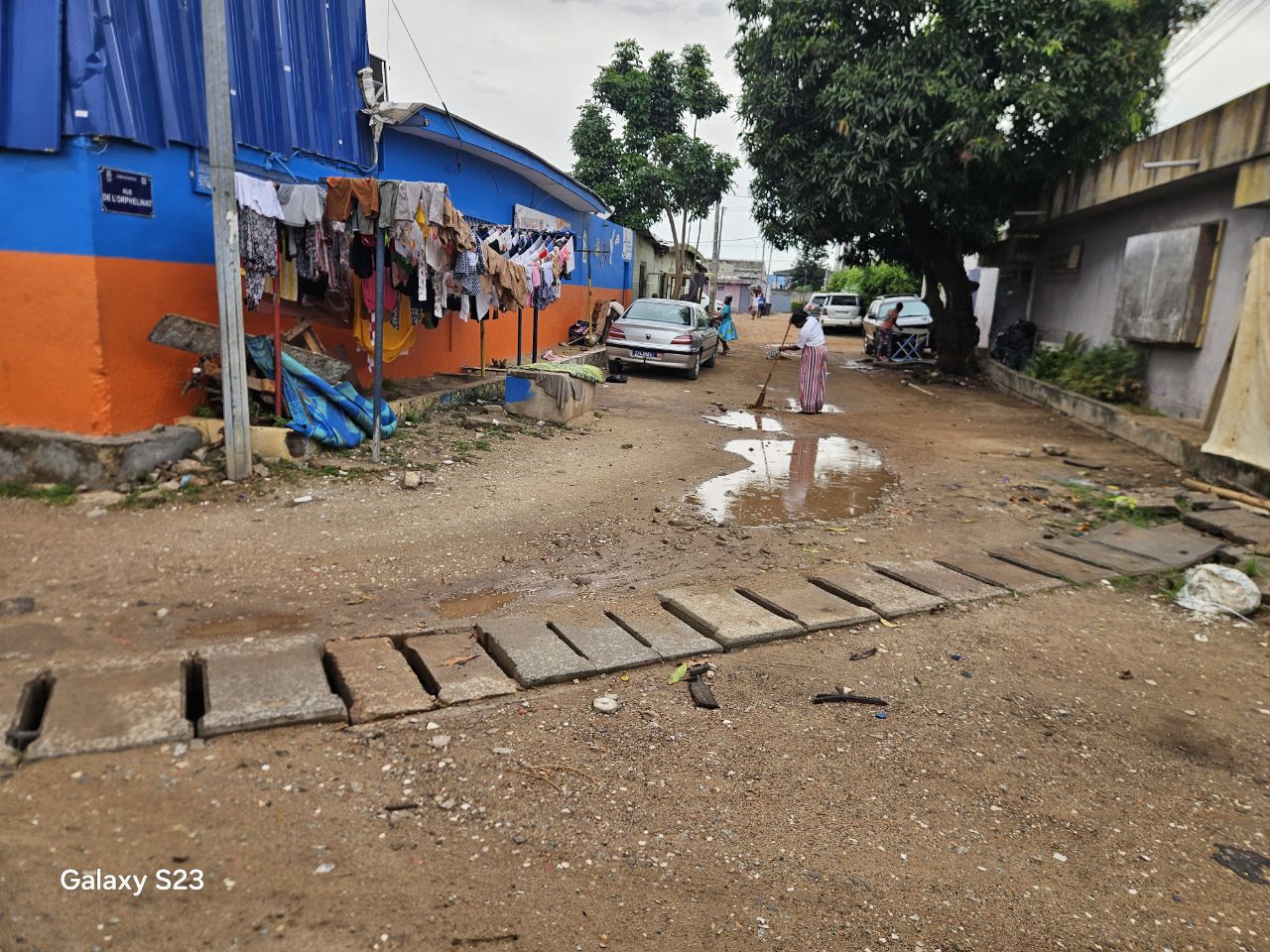
I find myself without accommodation on the evening of the 17th. Carole kindly offers to host me.
On the 18th: heading to Assinie 🌴 — objective: relax + test the bike. Difficult departure (sweating like in a sauna just putting on socks).
On the road, the bike is perfect, no issues.
On site, I meet Jial, the hotel owner: very nice, and a biker.
In the evening, I meet Ian, a South African in a van. And then… he tells me about Silviu, a Romanian biker I met at Riad’s 3 days earlier. He’s supposed to arrive tomorrow! So I change my plans and decide to stay. Good atmosphere.
The next evening, probably after drinking a bit too much, I make an impulsive decision: to continue toward South Africa instead of going back to Dakar…
Back in Abidjan on the evening of the 22nd. The radical change of plan I’ve decided on forces me to organize things differently.
As for gear: I’m almost ready. I have a small case of equipment and a set of tires waiting for me in Cotonou. To get there, the rear tire will easily make the trip; the front one is a bit worn, but it should hold up.
The only real issue left to sort out is the electrical connection for charging my phone (the connector on the phone side has become loose). So I ordered a charger that should arrive in Lomé, which I’ll pick up on the way.
The rainy season is slowly approaching. Nothing too intense yet, but it does pour quite a bit from time to time.
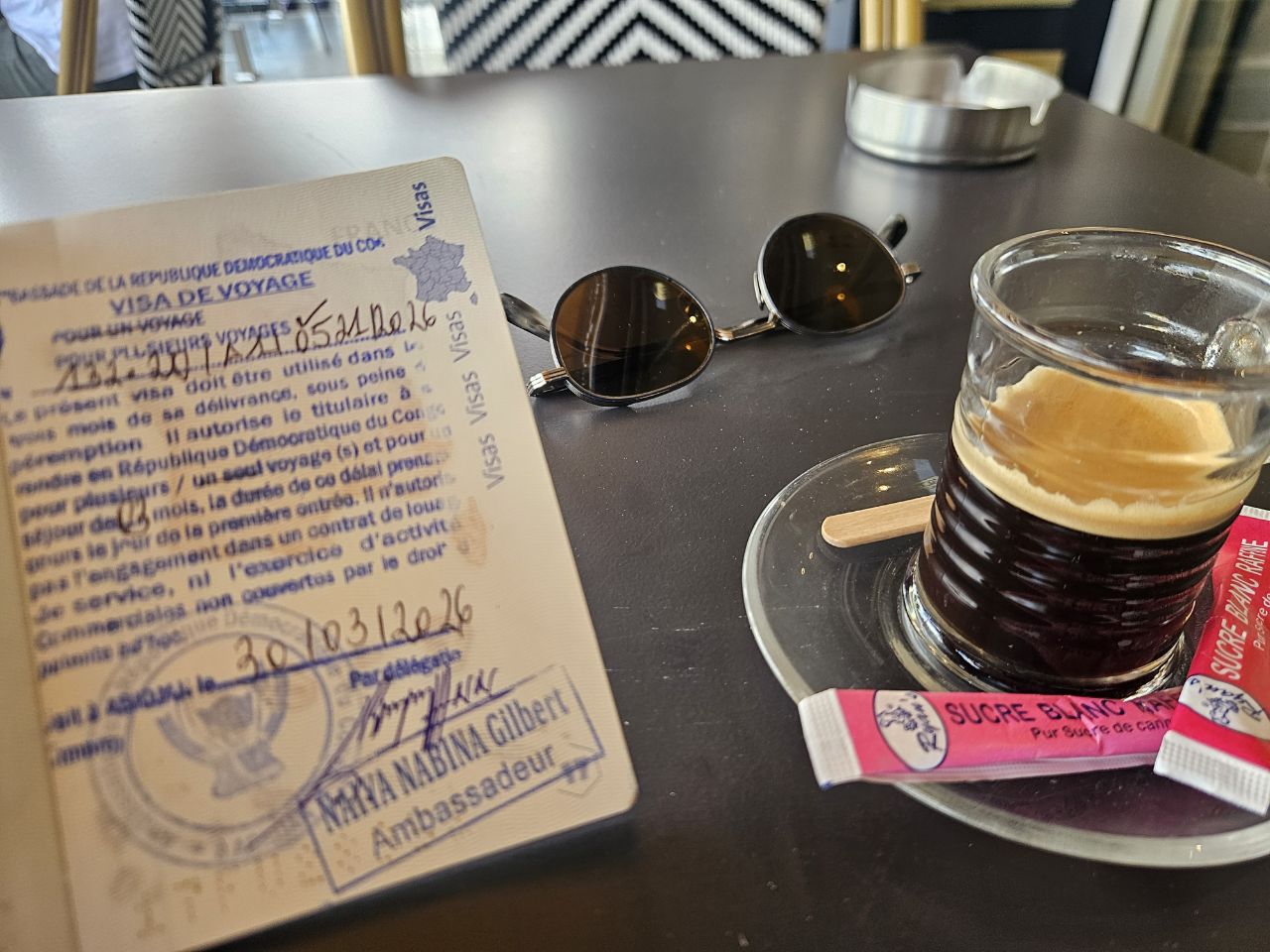
On the administrative side… the visa situation is a nightmare. It has almost become a deal-breaker in Africa — a real obstacle course (and the websites aren’t always very user-friendly…).
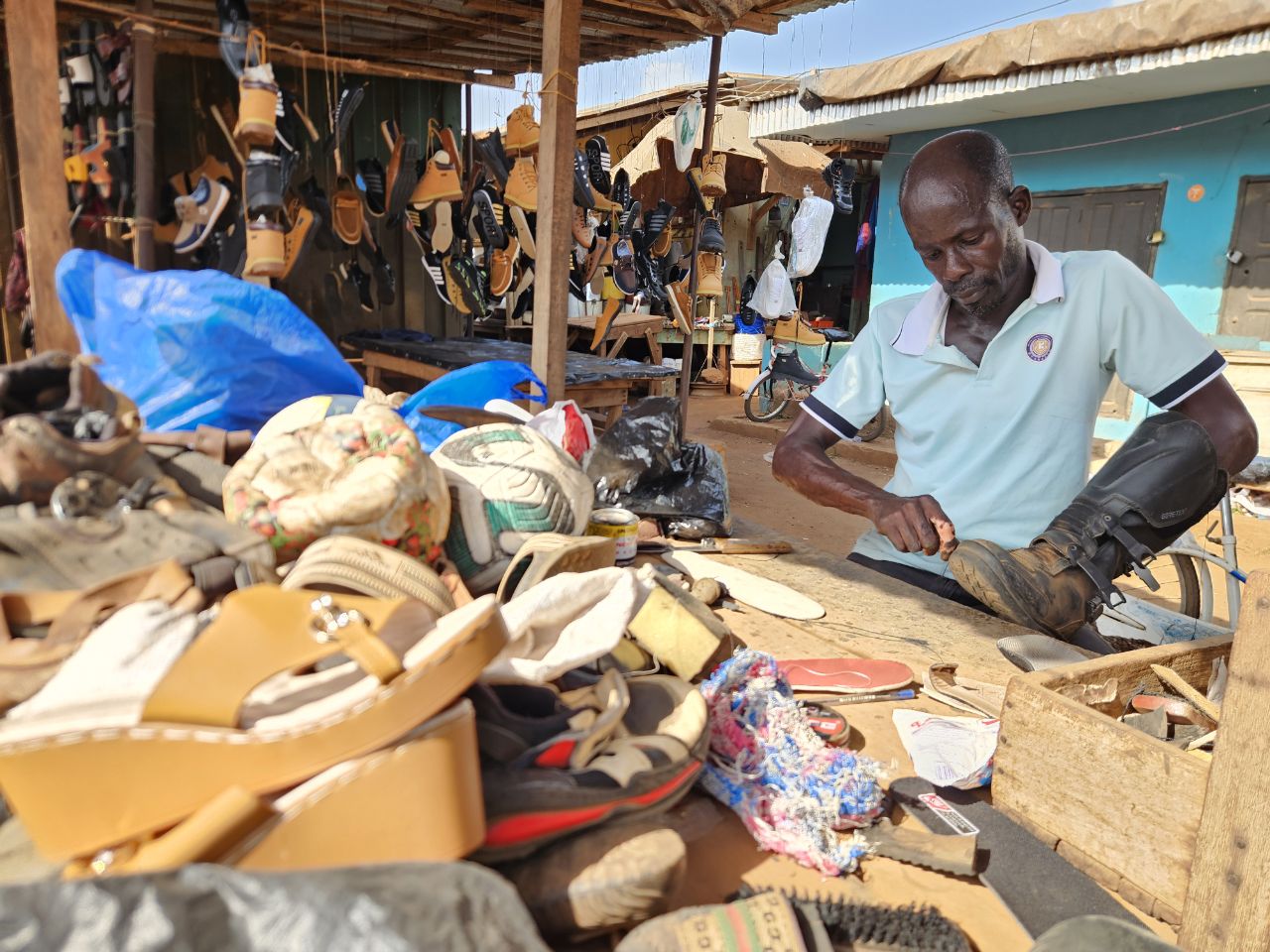
In between errands, a small amusing scene: while sitting down in a café, I notice that my African trousers are torn. I ask the waitress where I can get them repaired. She calls over a guy who just happens to be passing by with a sewing machine. I change, sip my coffee… and ten minutes later I’m back on my way with my trousers fixed for 500 CFA.
On Friday, I pick up a ticket for the opera Carmen at the French cultural center. I’m planning to go with Carole.
Then I head to the Ghanaian embassy to collect my visa. Once I have it, I decide to walk to the DRC embassy to submit a visa application.
On the way, I spot a tailor. This time, it’s my jeans that are torn. I decide to leave them for repair — but that leaves me in shorts. Some embassies are quite strict about dress code, so I look for a boubou to be properly dressed when entering.
Once all that is done, and after a quick ice cream break, I pick up my jeans and head back to Carole’s place to get ready for the evening’s opera.
April 1, 2026 – Abidjan
A complicated day before departure
A slightly stressful day. I was supposed to pack to leave tomorrow, but in reality, nothing went as planned.
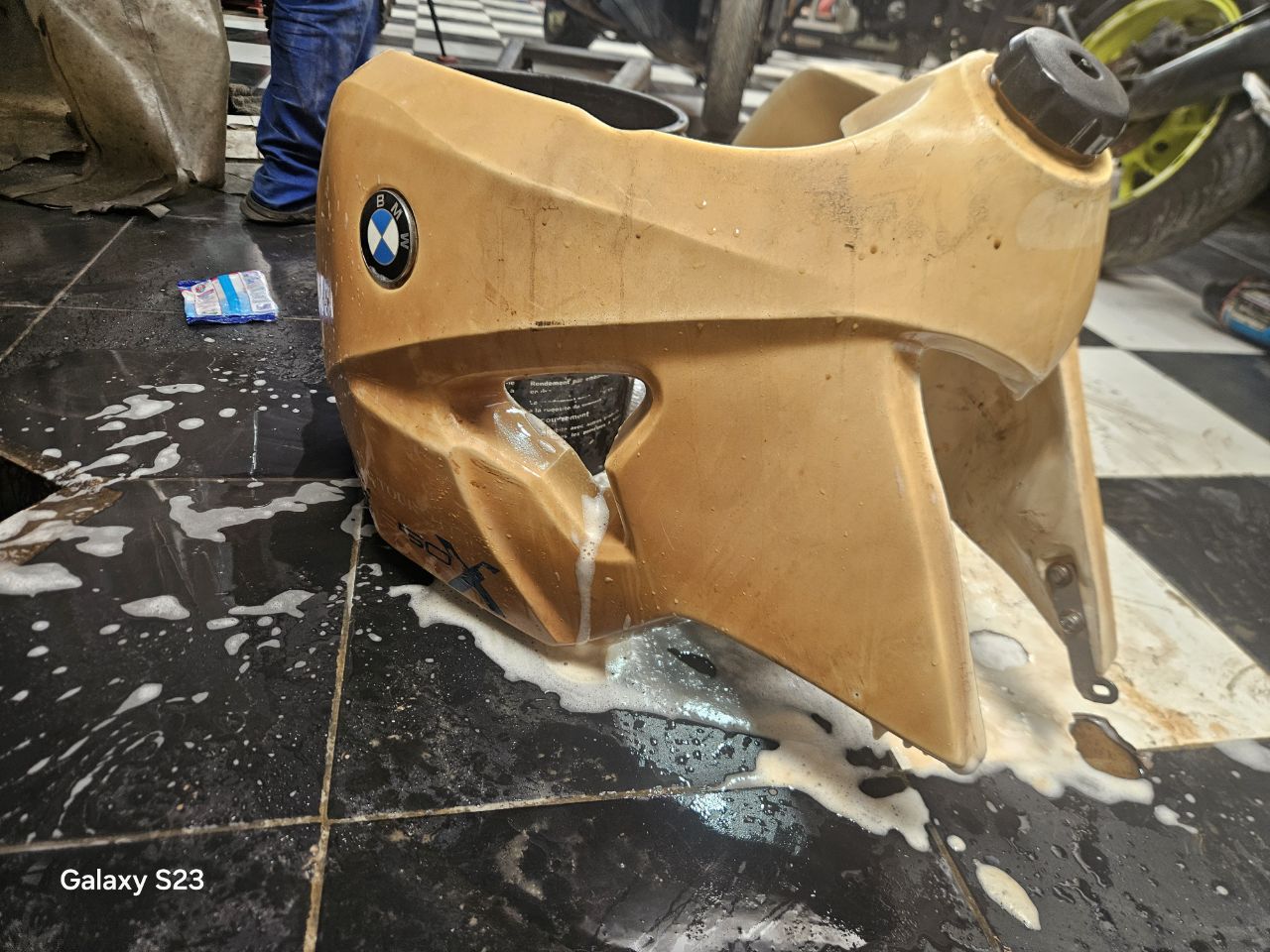
In the morning, I notice a trace of fuel on the bike’s swingarm. I already know this issue from before: it’s a leak from the seal of the main tank, located under the seat.
I had left the connection between the two tanks open. As a result, under the effect of gravity, fuel from the secondary tank puts pressure on the main tank, which ends up leaking from the top.
With Yayya, we take everything apart.
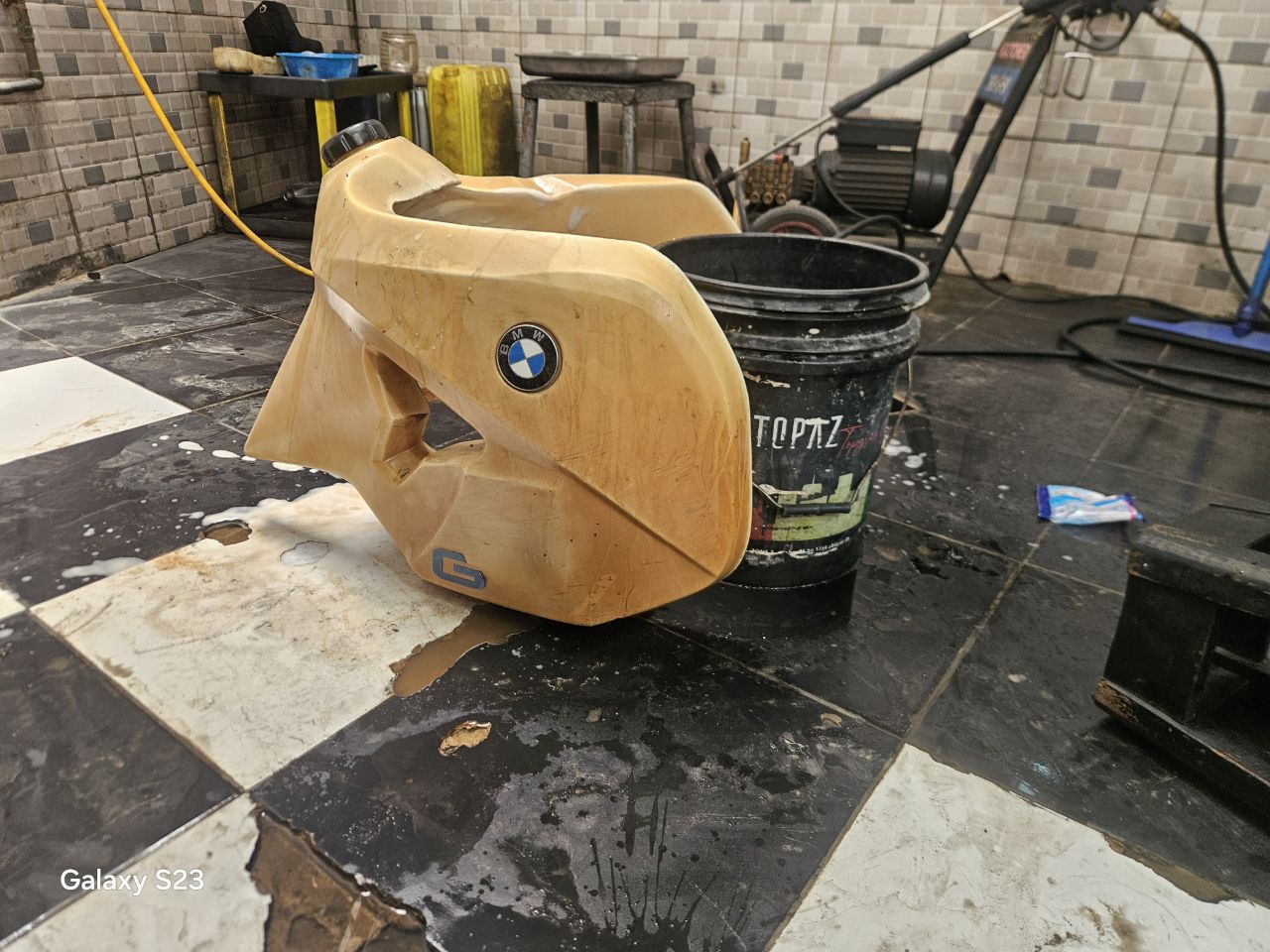
First observation: the insulating silicone we had used with Riad when repairing the contact terminals is breaking down in the fuel. As a consequence, we have to completely drain the tank, clean it, and replace the silicone.
Yayya then uses a kind of resin (with a smell similar to what dentists use). According to him, this material resists fuel.
This whole operation takes about two hours.
Then we have to solve a starting issue.
Yesterday, I went to fill up at the nearby gas station. Impossible to restart: the bike was just sputtering violently.
I had to push it back to the garage.
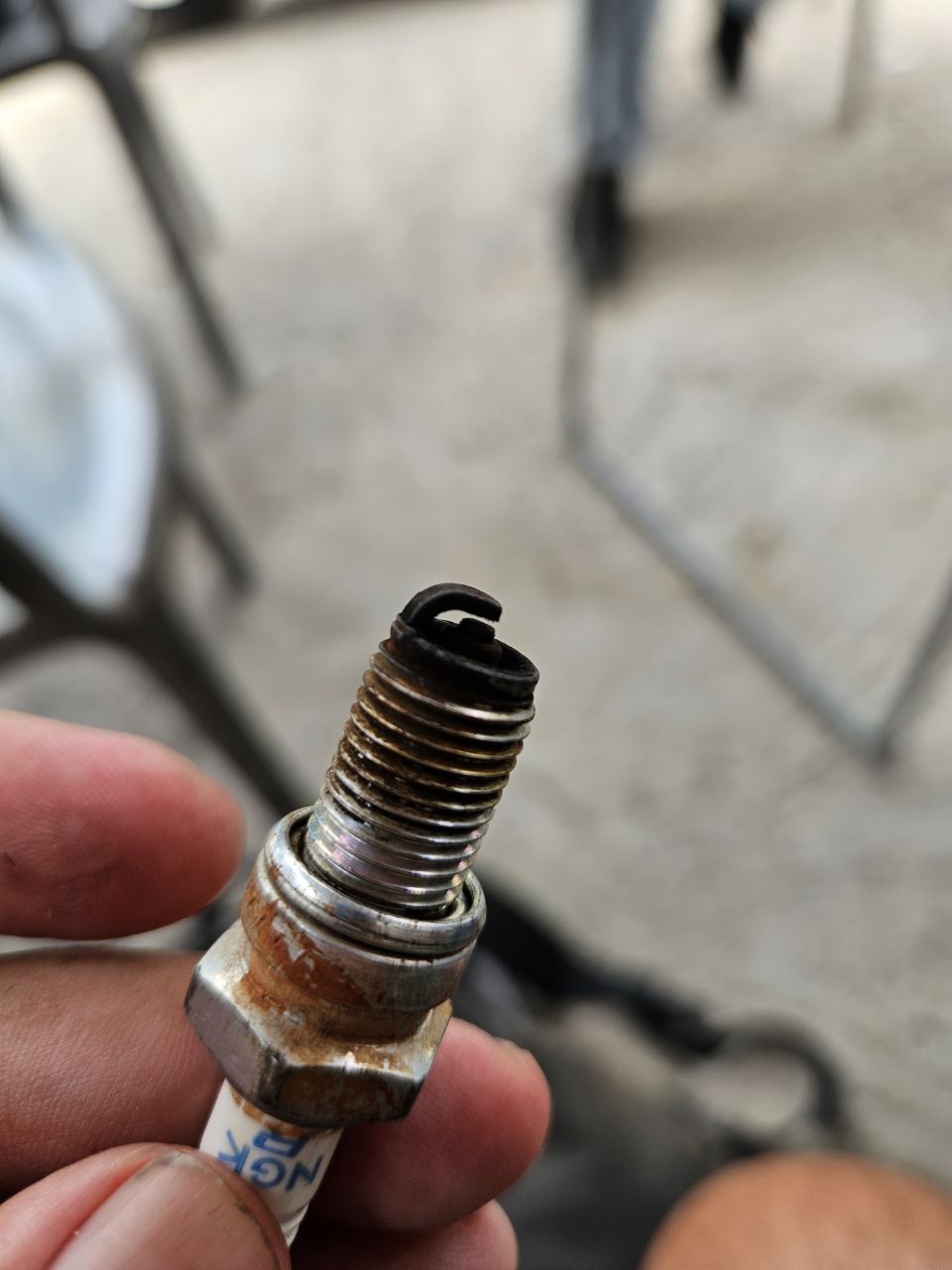
Yayya charged the battery and we changed the spark plugs. That seemed to fix the problem. Unfortunately, it starts acting up again with the same pattern: first start is fine, but impossible to restart when hot.
I recharge the battery for three hours… and then everything works perfectly again, even when hot.
The most likely hypothesis is a weak battery that has been unused for almost a year.
If it’s dead, I’ll have to find a new one… and that won’t be easy: the space is very limited on this bike, which greatly restricts the options.
Anyway… tomorrow I’ll go look for an XTZ 10 S.
In the meantime, I’ve obtained visas for Benin and Togo. So I should be able to move forward fairly quickly… if the bike doesn’t play tricks on me.
At lunchtime, as usual, sandwiches/skewers with Riad, Wissam, and the others. I am now officially and definitively accepted into the Lebanese circle. I must admit, I feel good with them. My Eastern side coming back out. It’s in moments like these that you realize how deeply the culture you grew up in shapes you.
April 6, 2026 – Finally departure – Abidjan / Bouaké
Yesterday, I left Abidjan after almost a month of doing nothing but talking with people. Time flies when you’re in good company. Thanks to Carole for the accommodation, the opera, the restaurants, and the conversations.
This time, it’s decided: I’m leaving. I’m meeting the other riders in Bouaké tonight, 350 km north. But they ride big touring bikes or sport bikes. With my 650, hard to compete.
Initially, I had planned to go there over two days via dirt tracks…
But the distance would be difficult to cover in one day under those conditions. And since I know they ride very fast on the highway, it’ll be highway for me too, leaving at dawn to get a head start and enjoy the cooler temperatures.
It’s also a good opportunity to test the bike and give it a proper run. It usually runs on small roads or tracks at low speed. This time, it’ll be a proper clean-out session.
First toll: 500 FCFA. So far, so good. Except they don’t accept bills above 2000… and of course, I show up with a 5000 bill.
After a bit of negotiation, we find a solution: payment via Wave (mobile wallet), and he provides the cash.
This is Africa: there’s always a solution — and often with a smile.
Second toll: I stop, ready to pay. The guy looks at me, puzzled:
— “But… you want to pay?”
— “Uh… yes?”
— “But motorcycles go around.”
Ah.
So I turn around in the middle of the toll, under the patient gaze of a truck driver waiting his turn.
Third toll: this time I anticipate. I spot a small dirt path 100 meters before. Bingo: VIP lane for motorcycles.
The next ones are a bit trickier: narrow, perfect for 125cc bikes… but with my panniers, I feel like a mammoth.
After two fuel stops and a coffee, I arrive in Bouaké around 11–11:30, at the Hôtel de l’Art, built and run by a Frenchman who has lived in Africa for… 72 years. That is, since birth. Ironworker, construction entrepreneur, and painter on the side: quite a character.
Riad and the others arrive two hours later… but they left two hours after me.
They ride faster (top speeds of 250), but stop more often. In the end, we take roughly the same time (they left at 8:30).
Afternoon: a walk around Bouaké. I discover that it’s really Riad’s home turf. He grew up here and is known like a local celebrity.
Every 10 meters: stops, conversations, reunions.
He takes me to a friend’s restaurant so I can buy a shawarma (1500 CFA). Result: the friend offers me a bottle of water… and even offers me to stay at his place, in his villa with a pool, for as long as I want.
At another time, I might have accepted… but now, I need to move forward.
Then we visit Riad’s uncle at his shop. Turning 64 in September, a former big-game hunter. I would have loved to listen longer to his bush stories.
He hunted quite a lot of big game (kudu, etc.), except buffalo: too dangerous, unpredictable. When wounded, it attacks.
In the evening — at night, I should say — Riad decides to visit him again in his new house, which he hasn’t seen yet.
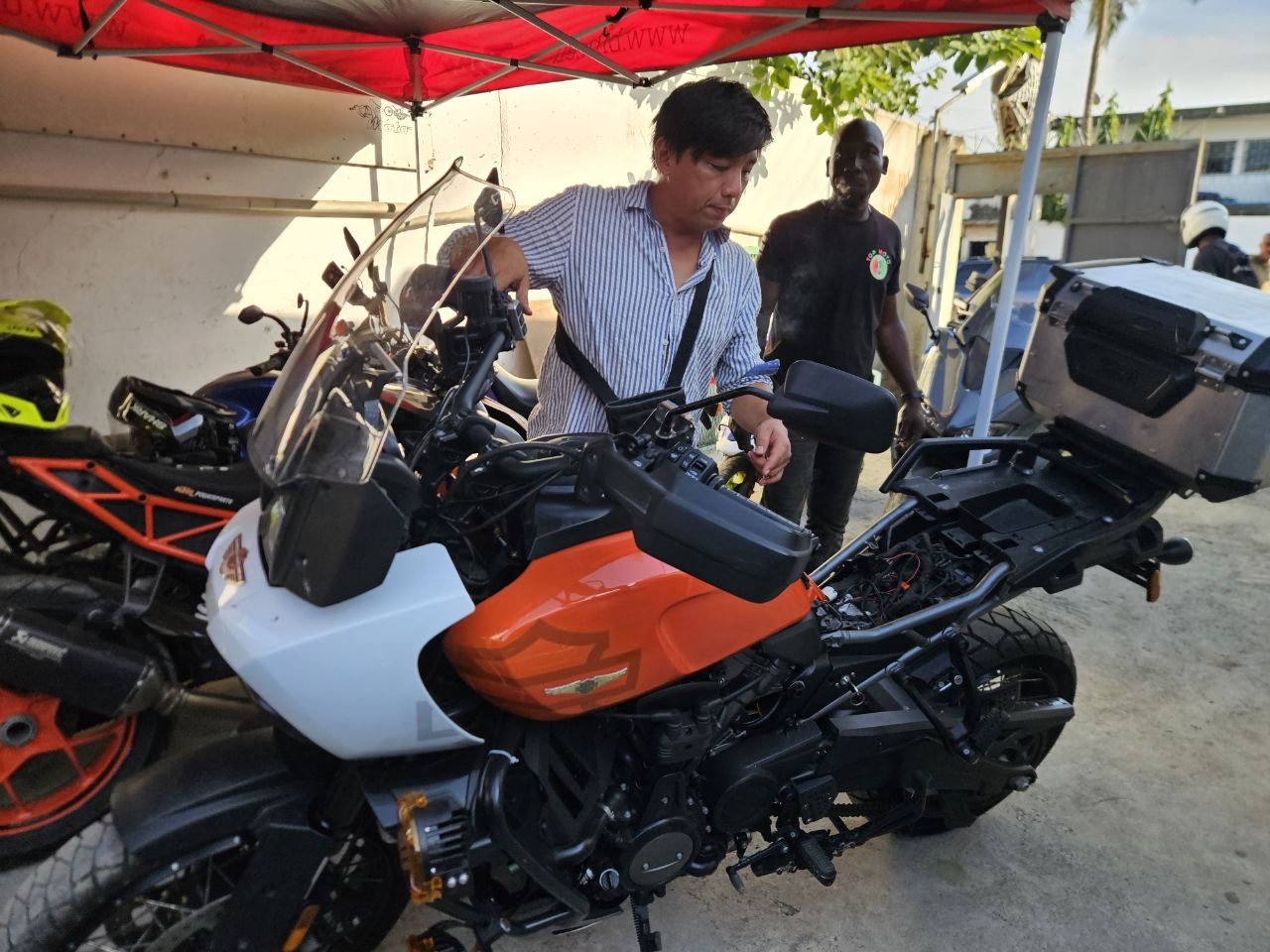
We are four bikes:
- one R1
- one Harley (Pan America)
- one BMW 1250 RT
- one X-ADV
And seven riders:
- one Korean
- five Lebanese
- and one Frenchman (me)
Out of the seven… only two are wearing helmets.
Care to guess if I’m one of them?
Yes. I know. I’m becoming a bit too “African.” I’ll need to fix that before Darwin gets involved.
All this at night, in traffic that’s… let’s say… creative.
Lately, in the category “things not to do,” I’m starting to tick quite a few boxes.
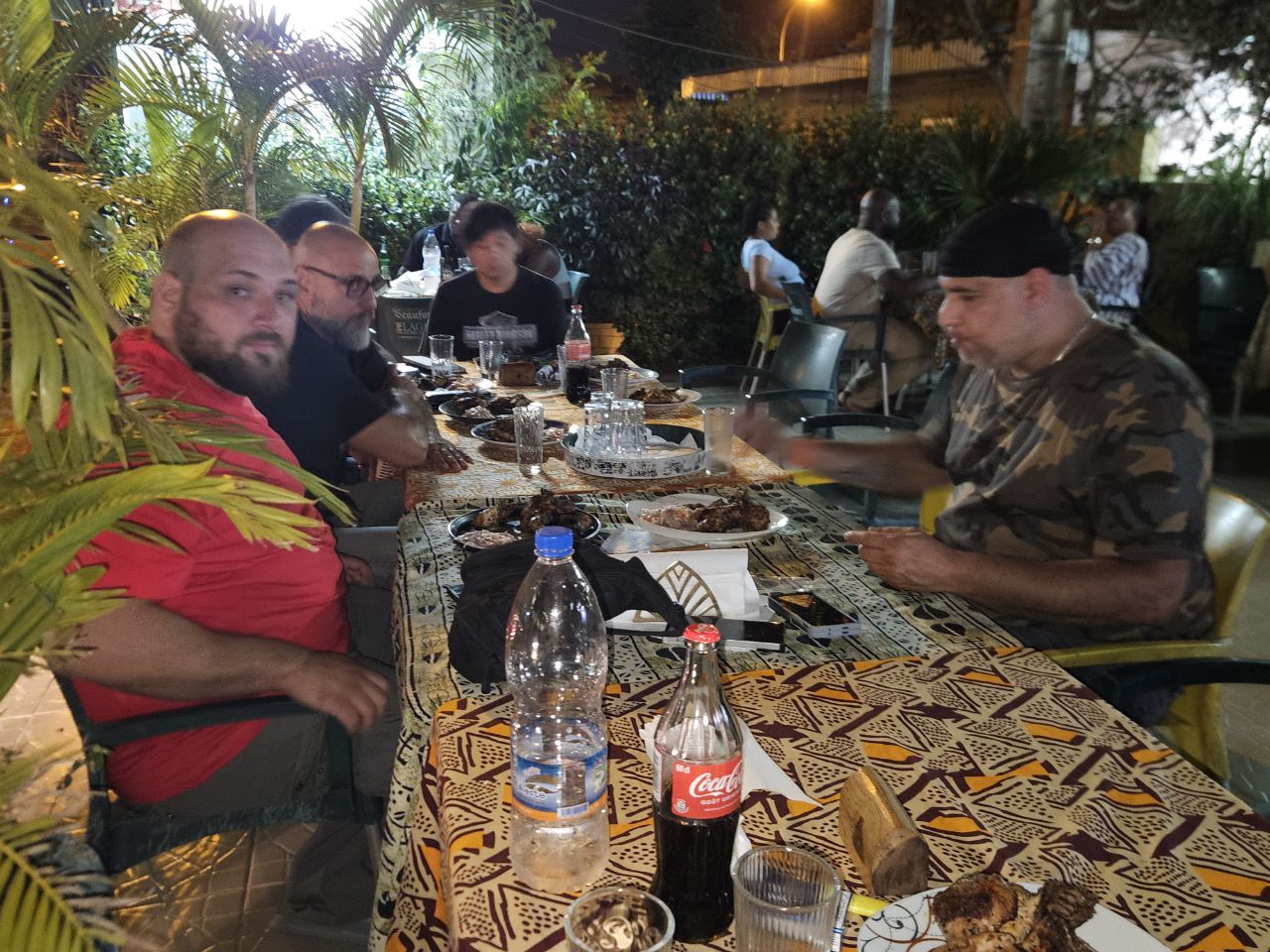
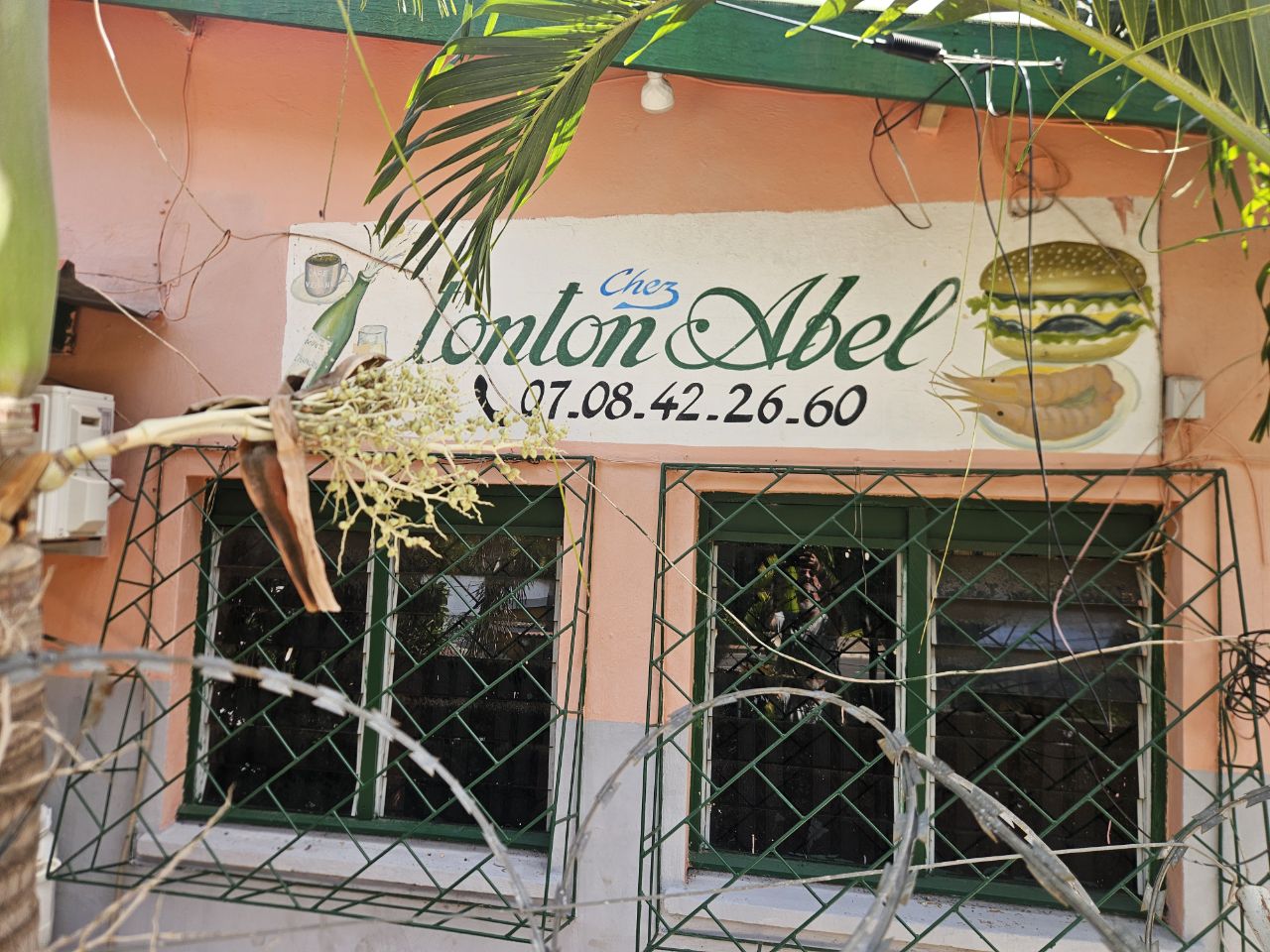
Then: grilled chicken and attiéké at Tonton Abel (the name of the local eatery), then bed for me.
The others went out partying, apparently until 3 or 4 a.m.… only to leave again at 8:30 for Abidjan.
All except… me (as planned) and Fawzi, who woke up at 9 with a solid hangover.
He left after a coffee… and I just learned he crashed his R1 on one of those damn speed bumps that are everywhere here (small, brutal, and invisible).
Result: hospital detour, return by car… and the bike in a covered truck.
As for me, I wanted to continue a bit further north, but:
- Not sure the authorities would let me through (like in Togo — sensitive area).
- I need to make progress.
So tomorrow: heading to Ghana.
Goal: be in Cotonou within a week. I have some margin, but I shouldn’t linger too much.
I’ll probably stick to asphalt.
I’ll have plenty of time for dirt tracks further south: Cameroon, Gabon, Congo, DRC, Angola…
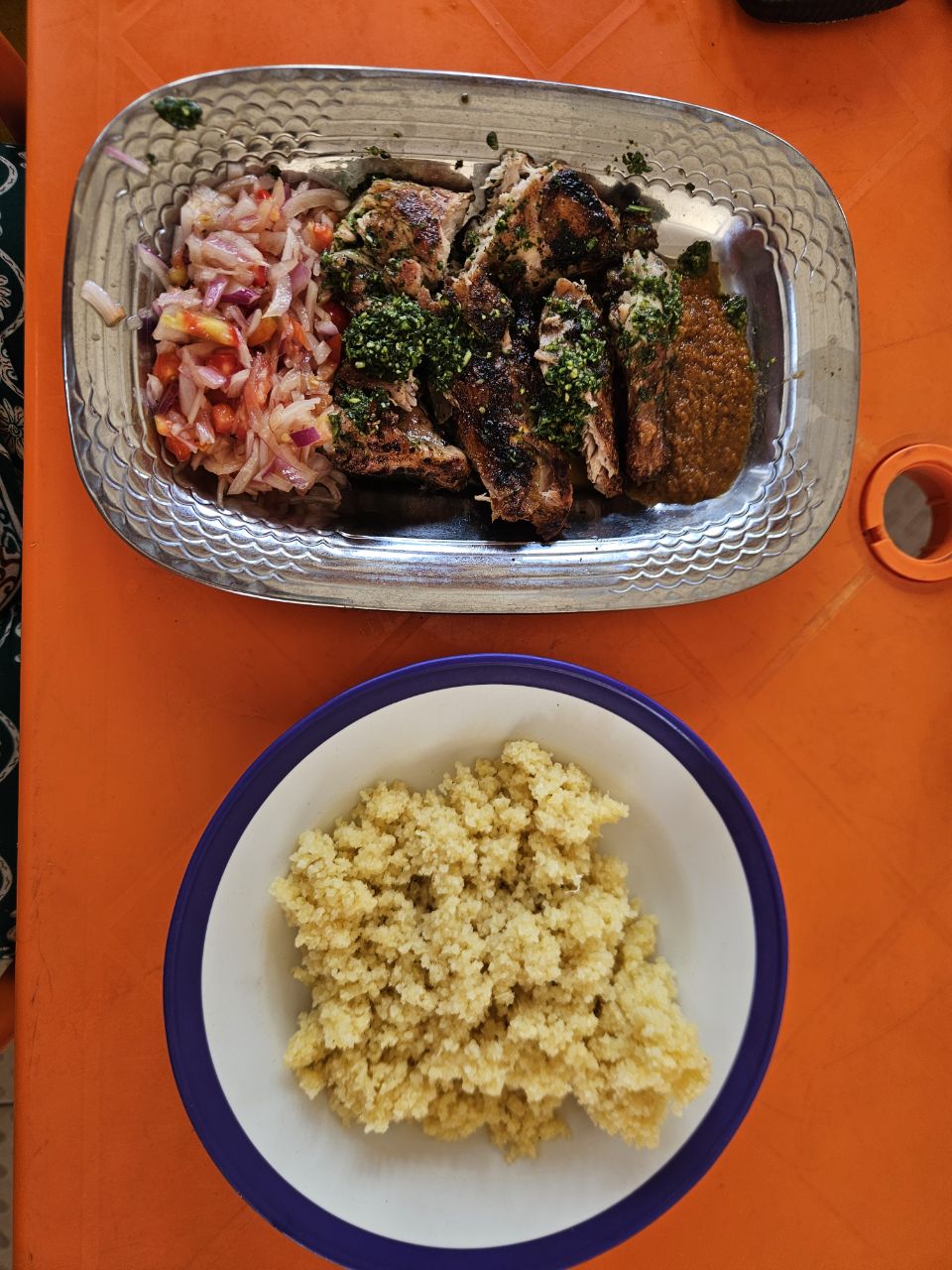
Update: Today I ate at a maquis — a popular open-air grill restaurant. The term is common in this part of West Africa: Mali, Burkina Faso, Côte d’Ivoire. It’s not used in Senegal, and I don’t remember hearing it in Benin or Togo.
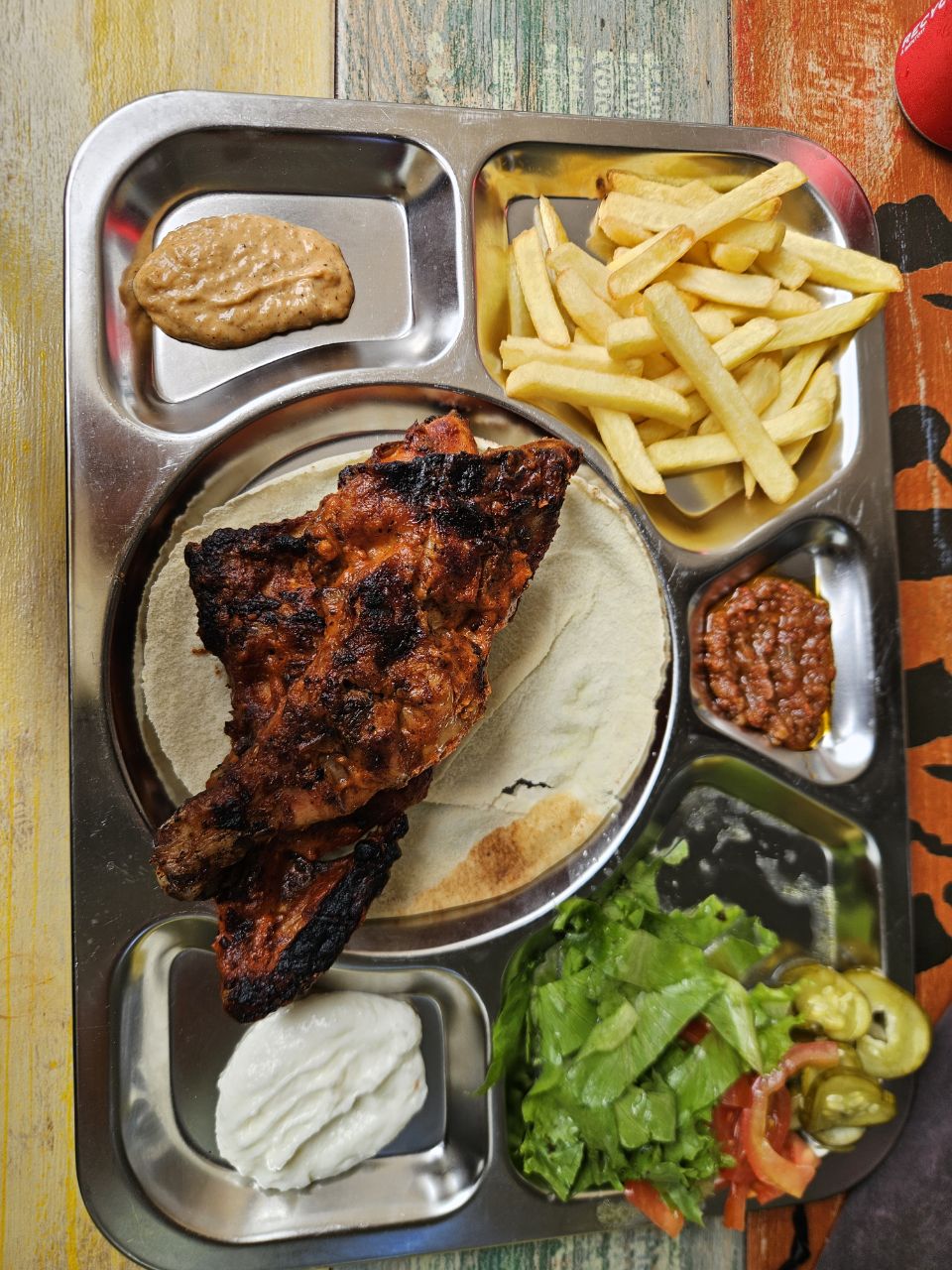
Lunch: grilled chicken, attiéké + Coke = 2700 CFA
Dinner at Tonton Abel: chicken again + large bottle of water = 3200 CFA
Then I literally crossed the street to go to a rooftop bar with live trumpet music and ended the evening with a mojito: 7000 CFA.
An Africa of multiple speeds.
While I was on the rooftop, my attention was drawn to an amputee begging near the maquis where I had been just minutes before.
April 6 – Bouaké to Tanda / Côte d’Ivoire – The beginning of the rough patch
Written on Tuesday, April 7, 2026. Town of Tanda, Côte d’Ivoire. Hotel Titanic.
The day in numbers:
- 265 km, including 200 km of dirt tracks
- One breakdown
- One fall (from the bike at a standstill)
- Two butterflies fatally crashed into my helmet
- At least 4 liters of water consumed
- One pair of boots to repair
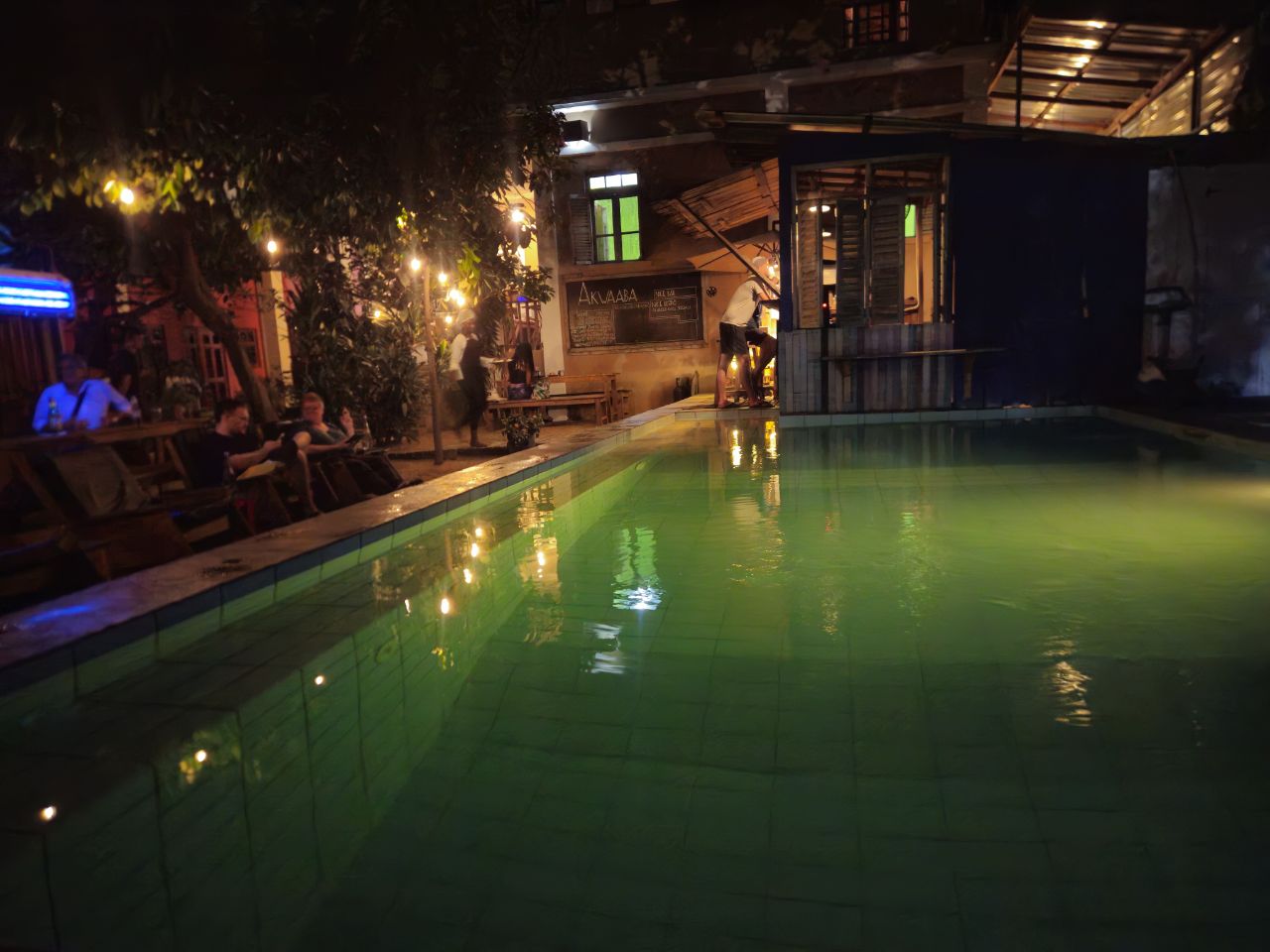
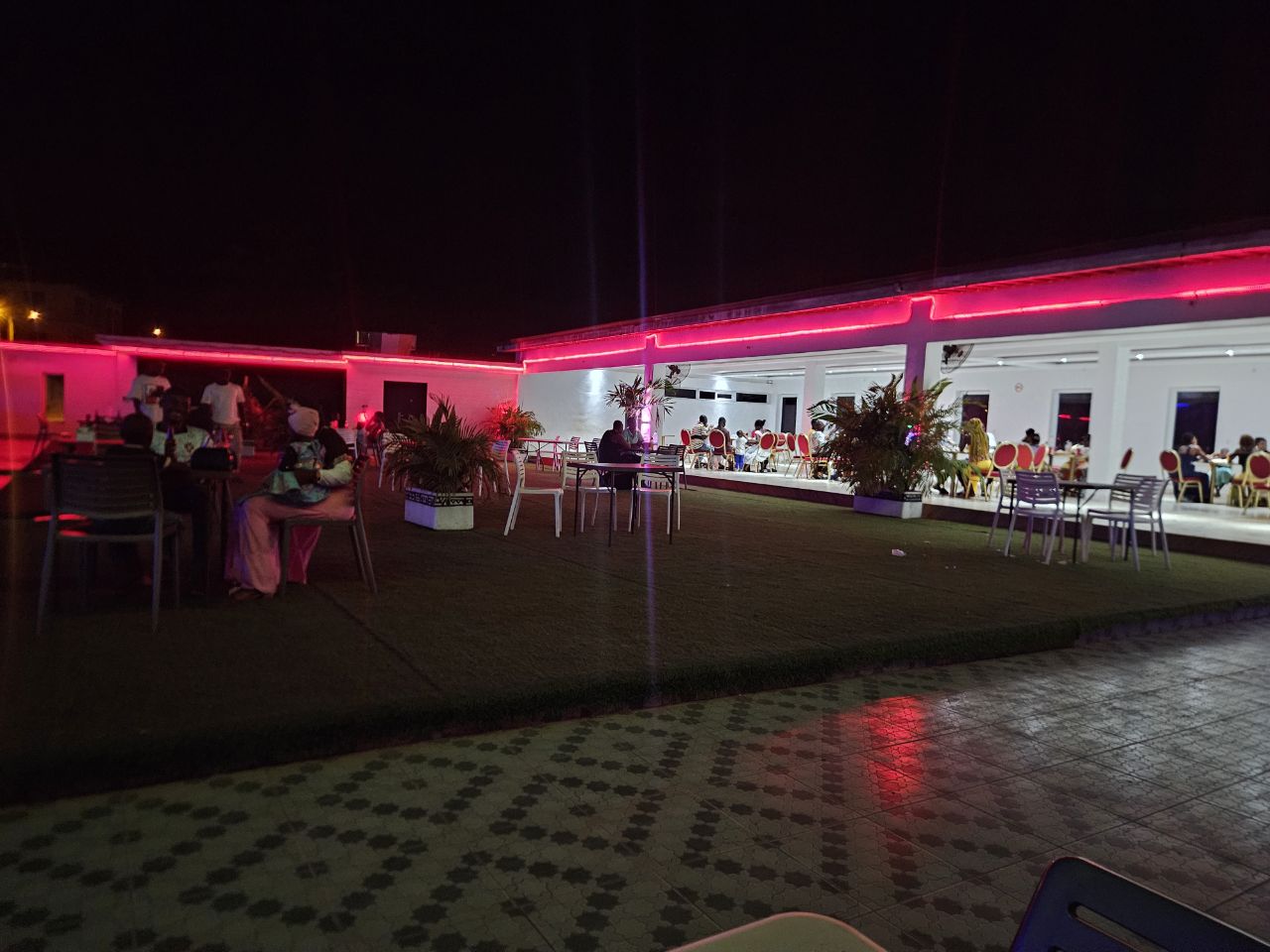
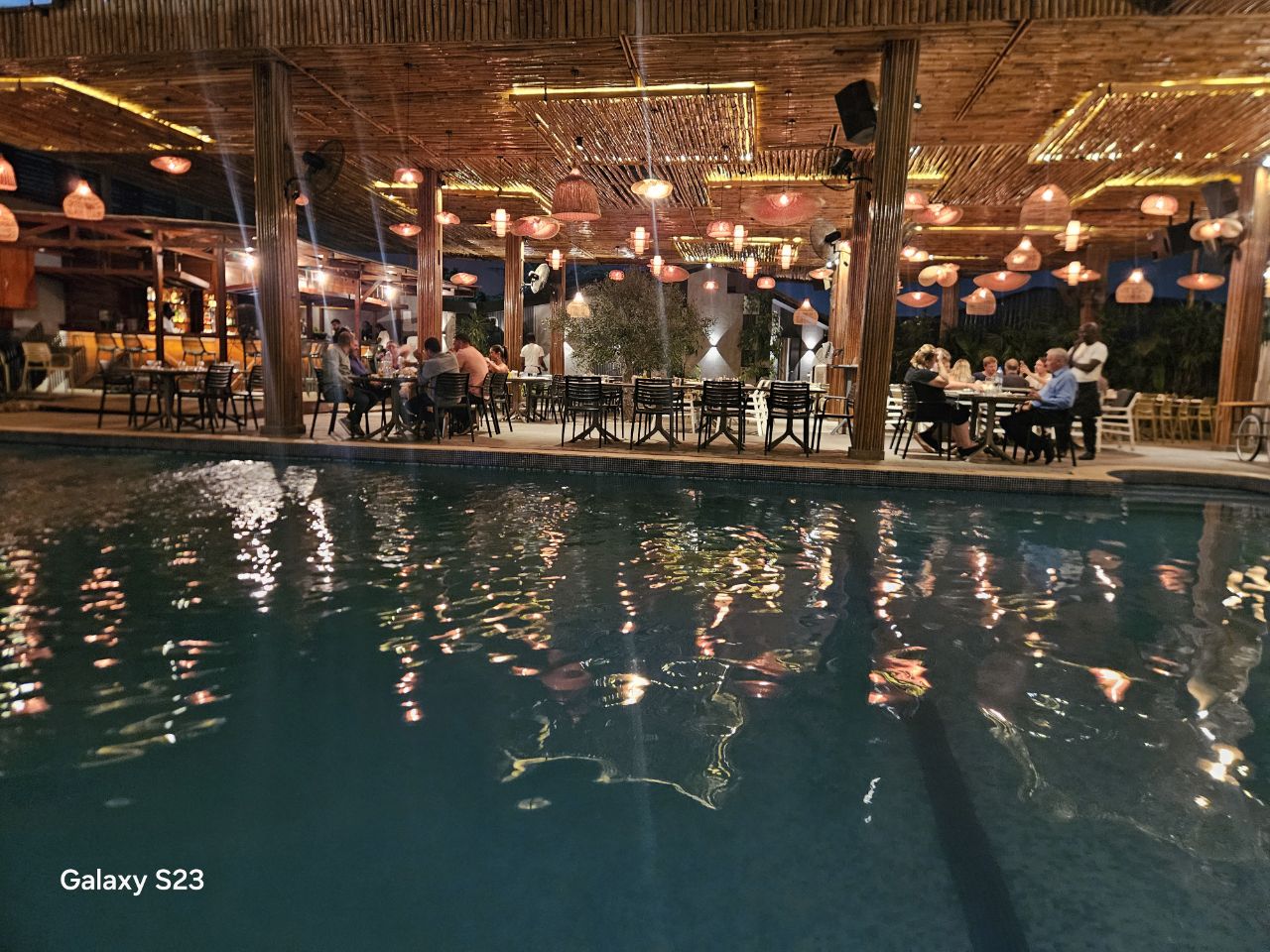
I’m sitting at a table in a corner of a large open area lit by red and blue LEDs.
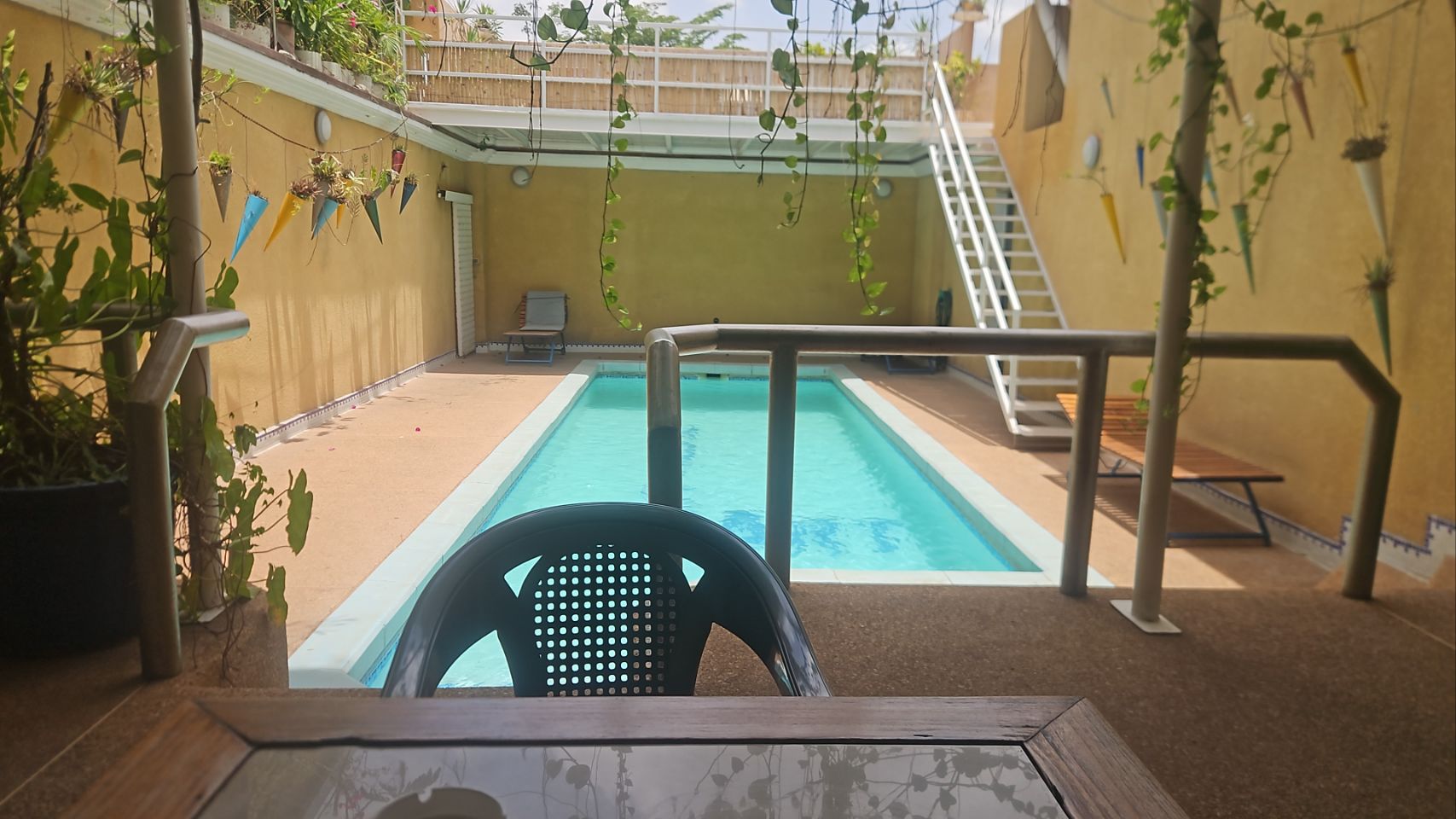
To my left, a swimming pool. For once, the music isn’t too loud, unlike last night when I arrived — it was full-on party mode.
I left Bouaké on Monday, a little before 10 a.m. The sky was overcast, which kept the heat down.
Objective: reach Bondoukou, a town near the Ghanaian border.
Three routes were available: south, north, or center.
- The easiest was via the south: 400 km of asphalt, 6h58 according to Google Maps.
- The northern route: a good mix of asphalt and dirt tracks, 367 km in 6h40.
- The central route: mostly dirt tracks, 313 km in 6h29.
I chose the central one.
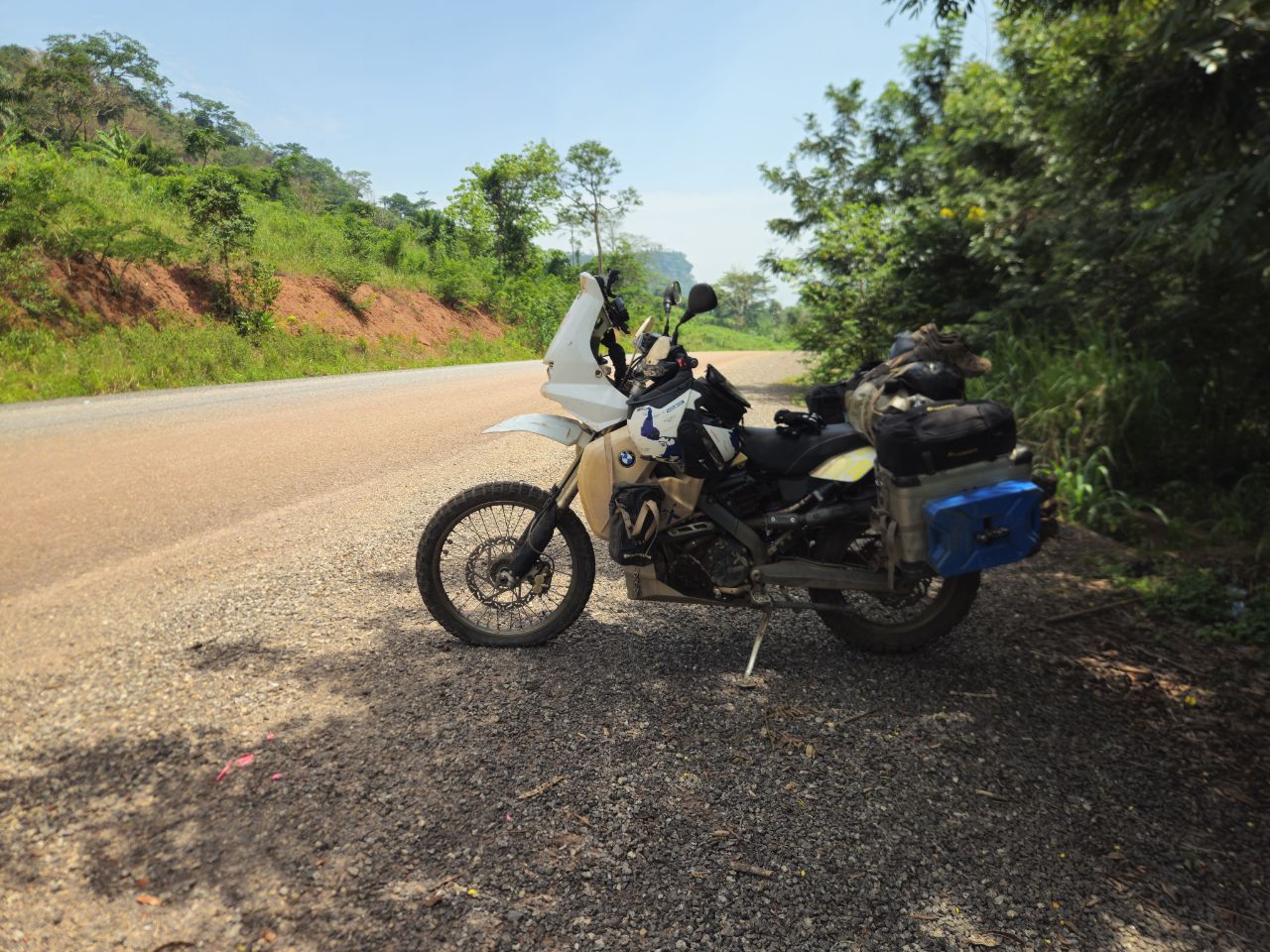
The first 65 kilometers were easy: almost brand-new asphalt, very little traffic.
Then 10–15 km alternating between tarmac and dirt alongside a road under construction.
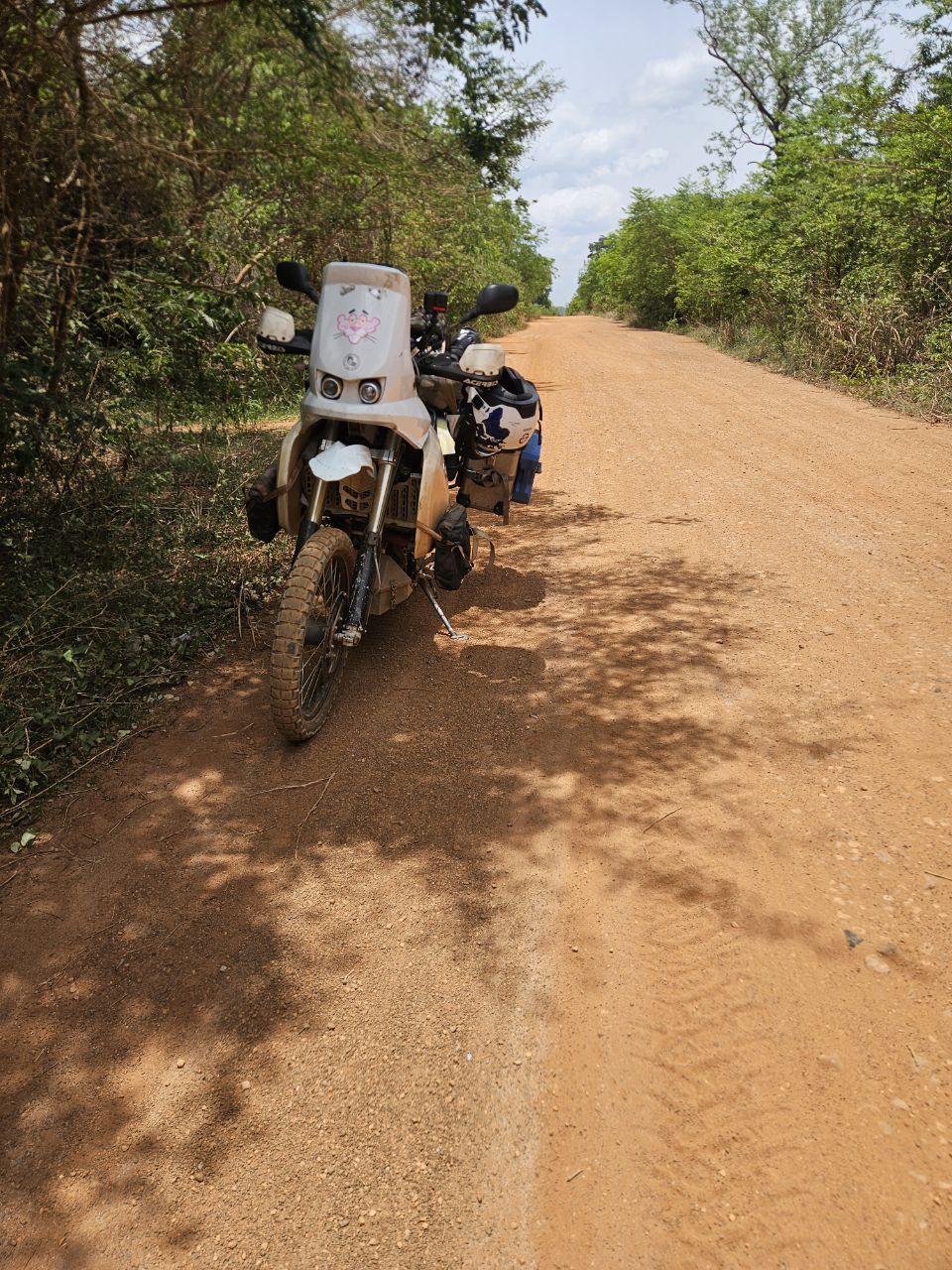
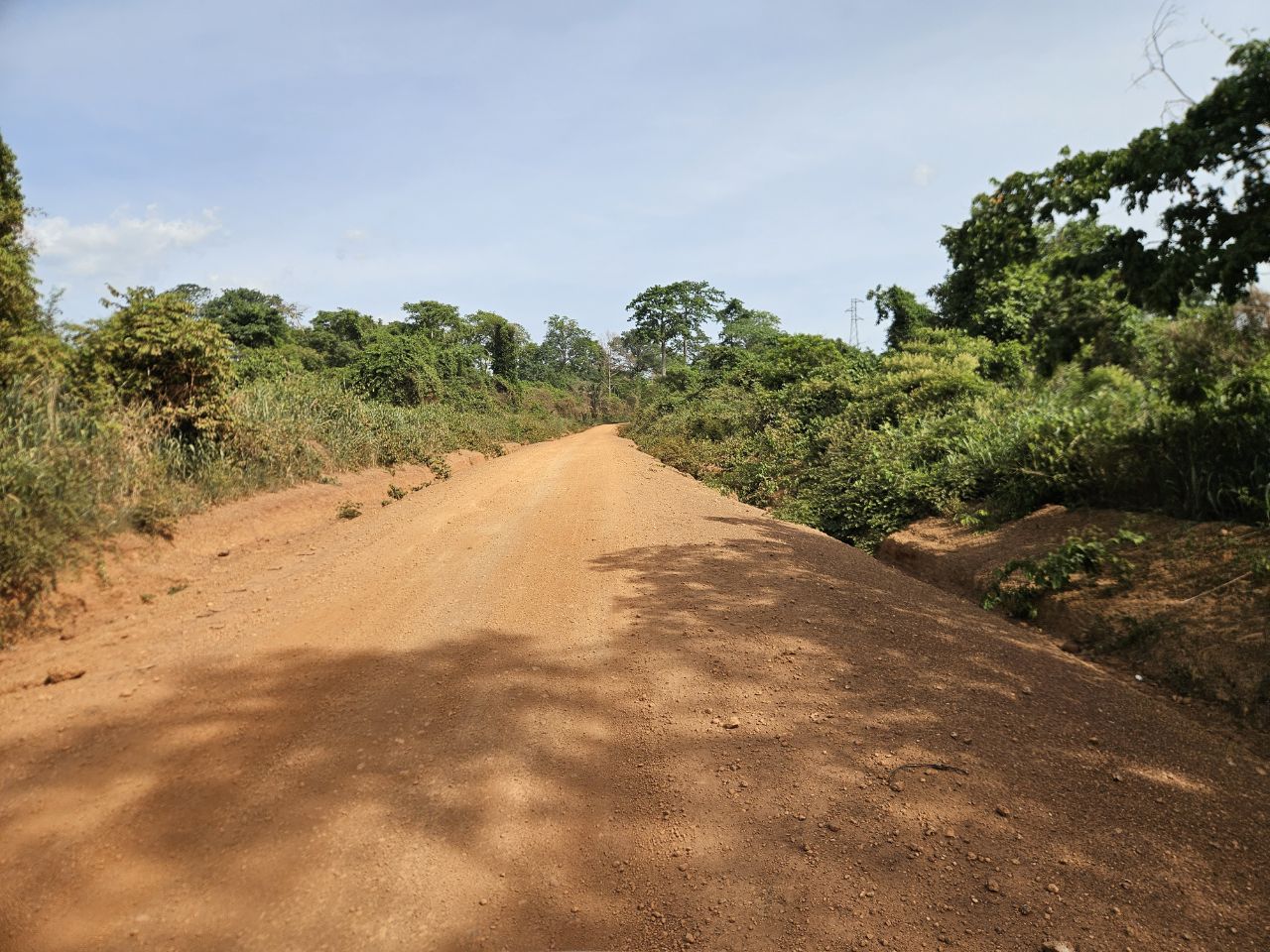
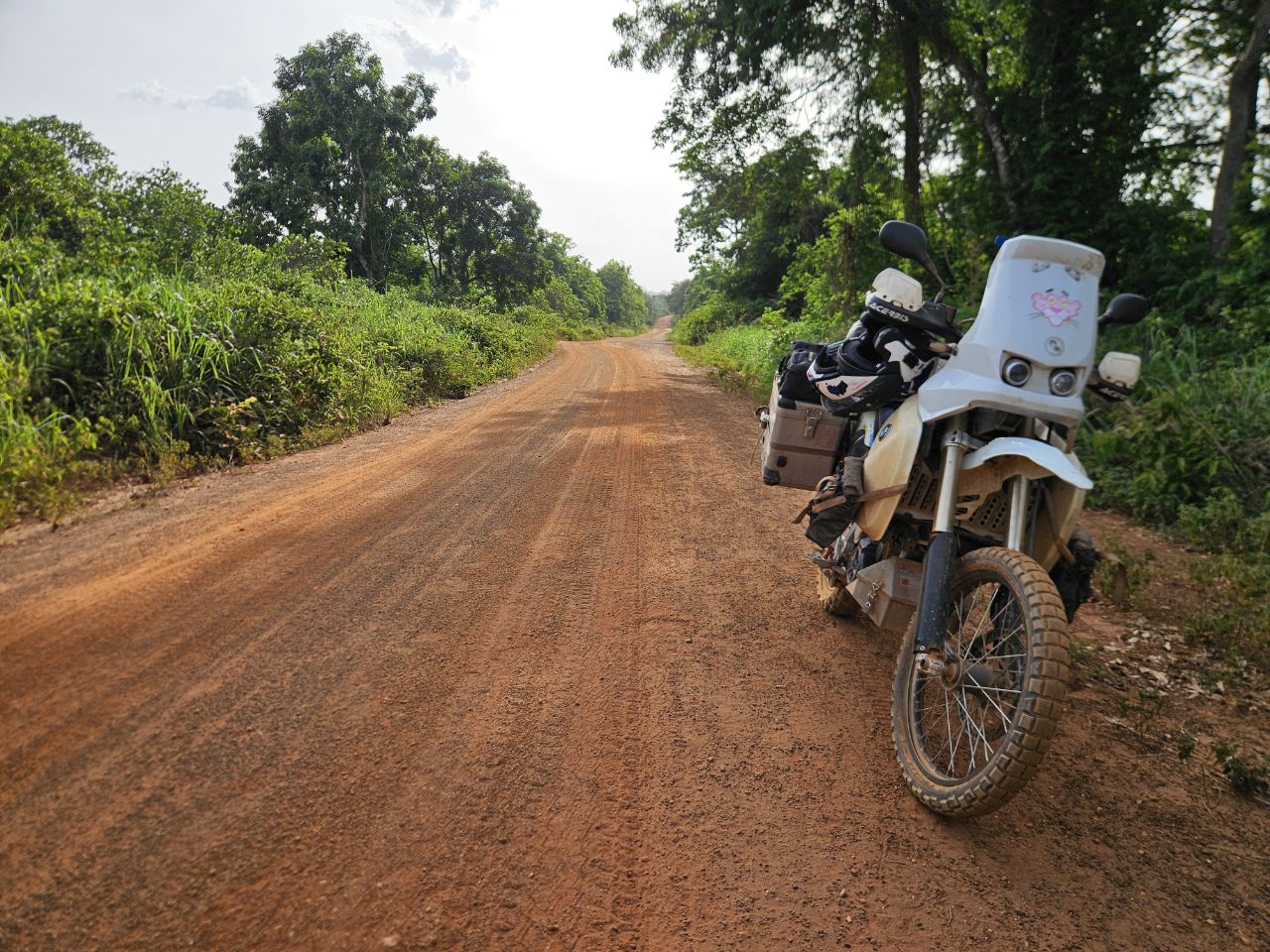
From Satama-Sokoura onwards, the asphalt disappears completely, replaced by laterite.
After about twenty kilometers, I stop to lower tire pressure: the front tends to drift in soft sections.
1.2 bar front, 1.4 rear.
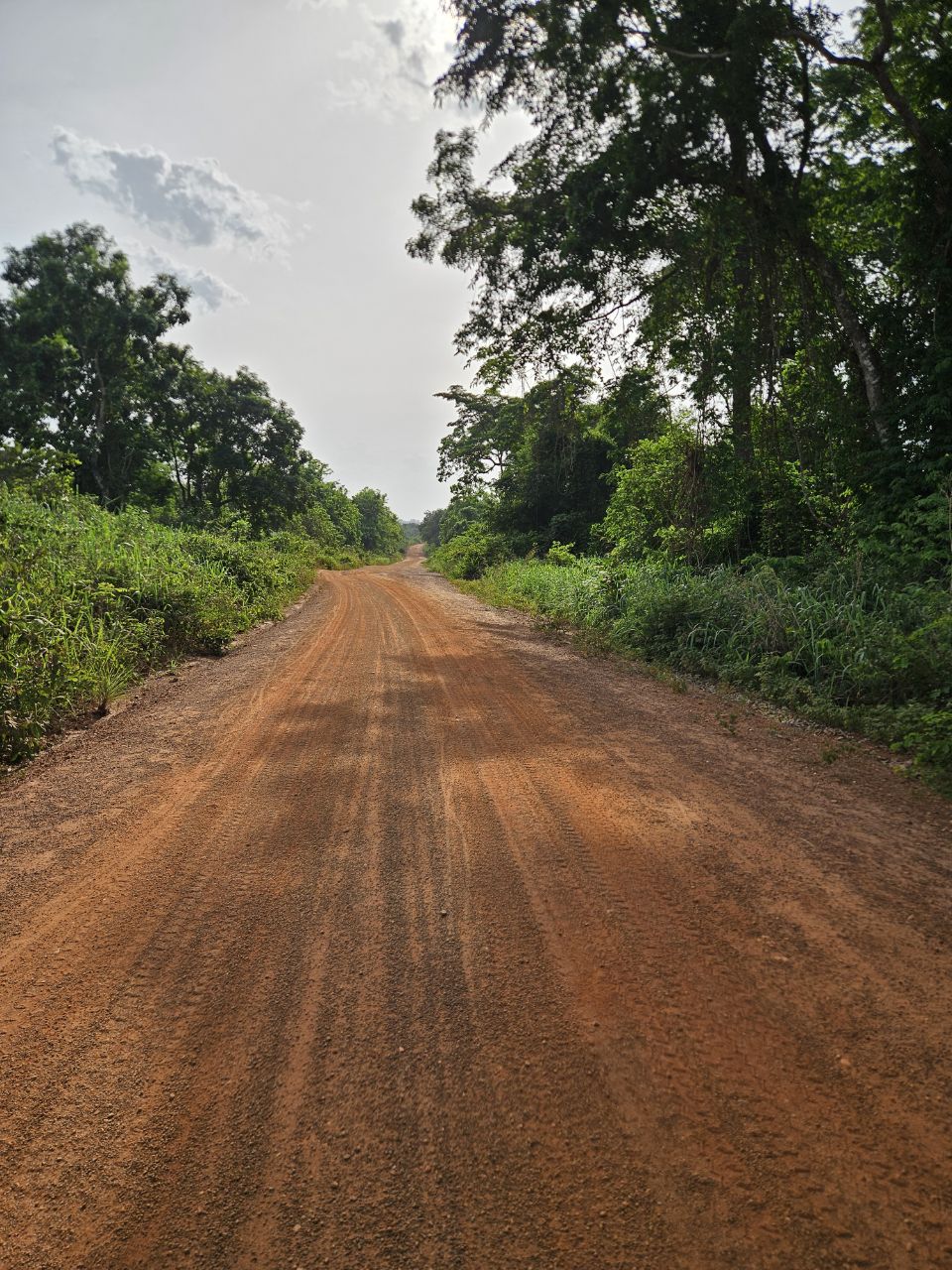
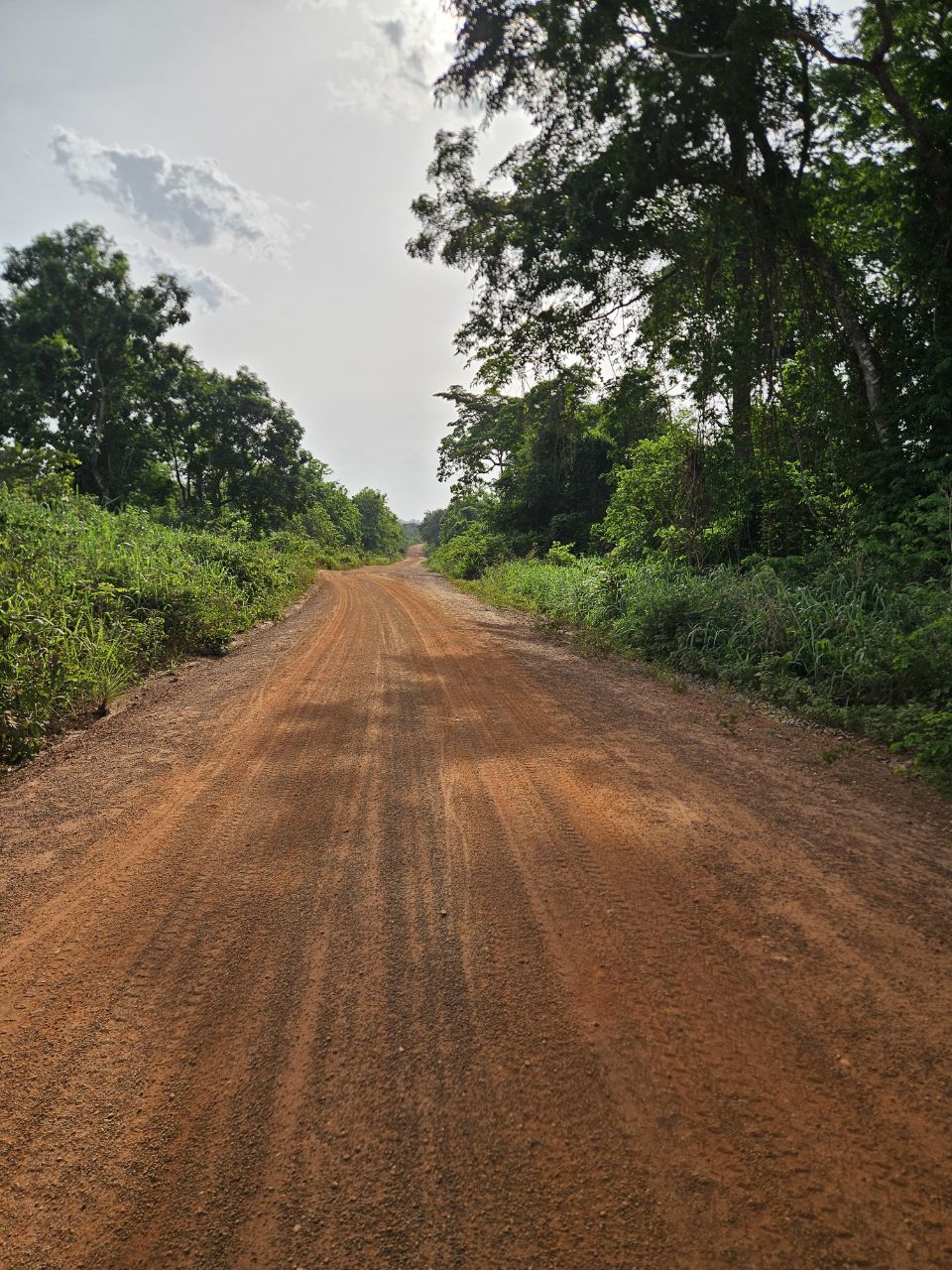
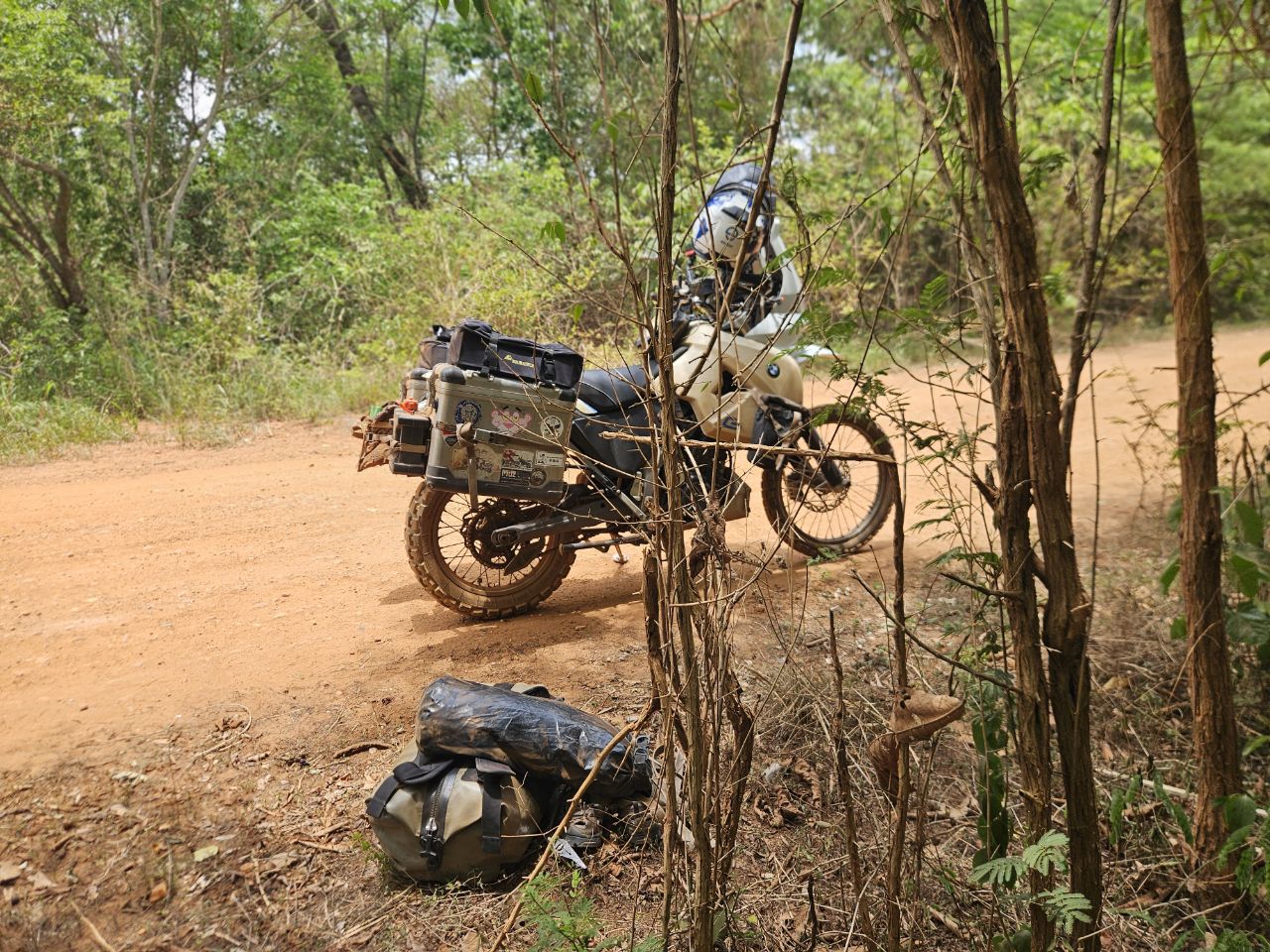
The track is beautiful: ochre laterite, lined with greenery.
As I set off again, the bike stalls. Once — normal, I forgot to retract the kickstand.
I restart. It stalls again. Then again.
And this time… nothing.
It’s hot. Very hot.
I think. Above all, don’t get angry.
I’m sweating, and I don’t have much water left — less than a liter. Luckily it’s still cool thanks to the thermos I bought in Abidjan. A small luxury I don’t regret.
In the shade, I think it through. Not the battery. Not the kill switch. Probably a fuel supply issue. Maybe a blown fuse.
I need to dismantle things: the fuses are under the seat.
An old covered pickup passes by. The driver stops and offers help.
I hesitate. It would be easy to load the bike and go fix it elsewhere.
I refuse. Misplaced pride, maybe.
The pickup drives off. And I’m left alone, out of network, with little water and a broken bike. The perfect trifecta of bad luck.
I struggle: my Leatherman is buried deep in a box. I’m sweating so much the fuses slip through my fingers.
Clearly, getting back into the swing of things is tough — I’m far from my usual level of organization.
Finally, I manage. One fuse seems blown. I replace it without overthinking.
I hit the starter. The bike comes back to life.
Yeeeeyyy.
I pack everything, drink a good portion of my water.
Another start… nothing.
I’m gutted. I should have taken the pickup.
I think of that joke about the priest who refuses a rowboat, a zodiac, and a helicopter (telling each rescuer: go save others, God will provide for me), and then drowns… In heaven, he complains to God, who replies: “I sent you a boat, a zodiac, and a helicopter. What more did you want?”
Yes… I should have taken the pickup.
I take everything apart again.
And this time… it starts. Why? Mystery.
I set off again.
A motorbike passes with three people on it. I ask for water. They tell me to turn back.
I don’t argue.
In a village, I ask a woman if I can buy water.
She comes back with two ice-cold sachets. Surprising, given the apparent lack of electricity.
Filtered water in sachets — practical, but an ecological disaster.
25 CFA for two. I ask for ten.
She comes back with a whole bucket full.
I borrow a knife — mine is of course buried in the boxes — and fill my camelback and bottle.
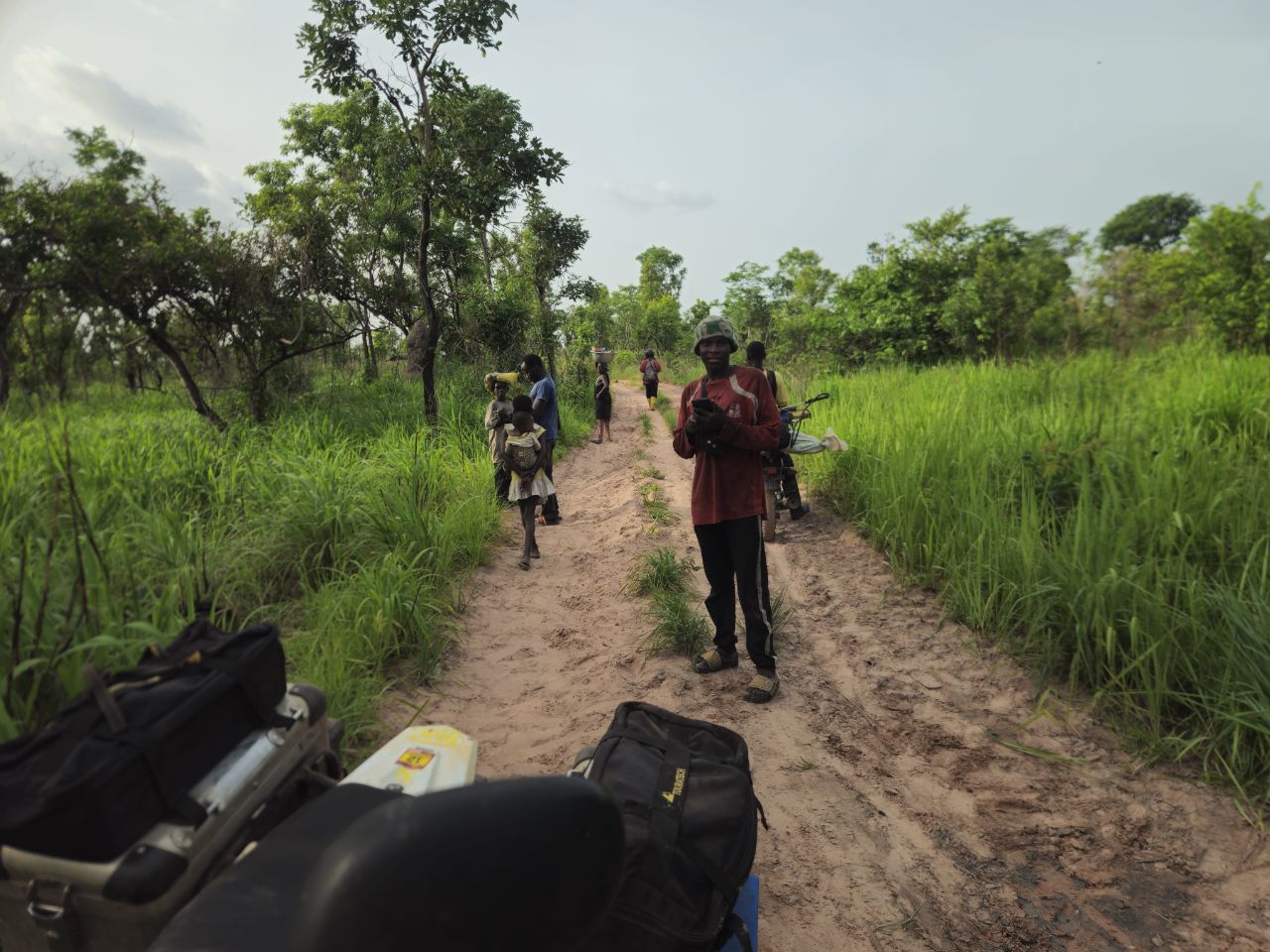
Children gather. They watch this white-bearded man, drenched in sweat.
One says: “It’s the first time I’ve seen a white man.”
I laugh and reply. The kids burst out laughing.
I finish.
The woman comes back with my 1000 CFA bill: no change, she tells me to keep the water.
I give the bill back: she can keep it all.
At that moment, that water is worth gold.
I set off again… hoping the bike will start.
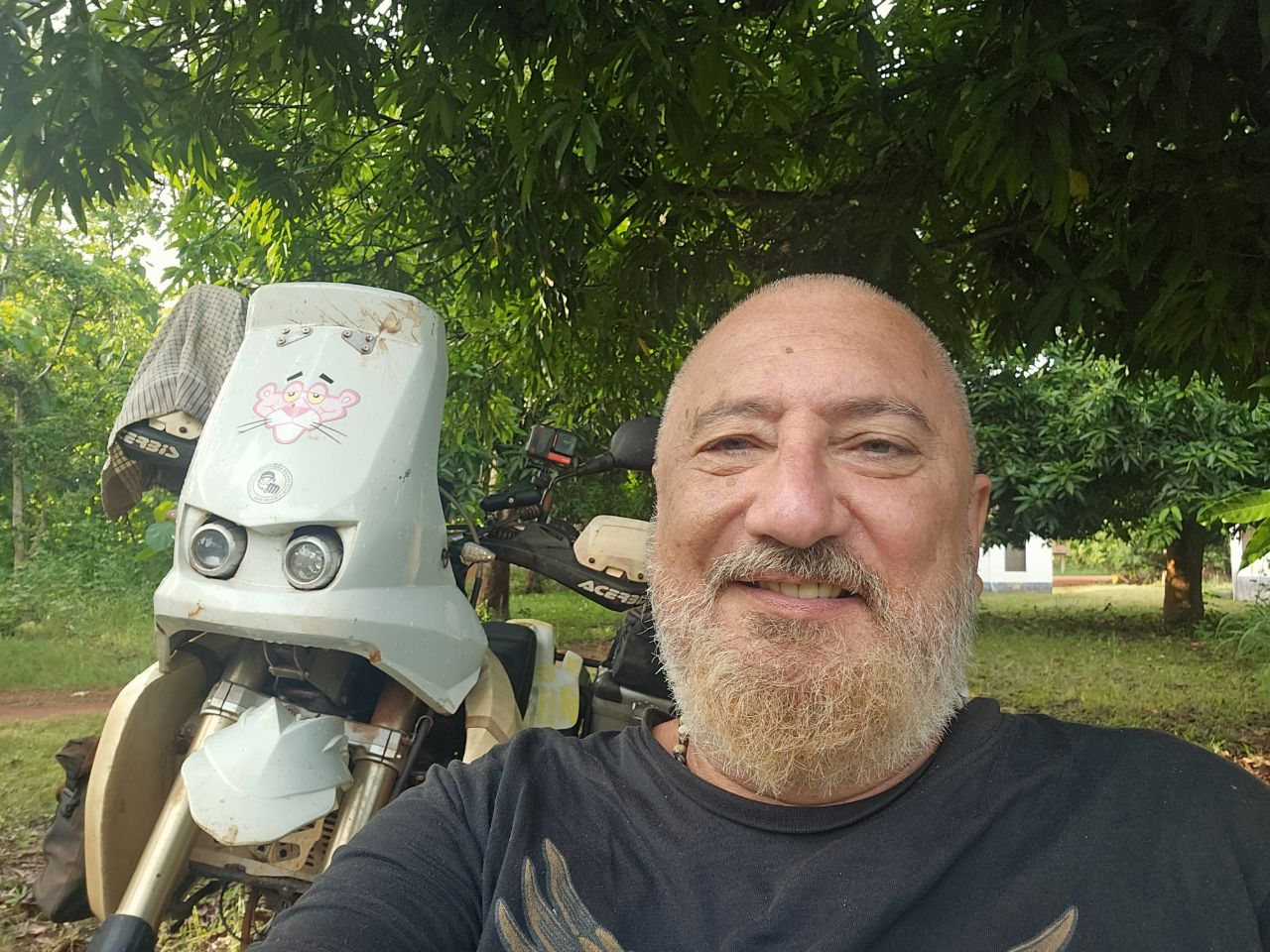
With my fractured pelvis, I mount from the right. But it’s hot, the bike is unbalanced…
I pull too hard on the handlebars.
It falls.
The woman bursts out laughing, stops, then laughs again when I laugh too.
We lift the bike together, still laughing.
We say goodbye, still laughing.
The rest goes smoothly.
Just a small anxiety at each stop: will it restart?
The track is magnificent. Swarms of butterflies accompany me. Two crash into my helmet.
I pass through several traditional villages.
Life seems close to what it was 50 years ago… with a few differences: wooden stalls selling SIM cards and acting as mobile money counters, especially Orange Money.
Bright orange plastic booths contrast with the huts.
I also pass traditional round huts, Fulani herders with their cattle.
The afternoon fades. The urge to ask for hospitality is strong — so much to share — but I have to keep moving.
I have a DRC visa to use before June 30.
And I admit it: I want a shower.
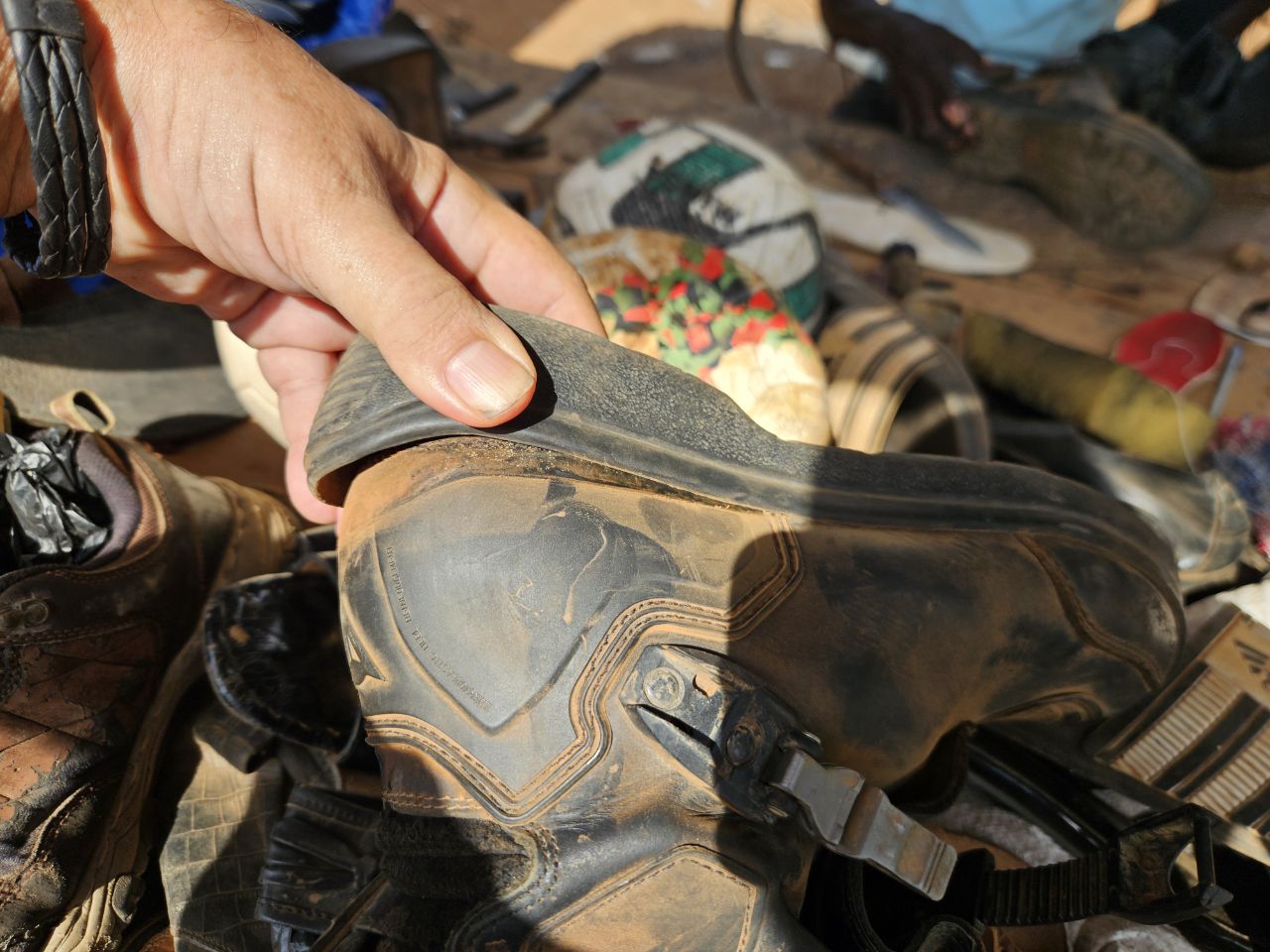
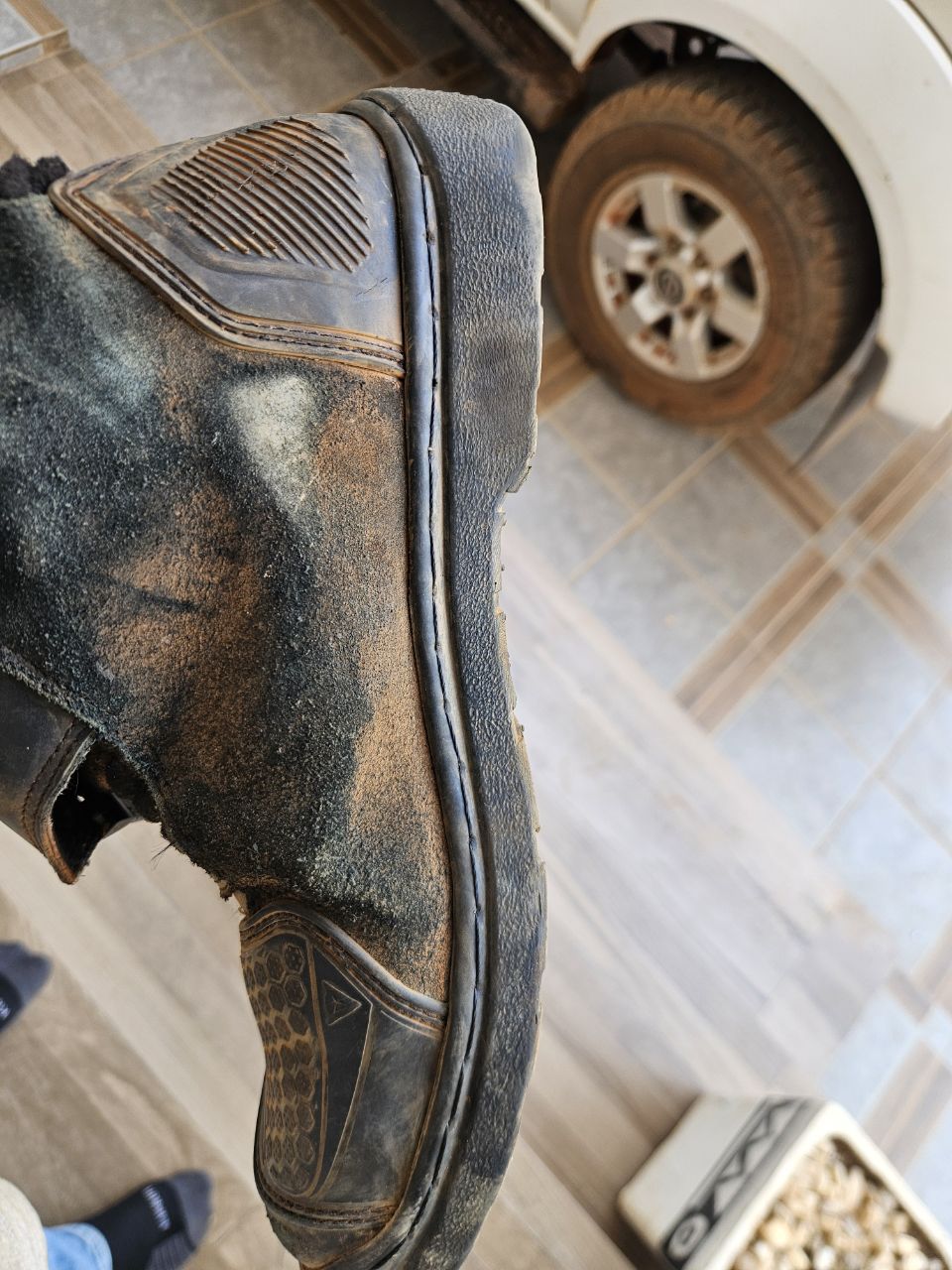
In the evening, when I take off my boots, I notice the soles are coming apart.
Another repair to plan.
Routine.
April 8, 2026 – Tanda / Bondoukou – the struggle continues
The day in numbers:
- 50 km of good asphalt
- Two police checks. The first just to chat, the second to see if I had “something” for them. In both cases, less than three minutes
- Only one meal, like the previous two days. With the heat, my body is adapting, I suppose. No feeling of hunger
- 3100 CFA: chicken attiéké and a 60 cl Coke
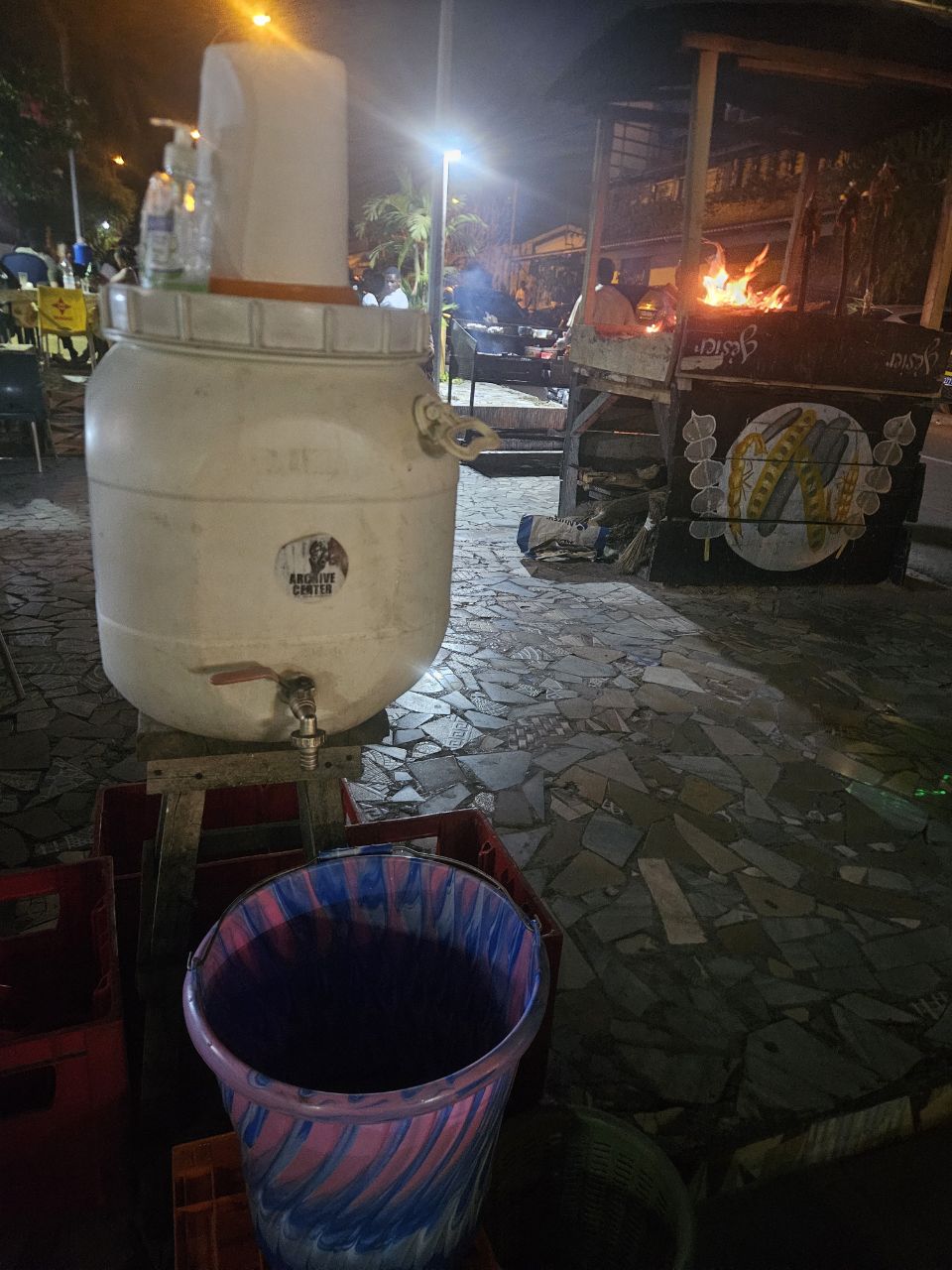
It’s 8:50 p.m. I’m writing from a roadside maquis.
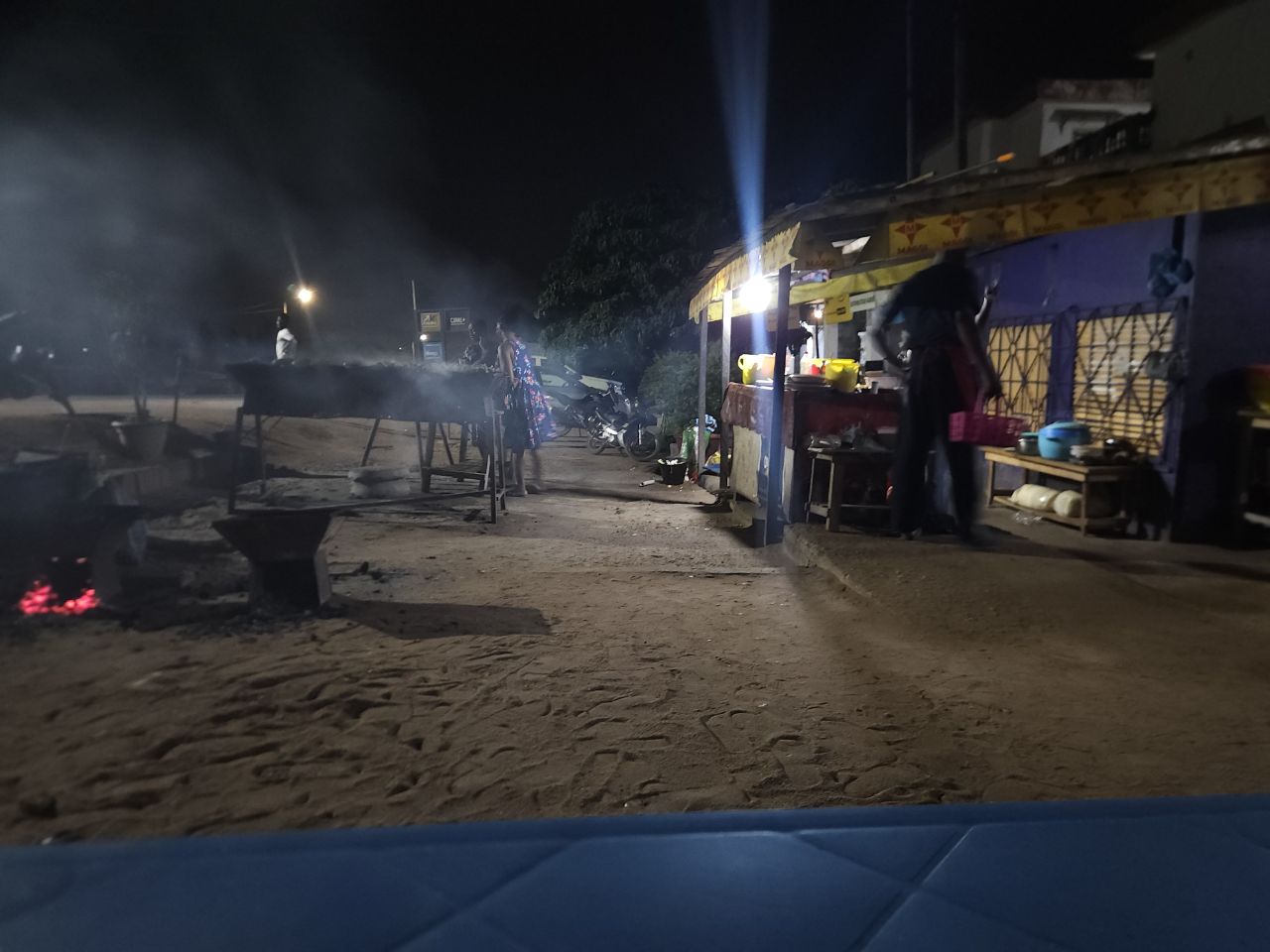
In front of me, to the left, a large metal barbecue, with a small brazier where the coals are prepared.
On the right, women are busy preparing the sides: attiéké, finely sliced onions, a few pieces of tomato.
Around me, couples, groups of friends. People eat, talk, sometimes drink a bit of wine.
The ground is bare earth. Tables and chairs are plastic.
Across the road, on the shoulder, customers have parked their “jakarta” (motorbike taxis).
This morning, the bike once again didn’t want to start easily. Then a few misfires on the road.
Maybe dirt in the fuel.
But above all, a small electrical issue: the fuse blows as soon as I switch to high beam.
A problem I already had last year.
I decide to take the time to check.
On previous trips, I had protected all connectors with silicone spray. No electrical issues.
This time, I was told it was no longer necessary with modern connectors… so I didn’t do it.
Today, after taking them apart, the conclusion is clear: they are all filled with laterite dust.
Lesson for future preparation: silicone spray. Always.
In short, the bike is back to its old tricks from last year.
It doesn’t like staying still.
Arrived on the 9th – departure on April 11 – monkey sanctuary – another breakdown. It’s starting to add up.
Day in numbers:
- 162 km in about 6 hours including border crossing, including:
- 88 km of very rough dirt tracks
- 23 km of beautiful laterite track
- 51 km of asphalt
- 1 border crossing
- 1 phone lost and found
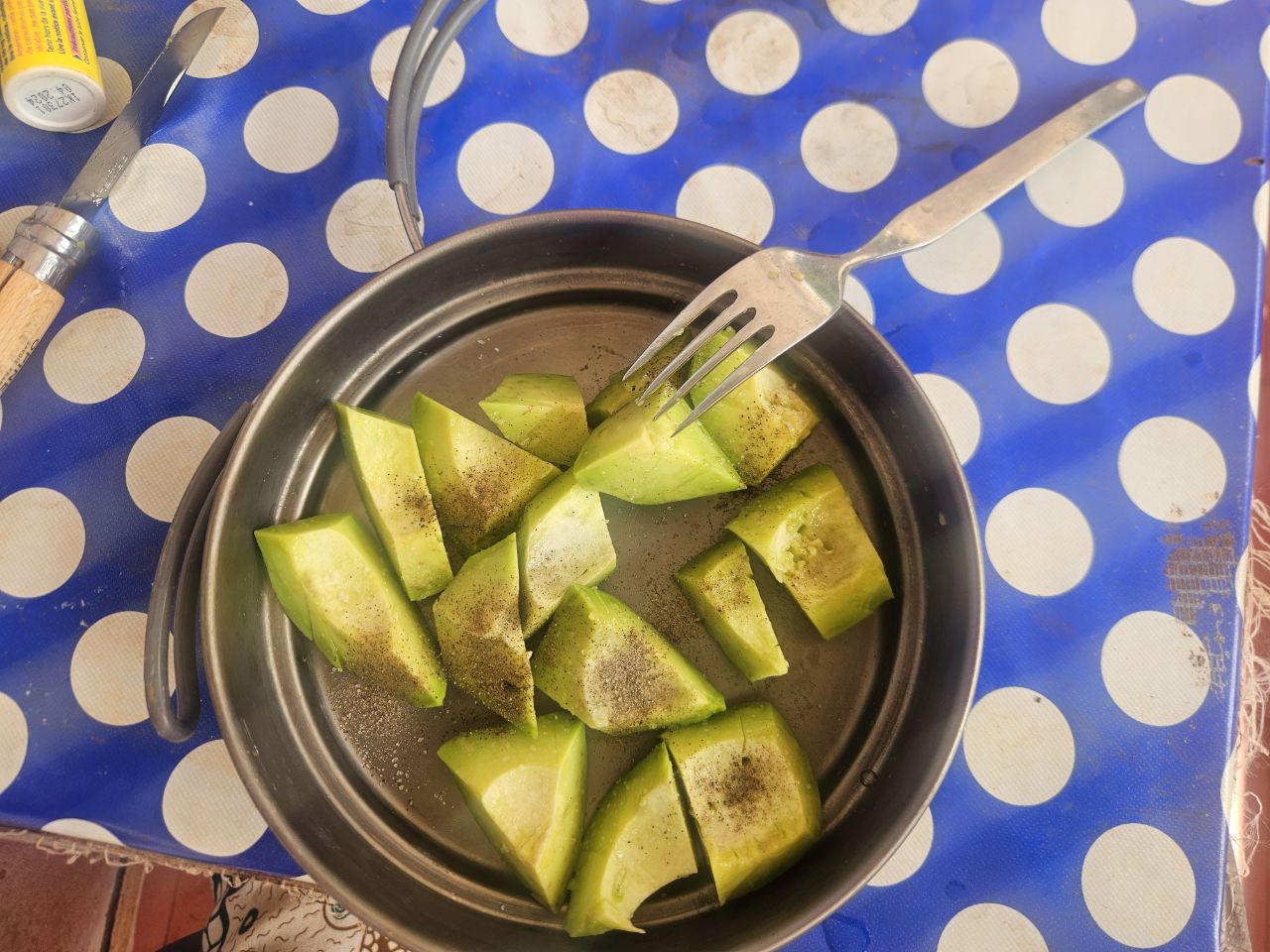
- 1 light evening meal (instant noodles and an avocado)
- 1 breakdown… in the last kilometers: hesitation under acceleration / engine misfires
As I arrive, the bike decides to play tricks on me again: it starts cutting out under acceleration. Funny detail: it broke down in exactly the same place last year.
I have to take everything apart again, not without concern. But the issue turns out to be easy to detect and fix: the battery terminals had loosened due to vibrations and shocks from the road.
April 11 – Towards Agordeke port, Lake Volta – getting worse, I’m close to heatstroke
Planned distance: 310 km
Actual distance: 141 km, including (in order):
- Good track: 6 km
- Asphalt: 70 km (to Ejura)
- Medium to difficult track (laterite and sand): 54 km
- “Hellish” track: 11 km
- Falls: 1.5
The evening before, on the 10th, the bike acted up again. On the way to the village 2 km from where I was — along this new laterite track meant to become a major road, right in the middle of monkey territory (I still don’t know which idiot came up with that idea) — it had a small misfire. Subtle, but I’m always on alert. It worries me.
Whatever happens, I leave the next morning after breakfast in the village (coffee + omelet: 30 cedis, about 2 euros).
The beginning is pleasant, a small road to Ejura. Then the track starts. It’s quite rough but manageable, despite the rear shock now being too soft. I tell myself I’ll need to adjust it in the evening.
I use both Google Maps and Maps.me as GPS. At one point, they disagree. Google sends me straight with a longer route. Maps.me suggests a shortcut to the right.
I take the right.
Big mistake.
This is no longer a track, but more like a steep forest trail carved by tractor wheels. Alternating mud — the rainy season is starting — and extremely deep sand. The bike handles it fairly well, but it’s very technical.
It takes me 42 minutes to cover… 6 km.
The problem is I can’t build speed. Sand is everywhere. Even small local bikes seem to struggle, judging by the tracks. With my loaded bike, a worn mixed front tire, even at 1.2 bar, the front wheel constantly drifts.
The only solution would be to accelerate, but it’s impossible. The spacing between ruts is too short, and some sections make any mistake dangerous. In places, there’s up to 50 cm of vertical difference between tracks. If the front wheel slips, it’s a guaranteed fall down the side.
In fact, I narrowly avoid one: the bike lies down against the embankment in a particularly steep section.
I arrive exhausted near a few huts — Berdum according to Maps.me — just before Maallu. Google even shows a bank here, which seems unlikely. I mostly hope to find a better track.
I stop in the shade to recover. I feel dizzy — slightly, but clearly. I check my blood pressure: 85/60 with a heart rate of 90, after already ten minutes of rest. Not reassuring.
I decide to extend the break. I drink, rehydrate with electrolytes given by my cousin. I hesitate between orange, peach, or watermelon. I choose watermelon. Thanks to my insulated bottle, I still have cool water.
I stay like this for over an hour. Children watch me from a distance without daring to approach. Normally I would wave them over. Today, I just want to rest.
I leave again around 3 p.m. I quickly reach Maallu. The village is traditional, no electricity. I still don’t understand how Google placed a bank here.
I try to talk with the locals, but no one speaks English. I leave again.
First mistake at that point: not refilling water. But I thought I was on a main track.
In reality, the track is barely better — if anything, worse. The sand gets even deeper.
This time, it takes me 40 minutes to cover… 4 km.
I’m exhausted. Completely. I’m reaching my physical and technical limits.
And this time, I fall.
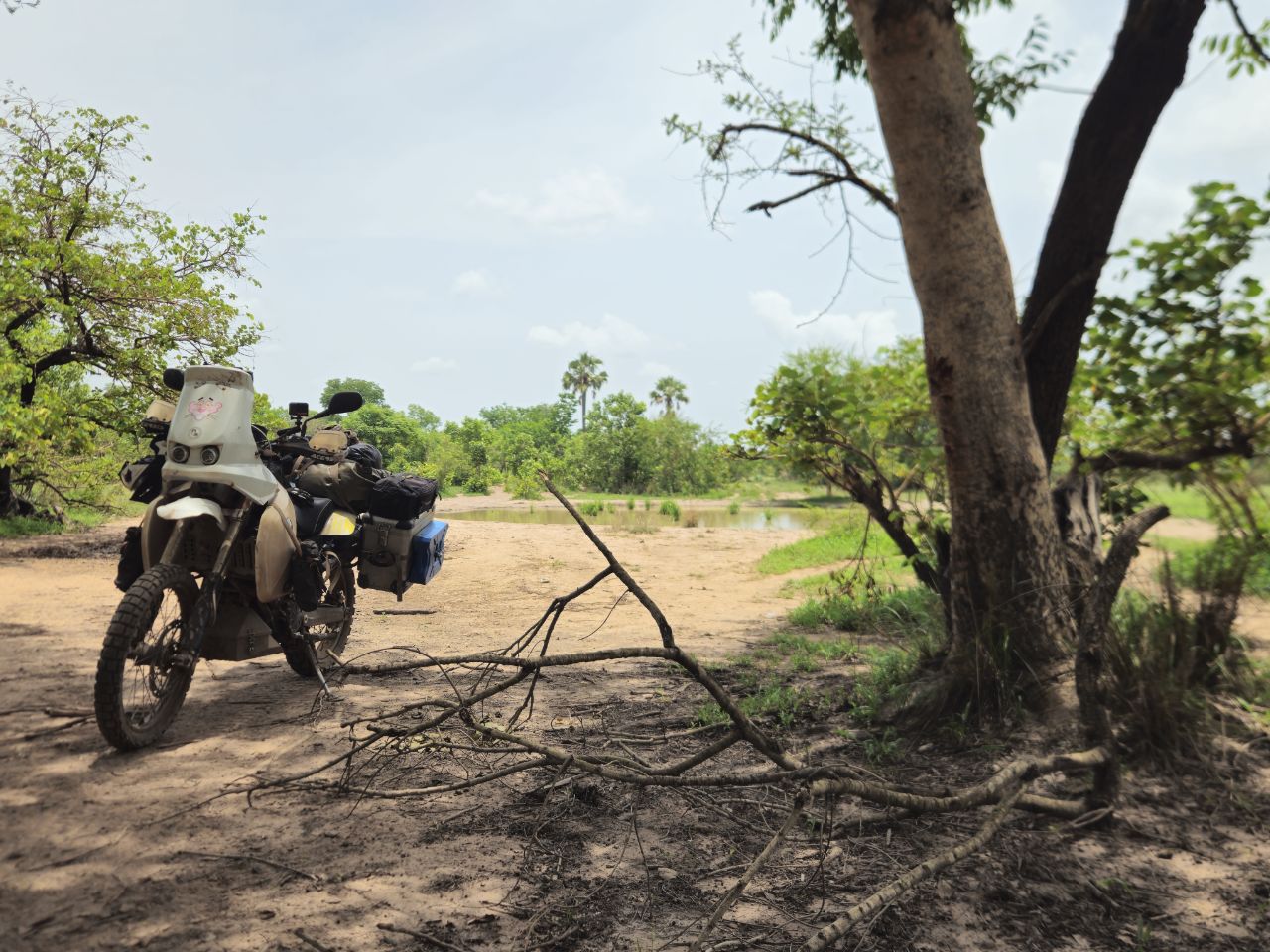
The fall isn’t serious, but it drains me completely. With a last effort, I lift the bike. And I decide to bivouac on the spot.
Two motorbikes arrive shortly after, with three people. I stop them. I know this bivouac will make me use up my remaining water, with no way to get more for the next day. Impossible.
I ask for help. Luckily, one of them, Peter, speaks English. He tells me a farmer lives about a hundred meters away and signals me to follow him.
Indeed, less than 100 meters further, we find the man. His name is Alex.
I ask him for water. He seems uncomfortable. Thinking it’s about money, I say I’ll pay.
He replies:
“Money is not the problem. Here, the only water we have is rainwater, filtered through soil and plants.”
That’s fine with me. I have a filter.
He takes me to the water source, about ten meters… from where I fell.
He invites me to stay near his hut. I decline: I’m too exhausted to walk another 100 meters.
While we talk, a violent wave of dizziness hits me. I have to sit down immediately. I can see their concern.
Night is approaching; they have to leave.
In a final effort, I stand up to please them: they want a photo with the bike. But I can barely stand. My vision is fading.
After they leave, I sit against a tree and wait for it to pass, drinking.
I set up my tent 5 meters from the track, among the trees, hoping it won’t rain — the place is clearly flood-prone.
I don’t even have the strength to heat a soup. I settle for a can of sardines.
I try to filter water. It’s so muddy that the filter clogs after three sucks, despite the pre-filter. After several attempts, I barely manage to get one liter. And I’ve already drunk more than 4 liters in the afternoon.
Night falls. The bush comes alive. The space fills with sounds I cannot identify: reptiles, amphibians, insects, birds, mammals… probably all of them.
I’m still hot. For a moment, I consider immersing myself in the water hole to cool down, but I give up. It’s Alex’s family’s drinking water reserve.
Around 9 p.m., a tractor passes. Its presence here almost surprises me.
The night is calm, except for three fairly close gunshots. Probably hunting.
April 12 – Getting out of the mess
At daybreak, the bush comes back to life and wakes me up. No way to sleep any longer.
I pack up quickly. No coffee. Just two biscuits.
I set off again.
A hundred meters further, I find Alex already at work. We talk.
He warns me: the track ahead is extremely difficult. “A very long and hard journey,” he tells me.
According to my estimates, I still have 50 to 60 km of very bad terrain. At yesterday’s pace, that’s about 10 hours. In the full heat. Probably without enough water.
Water is a real issue. I can carry 7 liters in total. But my 4.5-liter jerrycan, fixed to the side of an aluminum pannier, unbalances the bike on technical terrain.
I ask him for an alternative.
He points me toward the Seneso track — the one I should have taken instead of the Maps.me shortcut.
I decide to turn back.
It takes me 1 hour 20 minutes to cover the 17 km back to Ayinwofi. There, I finally find water and cold Coke.
The rest to Seneso and then Atebubu is easy.
I take an air-conditioned room and decide to stay one or two days to recover and think about what’s next.
Heatstroke, hypotension and nebivolol
I’m almost 64 and have been on treatment for high blood pressure for years. I take nebivolol, a beta-blocker.
It protects my heart, but limits my physical capacity.
This isn’t the first time it’s been an issue. Eight years ago, on the Pamir Highway, I had to stop taking it completely for a while: altitude combined with the medication caused constant shortness of breath.
Over the past two years, I’ve adapted: I take it in the evening, at half dose. The peak effect comes at night, and physical activity naturally lowers my blood pressure during the day.
But this time, I had just started riding again. I was still on a full dose, taken in the morning.
That partly explains the episode. It’s not the first: I’ve had two or three similar ones. In those cases, I rest in the shade for two days. And it passes.
Observation
A small remark, not directly related.
It’s striking how much local cultures have been shaped by different external influences.
In Ghana, most first names are English. In Côte d’Ivoire, Benin, or Togo, they are more often French. In Senegal and Mali, they are often Arabic. In Guinea-Bissau or Angola, Portuguese.
April 13–14 – Rest in Atebubu – time to choose
Day in numbers:
- Km: 0
- Flat tire: 1
- Decision: not fully made yet
This morning, waking up around 6 a.m. — it’s crazy how early I wake up while traveling — I still haven’t made a decision about my direction.
First observation: a night under a fan (I turned off the AC, too strong) helped me recover well.
Second observation, less pleasant: my front tire is flat. I admit I don’t feel like fixing it myself, even though I have everything needed. So I inflate it and go looking for a repair guy.
I find one 100 meters away. But he mainly works on trucks and doesn’t have the tools to remove my wheel. He points me to another shop across the street: they can remove it, and he’ll repair it afterward.
So I literally cross the street.
The wheel is off in 5 minutes. Then the tire repair guy takes over. I give him a new inner tube and ask him to fix the old one. He does. The leak comes from a previous repair that failed — probably due to heat and the very low pressure I used in the sand.
The job is done quickly and well (even if his sanding method is… unconventional: he uses a grinder). Less so for the team across the street, who almost strip the thread on my axle — I have to step in.
(Side note: it’s 9:23 p.m. and a violent tropical storm has just started. In moments like this, I’m glad not to be under a tent…)
Later, around noon, I look for somewhere to eat. Unlike Côte d’Ivoire, where maquis are everywhere, places to eat here are much rarer and, it seems to me, far less frequented.
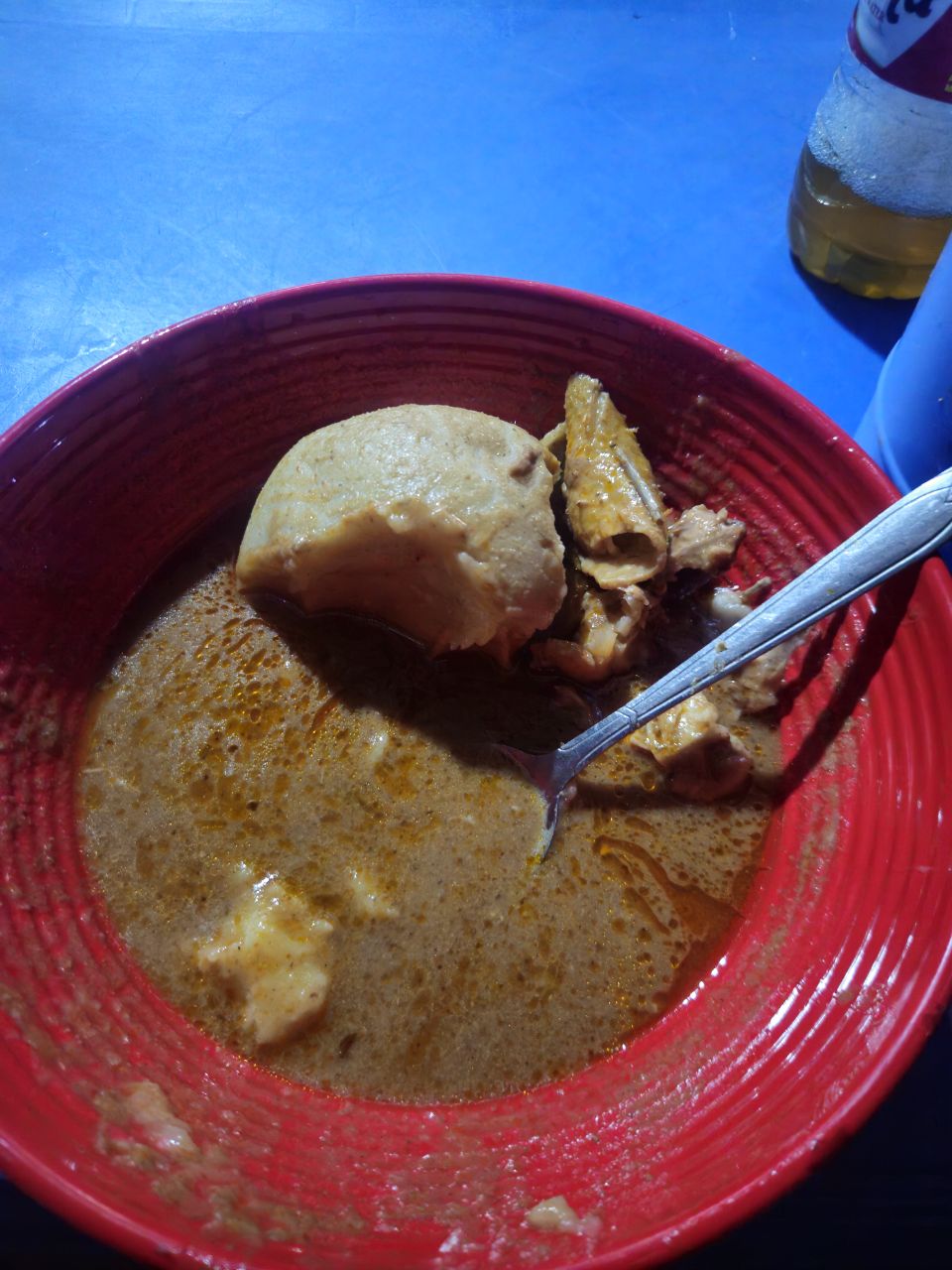
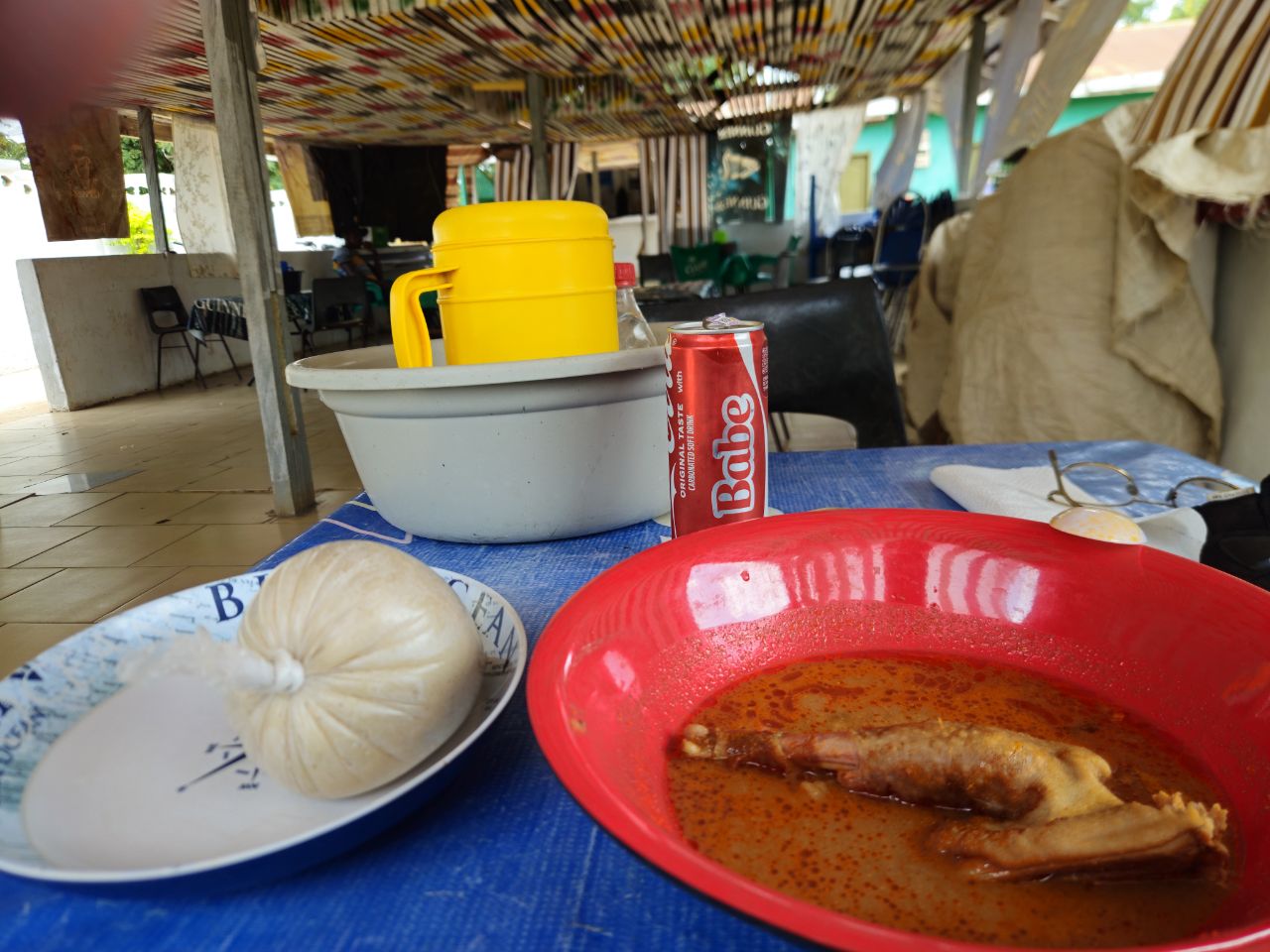
The food is also quite different. No grilled chicken with attiéké here, but rather meat in sauce — always the same one, it seems, whatever the meat (or fish) — served with banku, a mix of fermented maize and cassava, presented as a smooth, dense white paste, cooked in boiling water.
It’s not bad, but I wouldn’t call it a festive meal.
At lunch, I choose chicken (there’s also goat, agouti, mutton, fish…). I get a drumstick from a real “bicycle chicken” from the old days (25 years ago): it ran so much there’s almost no meat on it.
Then I have to think about what’s next.
Option 1: try again to reach the Agordeke landing point. From where I am, it doesn’t seem easy. There might be a track further north than the one I tried. That said, the natural and most used route seems to be much further south, involving a first ferry at Adowso. This option doesn’t seem appealing.
Option 2: head to another landing further north, in Yeji. From there, two possibilities: a simple crossing to Old Makongo, or boarding the Yapei Queen, which travels the entire Volta Lake down to Akosombo. The journey takes two days.
I jump with joy discovering this option — it instantly becomes my favorite. Unfortunately, I learn the boat is currently under maintenance and not operating.
Option 3: head to a third landing at Krachi, between the two. It leads to Kete-Krachi. It’s closest to my initial plan, and the track is a standard laterite road — theoretically easy, provided the current storm hasn’t damaged it too much. But it’s the start of the rainy season, and from experience, the ground still absorbs water fairly quickly.
This option would allow me to reach Togo quickly, then Benin, to revisit the family I stayed with in Tata Somba in the north. From there, I could go down to Cotonou to retrieve tires and spare parts I left there a year and a half ago.
But… there’s a catch: this option doesn’t pass through Lomé, where a friend — thanks Fredo, you were already there 25 years ago and still are to send me parts in Togo 😉 — has sent me a part I need to pick up.
Which brings me to…
Option 4, the one that disappoints me a bit but is the most practical given the circumstances: go south, bypass the lake, and enter Togo from the south to collect the part. Then head to Cotonou and organize my crossing of Nigeria.
This is the most reasonable option given my timeline.
I’ll decide tomorrow between option 3 — the emotional one — and option 4 — the rational one.
April 14 – Towards Lomé – trouble again
The day in numbers:
- Distance: 234 km of mostly good asphalt (just a few rough sections, nothing serious)
- Flat tire: 1
- Detection of a potentially more serious issue: 1
Up at 7 a.m. A massive storm hit during the night — the rainy season is beginning.
I start by checking the bike. Tire pressure is fine, but since I’ve decided to take the shortest route to Lomé and ride on asphalt, I adjust to 2.3 bar front and rear.
But surprise: it looks like someone siphoned part of my secondary tank. Last night I filled both tanks. The main one — under the seat — is locked, but not the secondary one, which actually has the larger capacity. I ride to a gas station to refill and check the missing amount: 3 liters. That’s the equivalent of a local bike’s tank. Someone got a free refill. It had never happened to me before… or maybe I just hadn’t noticed.
I had planned to have breakfast where I ate the day before, but the owner seems to have overslept. Never mind, I’ll find something on the road.
So I set off. The road is clear and overall quite good. And for once, thanks to the storm, it’s not too hot. Everything looks promising. With a bit of luck, I’ll reach somewhere near the Togo border tonight, and be in Lomé tomorrow.
As for the lake, too bad — I’ll come back. The two-day cruise really appeals to me, as does exploring the surroundings… but with a lighter bike. Who knows, maybe I’ll do it one day with my 400 XR. That would be the perfect bike for these small tracks and would turn what was a struggle into pure fun.
For now, I ride, and the ease of the road gives my body a break — I have to admit it.
In Ejura, I spot a pizzeria. Why not… I stop. The waitress takes my order: a Coke and a meat pizza. The Coke arrives quickly… but the pizza takes forever. After a very long half hour, she comes back to tell me there’s a power cut: no way to cook the pizza.
I pay for the Coke and hit the road again. A few kilometers later, I buy four boiled eggs from a roadside vendor who flirts with me. Apparently, I’m very handsome (I swear, she actually said that!).
I laugh, she laughs, I say goodbye and ride off, stopping a bit further in a schoolyard to eat my eggs. Well, a yard… more like a small wooded park around the school.
Then I continue south. Gradually, things change. Especially the towns: more dynamic, more chaotic, more alive, dirtier.
In the south, it’s the “new Africa” — increasingly westernized. Gas stations are bigger and include shops, similar to those in Europe or even Côte d’Ivoire. With one notable difference: I don’t see any seating areas where customers can sit and consume what they’ve bought.
Anyway, everything is going well… until suddenly, as I finish a short laterite descent — the only one of the day — the steering becomes stiff. I stop and realize, in disbelief: my front tire is flat! Again! Even though I had just installed a new tube.
This can’t be happening… at this rate, I should apply for a role in a remake of The Goat!
I roll about twenty meters to get into the shade. The road here is wide and not very busy.
Step 1: take off my gear.
Step 2: remove my duffel bag from the seat.
Step 3: put the bike on its center stand.
First difficulty: I can’t do it alone. I had this stand installed for situations like this, but it’s designed for the bike in its original configuration — about 5 cm higher (I lowered it so I can put my feet on the ground while traveling). That has an advantage: once on the stand, the bike sits very high. But also a downside: it’s very hard for me to get it onto the stand alone.
No problem, I wave down a passing taxi and ask for help. Done in two minutes. Then I start removing the front wheel. No difficulty here — the longest part is just getting the tools out.
As I’m about to take out the tire levers, four young guys pass by in a three-wheeler. The oldest is maybe 18, the youngest around 12.
The oldest offers to take my wheel and have it repaired in the nearby village. I ask the price: 20 cedis (about €1.50 — yesterday I paid 50 for the same thing). I give him the wheel and my last inner tube (I had two spares). He leaves with the second oldest. The two younger ones stay.
We chat. I give them some St Michel biscuits (bought in Abidjan) and water. Two more kids of the same age come out of the bushes.
While waiting, and looking at my fork, I understand why they had so much trouble reinstalling the wheel yesterday. One of the tubes slides freely, unlike the other. When I push it back up, it makes a clunking noise I don’t like at all.
I call Riad for advice. He confirms it’s not normal and that it needs to be taken apart. I ask if I can keep riding: “yes, but no off-road.”
Meanwhile, the two guys return and help me put the wheel back on. We struggle a bit — we have to force it, since the two fork legs are now vertically misaligned.
As I get back on the road, I realize that, in the end, this second flat tire was actually a blessing: without it, I wouldn’t have been forced to remove the wheel myself, and I wouldn’t have discovered this potentially serious issue.
So… on iOverlander, I found a mechanic in Accra, specialized in suspension and hydraulic systems. He recently rebuilt the rear shock of a T7. He should be able to help me. I’m 140 km away.
Tomorrow: heading to Accra to fix this new problem.
April 15 – Towards Accra
The day in numbers:
- Distance: 143 km, mostly asphalt
- Fall: 1
The ride was uneventful… just boring.
I honestly don’t understand travelers who cross Africa sticking to coastal roads. There’s not much interest.
Boring and dangerous. At best, you deal with chaotic traffic. At worst, chaotic traffic combined with terrible roads.
I had both.
In the last 25 km or so, it alternated between highway and wide rocky dirt tracks alongside a highway under construction. Mostly crawling pace due to traffic jams. Not ideal with a loaded bike.
You never know when the car in front will stop. If it happens when your bike is perched on a bump with holes on both sides, you risk falling — your feet can’t reach the ground. The bike starts tipping, and with the weight, you might not be able to hold it.
It almost happened countless times over the years. But I always managed to avoid it. Always. Until yesterday.
The ground was muddy and slippery — a water truck had just sprayed it to reduce dust. The car ahead stopped. So did I. My foot slipped… and down I went.
No injury, but still a fall.
A rider behind helps me lift the bike. A truck driver points at my front tire and says: “bad tyre.” I know, my friend… but today, it wasn’t the tire — it was my legs being too short.
Apart from that slightly frustrating moment, the ride went smoothly.
By late afternoon, I arrive at a place found on iOverlander.
I rarely use iOverlander for accommodation. It’s very useful — I found both this mechanic and the one who rebuilt my engine in Nepal through it — but it has one drawback: it concentrates all travelers in the same spots.
Like animals at a watering hole.
Sometimes practical, but it limits the experience. I mostly use it when I feel like meeting other travelers. And sometimes… it’s nice.
It’s all about balance.
And tonight, I wanted a chill place with fellow travelers.
And I found exactly that.
April 16 – Accra – Fork repair
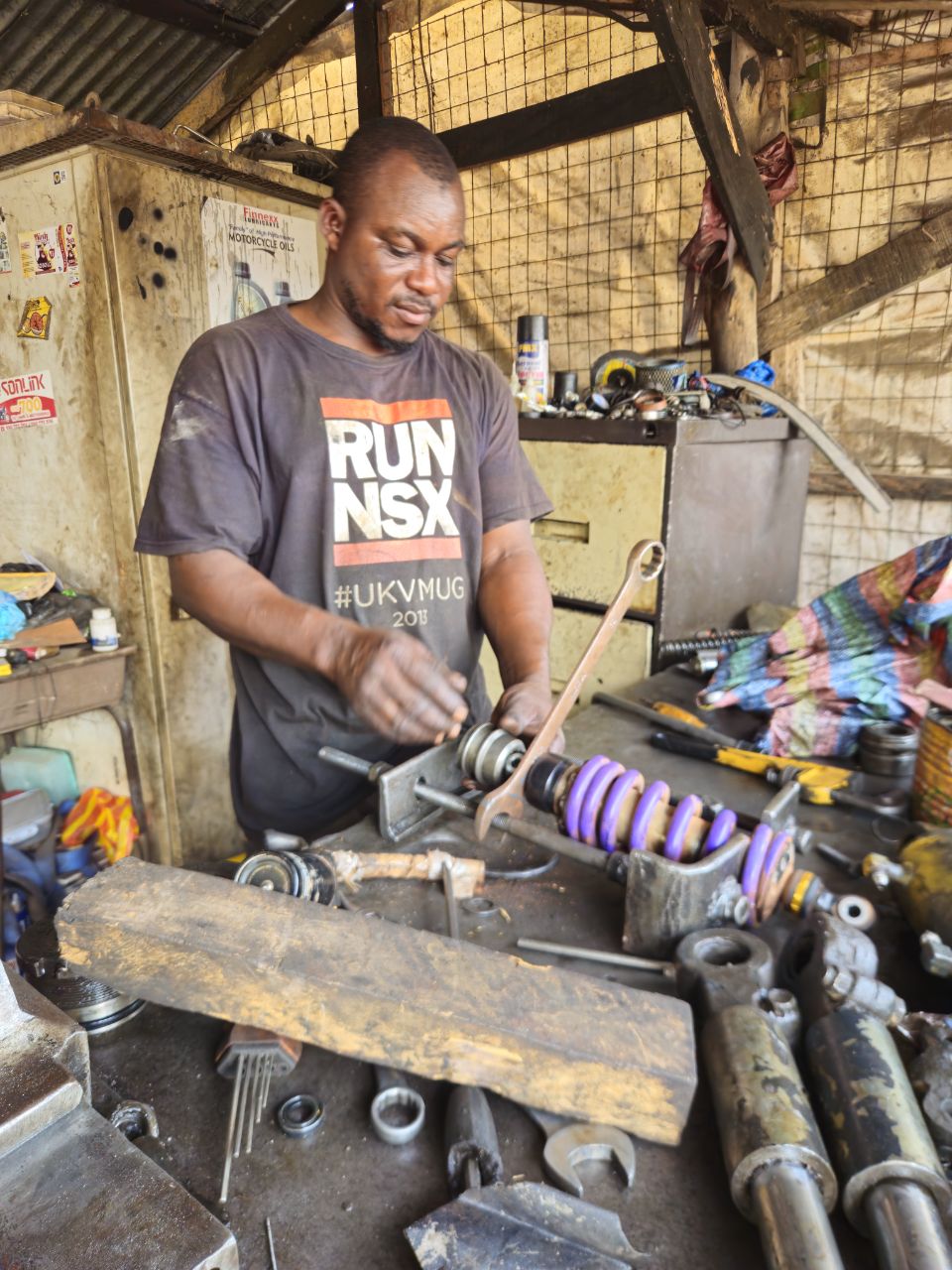
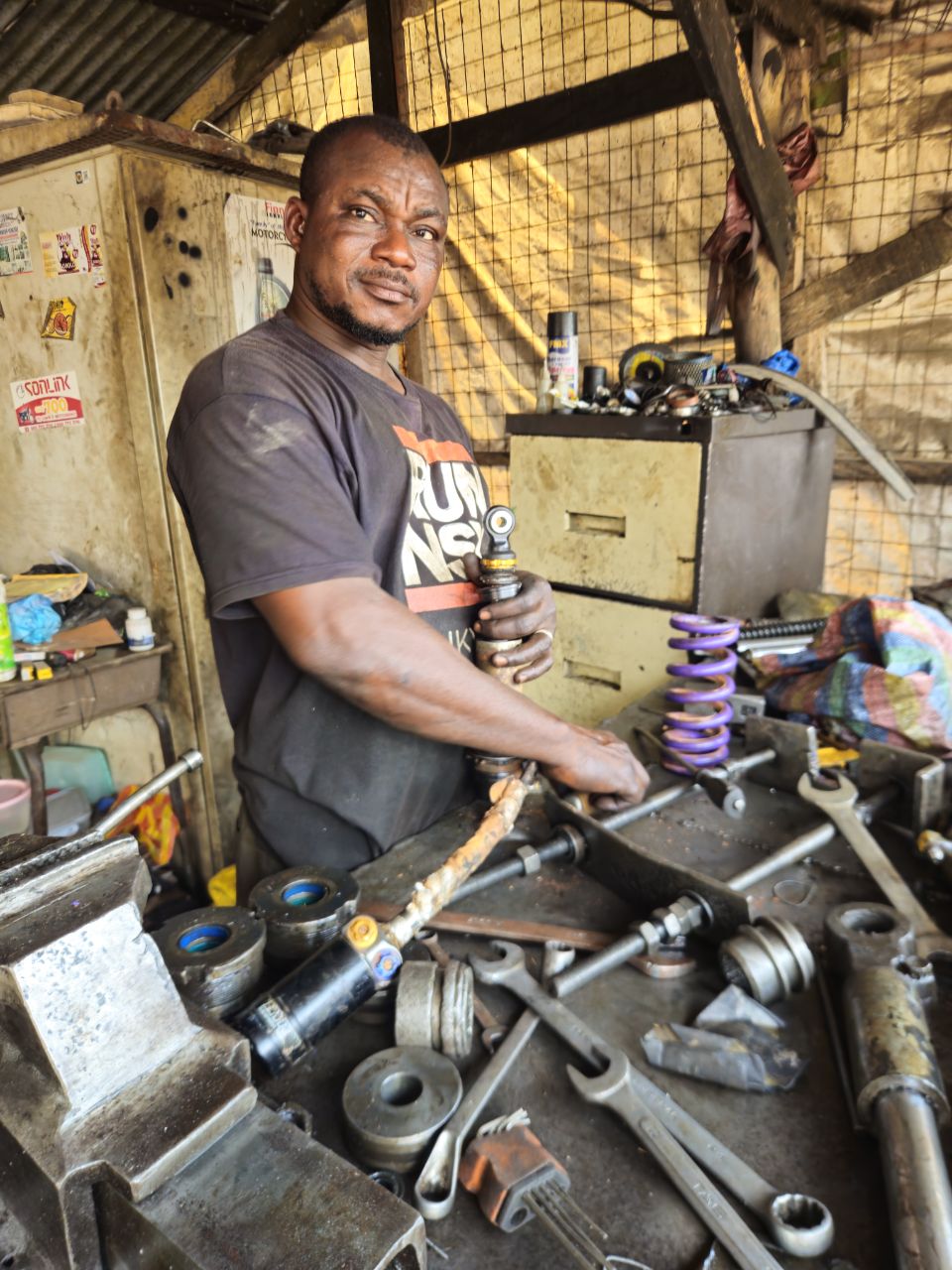
His name is Rachid. The mechanic I found on iOverlander, apparently specialized in suspension, forks, and hydraulics in general.
He told me he’d be at his shop around 10 a.m. I take my time, start the morning with a swim. My body appreciates it.
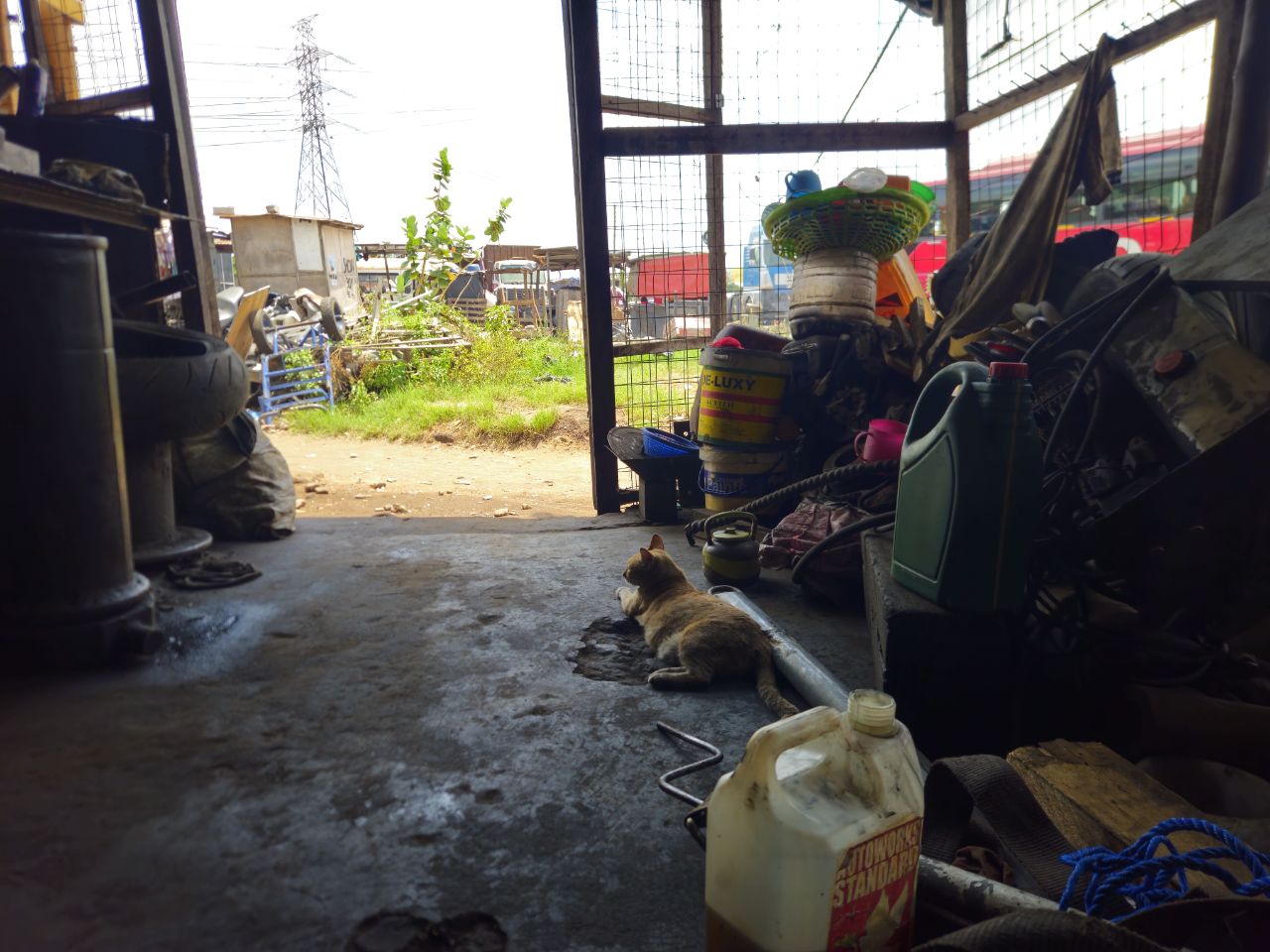
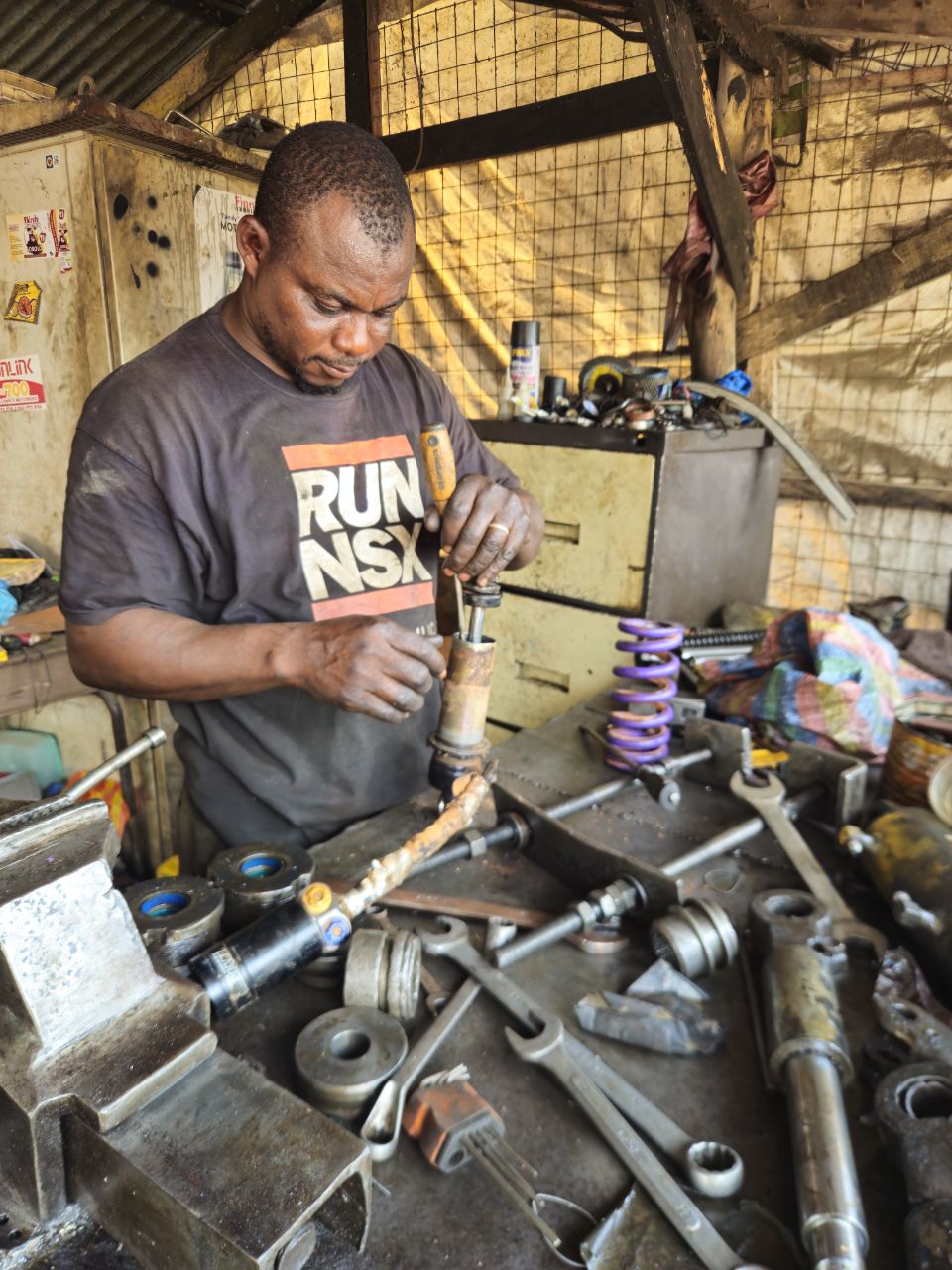
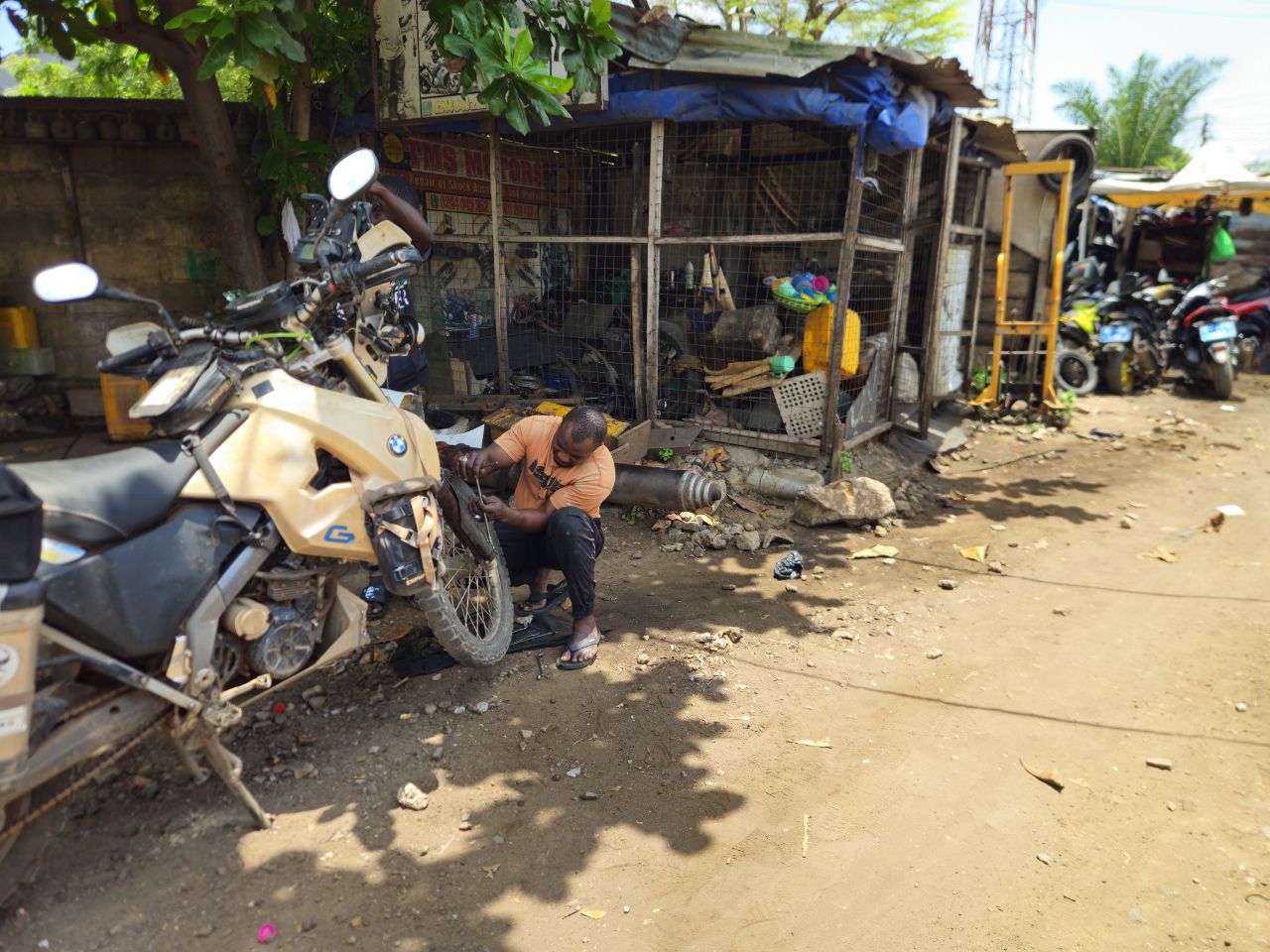
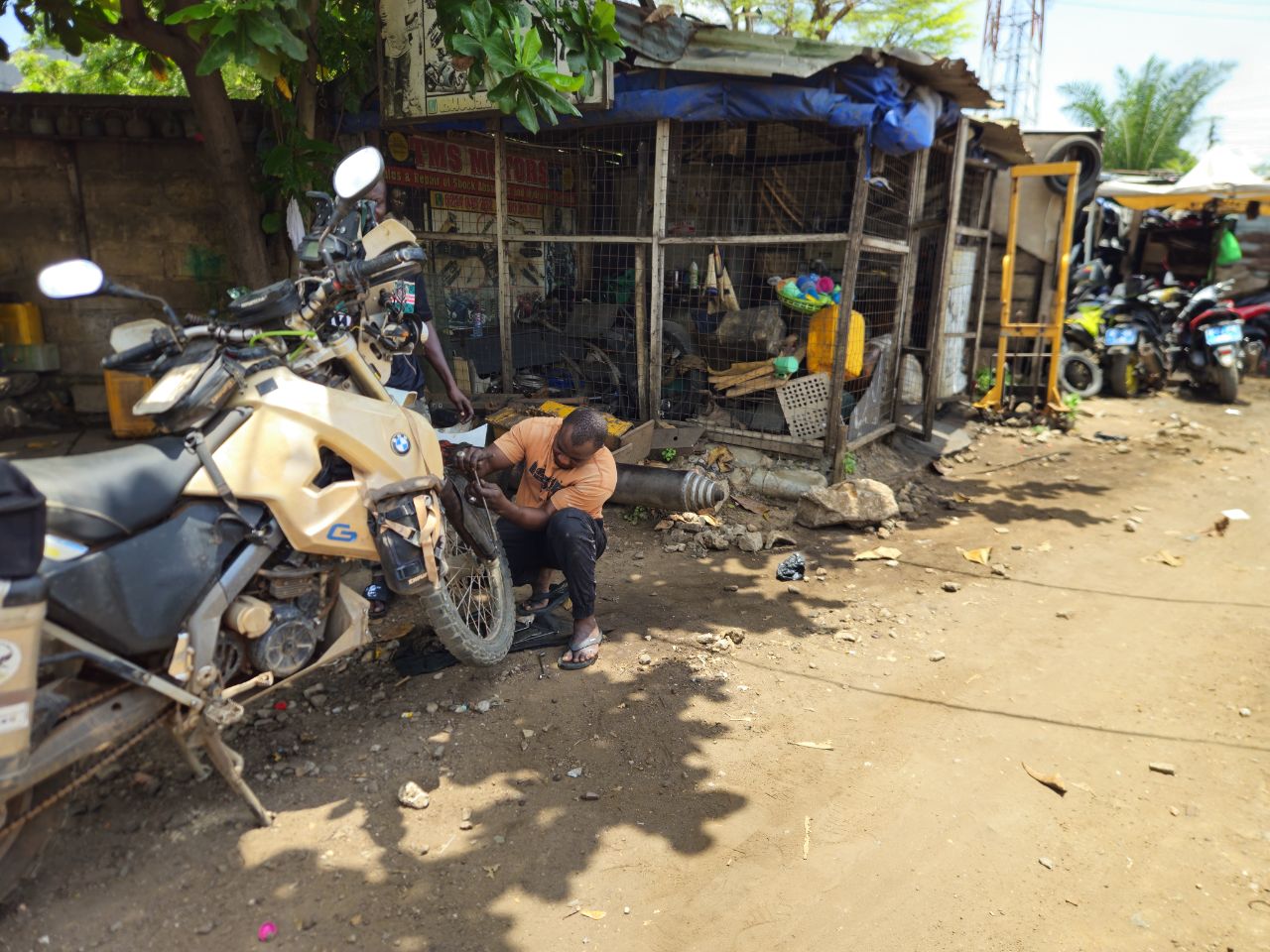
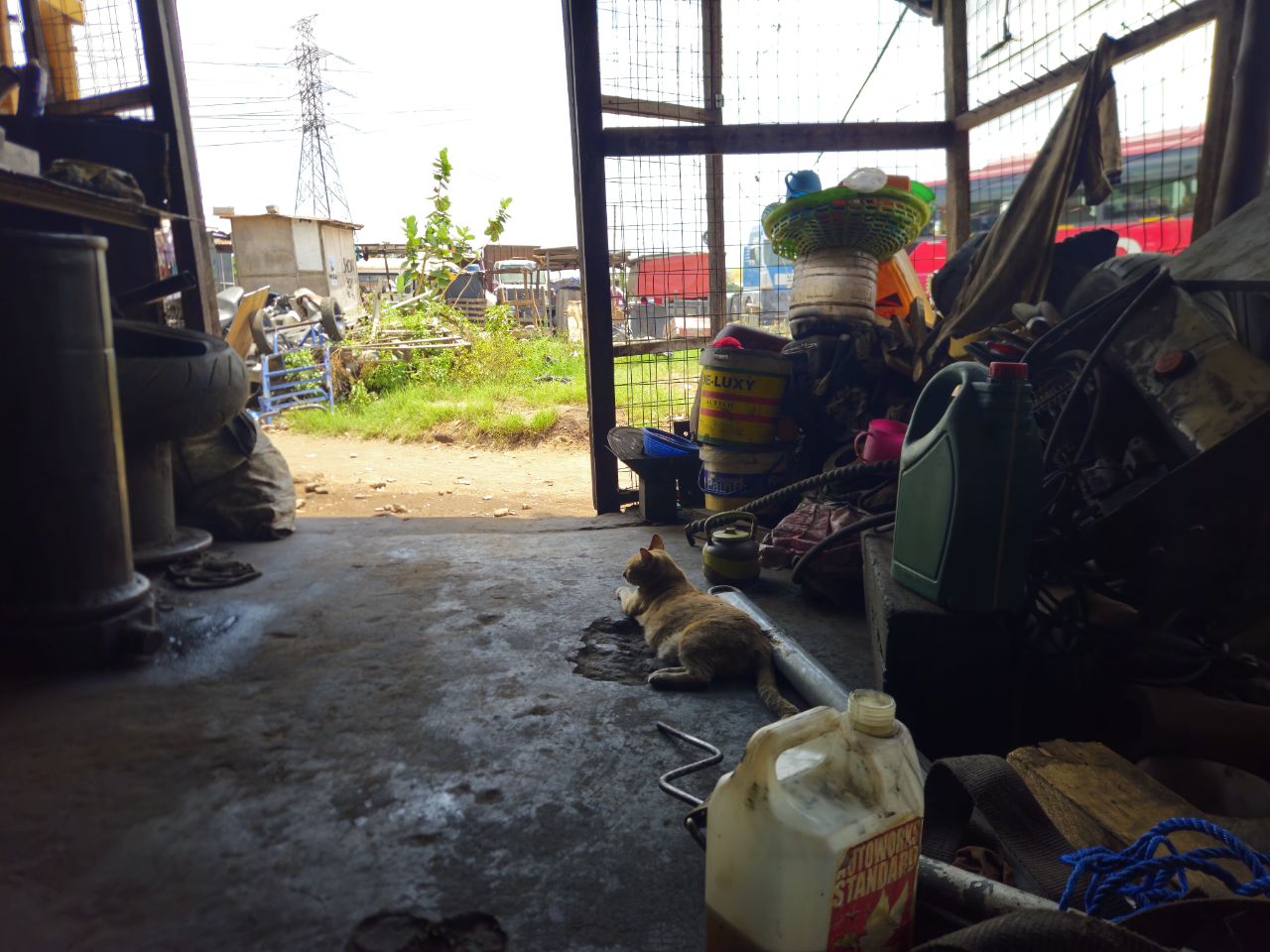
I arrive around 10:30. He’s not there yet. His assistant is sitting on a stone. The area… looks like an area. And the shop looks more like a wire-mesh chicken coop than a workshop. Three ginger cats are waiting.
Rachid arrives shortly after on his scooter. He seems nice, though I’m not sure if it’s natural calmness or the effect of some fragrant substance.
He asks me to sit and tells me he’ll eat first.
His assistant brings two bottles of cold water — one for him, one for me.
Rachid eats his banku with sauce and meat. We chat.
Then he looks at the bike. Calm. Focused. He goes to his bench, selects his tools. Still calm, he dismantles, fixes the issue (a rod that had come loose inside), and reassembles.
Less than an hour later, the bike is ready.
He asks for 500 cedis (€38). I give him 50.
Before I leave, he notices my rear shock is very soft. Too soft. He offers to fix it for €70. I hesitate. I tell him I’ll think about it and maybe come back tomorrow.
Travel has taught me one thing: trust your lucky star, fate. That flat tire led me to discover the fork issue — when I had decided, almost against my instinct, to rush toward Togo. That breakdown brought me to Rachid. He fixed it without hesitation.
This soft rear shock has been a problem since the start of the trip despite two spring changes. I curse Hyperpro for their lack of seriousness — at least in my case — and questionable business ethics.
Anyway… tomorrow morning, I’m going back to see Rachid. You have to catch the wind. Balloon pilot’s word.
I’ll also stop by another shop to buy a new front tube.
April 17 – Accra – Rear shock repair – The end of the troubles?
So I decided to go back to Rachid. Good decision: once dismantled, we saw the shock had started leaking. That explains everything.
Rachid fixed it all, and now it feels like I have a new bike that glides over bumps and holes.
The shock — a reinforced model — has only 25,000 km.
Africa wears everything down.
Including the rider…
A week ago I struggled to button my pants. Today, they’re starting to fall down…

No Comments