
Cet article est également disponible en :
August 17, 2026 – Leaving Yaoundé
He who watches the weather too closely stays at the bar.
My friend Didier (Les 2 Nomades) reminded me yesterday of a saying his grandfather, who was a sailor, used to quote:
“He who watches the weather too closely stays at the bar.”
I thought he had a point.
Because as far as the weather was concerned, things weren’t looking great.
And as for sleep, things weren’t much better either: I finally fell asleep at five in the morning and woke up with a start at nine, even though I had wanted to leave by eight at the latest.
So leaving was… complicated. Very complicated.
The bike was almost ready, but it took me forever to get myself organized. I had to kick myself into gear.
I had planned a short 160-kilometer stage, about three hours of riding, including a good hour just to get out of Yaoundé.
Leaving at one p.m., I knew I would arrive around four, maybe a little later, and with the weather forecast, there was a good chance I would get absolutely soaked.
So I had put my rain jacket somewhere easily accessible, on top of the panniers, above the luggage.
As for rain trousers, I’ve given up on those a long time ago. They drive me crazy because I have to pull them on over my motorcycle boots.
So unless it’s really cold, I’d rather get wet and dry off afterward.
In Africa, that’s generally not a problem.
But in the end, the ride went perfectly well.
Not a drop of rain.
I even got a little sunshine.
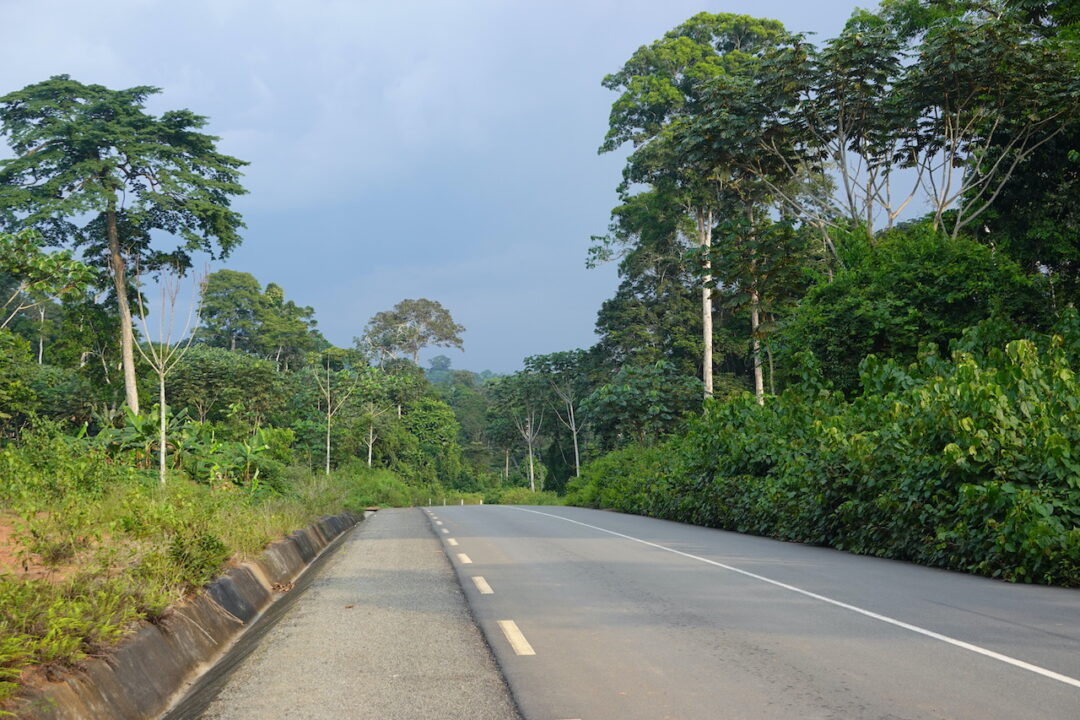
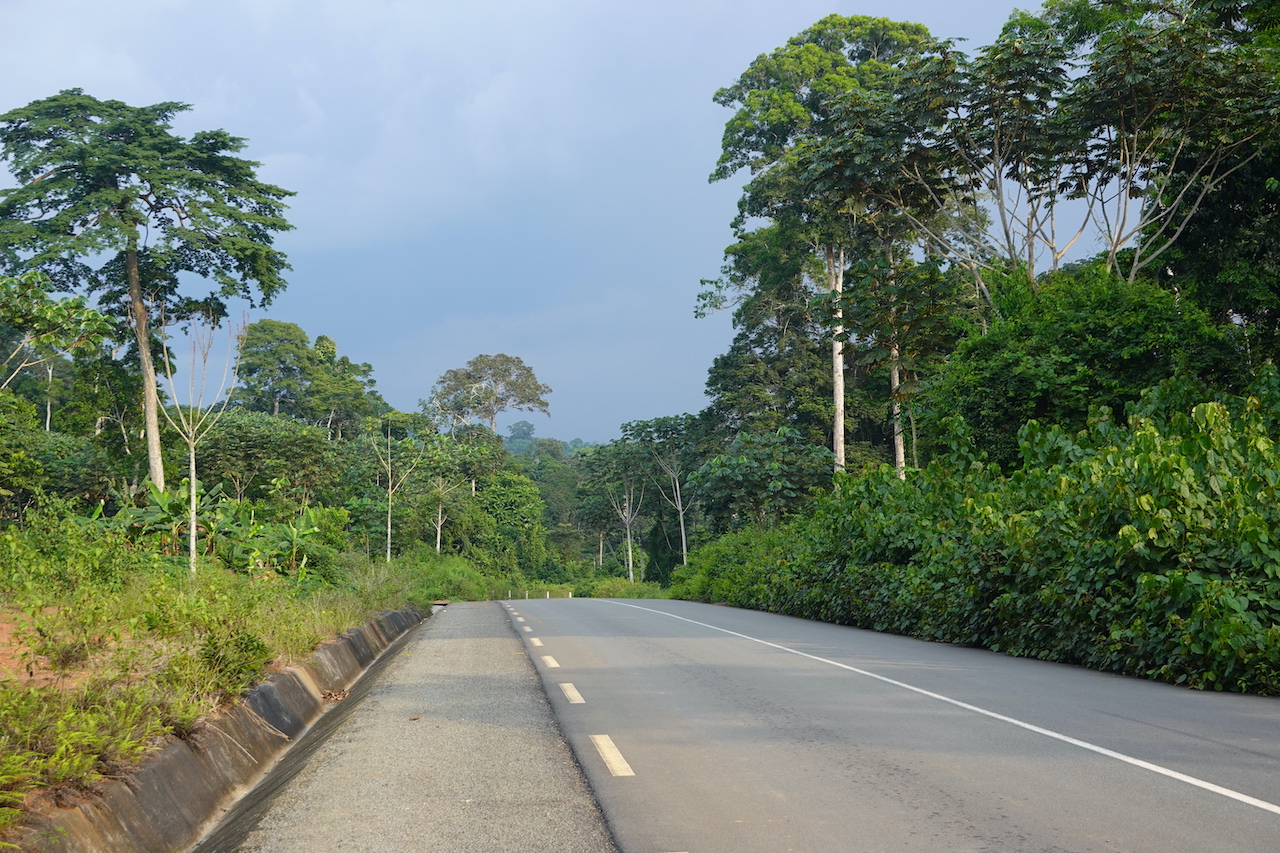
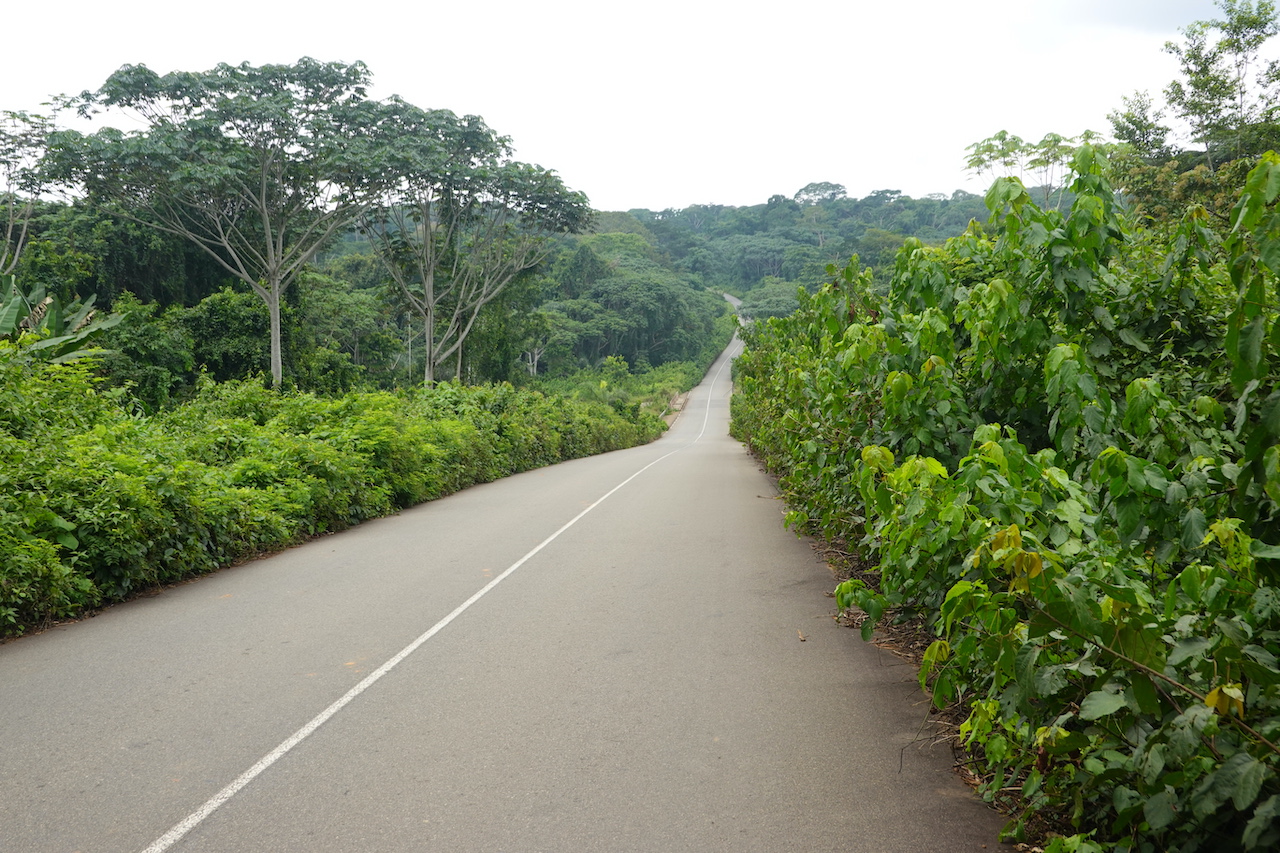
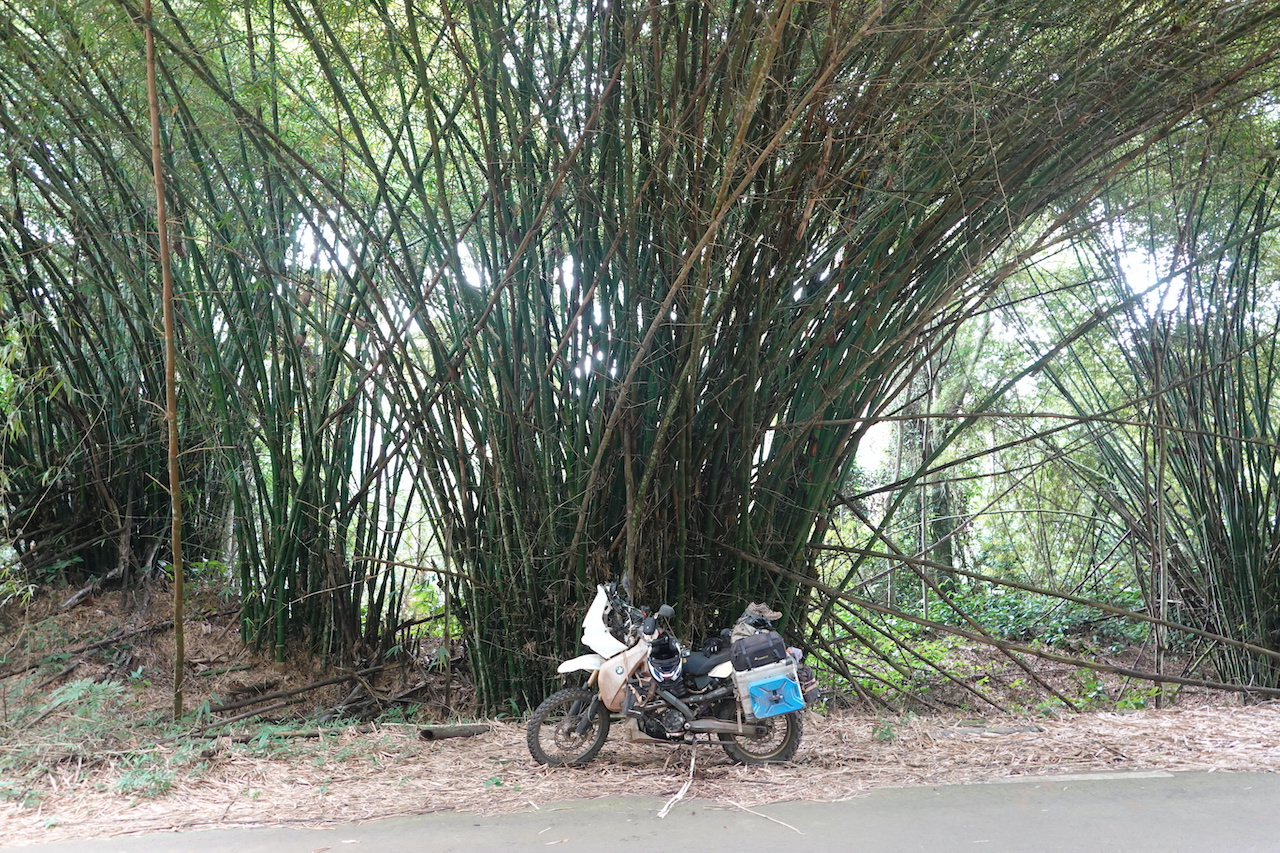
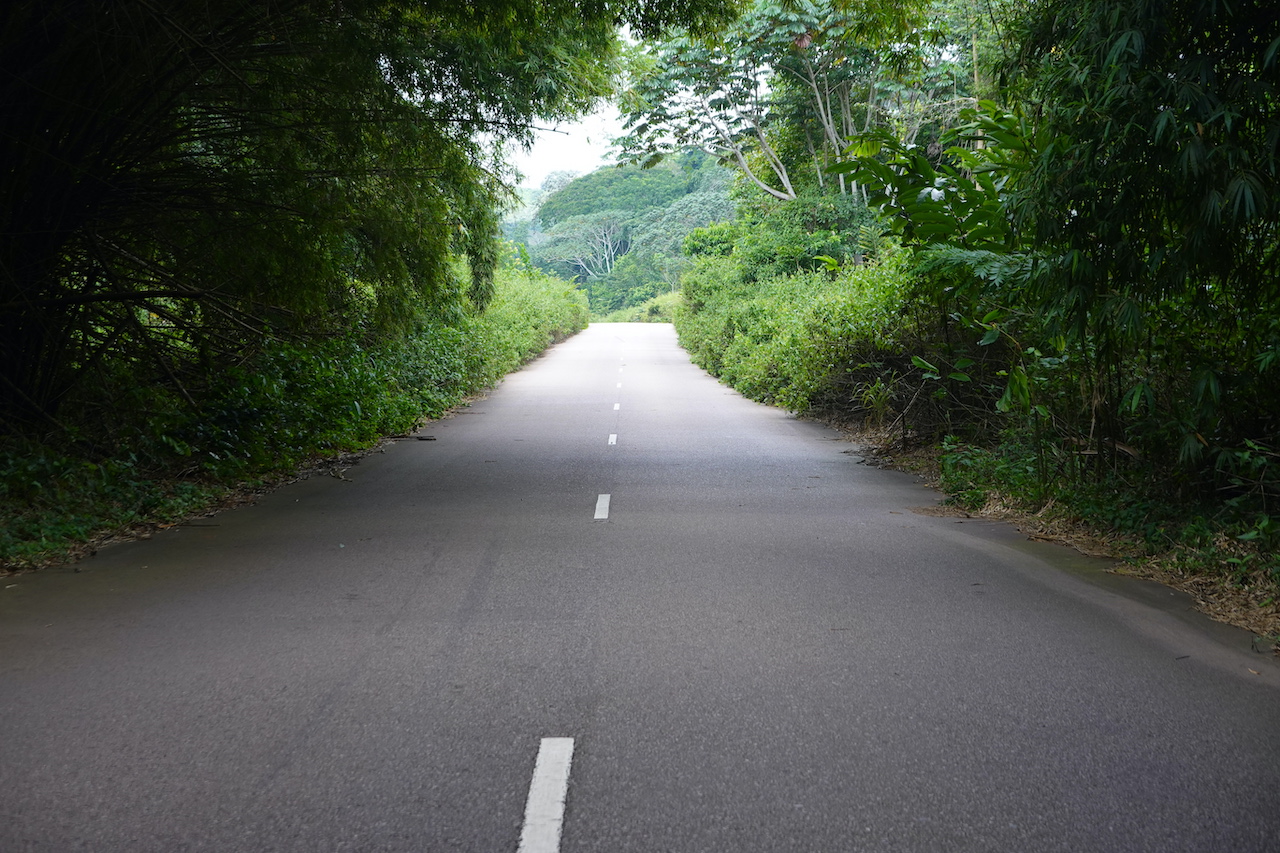
The road itself was a bit chaotic at first, obviously, getting out of Yaoundé, but then it became really pleasant, through a magnificent, incredibly green landscape.
And above all, there was brand-new asphalt.
Which, in Cameroon, probably means that in five years it will be completely wrecked… but for now, it’s like riding on a billiard table.
I filled up: 840 CFA francs a liter for premium petrol, or about €1.30 a liter.
I didn’t fill the auxiliary tank or the jerrycan. I’ll do that tomorrow.
The bike itself is behaving perfectly.
No problems whatsoever.
It’s just that I’ve got out of the habit of riding with so much weight.
I really felt it during the first few kilometers.
I need to find a way to get rid of about twenty kilos of luggage. It wouldn’t exactly be a bad idea.
The villages are pretty much as I remember them.
Very clean, with houses built on a rectangular layout along the road, made of bricks for the nicer ones, concrete blocks for the others, or mud.
The roofs are generally corrugated metal.
But there’s one major difference compared with what I remember from twenty years ago: the road.
Back then, the dirt road was part of the village: it went right through it, blended into it, passed between the houses.
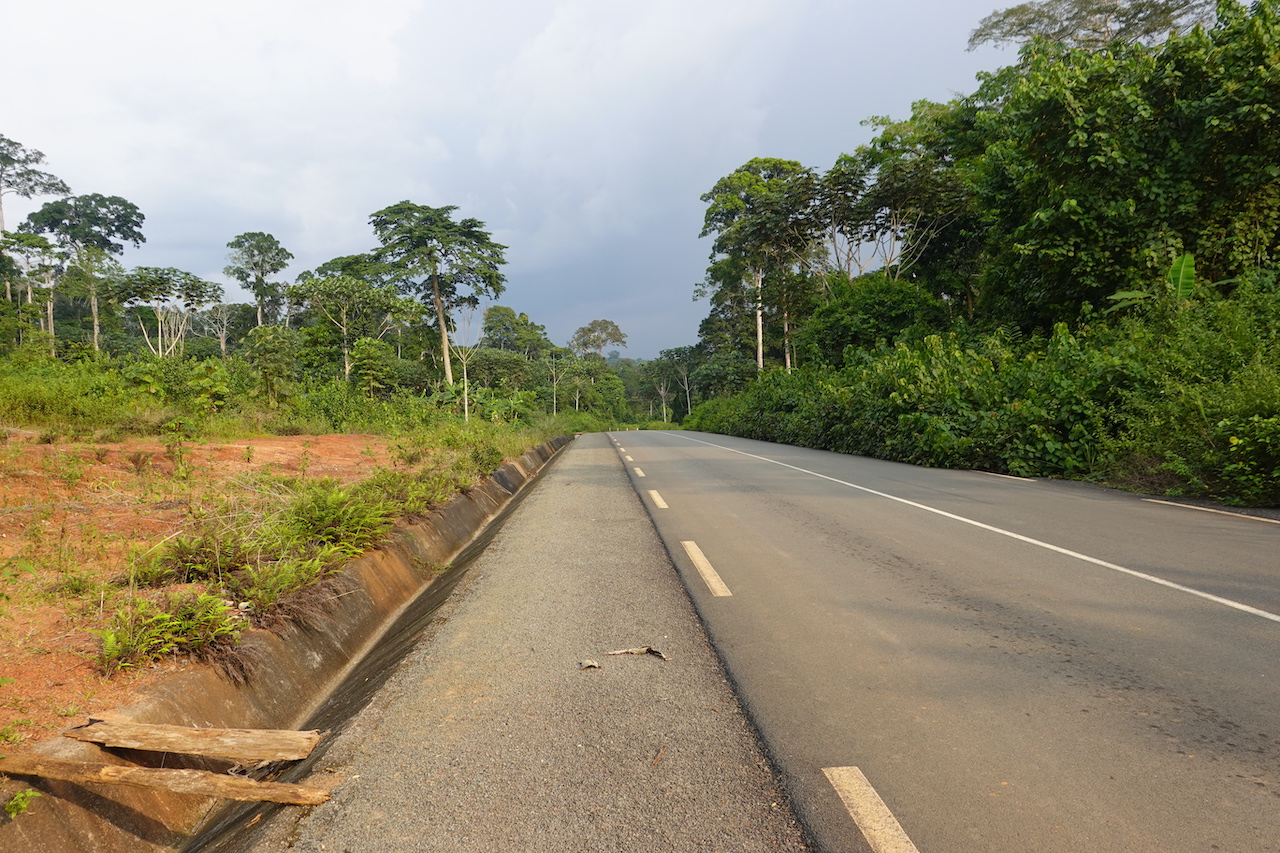
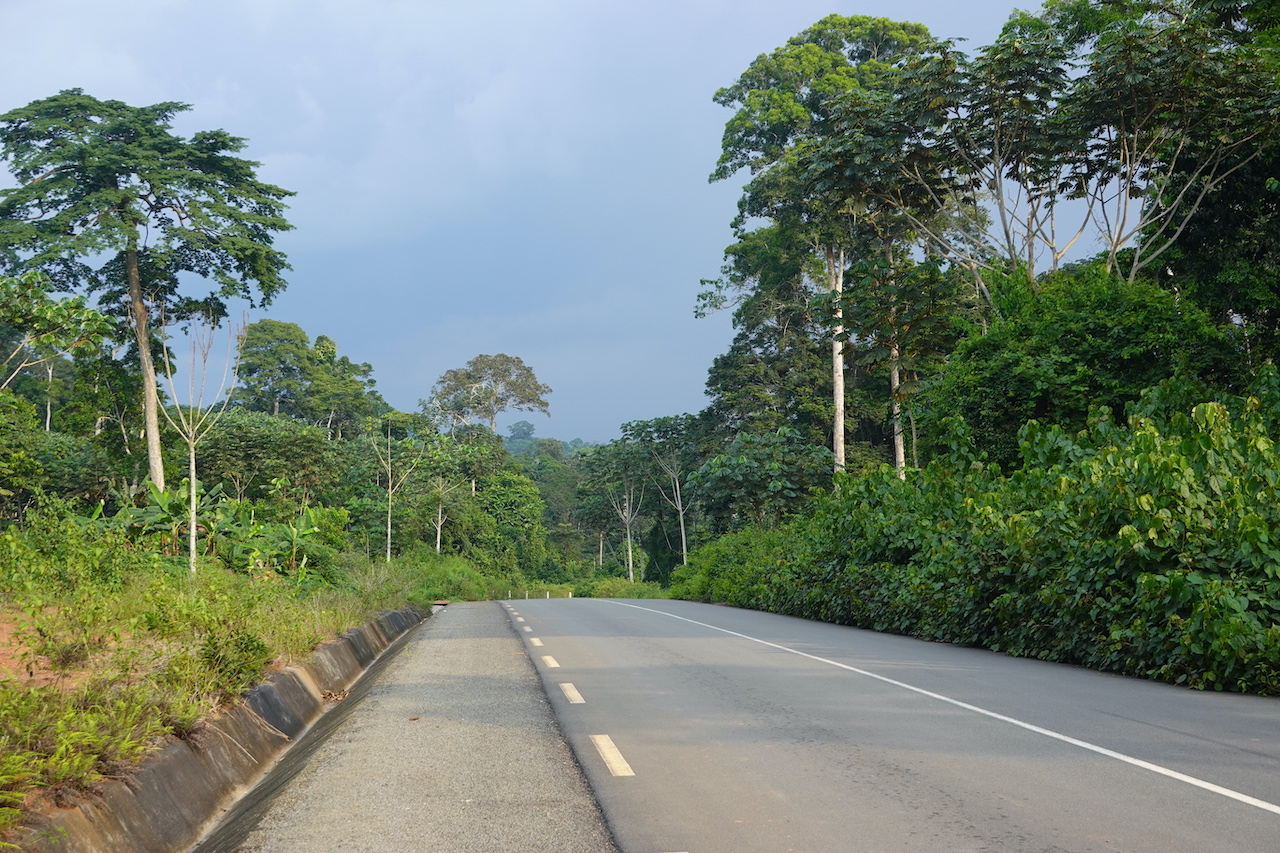
Today, paved roads, with their concrete drainage ditches, literally cut the villages in two and separate them from the houses.
That’s the price of modernity.
And it completely changes the atmosphere.
Otherwise, the usual scenes are still there: people walking along the roadside, and especially lots of children, sometimes really very young ones.
I came across three little girls who must have been five or six years old.
All alone by the side of the road, with parcels balanced on their heads.
In Europe, that would immediately cause an uproar: “What are those children doing there all alone? That’s irresponsible!”
Here, it’s just normal life.
I seriously considered camping.
There were plenty of places where I could have set up.
I could also have asked for hospitality in a village.
But… after a bad night’s sleep, during the rainy season, with the risk of a tropical storm in the middle of the night, I wasn’t really in the mood to take chances.
So I got a hotel.
Yes, I know… bit of a wimp! But after one sleepless night, I really didn’t fancy spending a second one in a tent under a tropical storm.
In the end, it was a quiet day. A few videos, no photos.
Just a short stage to get back into the rhythm.
And tomorrow, we carry on.
August 20 – On the road again
Yesterday, I covered about 300 kilometers through the tropical rainforest in southern Cameroon in just under six hours… and I wasn’t even rushing.
The road is excellent. Apparently, the asphalt was laid in 2022. And over 300 kilometers, I encountered only one pothole.
One!
That’s rare enough — exceptional, even — around here to be worth mentioning. I’ve never seen anything like it in Africa, at least not in this part of the continent. 😄
What’s quite amusing is that this brand-new road is already, in places, being covered by the luxuriant vegetation. The forest is slowly reclaiming its territory.
But above all, this road gives you a sense of just how much things have changed.
I found myself wondering how long it would have taken me to cover those 300 kilometers twenty-five years ago.
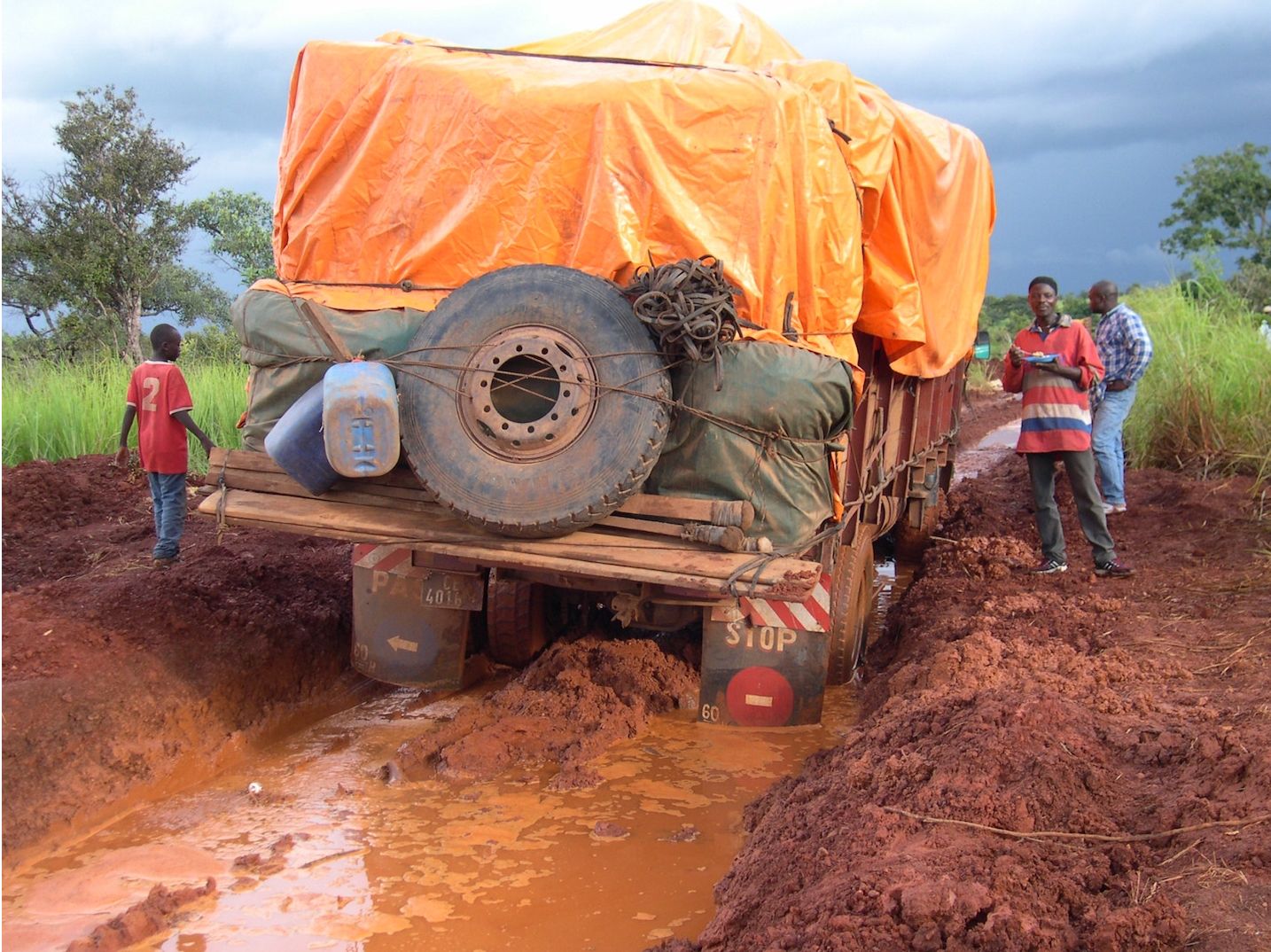
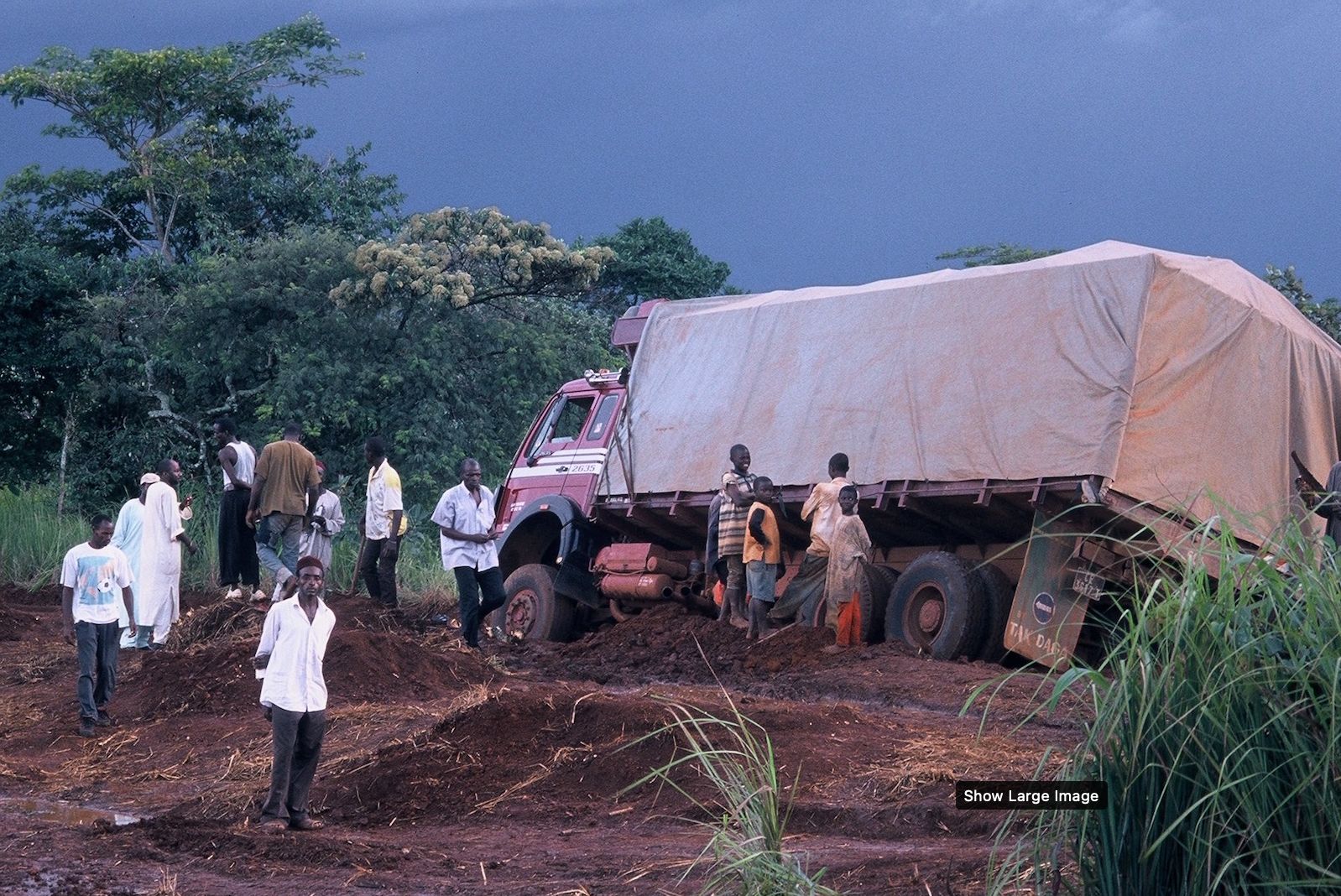
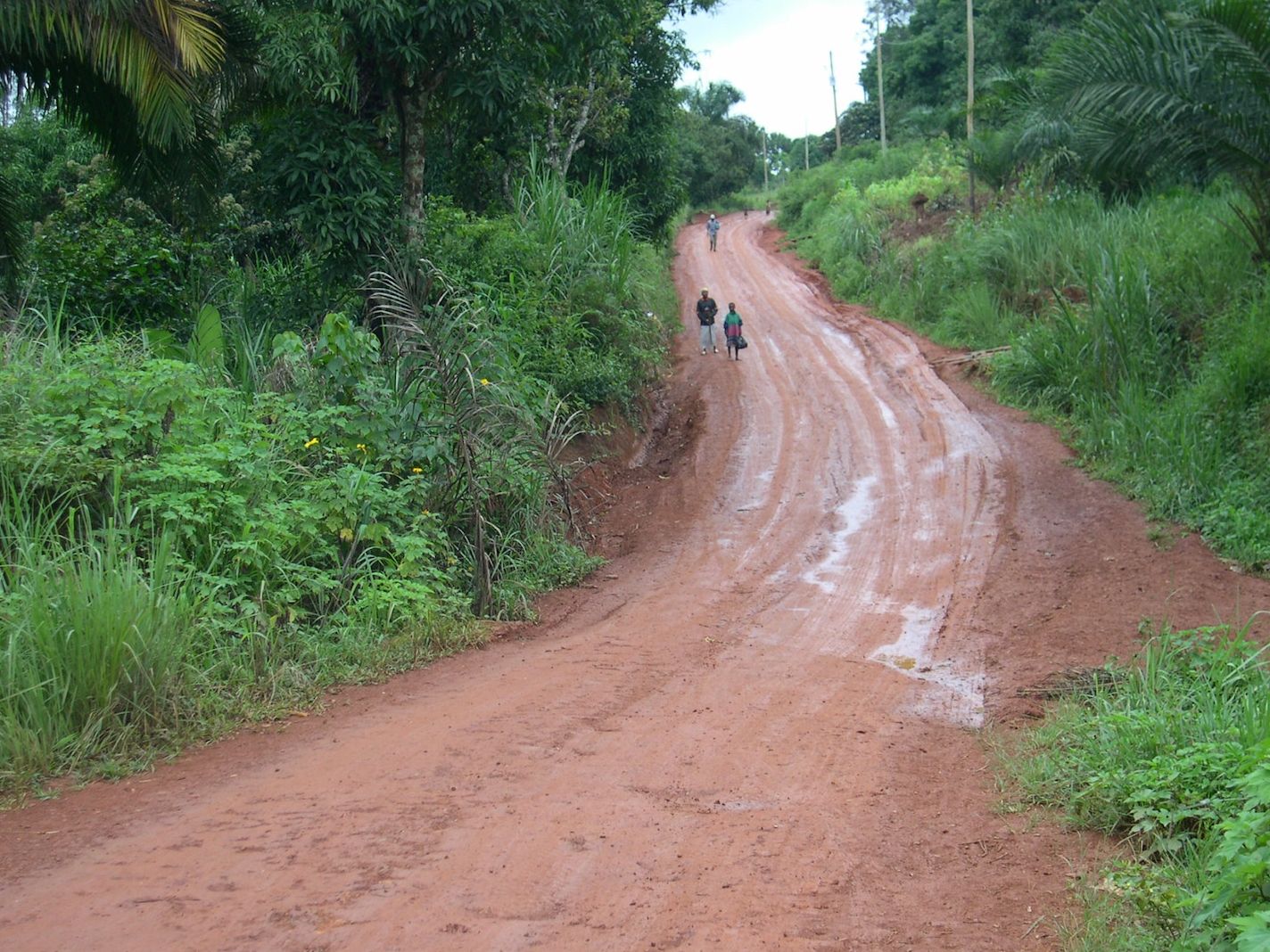
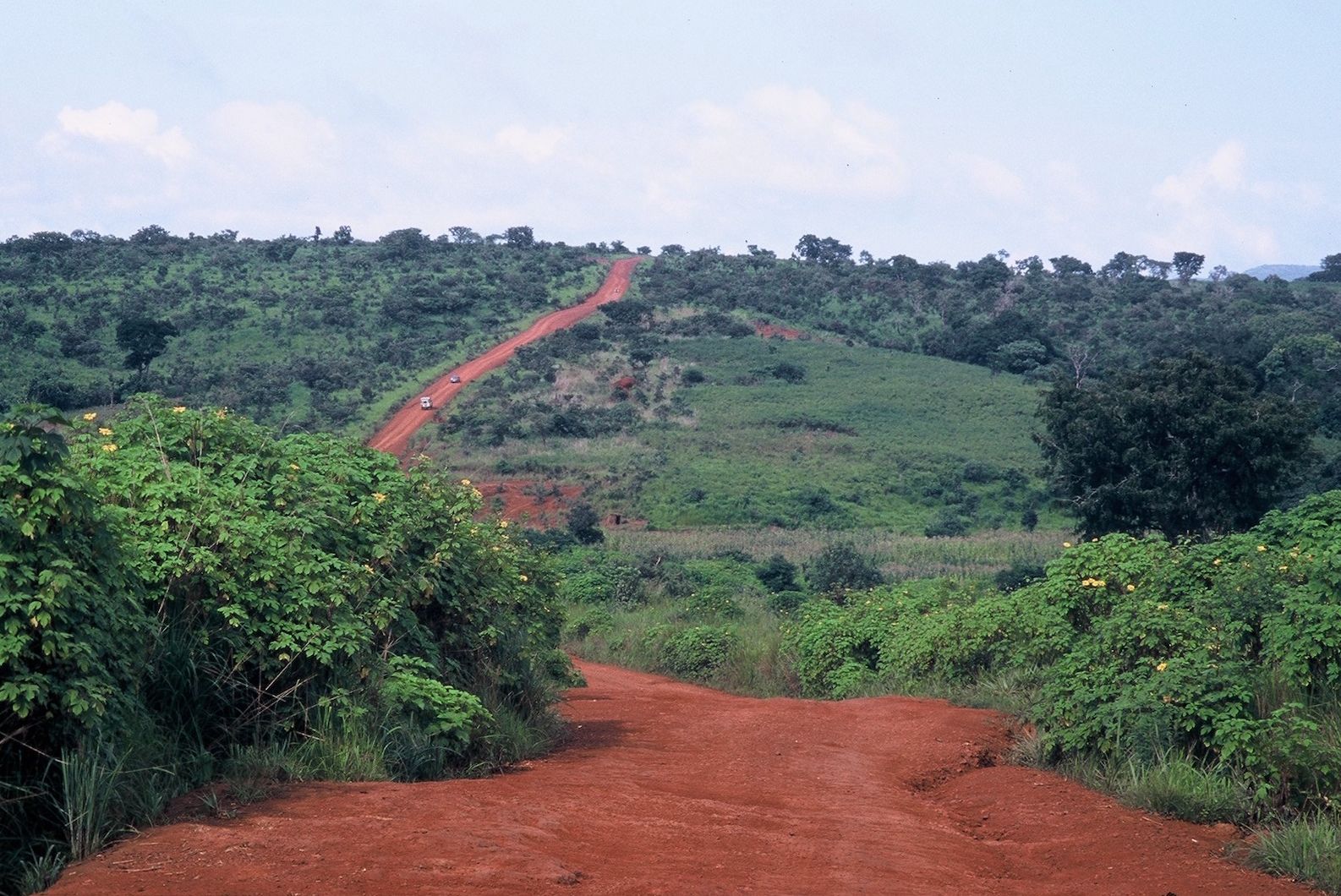
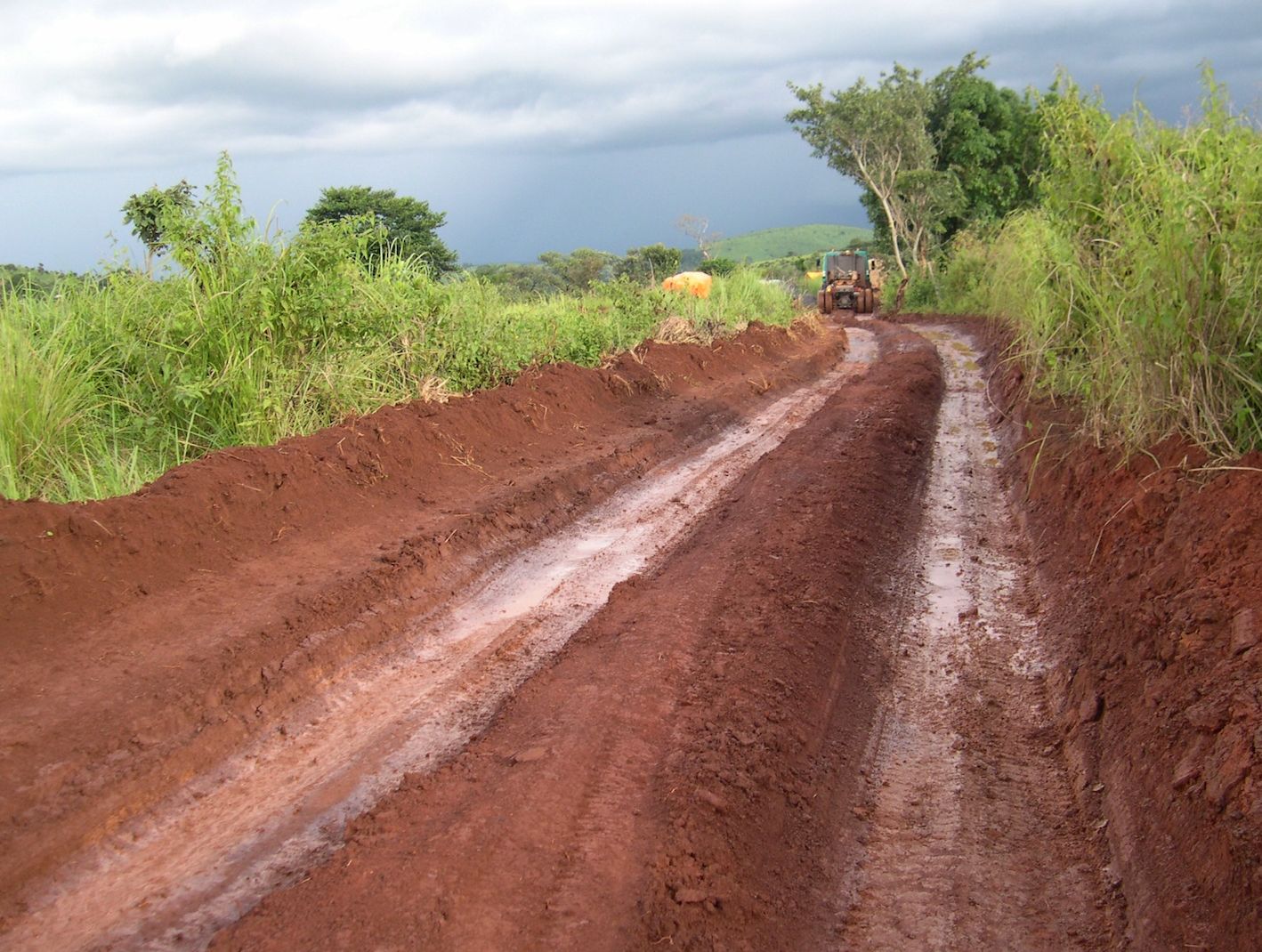
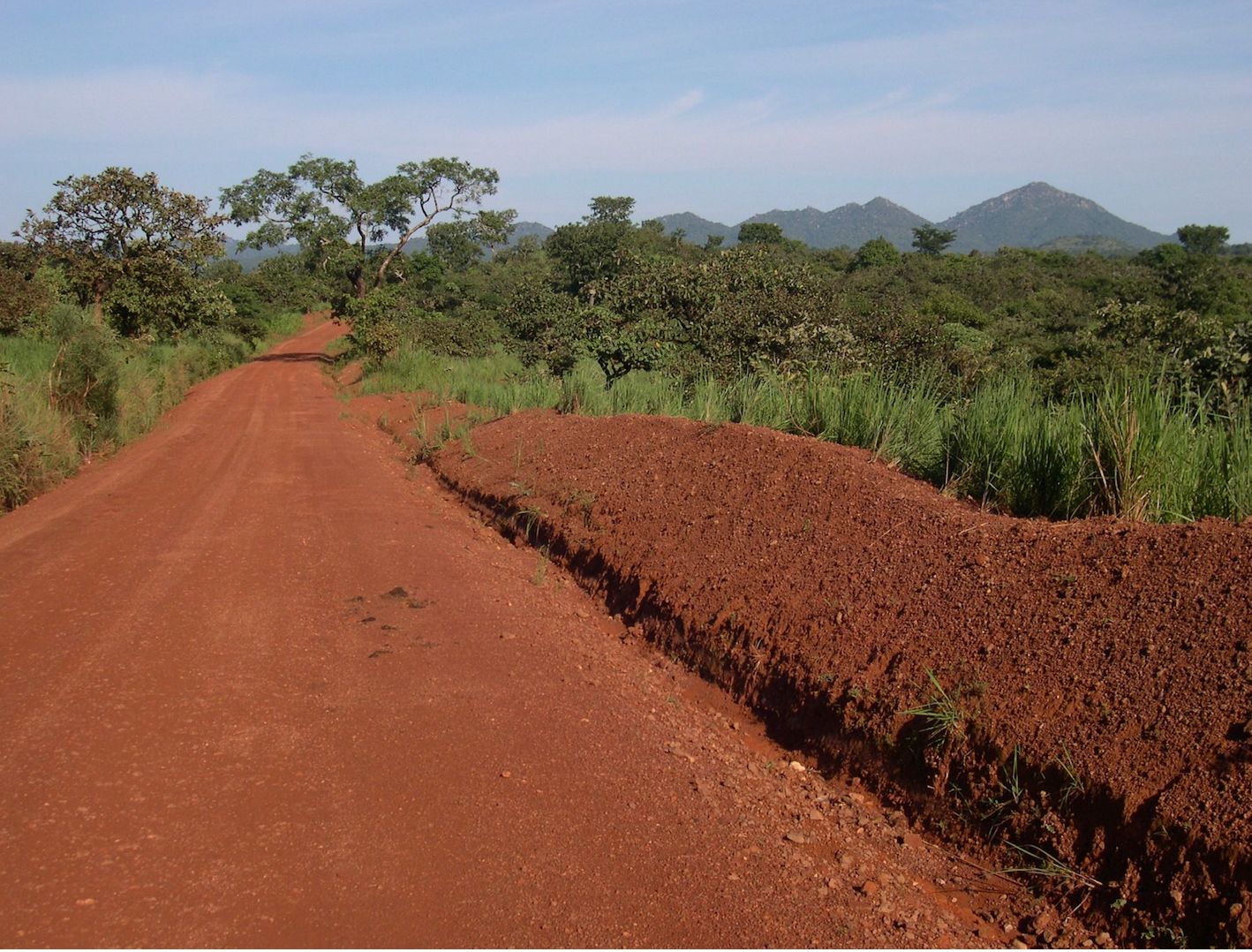
Before the asphalt, there was laterite. And during the rainy season, mud, ruts, difficult stretches… It took an incredible amount of time.
The person who runs the place where I’m currently staying told me that back then, during the rainy season, covering the same distance could take eight to ten days!
Yesterday: less than six hours.
That gives you some idea of the transformation. What we now consider a simple day’s ride could once have been a genuine expedition.
Another difference: gas stations.
Today, there are roughly one every 200 kilometers. Back then, I remember riding more than 700 kilometers through this region without finding a single drop of fuel.
And yet, despite these enormous changes, some things have barely moved at all.
The villages, for example.
The new road often passes beside them rather than through them as it used to. But when I look at the houses and the way people live, I find exactly what I experienced years ago.
Well… every now and then, you see a car. That wasn’t necessarily the case before. 😄
Same thing with food.
Yesterday, lunch was pretty basic: two hard-boiled eggs and three bananas bought by the roadside.
In the evening, I found some white rice, an excellent sauce and a small piece of chicken.
And this morning, for 2,500 CFA francs — a little over €3 — I got a fairly substantial breakfast: coffee, almost unlimited pineapple, bread, powdered milk and an omelet.
A sardine omelet.
That was a first for me.
And frankly… it’s an acquired taste! 😄
Today, in any case, the choice remains fairly limited: plantains or white rice, accompanied by fish, chicken… or bushmeat.
And when people here talk about “bushmeat,” sometimes they mean… monkey.
On that front, nothing has really changed.
Last night, I also spent quite a while wondering whether I should stop in a village and simply ask for hospitality, so I could spend the night there and share a few hours with the locals.
If we weren’t in the middle of the rainy season, I probably would have done it.
But the storm was rumbling and I preferred to find somewhere dry. I’ve slept through some genuine tropical storms in a tent before and, frankly, they’re not experiences I particularly want to repeat.
I still got caught in a downpour when I arrived.
Rain jacket, obviously.
Rain trousers, on the other hand, have been abandoned for a long time. Way too much hassle to put them on.
And besides, in this heat, even if you’re completely soaked, you just have to ride a few kilometers — especially on a road like this — and stand up on the foot pegs from time to time.
Five to ten minutes later, you’re dry.
In the end, what strikes me about this journey is that Africa has changed enormously… but not everywhere in the same way.
The roads have changed.
The distances have changed.
Fuel and supplies have changed.
The time needed to travel has sometimes been cut by a factor of ten, or even more.
But just a few meters away from the road, in some villages, I sometimes feel as though I’ve found exactly the Africa I knew twenty or twenty-five years ago.
And perhaps that’s the most interesting thing to observe: progress doesn’t necessarily make the old world disappear overnight.
For now, it simply passes by it.
And the old world, meanwhile, quietly carries on… waiting to gradually fade away.
African-style!!
Human relationships in Africa, especially when you’re white, are always rather amusing to observe…
A couple of little stories from the last few days.
The day before yesterday, I went into a little grocery store to buy some washing-up liquid and a bottle of Coke. A young man I’d met a little earlier came along with me to show me the way.
Very nice guy, thirty-two, but he looks twenty-five.
He lost his brother and sister when he was twenty and twenty-one and has been looking after his widowed mother and his family ever since.
In short, a young man who has already had his fair share of responsibilities.
When we got to the shop, I offered to buy him a drink.
He accepted.
He went and got himself a drink and came back with two. 😄
Well…
Why not.
He then said a few words in the local language to the cashier, whom he seemed to know very well.
I thought I heard the word “credit.”
When it was time to pay: 4,850 CFA francs.
I looked at the bill.
My own purchases? At most 1,000 francs.
His two drinks? Even being extremely generous, I couldn’t see how they could cost more than 1,000 francs each.
So let’s say 3,000 francs in total.
That still leaves 1,850 mysterious francs that somehow appeared between the cash register and my wallet.
I said nothing.
But I have a feeling that, along with my washing-up liquid and my Coke, I also paid off a little bit of my new friend’s tab. 😂
And then things continue in their own quiet way around here.
Yesterday, I had to pay for my meal: 3,500 CFA francs.
I handed over 5,000.
The person went off to get the change… and disappeared.
I chatted with the manager, who is also the cook. In the meantime, she had treated herself to a large bottle of beer and was calmly drinking it.
After a while, I asked her:
— And my change?
— Oh yes! It’ll come back. I’ll give you 500 francs, I took a beer for myself…
Ah.
Okay.
And this morning, another step forward in this collaborative economy.
I’m sitting outside with my coffee and three little biscuits I bought in Yaoundé. I ate one. Two are left.
The manager sits down next to me and casually takes a biscuit.
Her daughter arrives, she gives it to her, and then the girl starts reaching for my last biscuit.
That’s when I protest:
— Hey, my friend! You’re stealing all my biscuits!
Everyone bursts out laughing.
In the end, I broke the biscuit in half.
She got her half.
I kept mine.
You’ve got to know where to draw the line. 😂
But I admit that I rather like this very African way of seeing things, where once we’re together, what’s yours can very quickly become… a little bit everyone’s.
(Well, sometimes it can get annoying…)
August 21–23, 2026
The Landlady
A village called “I Love Love” — you can’t make that up.
I was riding too fast to take a photo. I regretted it a few kilometers later, but by then it was too late and I didn’t want to turn around.
And yet that sign was actually quite appropriate for the area… love had apparently decided to come knocking at my door the night before. But I’m getting ahead of myself. Spoiler alert, as they say.
That morning, I decided to leave Ntam, where I’d spent two nights.
The border was very close. I stopped just before it to fill all my tanks: the main 9.5-liter tank, the 16-liter auxiliary tank and even the 2.5-liter emergency jerrycan.
That’s a total of 28 liters, giving me a range on asphalt of between 700 and 800 kilometers. Enough to see me through.
But there’s a fuel shortage in Congo, I know that.
The border was quiet. Almost bucolic, both on the Cameroonian and Congolese sides. The customs officers were pretty easygoing. We chatted, joked, they stamped everything without any fuss.
No stress.
No tension.
A few formalities, a few stamps, and it was done.
Just as I was about to get back on the bike, a man came over to me.
He asked if he could take a picture of me with his son next to my motorcycle.
Obviously, I was happy to agree.
This is one of the major changes I’ve noticed over the past few years. Before, it was the Western tourist who took the pictures.
Today, everyone takes pictures.
And I like that change.
Because, in a way, it puts everyone a little more on an equal footing.
So I never refuse a photo.
And sometimes, when I see someone trying to photograph me discreetly, without quite daring to make it obvious, I simply wave at them.
Sometimes I even suggest we take a selfie together.
After all, why not?
On the road, I came across a checkpoint. That’s nothing unusual here, but these guys stayed inside their hut, where they controlled the piece of string serving as a barrier.
Military? Forest rangers? I have no idea.
So I had to get off the bike and walk a few meters up to the little wooden shack.
There were three of them. We talked for a couple of minutes.
One of them was carrying a rather impressive knife. The kind of knife that makes you want to remain very polite, assuming you’re not a complete idiot.
As always, I asked their names. I always ask people’s names, even though I forget them almost immediately.
These encounters are fleeting, ephemeral, often far too short to remember so much information. But I make a point of asking the name of the person standing in front of me.
It’s a rule.
We greet each other, exchange a few words, take a little time.
Then one of them asked me why I was making this journey.
So I told them.
I told them about Odile, of course. I explained how it all began, how that story started, and how, in the end, it led me onto the roads of Africa.
And then I explained that today I’ve become an old man who simply wants to see again what he experienced. To see again what he saw twenty years ago.
To rediscover places, landscapes, atmospheres… and above all, perhaps, to find out whether his memories still resemble reality.
They listened. Just a few minutes. Long enough to create a fleeting connection.
That’s also what this journey is about. A few minutes spent with people whose names I may no longer remember a few hours later, but whose faces will sometimes remain somewhere in my memory.
Walking back to the motorcycle, I almost fell. I’d forgotten just how slippery wet laterite can be.
Worse than a bar of soap.
Inwardly, I thought that asphalt isn’t such a bad thing after all.
A few kilometers farther on, I came across that famous sign:
“I Love Love.”
You really couldn’t make it up.
That’s when I thought of my landlady. Remember the woman at the forest workers’ camp where I stayed just before? The one who stole my biscuits?
Well, apparently, I’d completely misread the biscuit incident.
It wasn’t theft.
It was a seduction technique.
Madam had set her sights on me.
I’d stayed at the camp for a full day. In the afternoon, I started receiving text messages signed “My love.”
I replied politely.
Very politely.
During the day, madam has a second job. She’s a cook on the railway construction sites I mentioned earlier.
And in the evening, when she came back, she sat down at my table as usual.
The conversation started quietly.
Well…
At first.
Then she made a little video, apparently intended for her friends, in which she introduced me as “her guy.” Everyone around us found it hilarious.
I laughed too… cautiously.
As the evening went on, with the help of a few beers, she became increasingly insistent, and eventually I said goodnight and left, just to extricate myself from a situation that was becoming seriously awkward.
On the occasion, I found myself thinking about all the women who get hit on by pushy, persistent men.
For me, it was exceptional.
For some women, it’s a regular occurrence.
And frankly, it’s not pleasant.
When I said goodnight, she asked whether she could come by — to my room — later.
I declined.
The next morning, things had improved slightly: I was no longer “my love,” but “my boss.”
But once I’d left, the amorous messages started arriving again.
So when, a few kilometers later, I saw a sign saying “I Love Love,” I thought that this region really did have a rather peculiar sense of humor.
Mischievous Mama
I continued along the road.
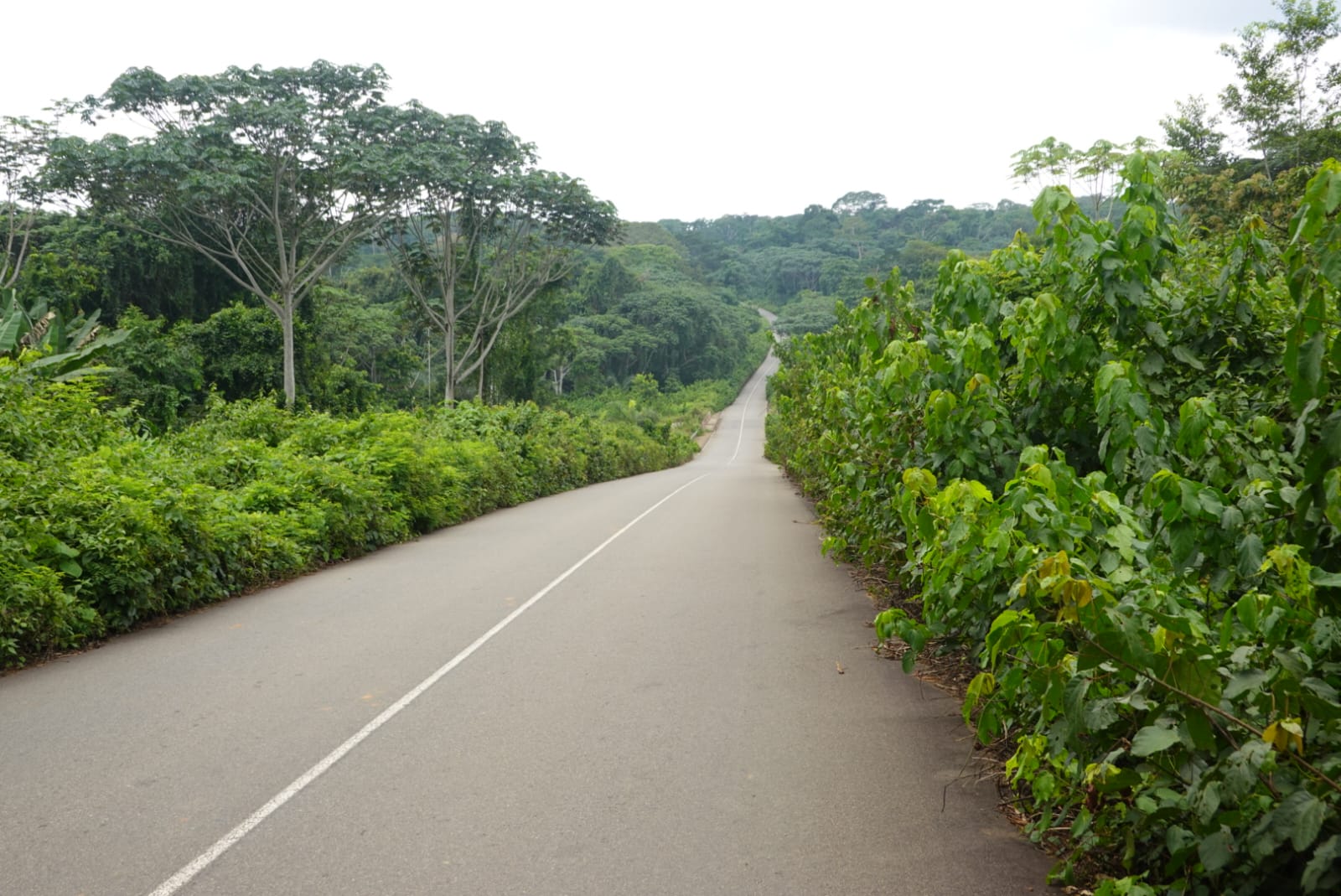
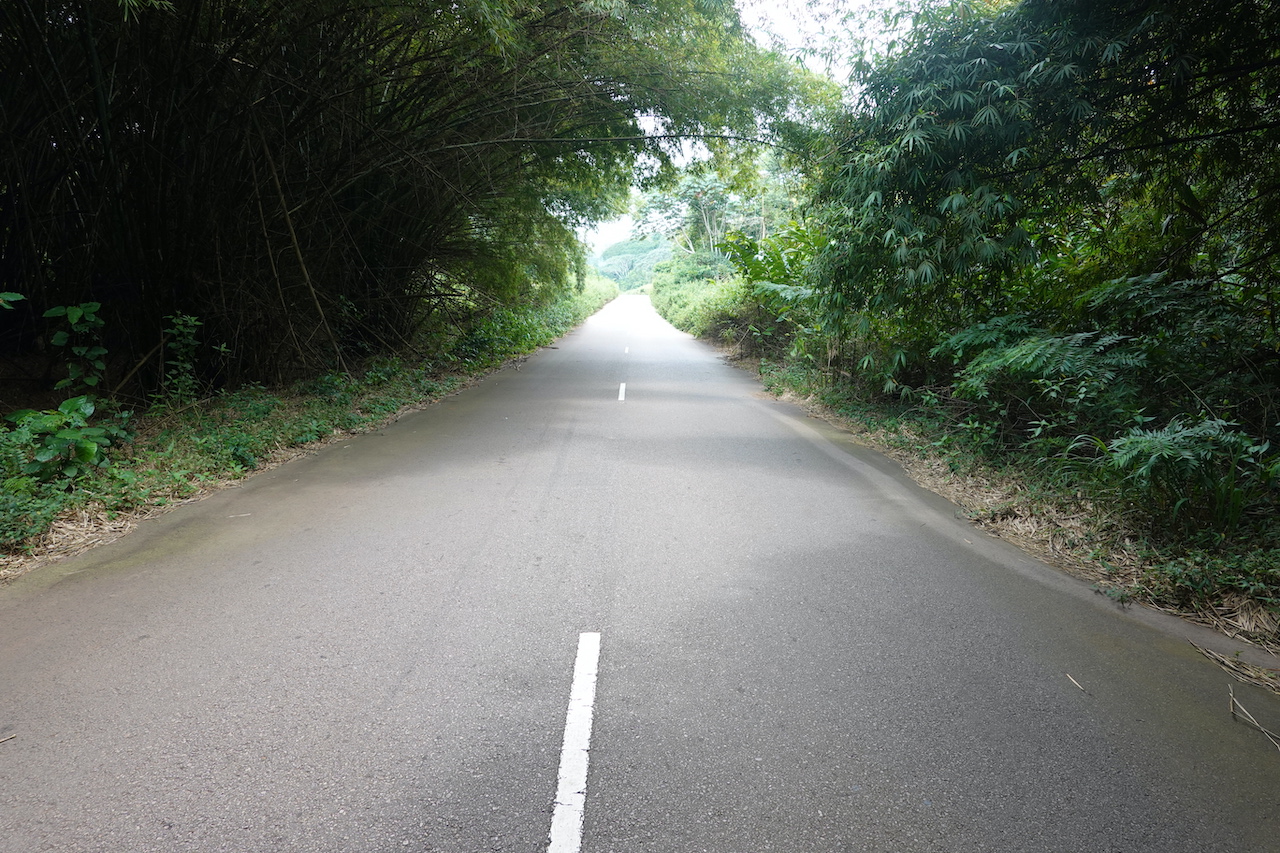
It’s almost as good as it was on the Cameroonian side. A few potholes, though, and in places the vegetation is already starting to reclaim it.
But that makes sense given its age: apparently it was built in 2014 (compared with 2022 on the Cameroonian side), if the information I was given is correct.
And it’s pretty crazy to think that before then — barely more than ten years ago — this region was still very much like the Africa I had known during my previous journeys: tracks where it could take several days to cover a distance that you can now swallow in a few hours.
On the other hand, some things haven’t changed.
Men, women and children are still everywhere, walking along the road and waving as you pass.
In this region, people don’t carry loads on their heads like they do in the Sub-Sahel. Instead, you see wooden baskets carried on their backs.
Many also have a machete in their hands for working in the fields.
Children help too.
Some are incredibly young, barely five or six years old.
At one point, I stopped for a little while under some trees whose species I couldn’t identify.
And there, with the engine switched off, I rediscovered something that always surprises me about tropical rainforest:
its silence.
At night, the jungle becomes a genuine cacophony. Things scream, rustle and move everywhere.
But during the day, it’s almost the opposite.
An incredible silence.
Every now and then, a few bird calls. A rustling in the leaves. The movement of a tree.
And then nothing.
That’s also what makes arriving in a town so brutal.
After hours spent in that immense silence, you suddenly emerge into a medium-sized town, lively, noisy, full of movement.
I stopped for a Coke and, above all, to try to buy a SIM card.
I asked the first shopkeeper I came across. He pointed me toward a little shop directly opposite.
Well…
When I say “shop,” imagine a simple wooden table with a parasol, sitting by the roadside.
The shopkeeper’s chair was empty.
On the little bench beside it, however, a mischievous-looking little girl was watching me.
She simply said:
— Sit down.
And pointed to the place beside her.
I sat down and asked her name.
Her name was Mama.
And Mama, apparently, hadn’t been delivered with the “keep your mouth shut” option.
She was talkative, quick-witted and, above all, incredibly mischievous.
Her mother was right behind her. She was selling a few pieces of bushmeat that she was grilling on a barbecue.
A man came and sat down on the bench beside us.
He was Burkinabè and a gold prospector.
We waited together for the shopkeeper, who turned out to be Mama’s uncle.
But the concept of “uncle” in Africa is very broad.
It can simply mean a family friend.
Eventually he arrived.
His name was Joel and he set about getting my SIM card sorted out.
Not so long ago, it was simple.
You walked into a shop, asked for a SIM card, paid for it, topped it up and walked out.
Today, governments all over the world want to know who owns what, who uses what and probably why you’re using it.
The result is that getting a SIM card without identification is becoming increasingly complicated.
And when the network is bad as well…
In my case, it eventually took two hours and several attempts to send documents before my SIM card was finally activated.
Two hours!
During all that time, Mama was still there.
Watching me, observing me, chatting, joking… basically keeping me entertained.
When I finally left, I had almost become her “Uncle” too.
I Am Your Father
A few kilometers farther on, I stopped to eat a few bananas beside one of the rare tracks running perpendicular to this endless paved road.
The ground was slippery there too.
While I was eating, I saw him coming.
How old could he have been?
I have no idea.
He was wearing a dark suit and old patent-leather shoes, which he was carrying in his hand.
He was walking barefoot on the asphalt.
When he saw me, he called out.
I assumed he was asking me for something, but I couldn’t understand a word.
Probably Lingala, the local language.
Seeing that I didn’t understand, he switched to a sort of broken French.
— I’m tired. I’m worn out. Can you take me with you and drop me off somewhere?
I looked at him.
— I can’t. I’ve got my bags, my luggage… There’s no room.
He insisted.
— Why are you saying that?!
And then:
— I am your father! I am your father! I am tired!
In Africa, that sentence has a very particular meaning.
“I am your father.”
It’s a way of saying: I’m older than you. You owe me respect. You owe me assistance.
I know that.
But I genuinely couldn’t.
There was no way I could put someone on that motorcycle. There isn’t even a passenger footpeg.
And my bags take up all the space.
He insisted.
Again.
And again!
It broke my heart.
Eventually, he left.
A few minutes later, I got back on the road and overtook him.
My heart was heavy.
I kept riding, thinking about that old man walking barefoot along the road, wearing his suit and carrying his patent-leather shoes in his hand.
Then, perhaps two kilometers farther on, I spotted a small cluster of houses.
I slowed down.
I hesitated.
I could have dropped my bags.
Turned around.
Gone back to get him.
But the hour was getting late.
What if night caught me out?
I hesitated for another second.
Then I carried on.
It wasn’t until that evening that I had the realization.
My brain had registered the information, but it hadn’t processed it.
In that village, I’d caught sight of a little red motorcycle out of the corner of my eye.
It was there.
And I could have stopped.
I could have asked someone:
— There’s an old man walking along the road over there. Someone needs to go and get him.
I could have gone with them.
Shown them where he was.
They could have picked him up.
But that thought never occurred to me.
And that’s something I feel bad about.
I’m sorry, my father.
I’m sorry, Dad.
I failed in my duty.
Abdoul, the Trader
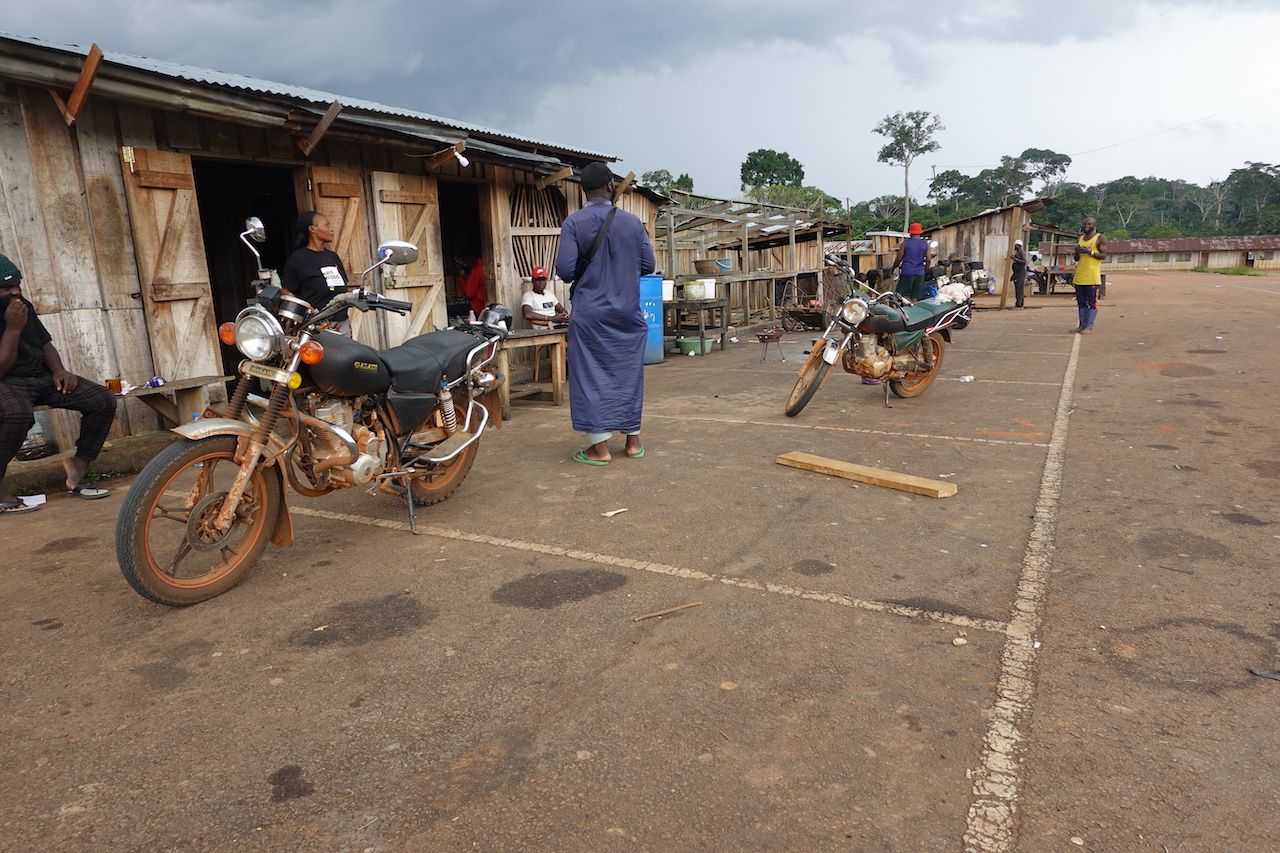
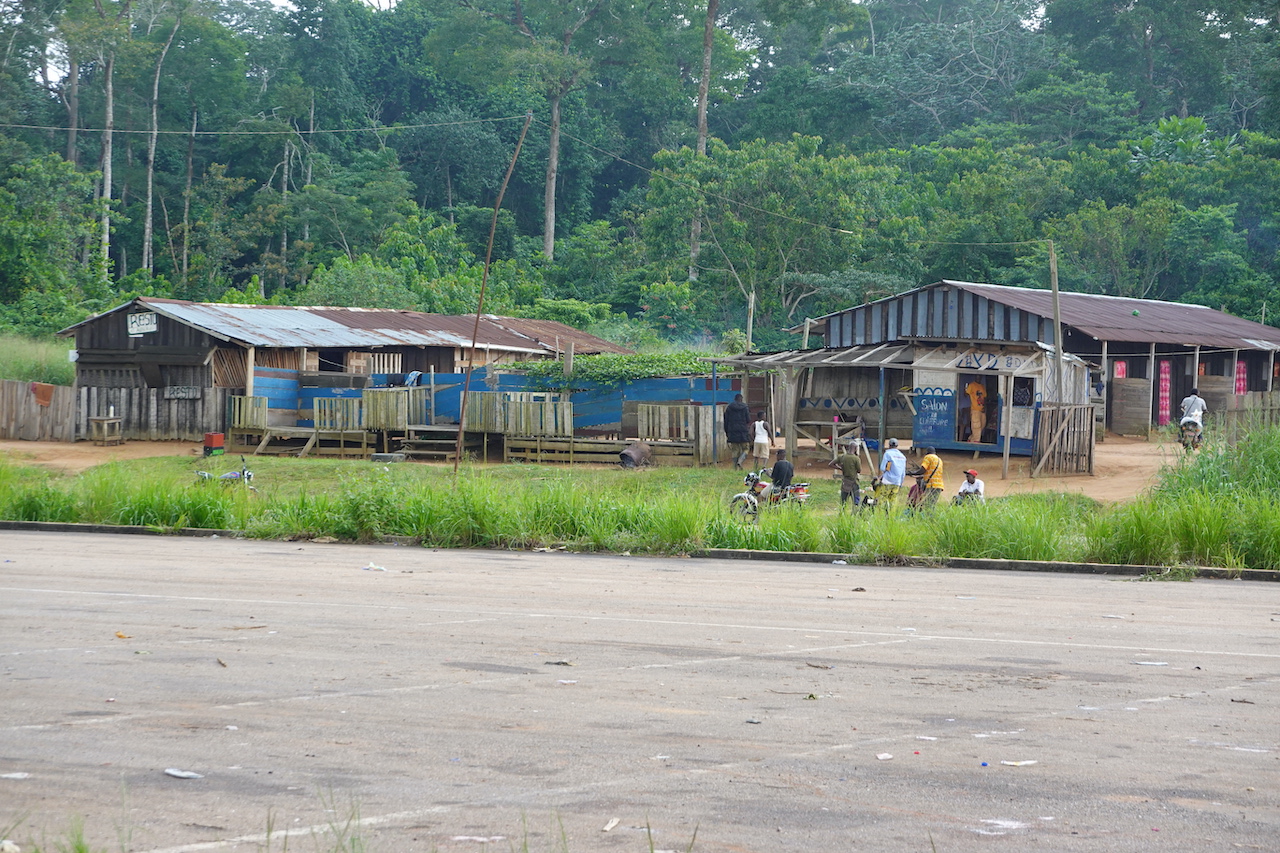
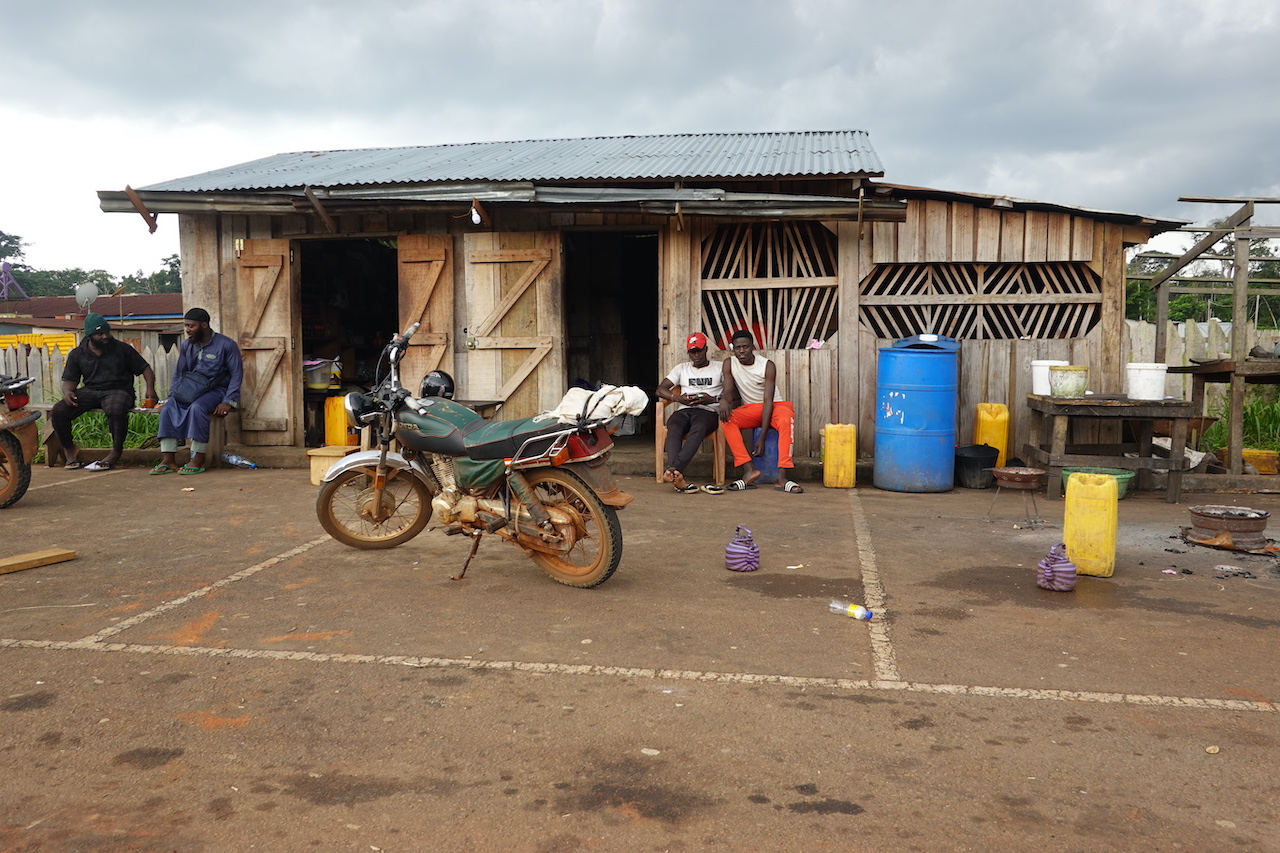
A little farther on, I stopped by the roadside, beside a huge parking area for logging trucks — those heavy trucks that carry logs from the forest to the ocean.
When I arrived, the parking area was almost empty.
On my right, there was some kind of wooden bar-restaurant.
Farther away on the left, a row of shacks that looked like a combination of truckers’ dormitories and a few makeshift grocery stores.
As soon as I stopped, a child approached me.
I asked him:
— Can we get a Coke here?
— Yes.
So I got off the motorcycle and headed toward this sort of maquis — that’s what we used to call places like this in West Africa.
I quickly realized that the kid was actually the owner.
I assumed his father or mother must be somewhere nearby.
I asked him for a Coke.
— I don’t have any.
Okay.
— So what do you have?
— Beer.
And then, when it came to Coke, he had something rather unusual:
Whisky-Cola.
I asked him to show me.
It was a bottle that already contained the whisky-and-Coke mixture.
I’d never seen that before.
But since I was riding, I asked whether he had anything without alcohol.
— No, no. We don’t have that here. You have to go to the Muslims, across the way.
Meaning: on the other side of the parking lot.
So I set off again.
And as soon as I left, I came across a man returning from a hunt.
He was holding a small dead monkey by the tail.
His catch of the day.
The famous bushmeat.
We exchanged a few words, then I crossed the parking lot to go to the Muslims.
That’s where I met Abdoul, Babacar and two or three other people whose names I’d obviously already forgotten.
I really do have a problem with names.
I ordered my Coke.
400 CFA francs.
I sat down.
One of the men moved along the wooden bench to make room for me and, while I drank my Coke, we started talking.
I’d planned to stop for five minutes.
But the black clouds rapidly gathering in the sky had other ideas.
A few moments later, a fairly intense tropical downpour hit us.
I stayed under shelter and we continued talking.
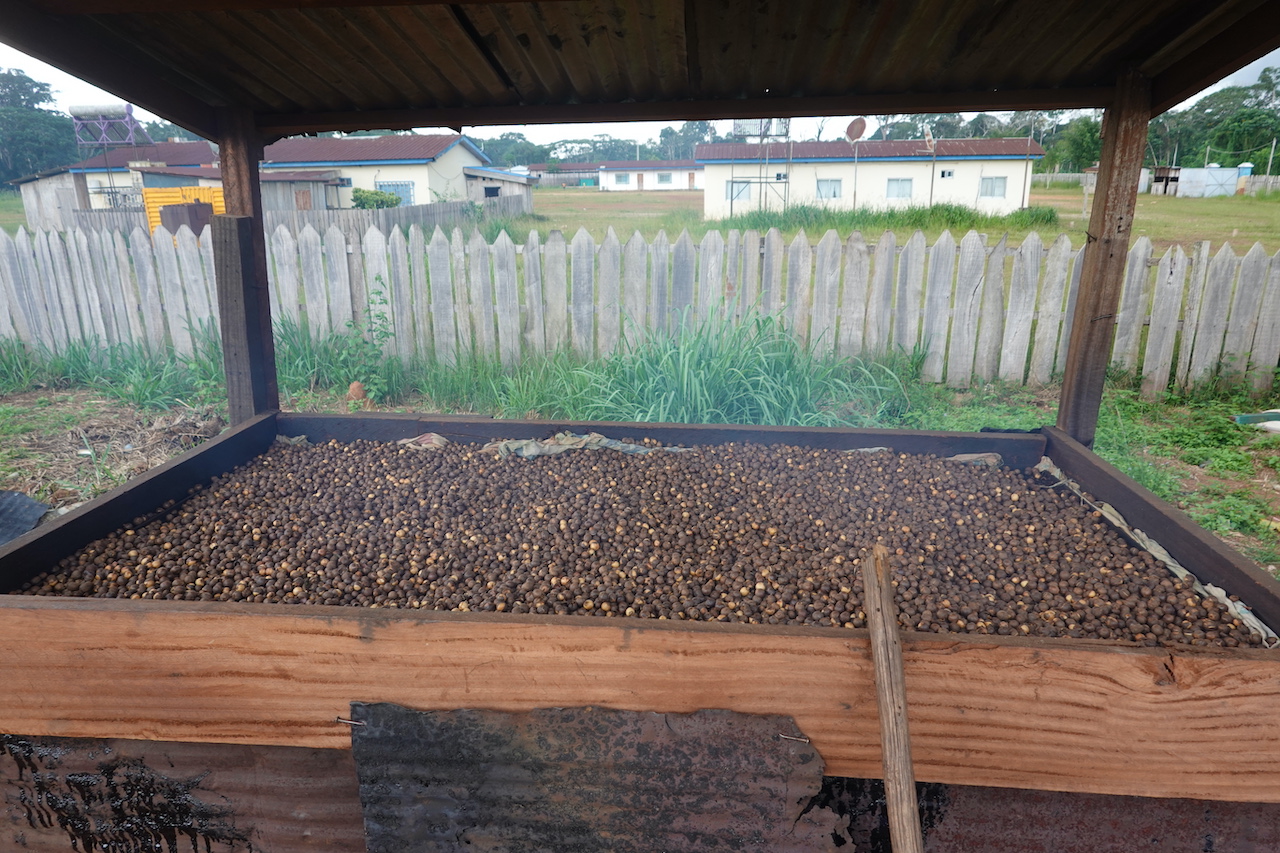
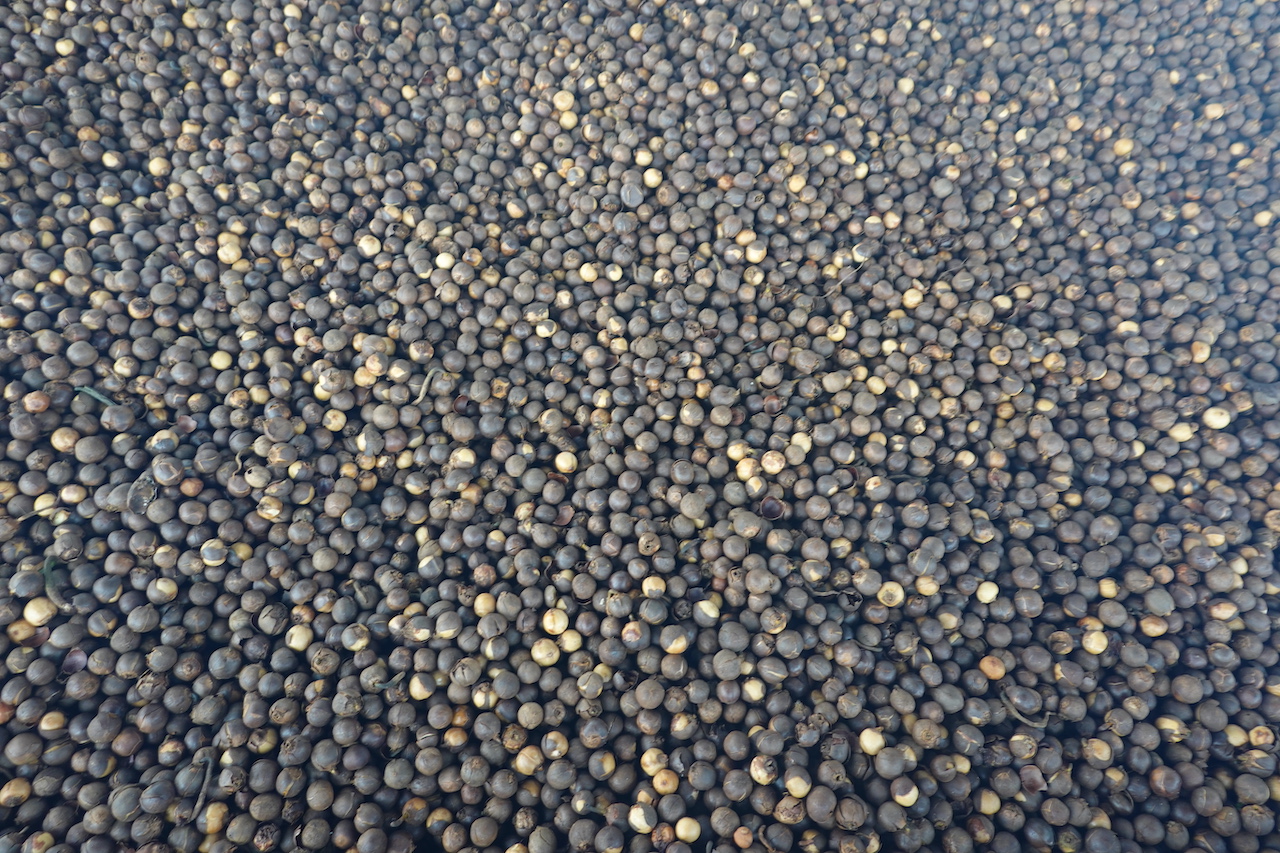
A few meters from the shack, I noticed what looked like a workbench covered with things being dried by smoking, which from a distance looked rather like hazelnuts.
I walked over.
But as soon as I smelled them, I immediately realized they weren’t hazelnuts.
They were wild garlic.
They belonged to one of the men sitting there.
He was a Cameroonian trader who did business in Bafoussam.
He had come all the way here specifically to collect wild spices gathered in the forest and was simply waiting for them to dry enough to transport them.
I was quite surprised.
I hadn’t expected someone to travel several hundred kilometers to the heart of the Congolese rainforest to collect wild herbs and spices and then resell them in Bafoussam.
But apparently, the business is profitable enough to make the journey worthwhile.
Abdoul explained all this to me quite calmly, sitting on his bench while the rain poured down just a few meters away.
And once again, I realized that these places we sometimes cross as nothing more than dots on a map are actually genuine little crossroads.
Logging trucks come there for rest and food.
Hunters bring back their game.
Traders buy forest products.
And I had simply come looking for a Coke.
I arrived intending to stay for five minutes.
I stayed much longer.
As so often happens.
Written in Ouesso, Congo, August 28, 2026
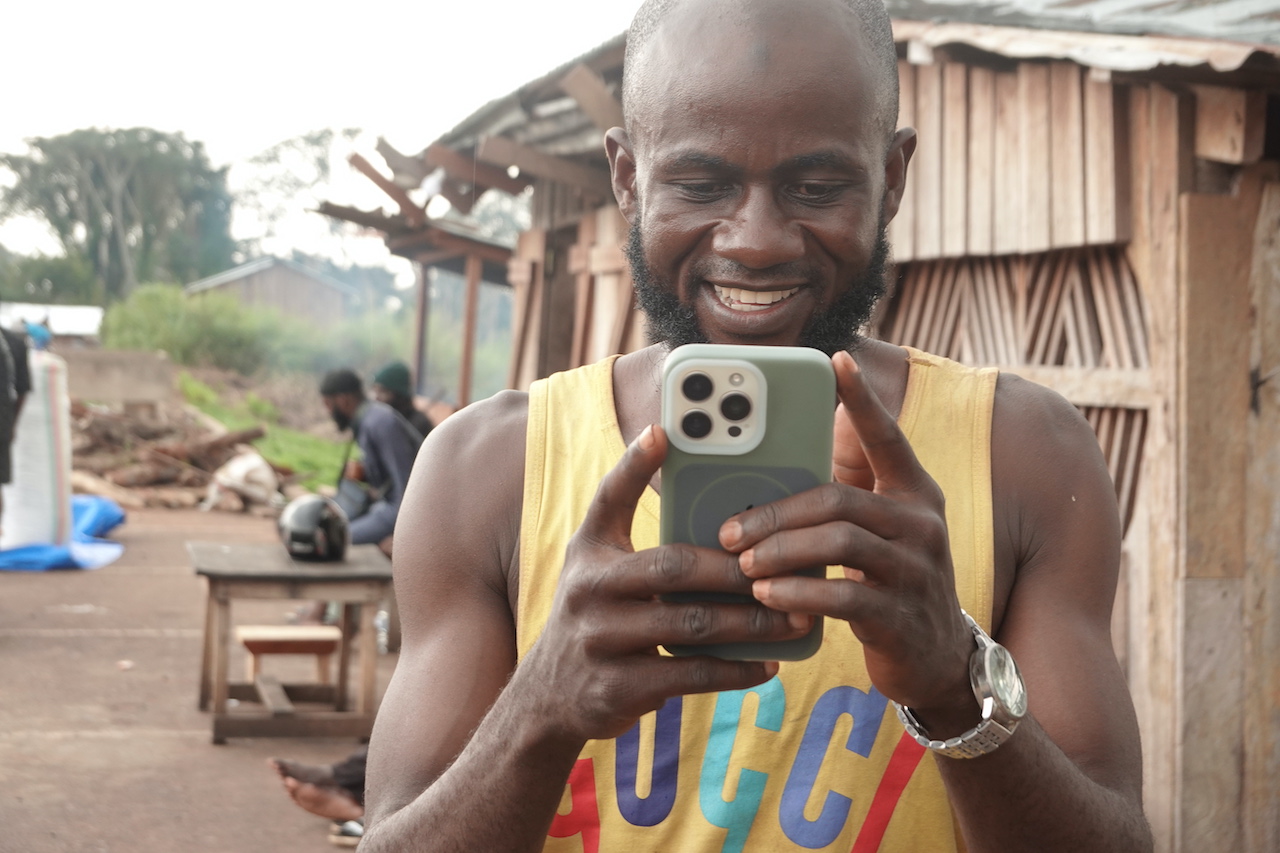
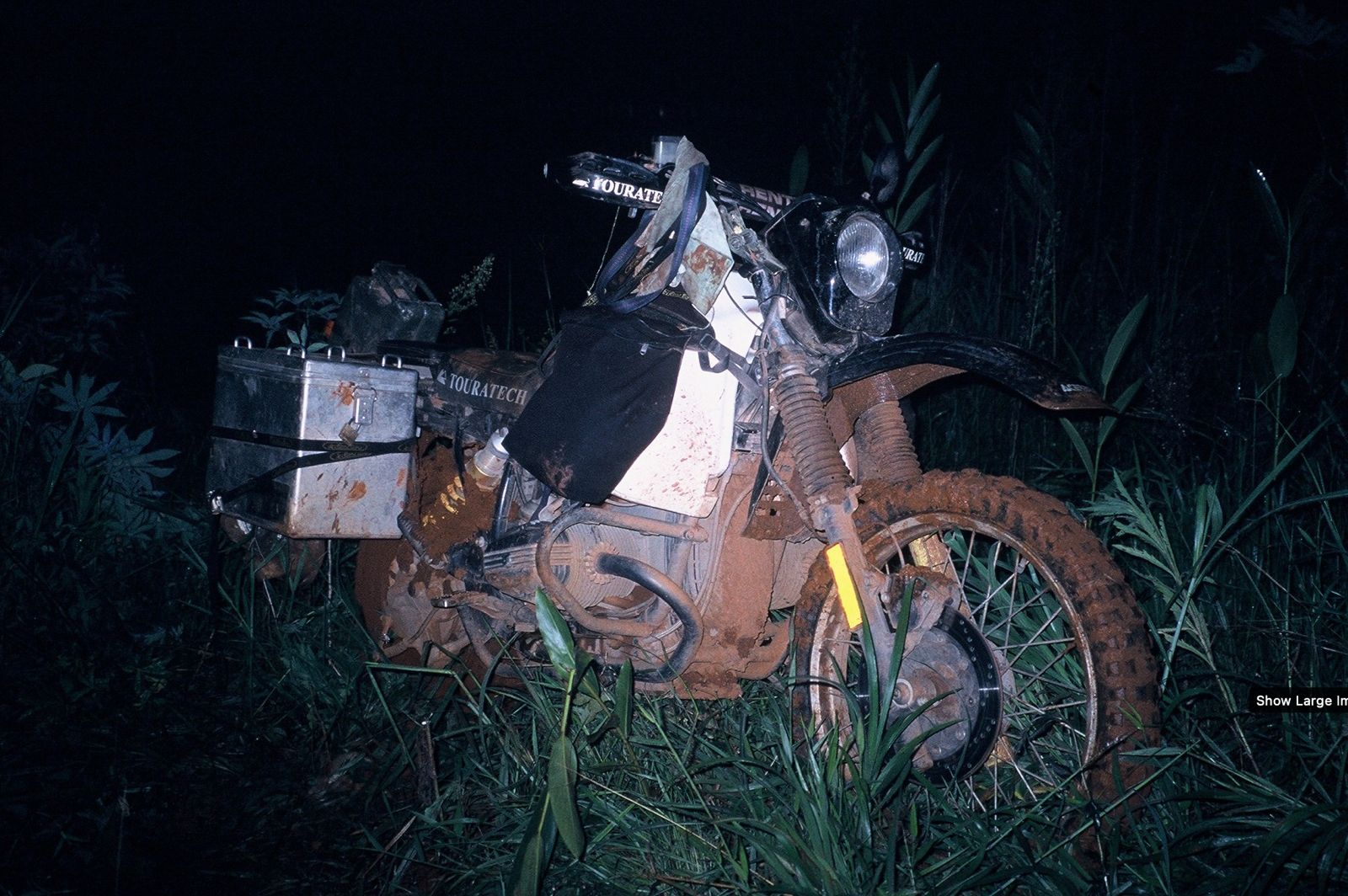
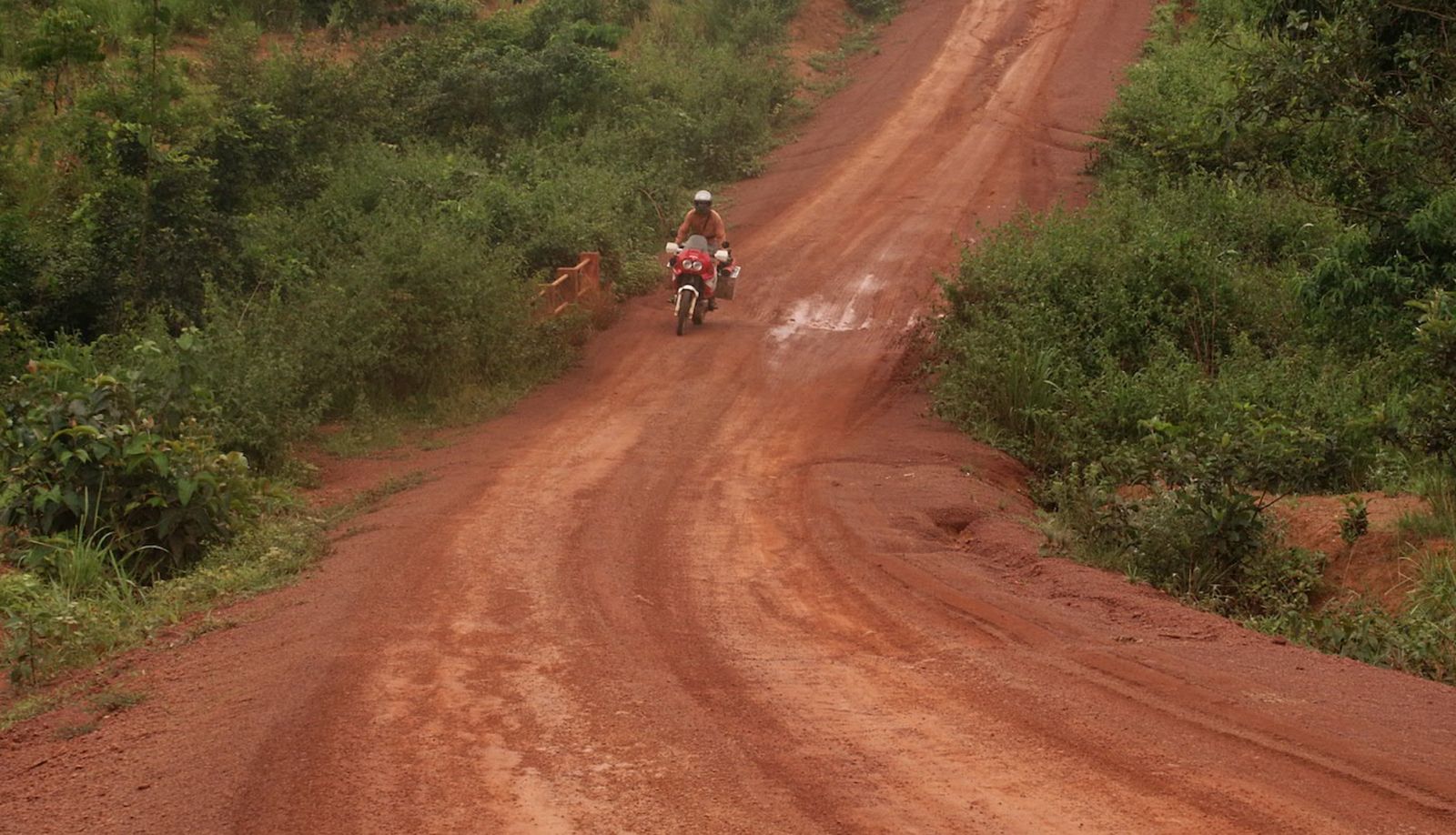
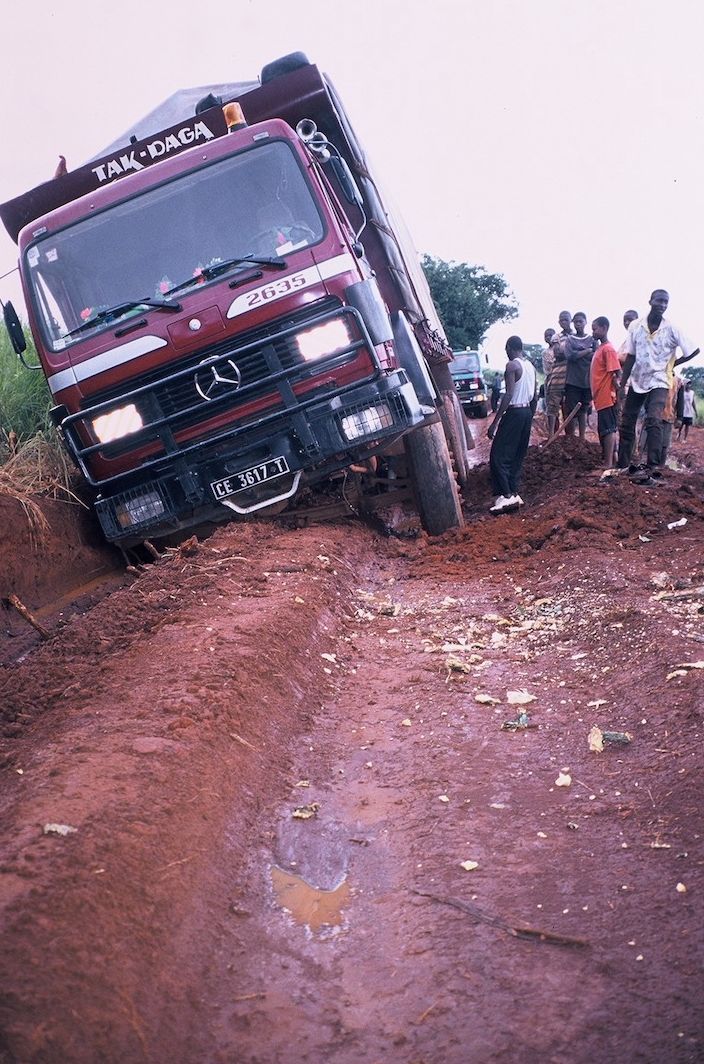
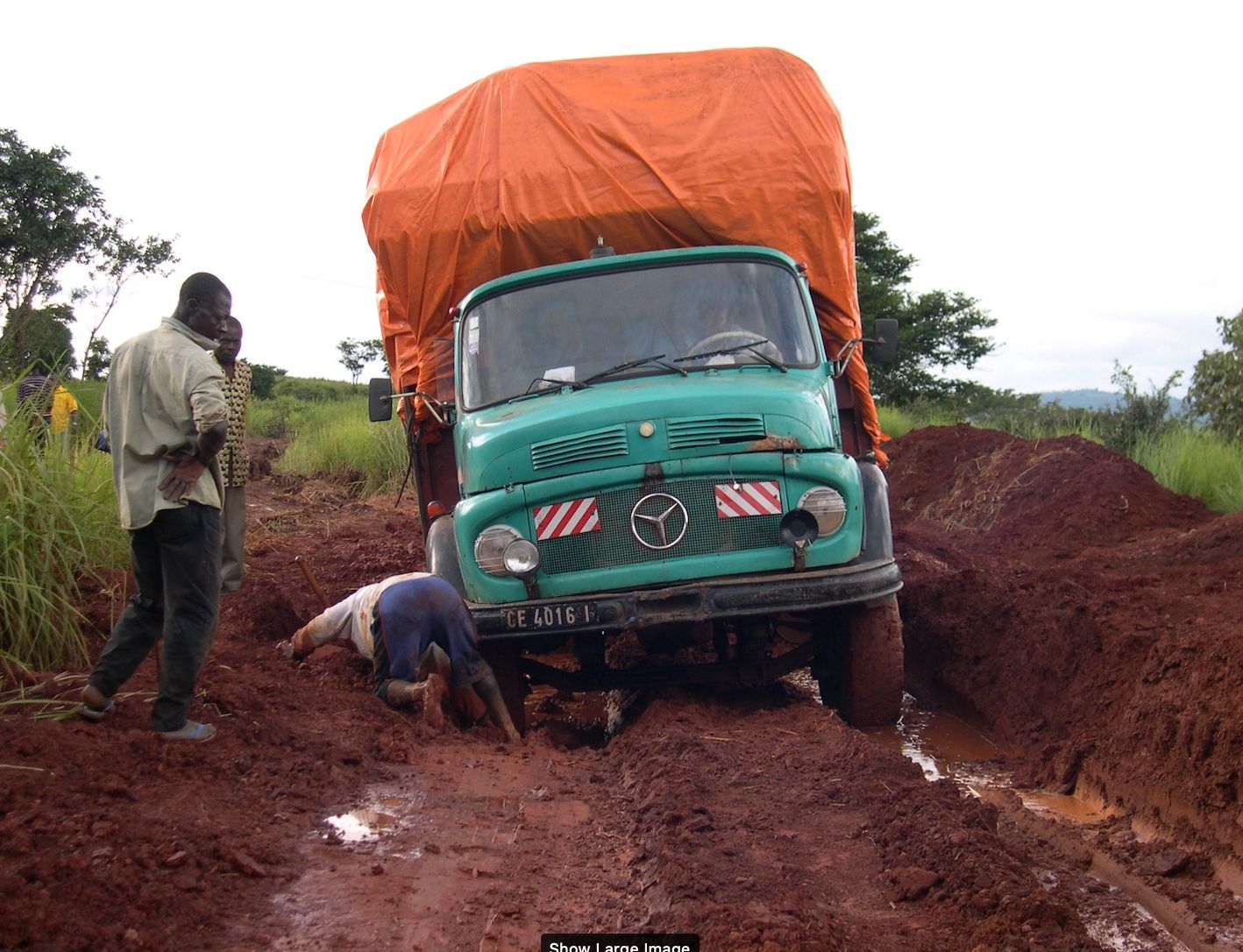
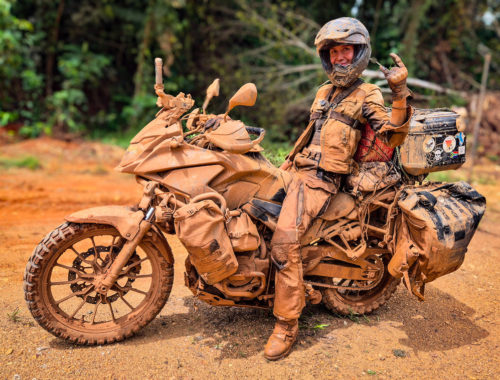
Will you be able to distinguish the photos from 2003 from those taken in 2026?

No Comments