
Cet article est également disponible en :
May 1–9, 2026 – Cotonou
In Cotonou, I reunited with the belongings I had left behind almost a year ago, as well as with my old habits.
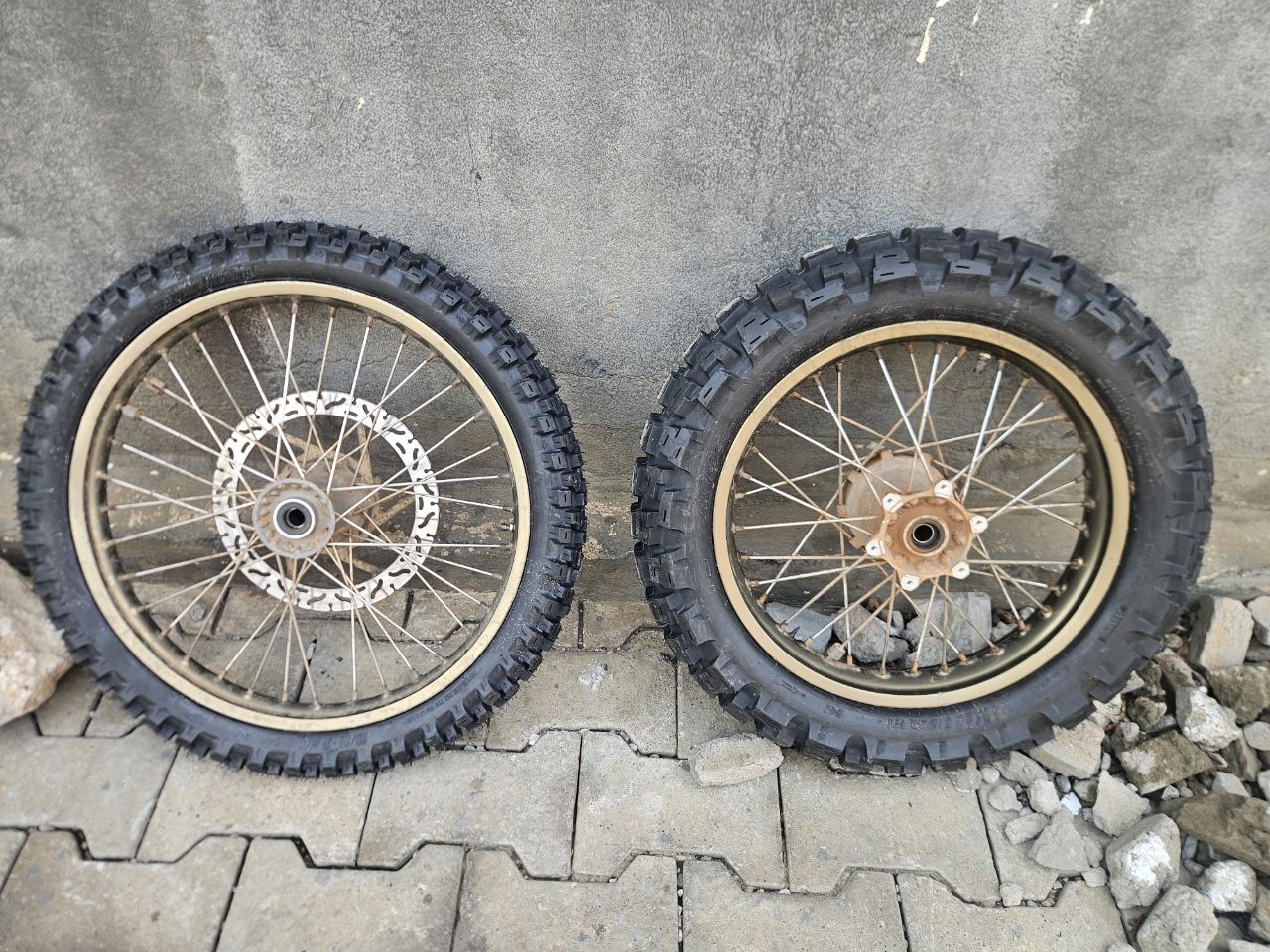
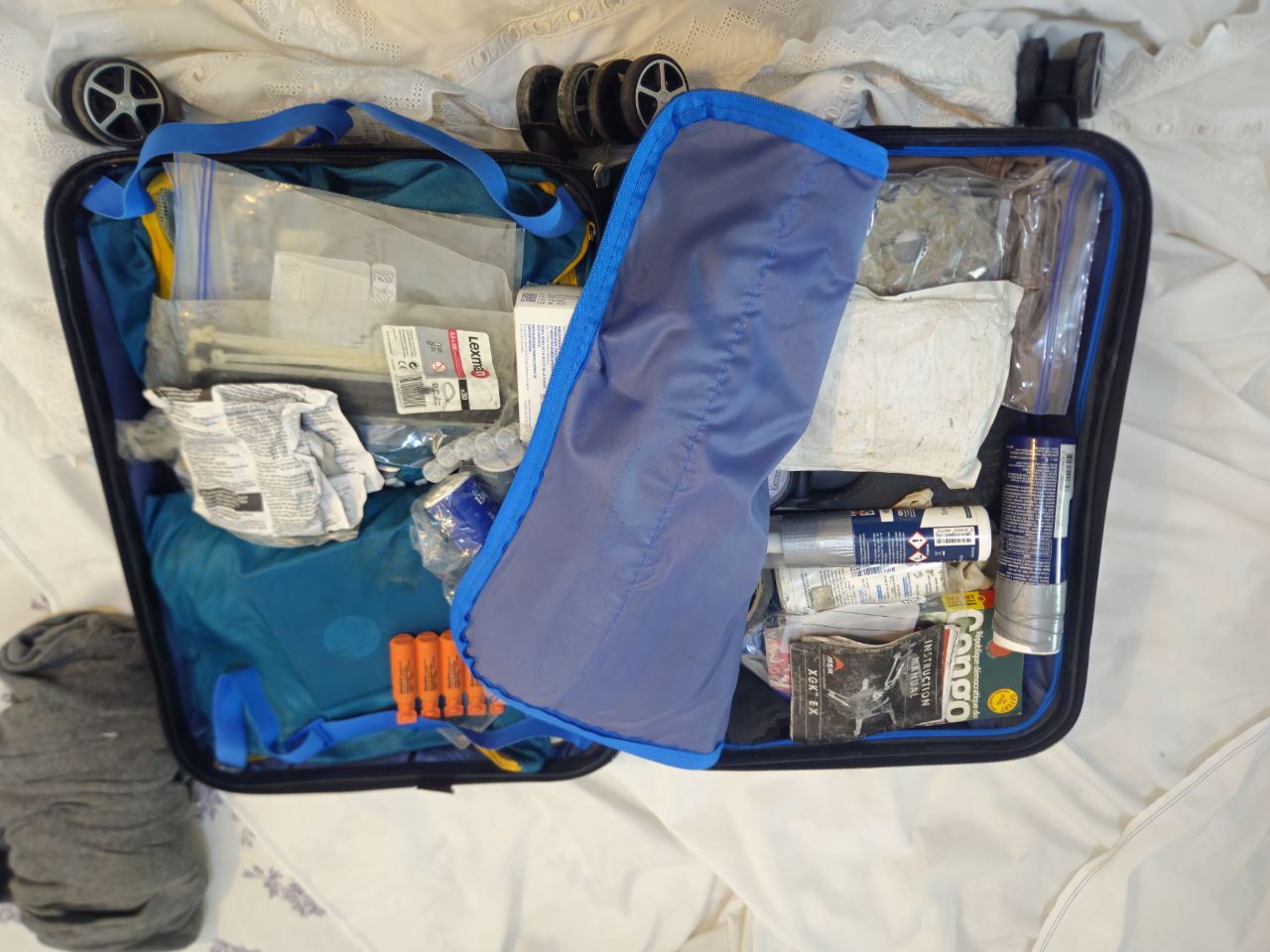
When I talk about my belongings, I mean a new set of motorcycle tires and a small carry-on suitcase that I had left there under the watchful care of Madame Angèle.
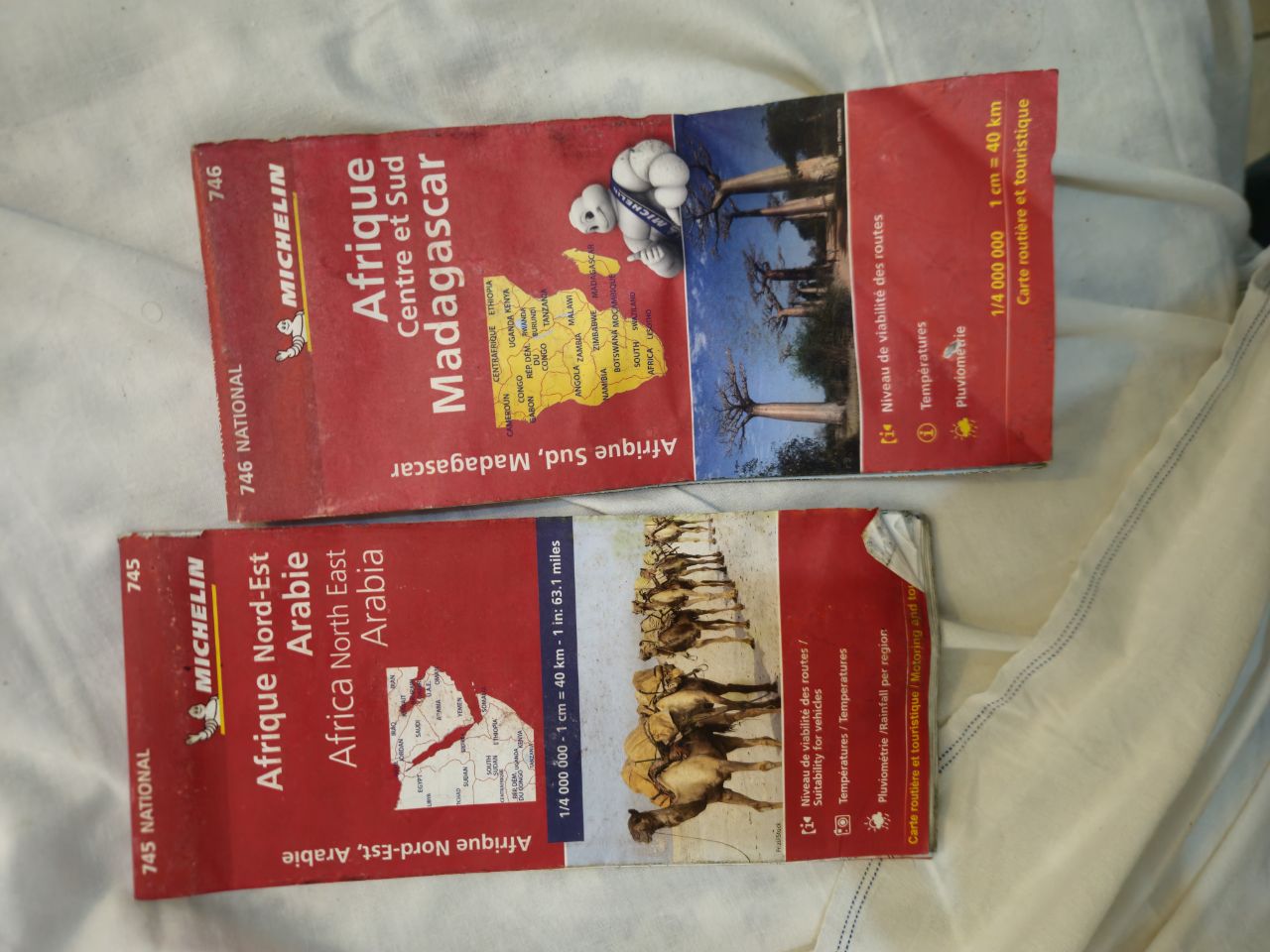
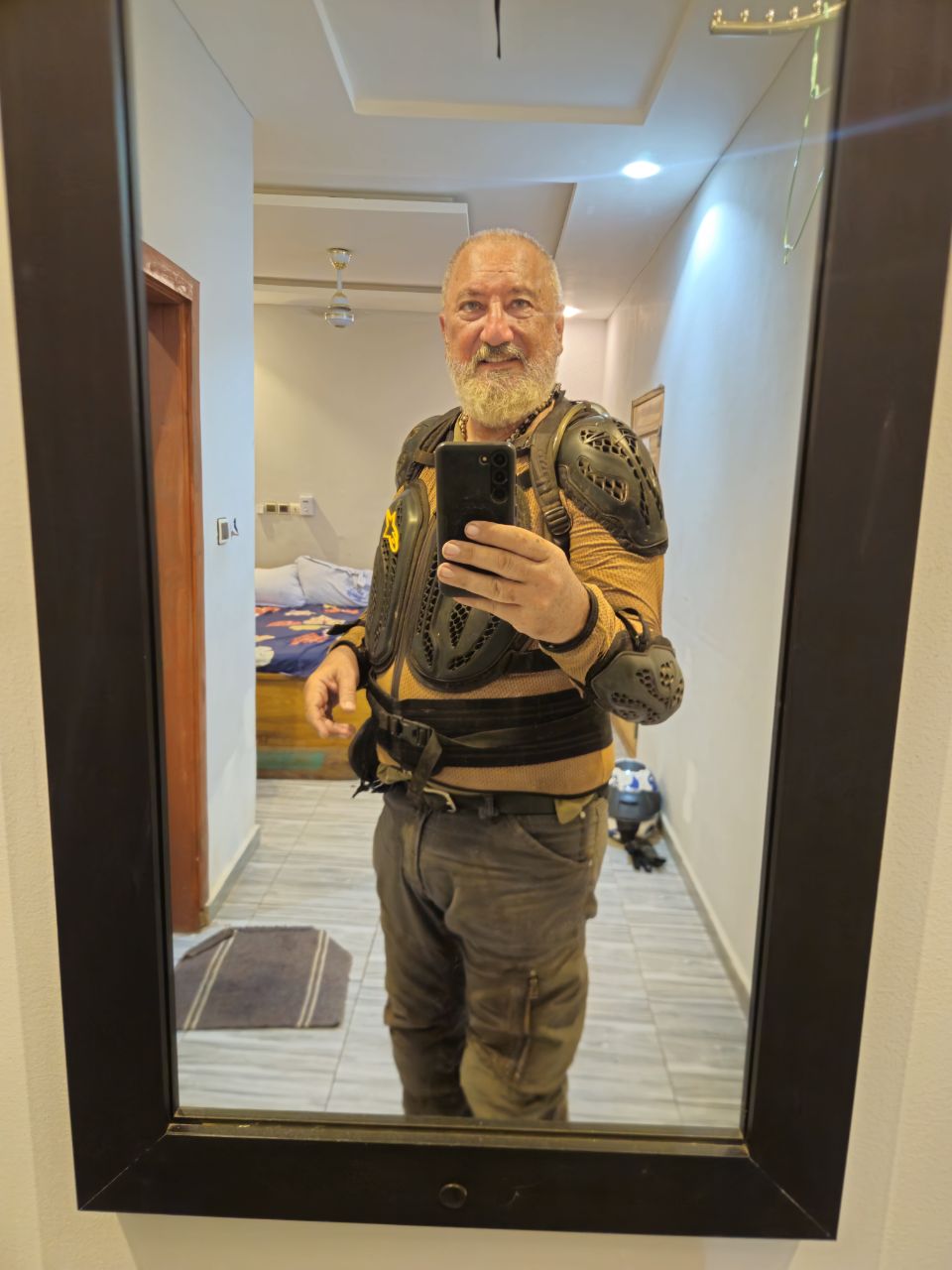
That said, I have no idea where I’m going to fit all of this! I now have quite a few duplicate items: T-shirts, pairs of socks, underwear, a fleece jacket, oil filters, and bottles of mosquito repellent. As for the repellent, that comes in handy since the rainy season is just beginning. There are also a few things I’m happy to get back, such as my Michelin maps and my solar panel. There are also two pairs of trousers. Once again, that’s fortunate, as the ones I’m currently wearing are falling apart. A sort-out is definitely needed!
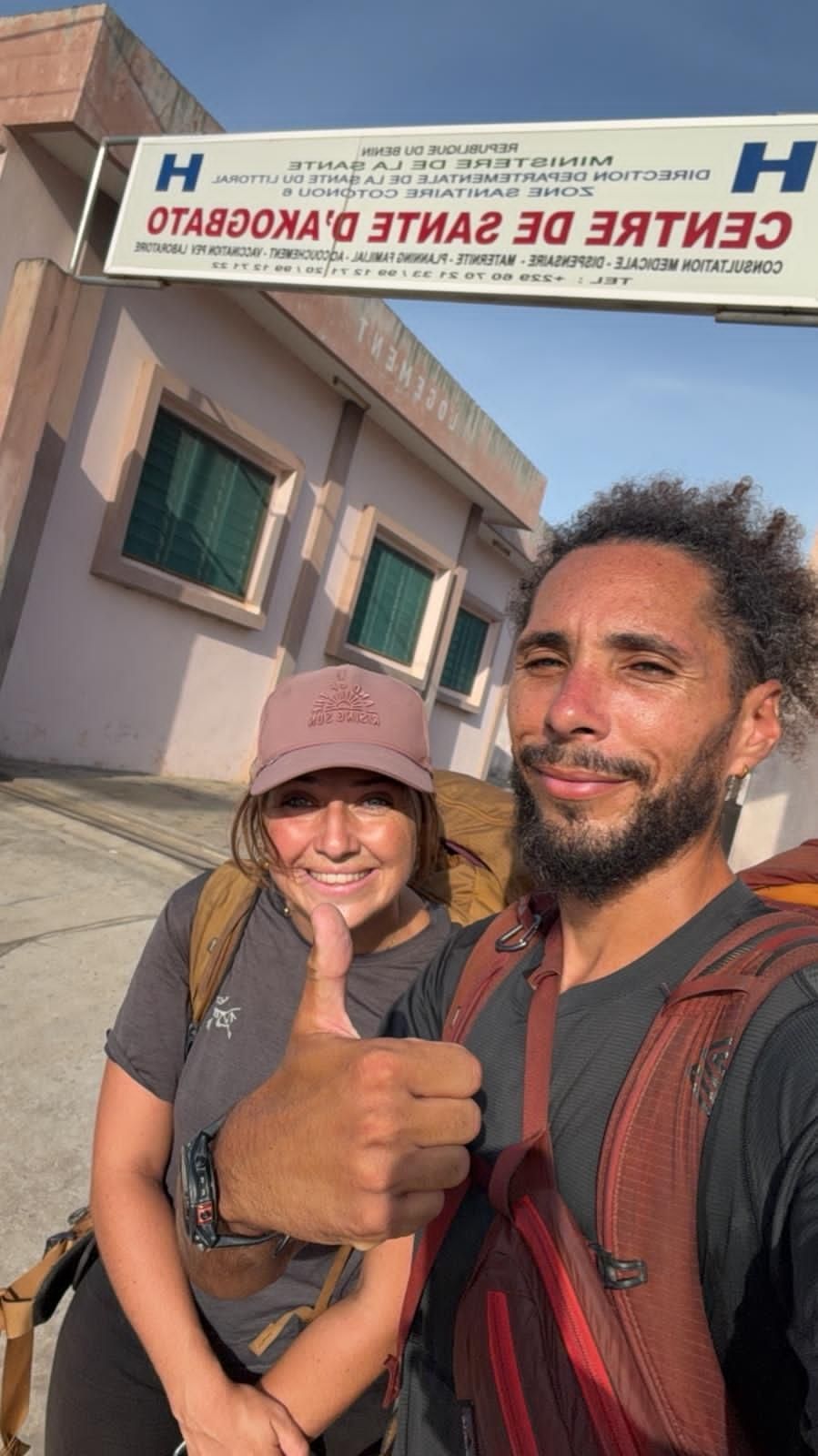
Yoni, Laurie, and I spend a few pleasant evenings together. They are still waiting for their famous cargo ship—which is becoming increasingly hypothetical—to leave Lomé for Douala. Their plan is to bypass Nigeria, whose visa has become outrageously expensive (more than €500 for the two of them).
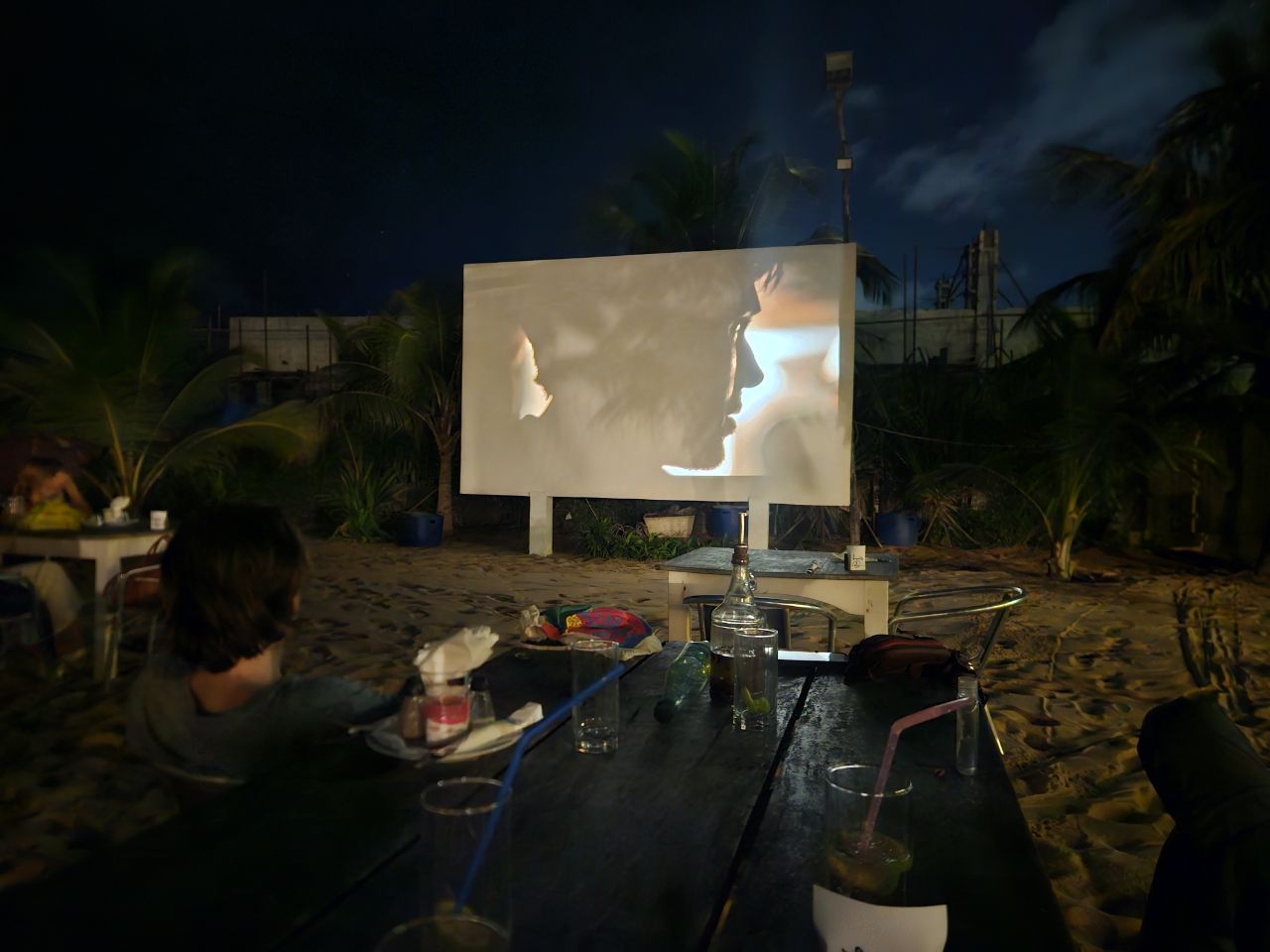
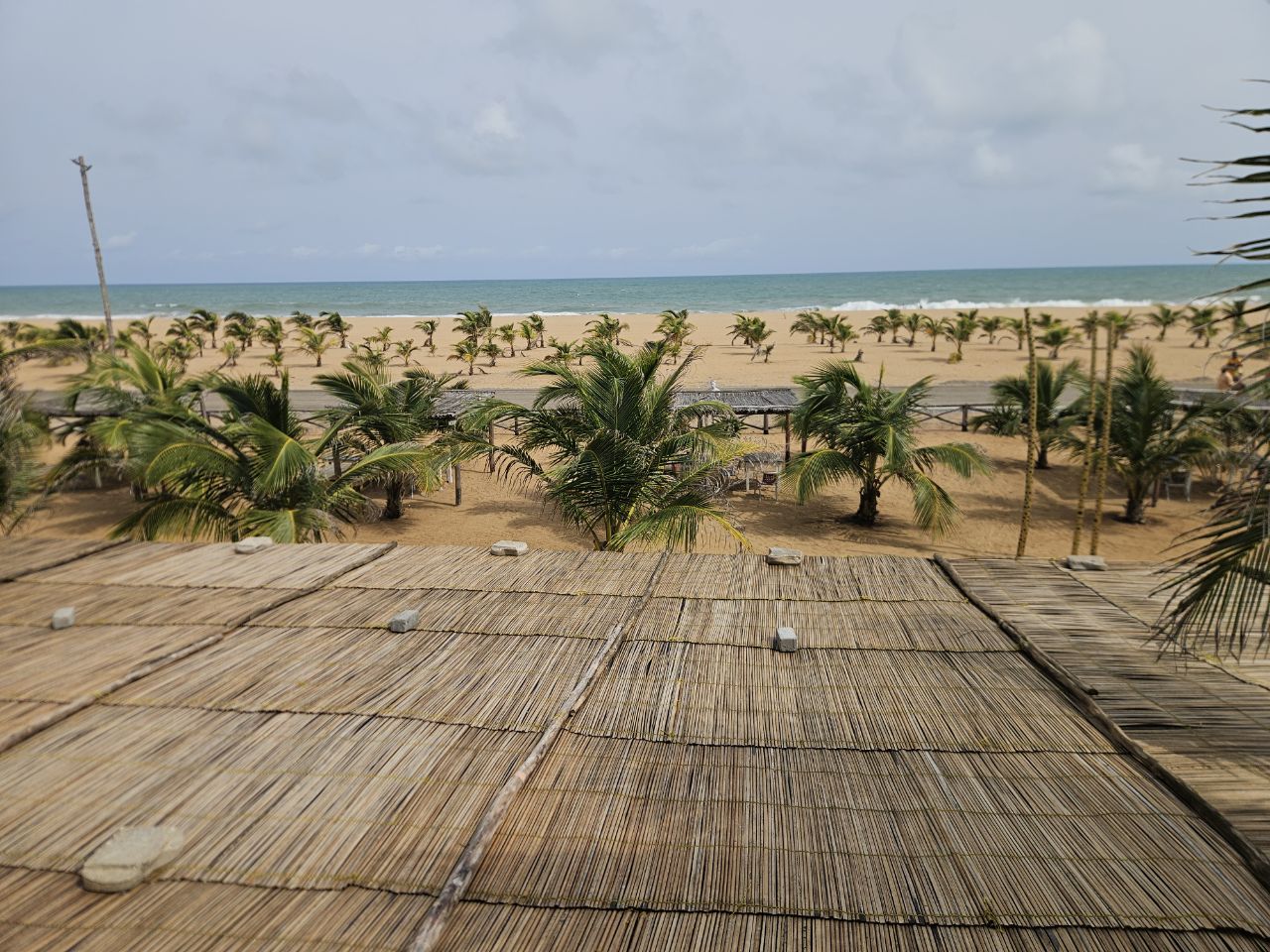
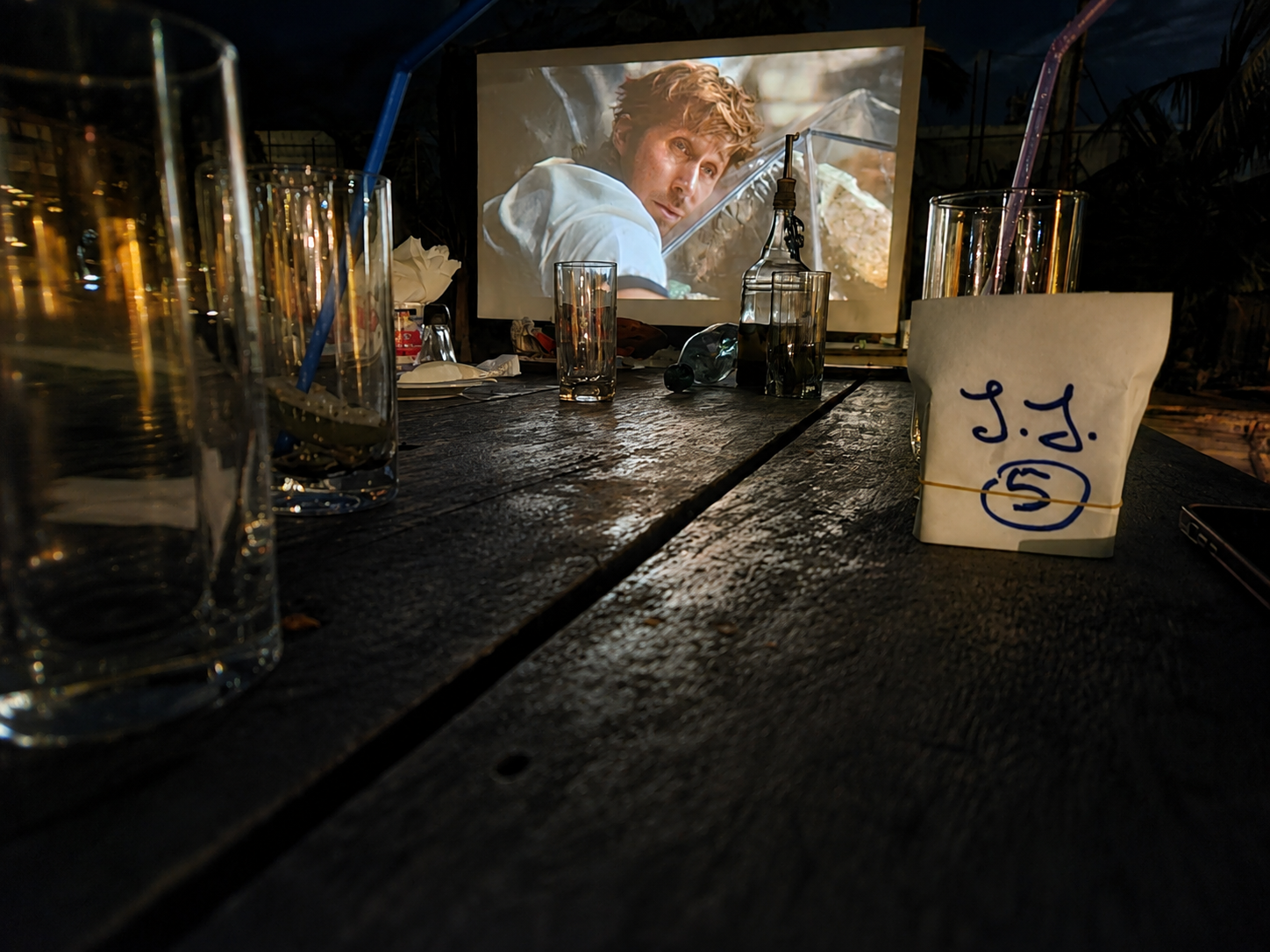
On Tuesday evening, it’s movie night on the beach at La Cabane du Pêcheur. I don’t even need to give my name when booking: the owner knows me, and when evening comes, our little group of five finds its table perfectly positioned in front of the screen.
Movie night and pizza.
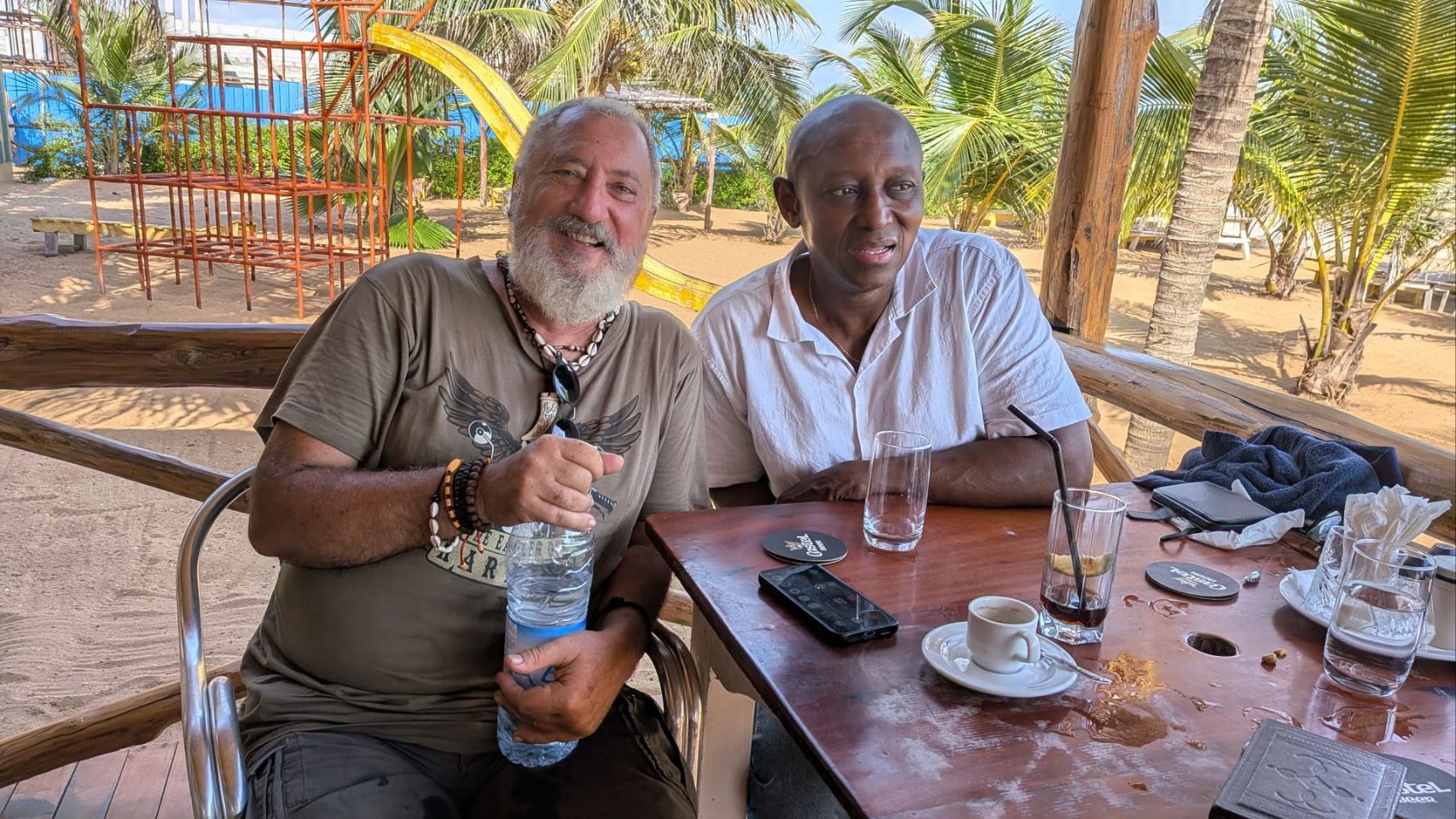
The film being shown is Last Chance Project. Of course, Yoni and Laurie were there, but so was Vincent “the Admiral.” Vincent and I had already been in touch, but we had never taken the time to meet. He is from Martinique and decided to settle in Benin five years ago. A really great guy.
The film, quite long at two and a half hours, ended under a tropical downpour. Our table was the only one that held out; it became a contest to see who could stay the longest. I was the second person to give up. Still, the rain was warm and we dried off quickly. The only problem was that with my glasses covered in water, I could hardly see anything.
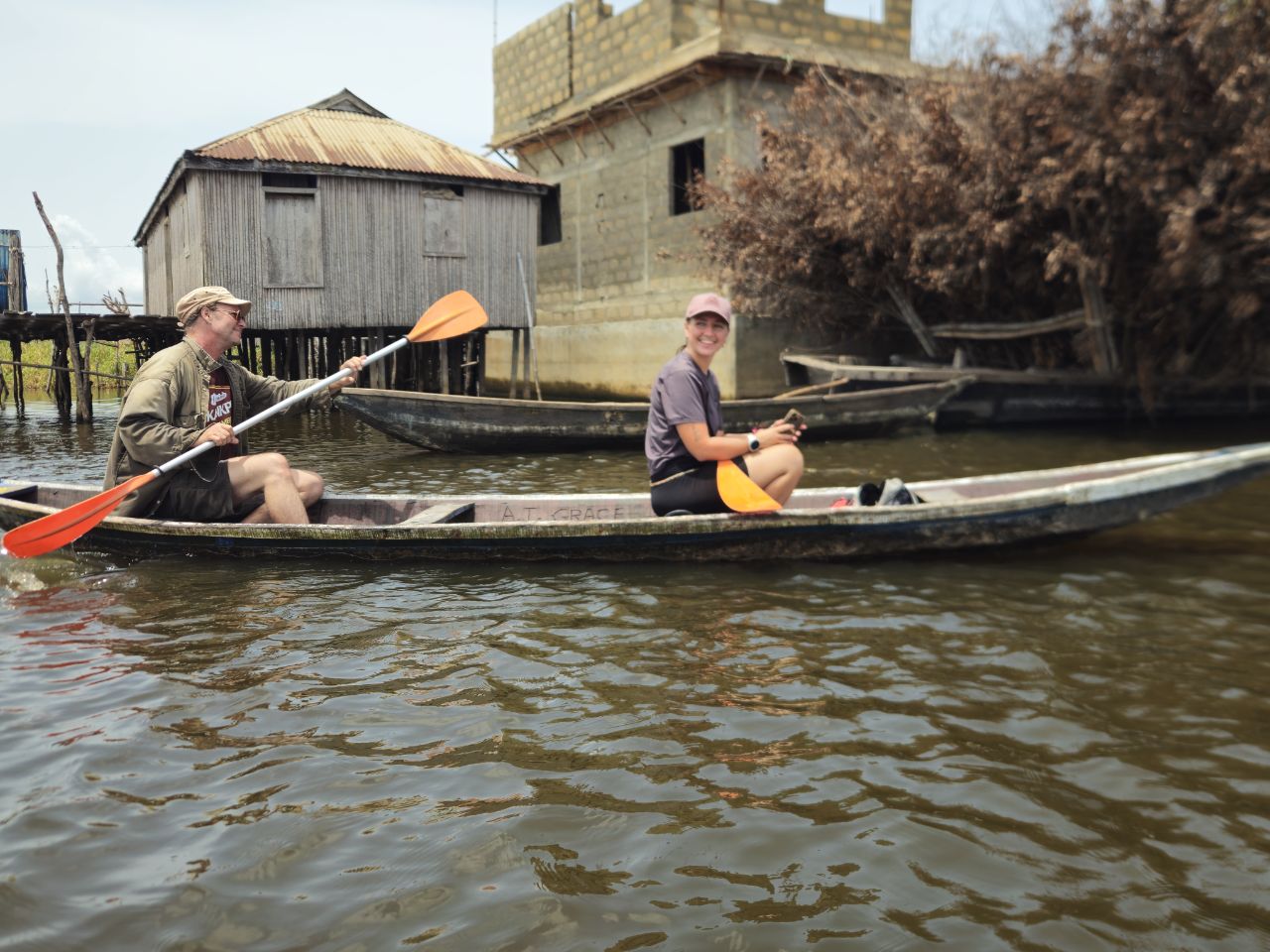
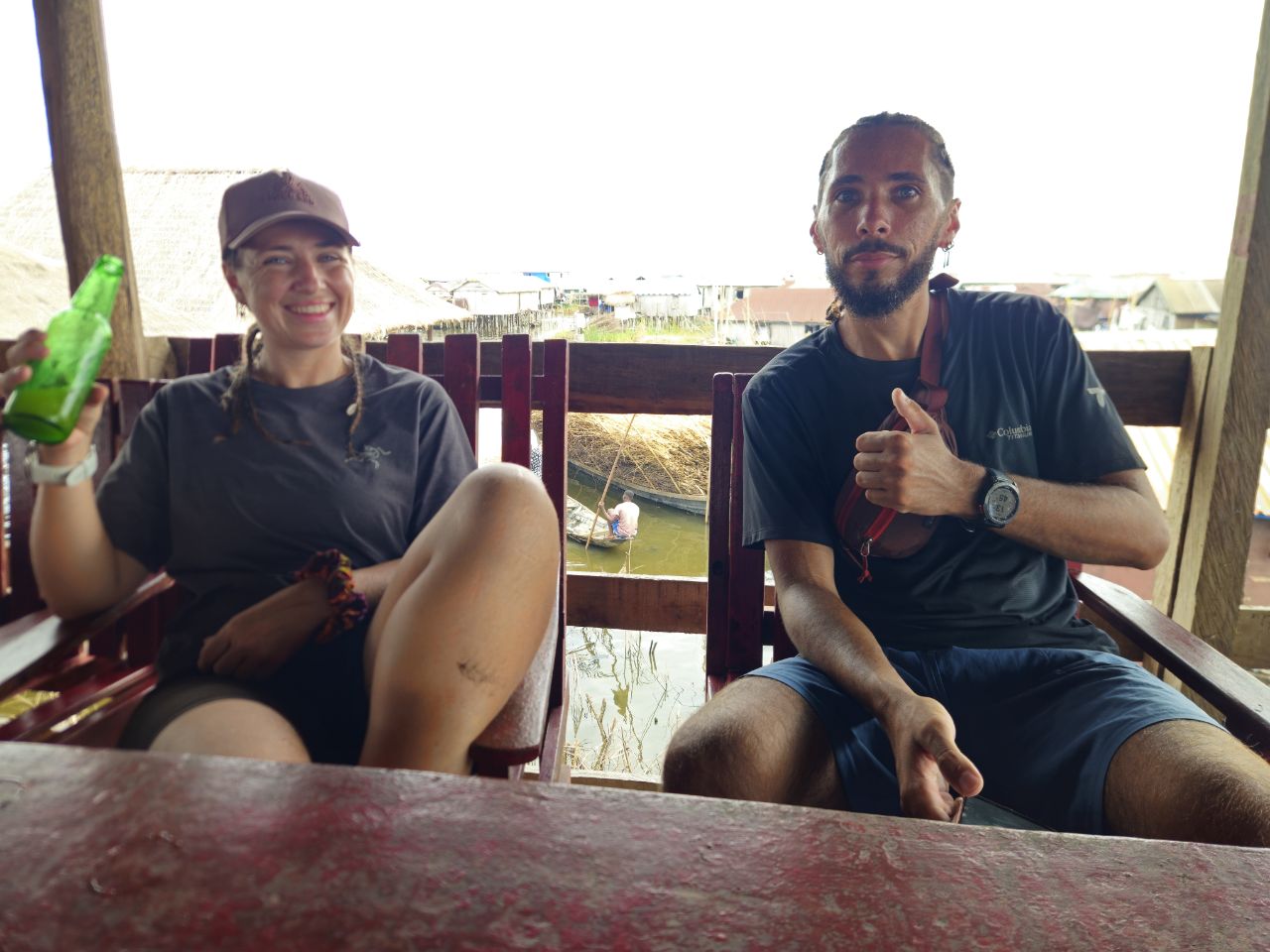
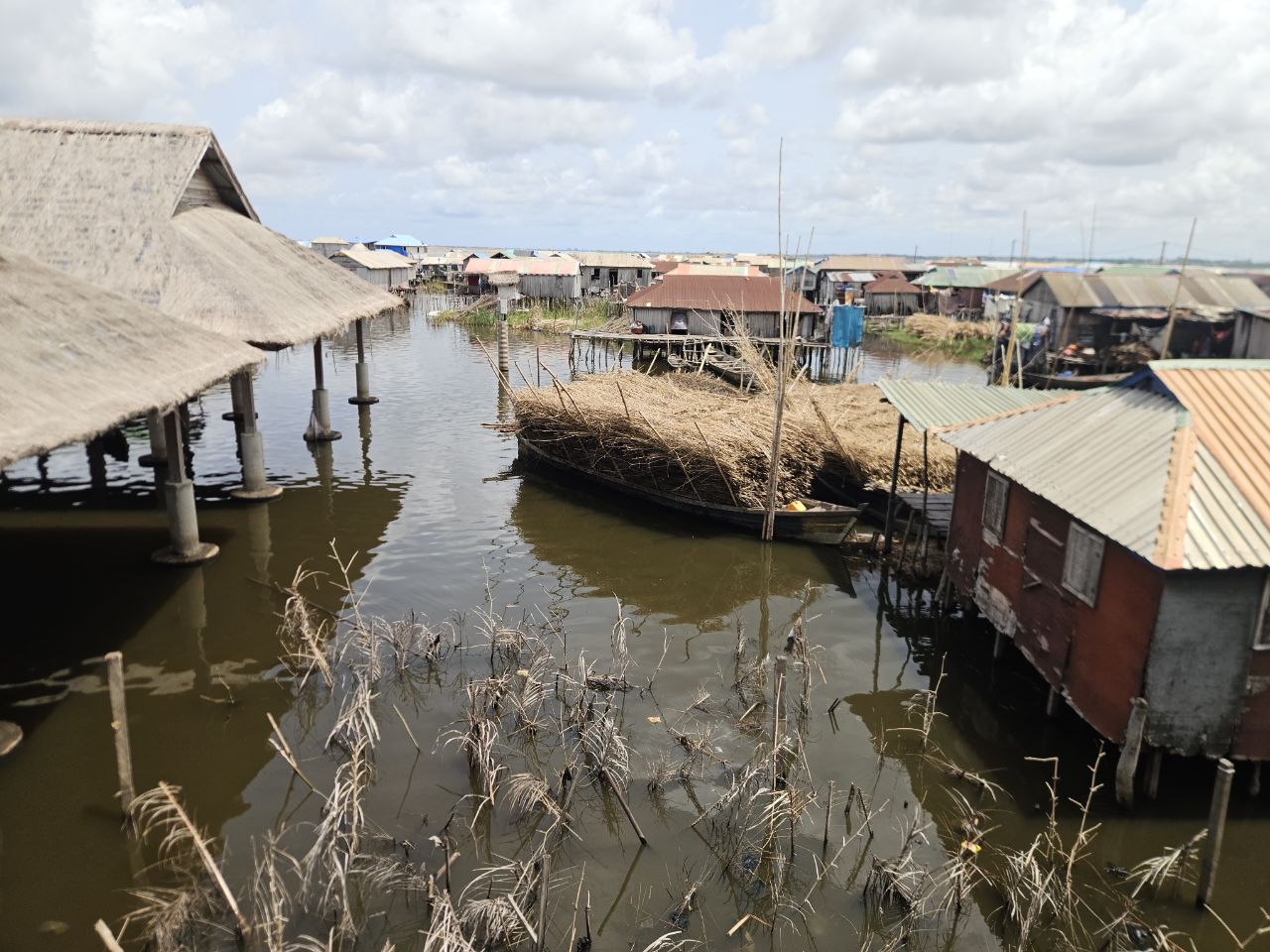
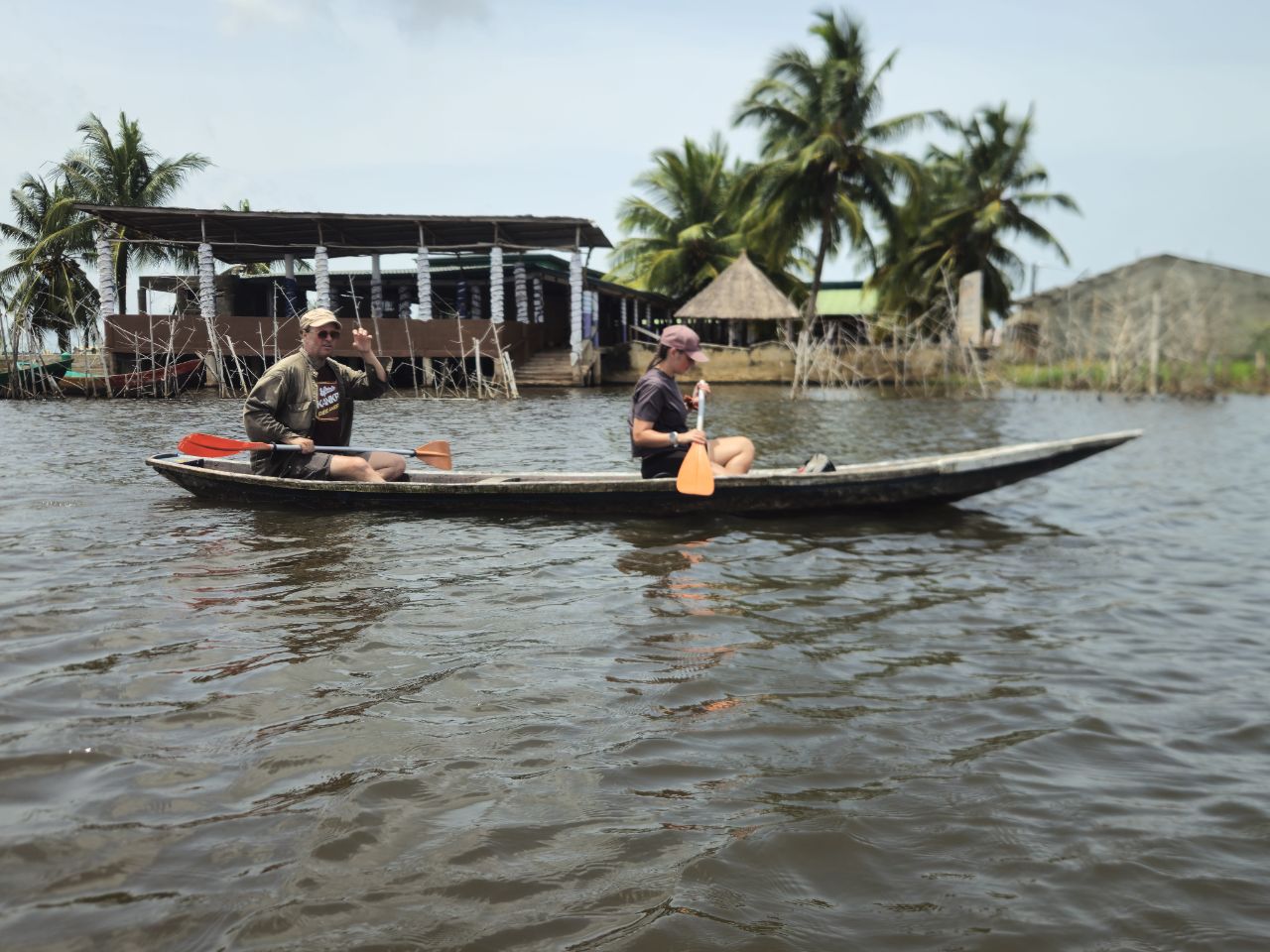
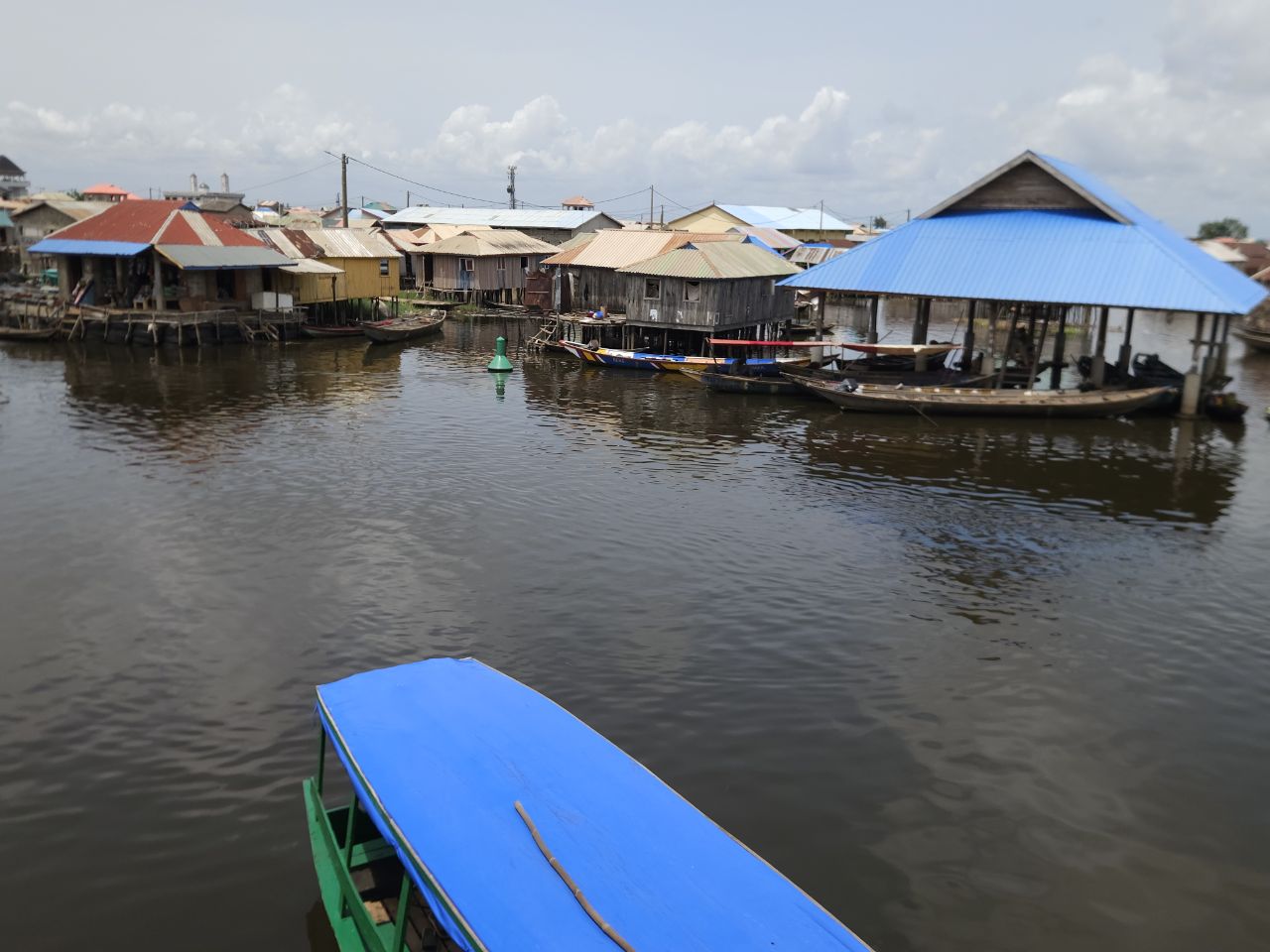
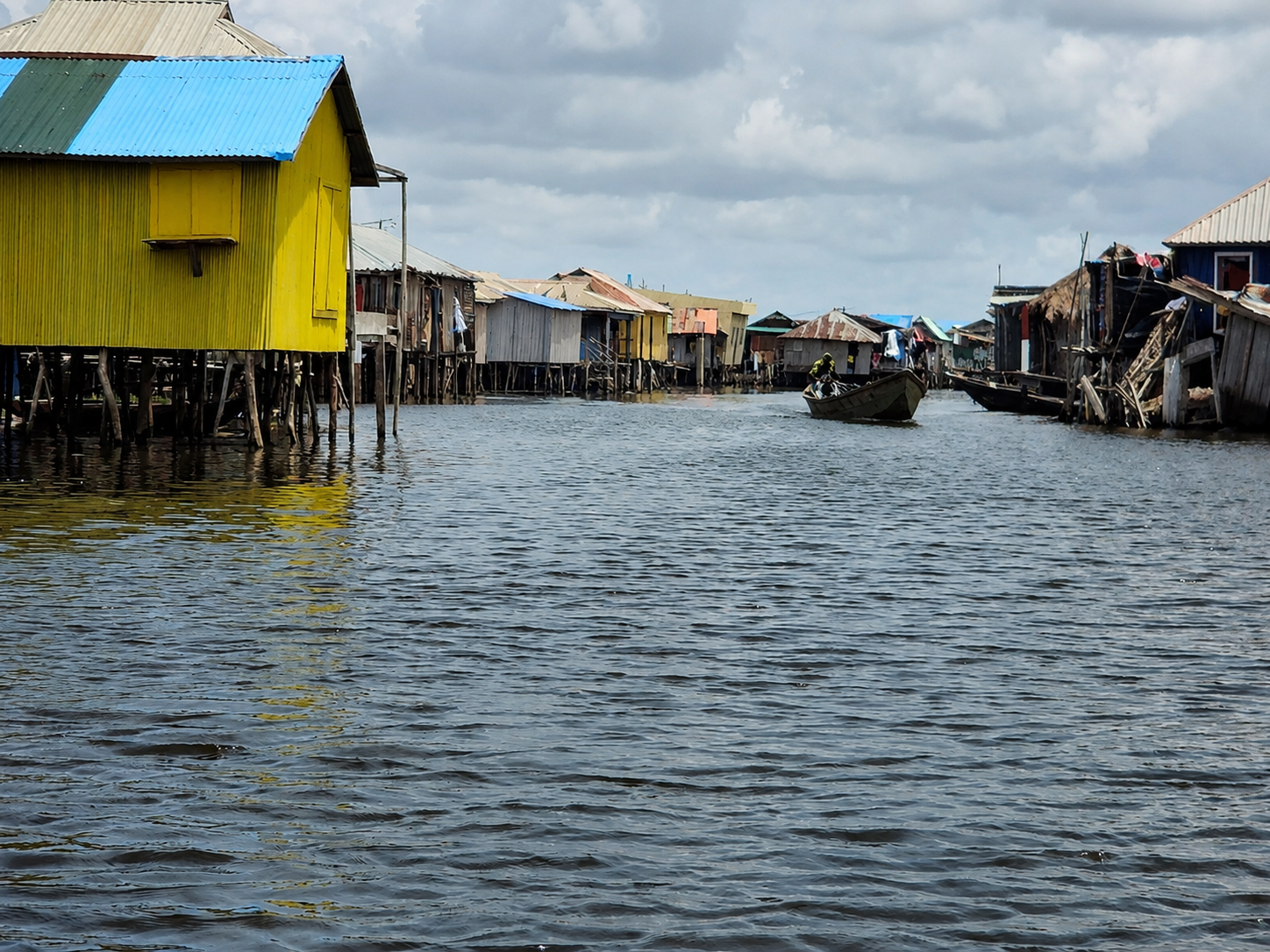
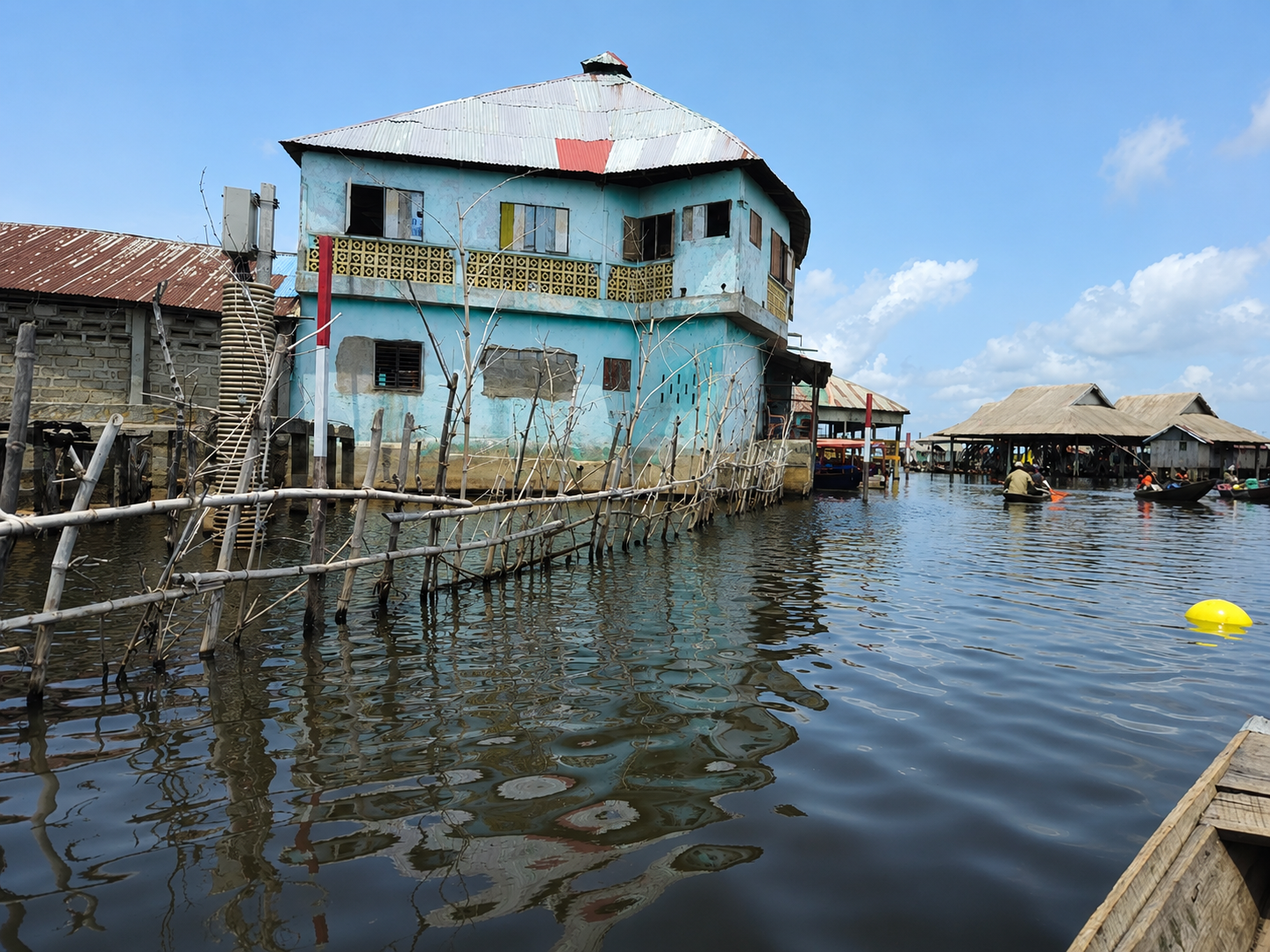
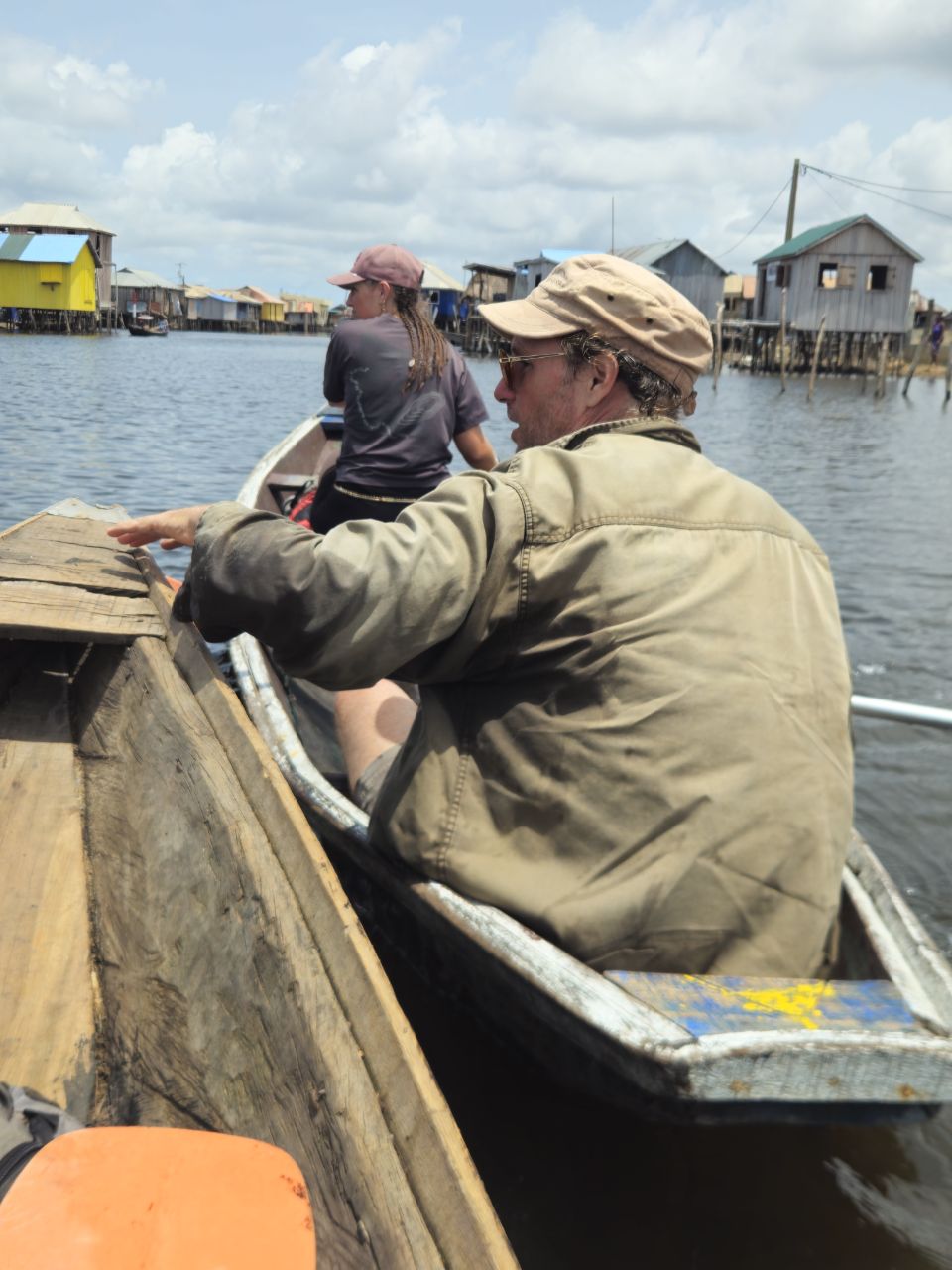
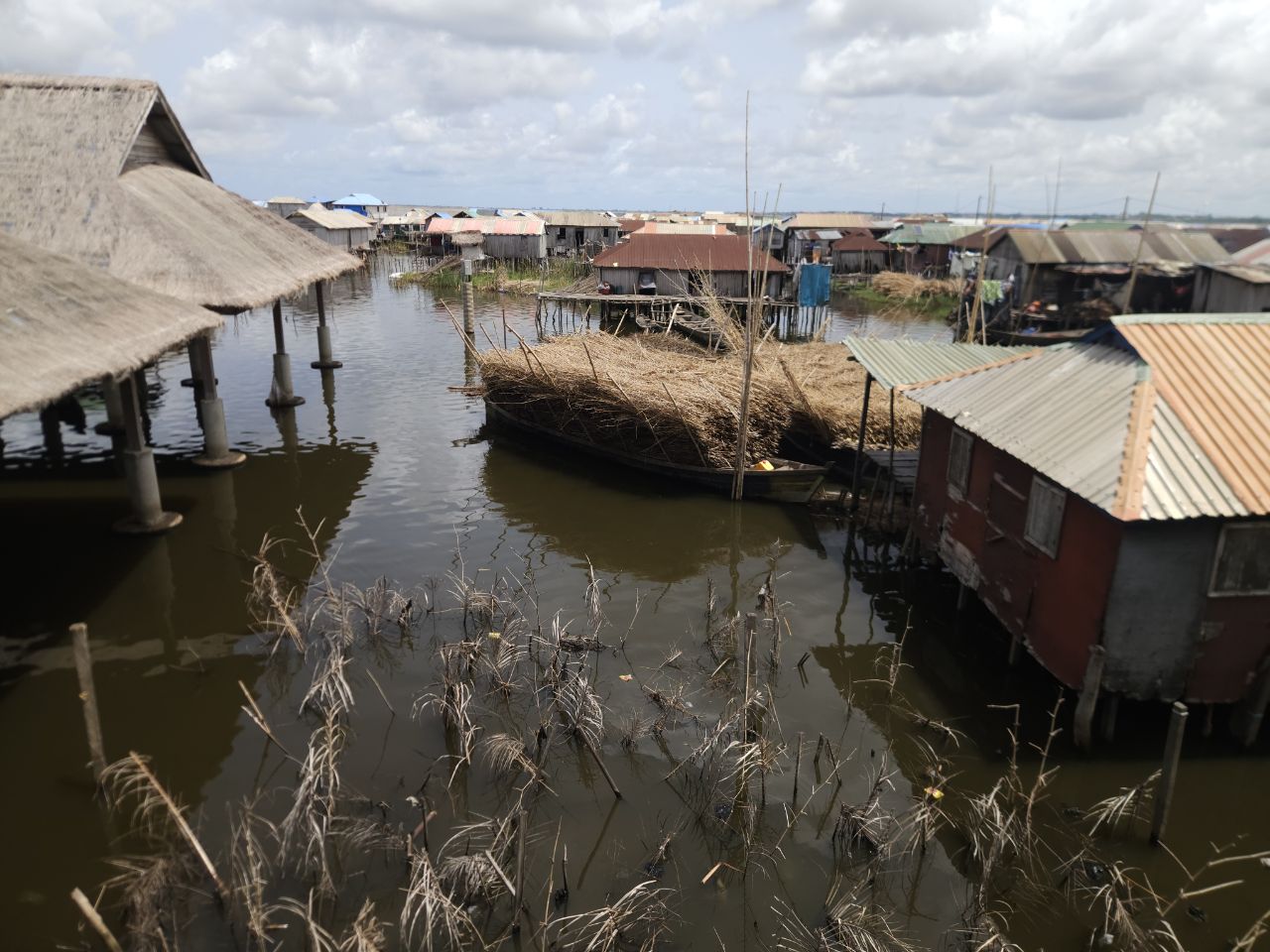
On the day the young travelers left, we visited the African Venice—Ganvié—by canoe, with Vincent as our guide. We had a brief altercation with some rather aggressive kids who started shouting at me when they saw my GoPro.
“No photos!” they yelled, while simultaneously asking me for money.
Nothing serious. While I understand that they may be tired of being photographed, I pointed out that one does not aggressively confront an elderly man with a white beard. Besides, I wasn’t filming them at all; I was simply taking a wide shot of the lagoon.
May 10–19, 2026
May 10 was a bittersweet day. On the one hand, it was my birthday; on the other, Yoni and Laurie had both come down with malaria. Yes, at the same time. I had warned them back in Grand-Popo to be careful in the evenings. Ah, youth… 😉
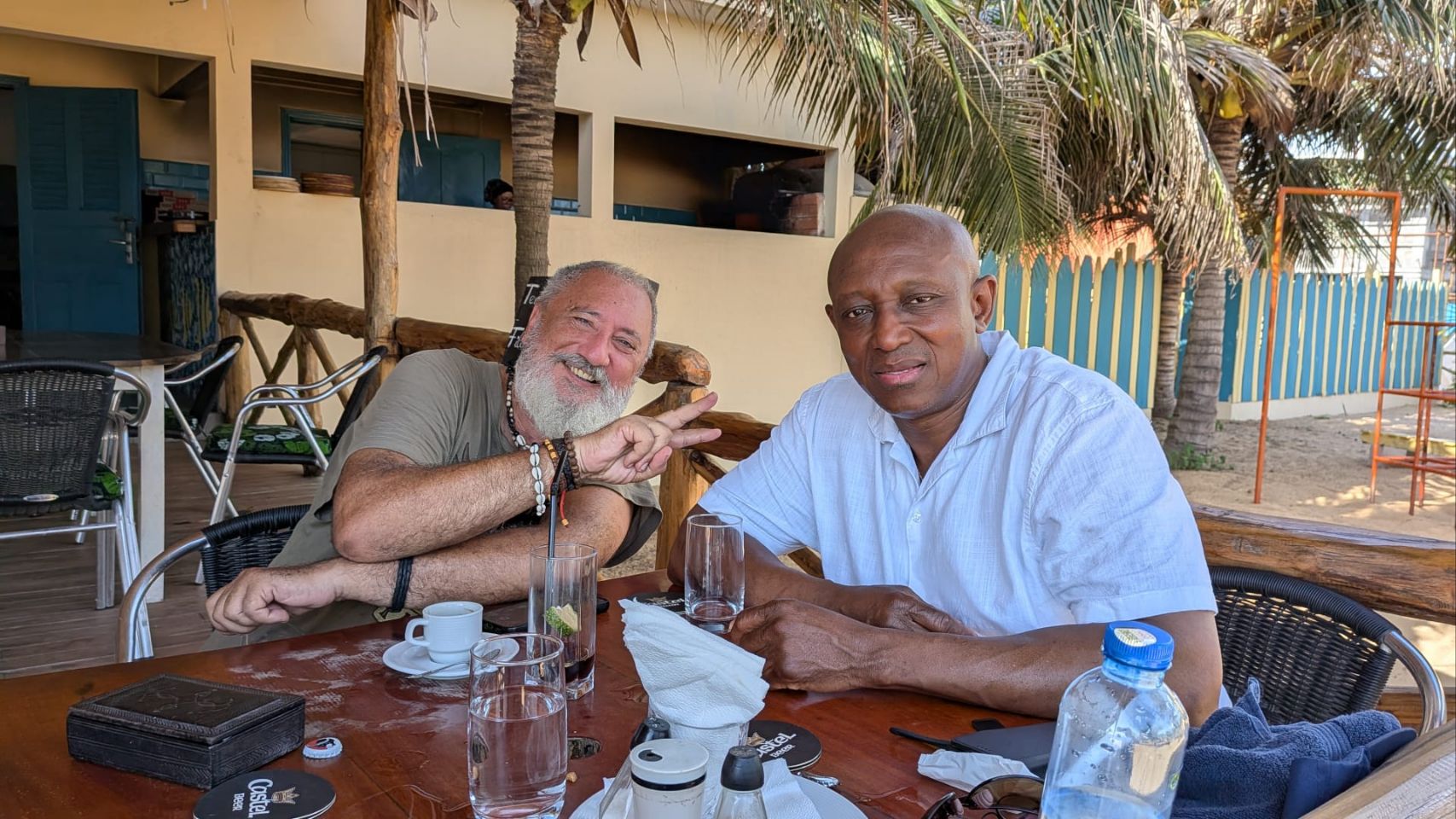
After they left, I decided to stay a few extra days in order to finish my next article for Globe Rider Magazine. During that time, I had the pleasure of having lunch with Fredo, an old Togolese friend who was passing through Africa. Of the two of us, he was clearly the one struggling most with the heat these days.
I handed him a huge bag of… adult diapers (see the post: The Diapers of Cotonou), and it was only on May 19 that I finally decided to get back on the road towards Nigeria.
Tuesday, May 19, 2026 – Leaving Cotonou and Entering Nigeria – Border near Kétou
At last, I left Cotonou, setting off fairly early, around 8:30 a.m.
I had planned to leave on Monday, but departures after a long stop are always complicated. I took the extra day to fine-tune my packing.
The departure went smoothly. The outskirts of Cotonou are wide open, with large four- to six-lane avenues and service roads reserved for motorcycles. At first, I rode on those side lanes, but the pace was a bit too slow for my liking, so I eventually merged onto the main road.
Traffic was relatively light, at least for cars. Much less so for the zem-zems, the small 125 cc motorcycles that make up most of Benin’s two-wheeled traffic. I counted only one bicycle.
Towards the Nigerian Border
The road passed without incident. A few light showers came and went, but I didn’t even bother putting on rain gear. Five minutes after each shower, I was already dry.
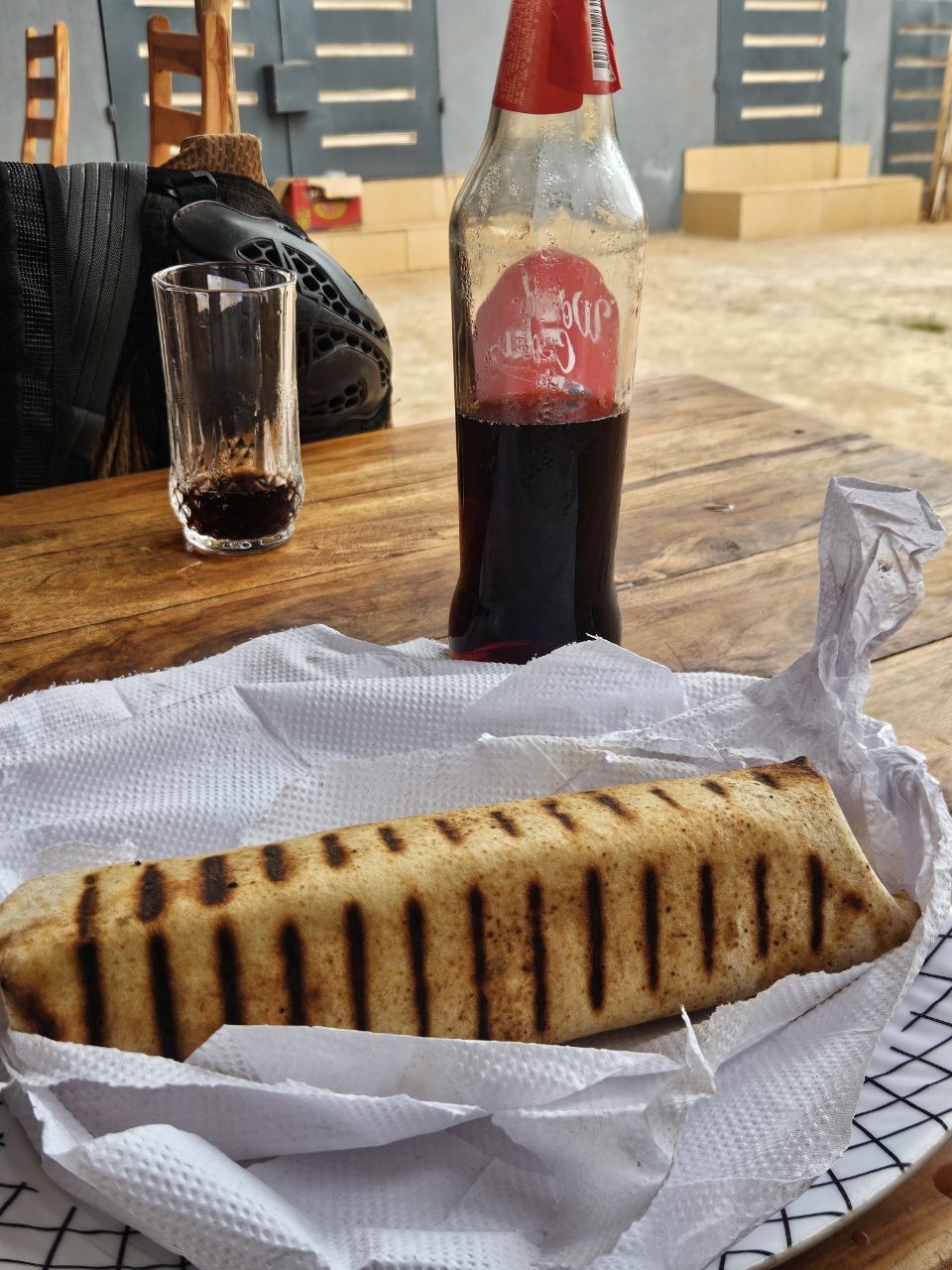
I made a short stop in Kétou for a shawarma. The town has one or two broad avenues, but most of it consists of sandy and dirt streets.
Then it was on to Nigeria.
I arrived at the Nigerian border… without having completed Benin’s exit formalities.
So I had to walk back to the Beninese customs office. The process took some time, mainly because the customs officer absolutely insisted on seeing a printed copy of my visa, which I had left on the motorcycle. I did have a copy on my phone, but we spent at least thirty minutes unsuccessfully trying to connect via Bluetooth.
Border Crossing
On the Nigerian side, the formalities do not take place at the border post itself but at the immigration office about a kilometer farther north.
At the end of a wide four-lane avenue that was almost deserted and lined with apparently empty buildings, I found myself at a roundabout leading nowhere, surrounded by offices that looked abandoned.
A man emerged.
An armed soldier carrying a submachine gun.
I asked him where immigration was located. He pointed me toward one of the buildings.
The room was fairly spacious, equipped with ceiling fans that were not running.
A man sat behind a small wooden desk. He motioned for me to sit on one of the two wooden chairs placed in front of him.
The man was friendly. He clearly did not see many French-speaking tourists. He examined my visa, then pulled out a pouch full of stamps. After selecting one, he stamped my passport.
He informed me that I had one month.
More than enough time to cross Nigeria, but it makes this visa extremely expensive considering the actual number of days spent in the country.
As a reminder, I paid €334 for it.
We exchanged farewells, and he wished me a safe journey.
First Kilometers in Nigeria
The first few kilometers were peaceful.
A small road winding gently through lush countryside.
I noticed an astonishing number of gas stations, most of which were either closed or abandoned. At one point, I counted no fewer than twenty within less than a kilometer.
I would learn the reason for this mystery later that afternoon.
Fuel is significantly cheaper in Nigeria than in Benin. Informal traders had therefore made a habit of crossing the border to stock up. I gathered that an agreement between the two countries had likely prohibited fuel sales within 25 kilometers of the border, resulting in the closure of countless stations built to serve that trade.
A Forgotten Atmosphere
These first kilometers also gave me the opportunity to rediscover an atmosphere I had almost forgotten: that of West Africa twenty years ago.
Smiling faces.
Surprised faces.
Curious faces eager to see a foreigner pass by.
It was something I had not really encountered in recent months in West Africa—or only rarely—whether in Senegal, Côte d’Ivoire, Togo, Benin, or elsewhere.
Meeting Nigerian Bikers
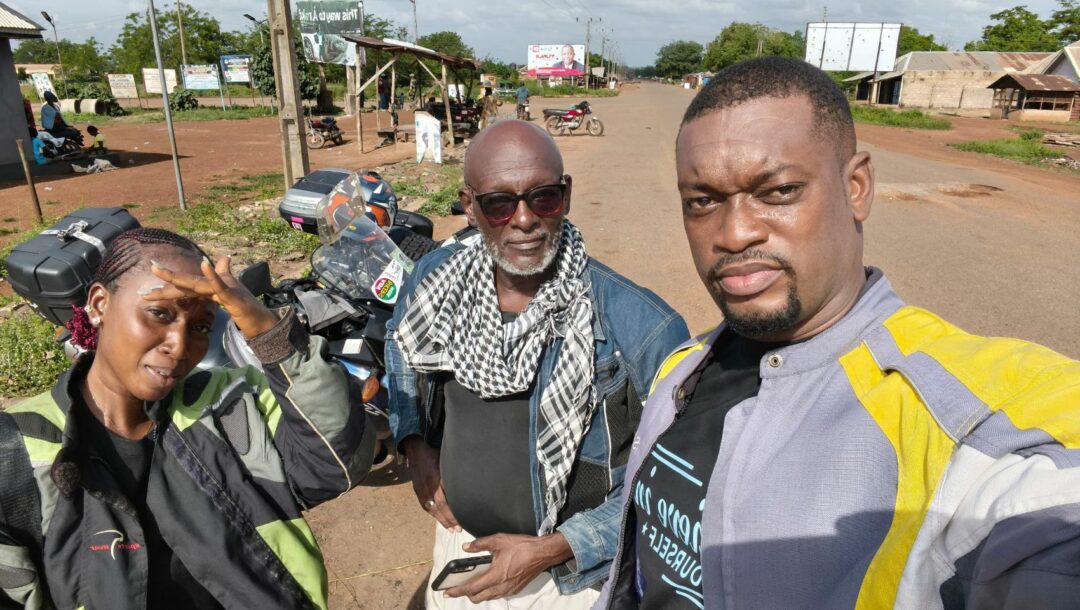
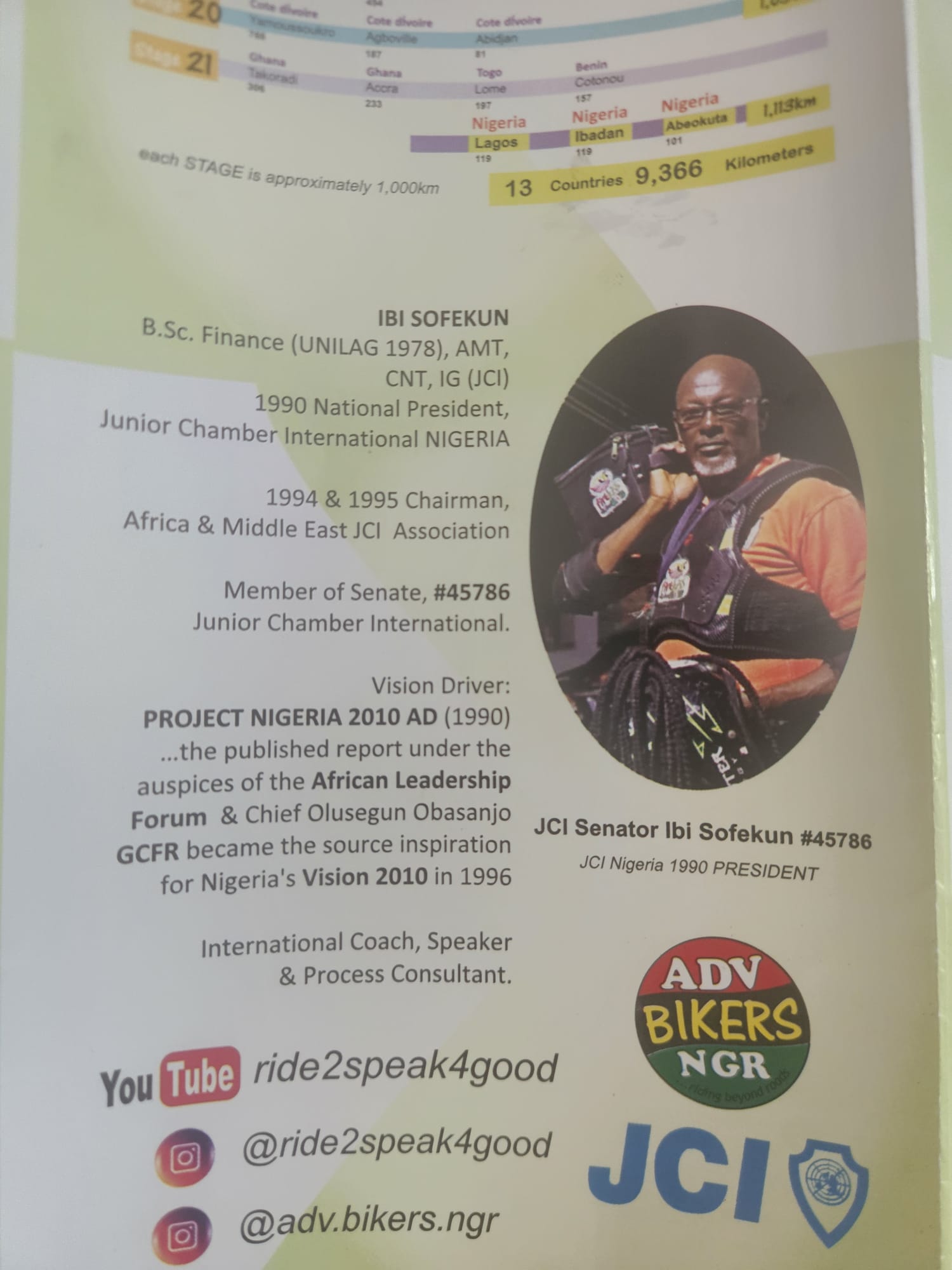
I met up with Big Bam, Lucy, and Ibi in Olorunda.
These Nigerian bikers had come to welcome and escort me.
From there, the scenery changed.
Traffic became dense and, despite the wide avenues, filtering through it was sometimes difficult.
But Ibi knew exactly what he was doing. His motorcycle was equipped with an extremely powerful horn. Behind me, Big Bam and Lucy, riding together on one bike, brought up the rear.
We made a first stop to try to find a SIM card.
Then we headed to Ibi’s home.
Ibi
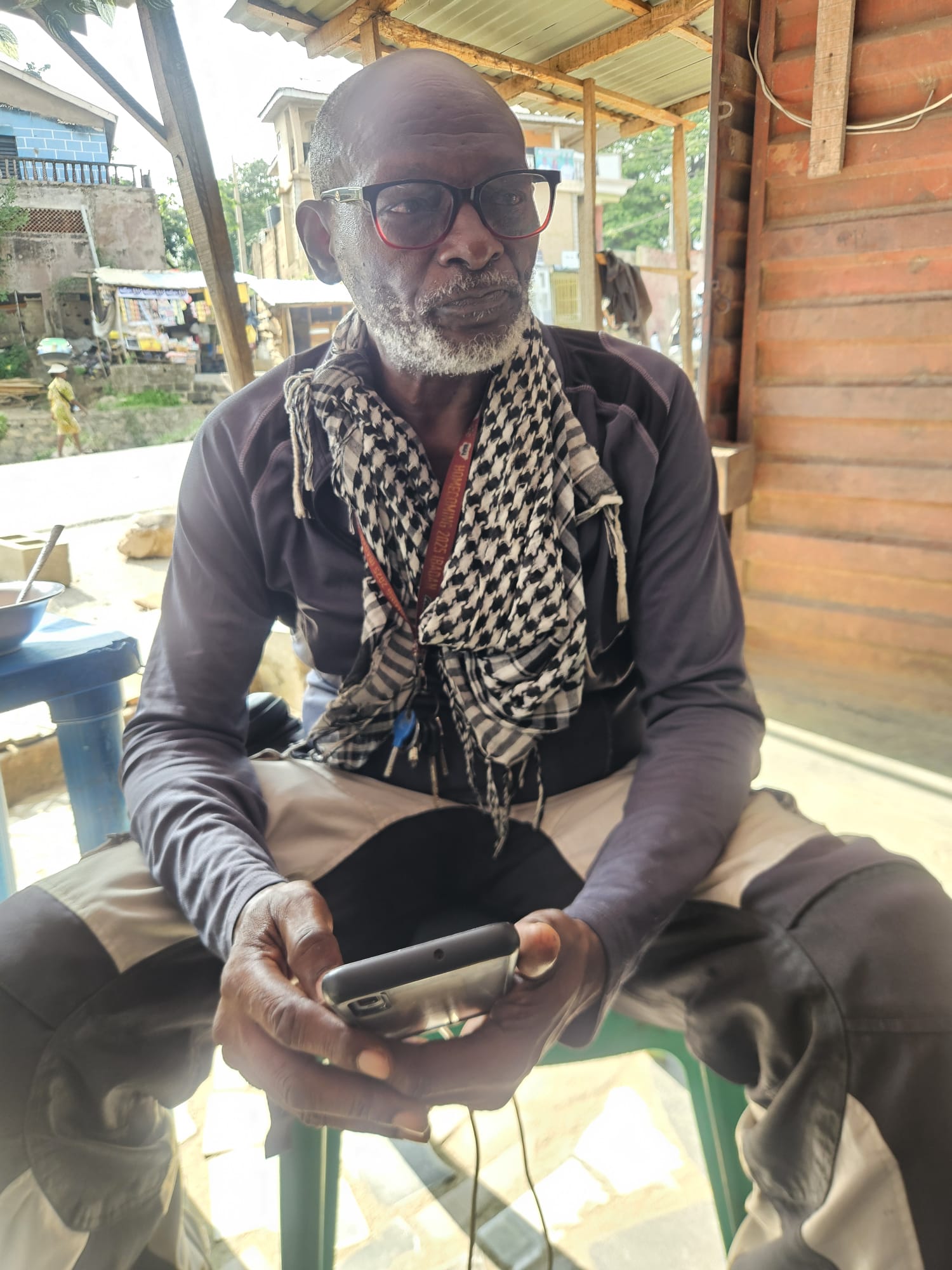
Ibi is around seventy years old, though he looks fifty.
We have been in contact for two years.
Last year, he left London, where he had bought a motorcycle, and set off on a tour of Europe before riding back down to Nigeria: ninety-nine days on the road.
His dual Nigerian-British citizenship helped him greatly at border crossings.
And not only in Europe.
Even in countries such as Mauritania, it is far better to carry a British passport than a Nigerian one.
That says a lot.
Nigeria has a reputation that often works against its citizens abroad.
End of the Day
A small group of additional bikers joined us.
We spent the evening at Ibi’s place.
His home was cozy, and one could clearly sense his artistic side.
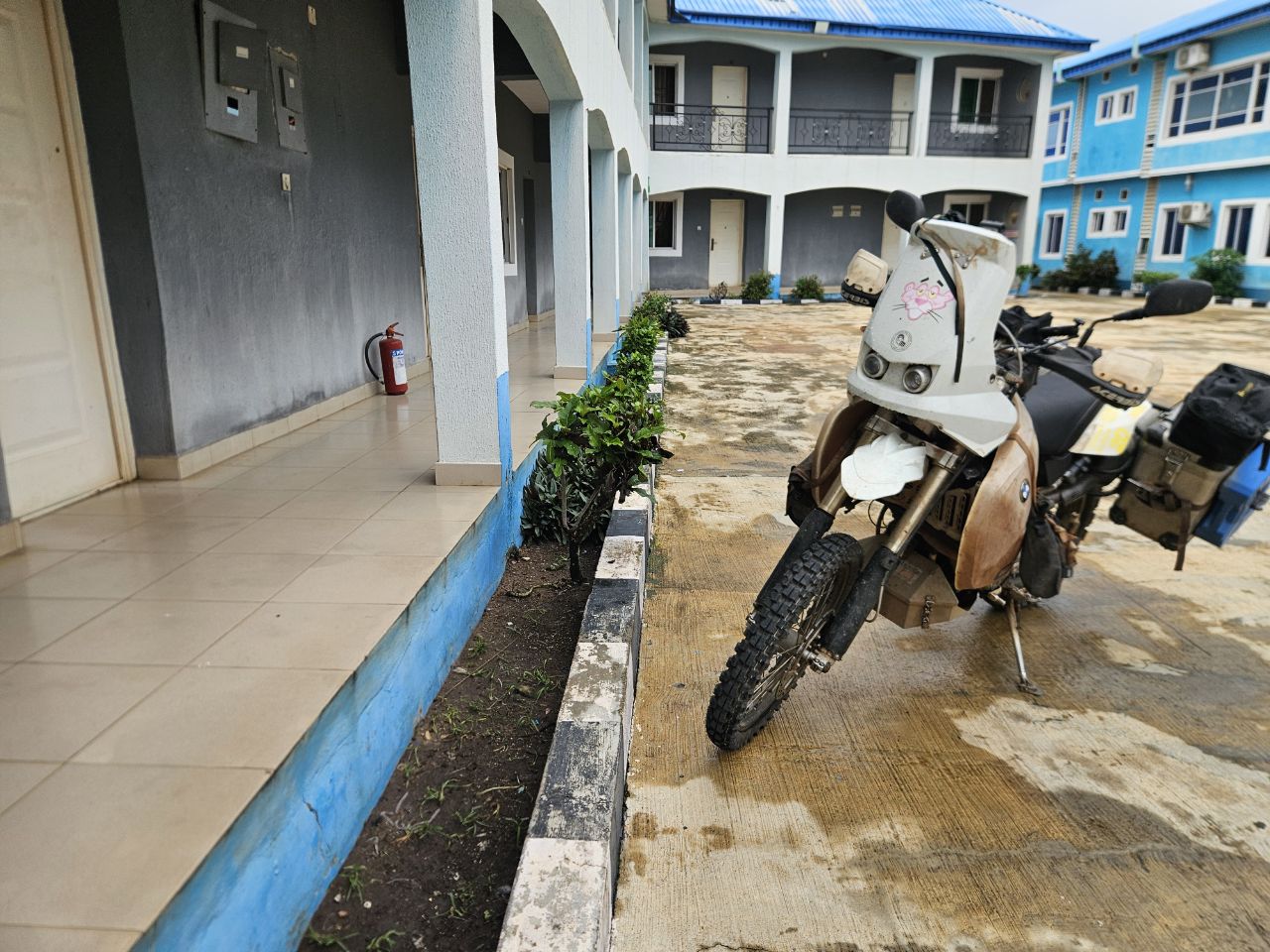
Later that evening, I was escorted to a guesthouse costing about €12 per night, with air conditioning.
The place was secure.
The motorcycle was parked right beneath my window.
May 20, 2026 – Abeokuta
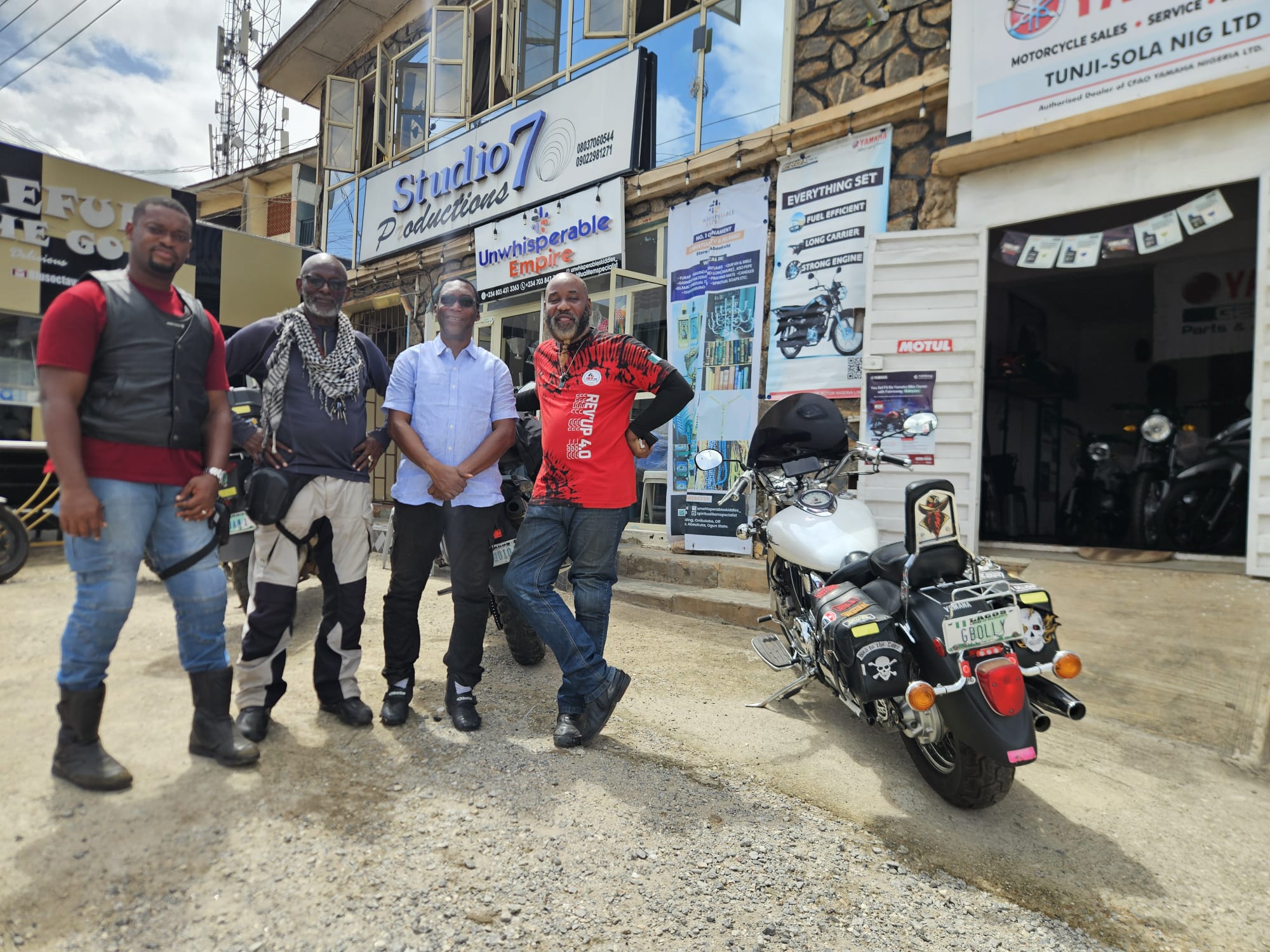
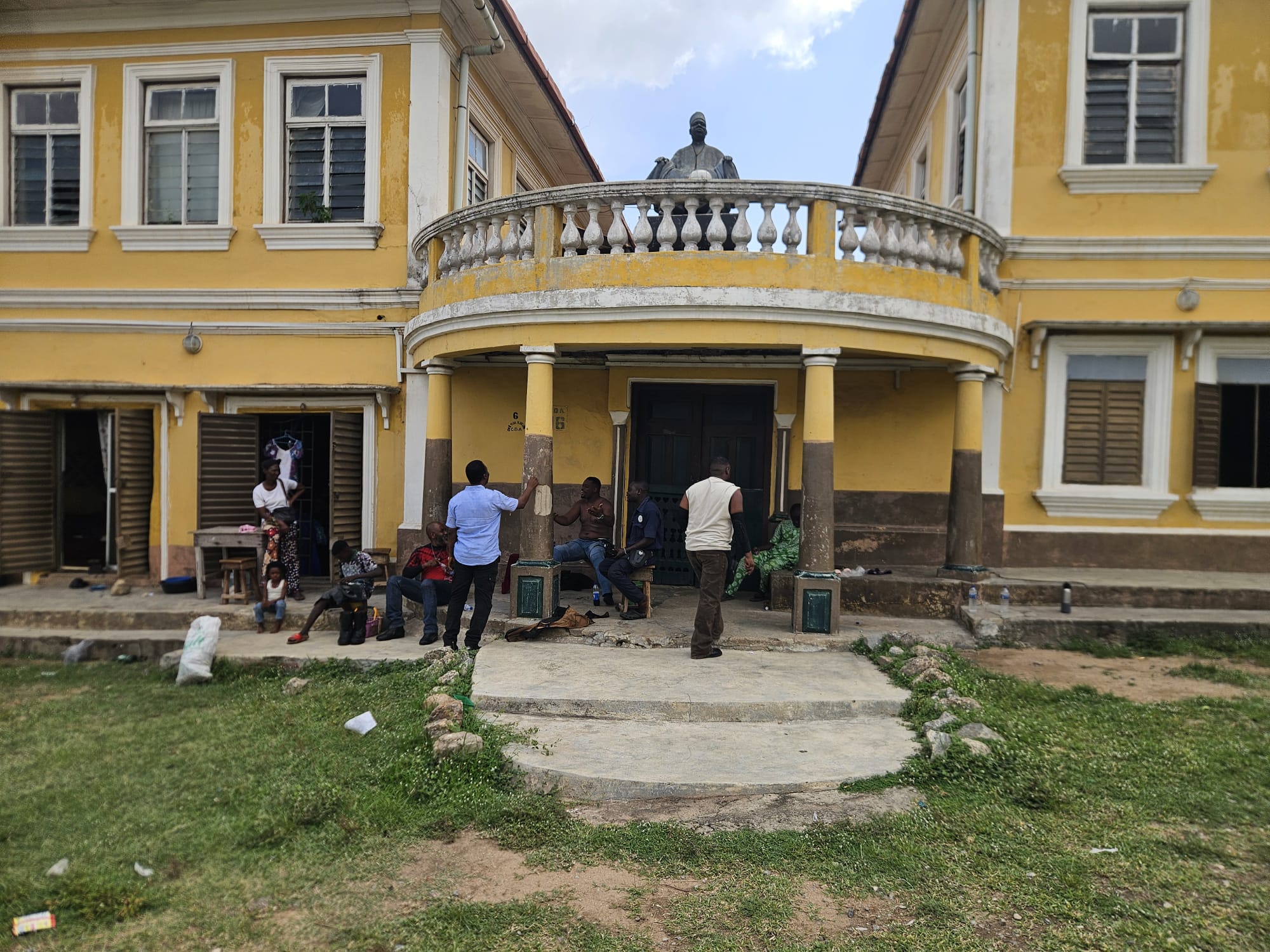
Ibi picked me up from the hotel around 10 a.m. We first headed to what appeared to be their motorcycle club, where several riders were already waiting for me. The welcoming committee was in place. We grabbed a quick sandwich and a cold drink together before setting off.
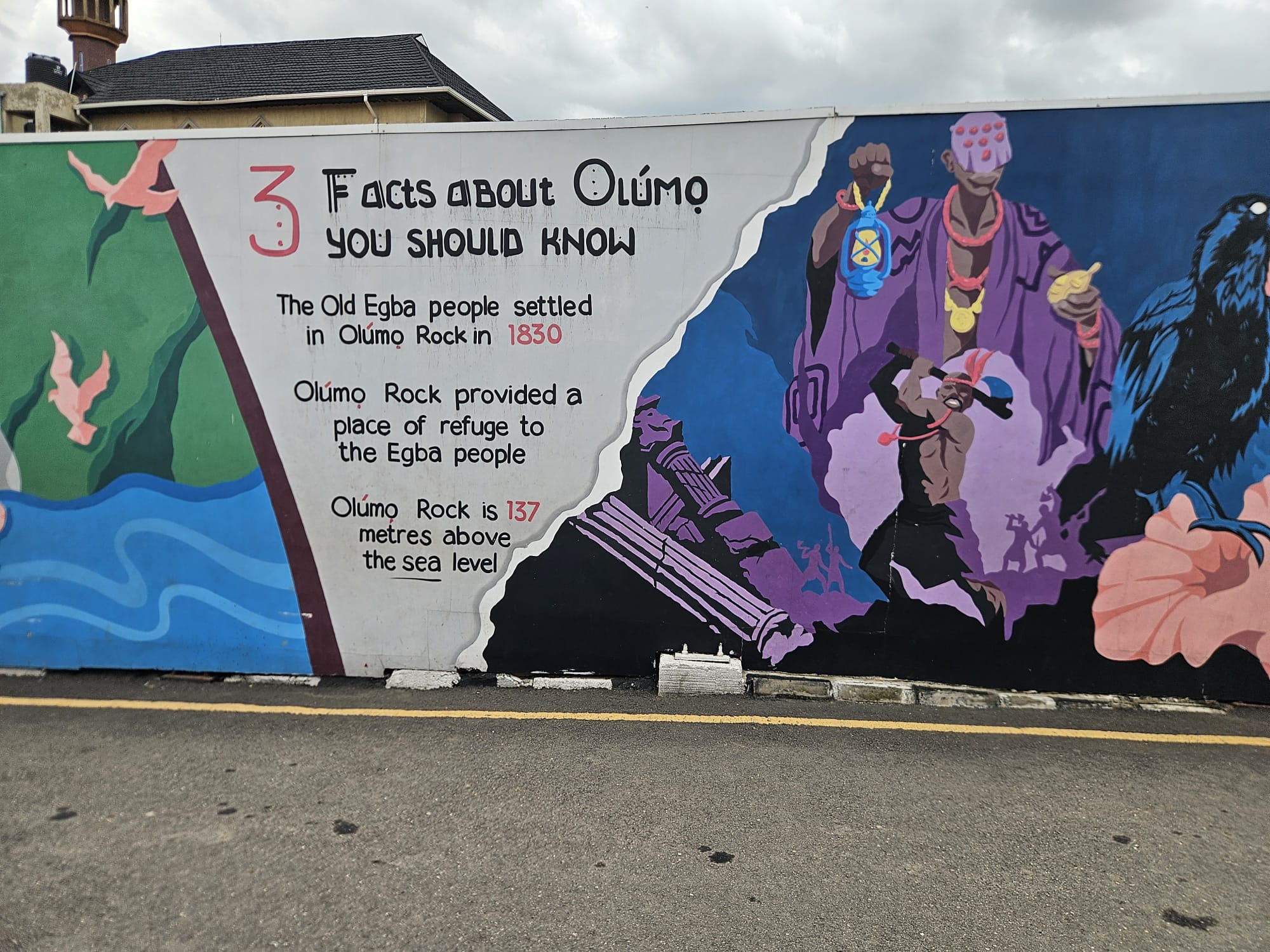
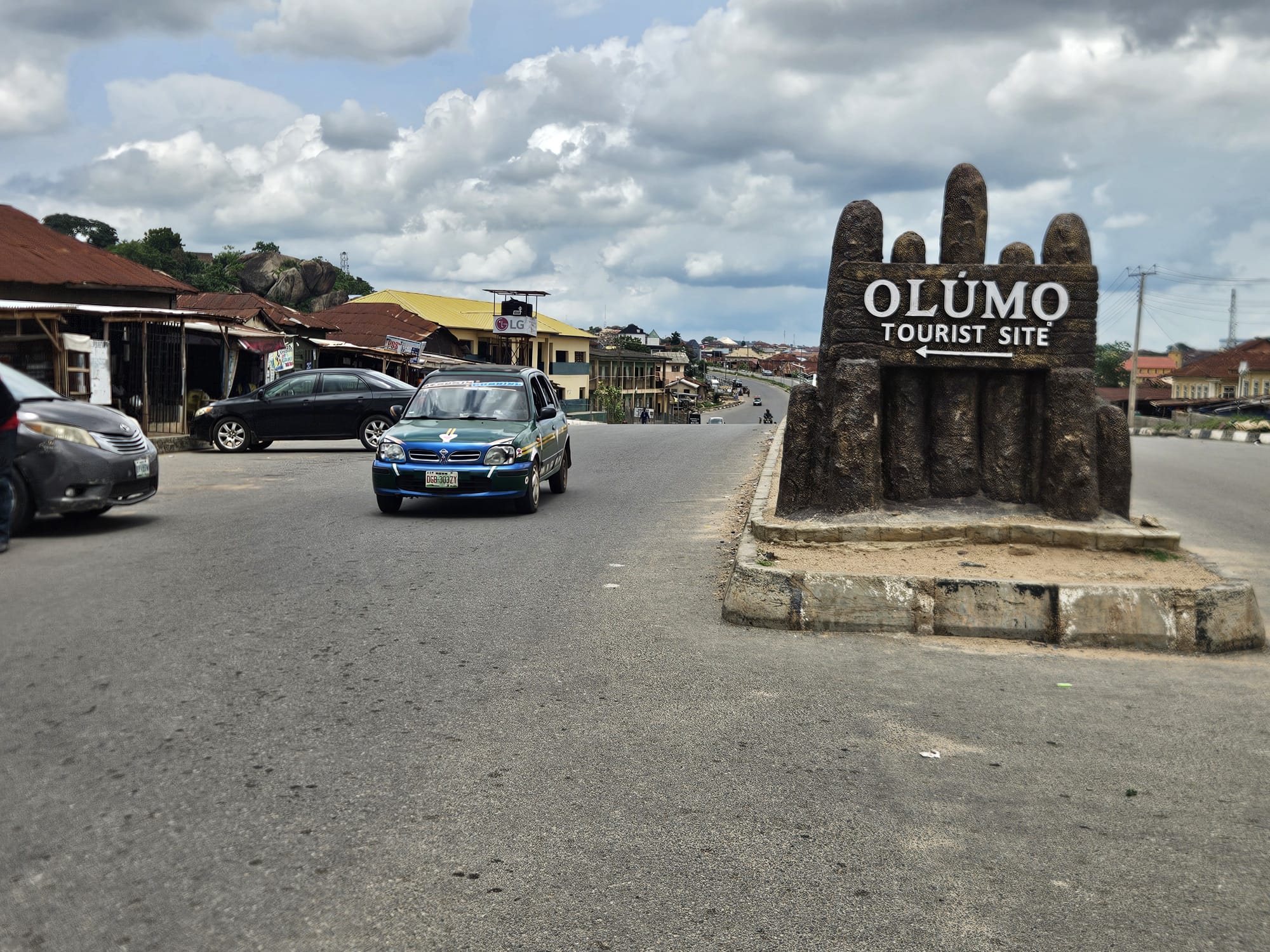
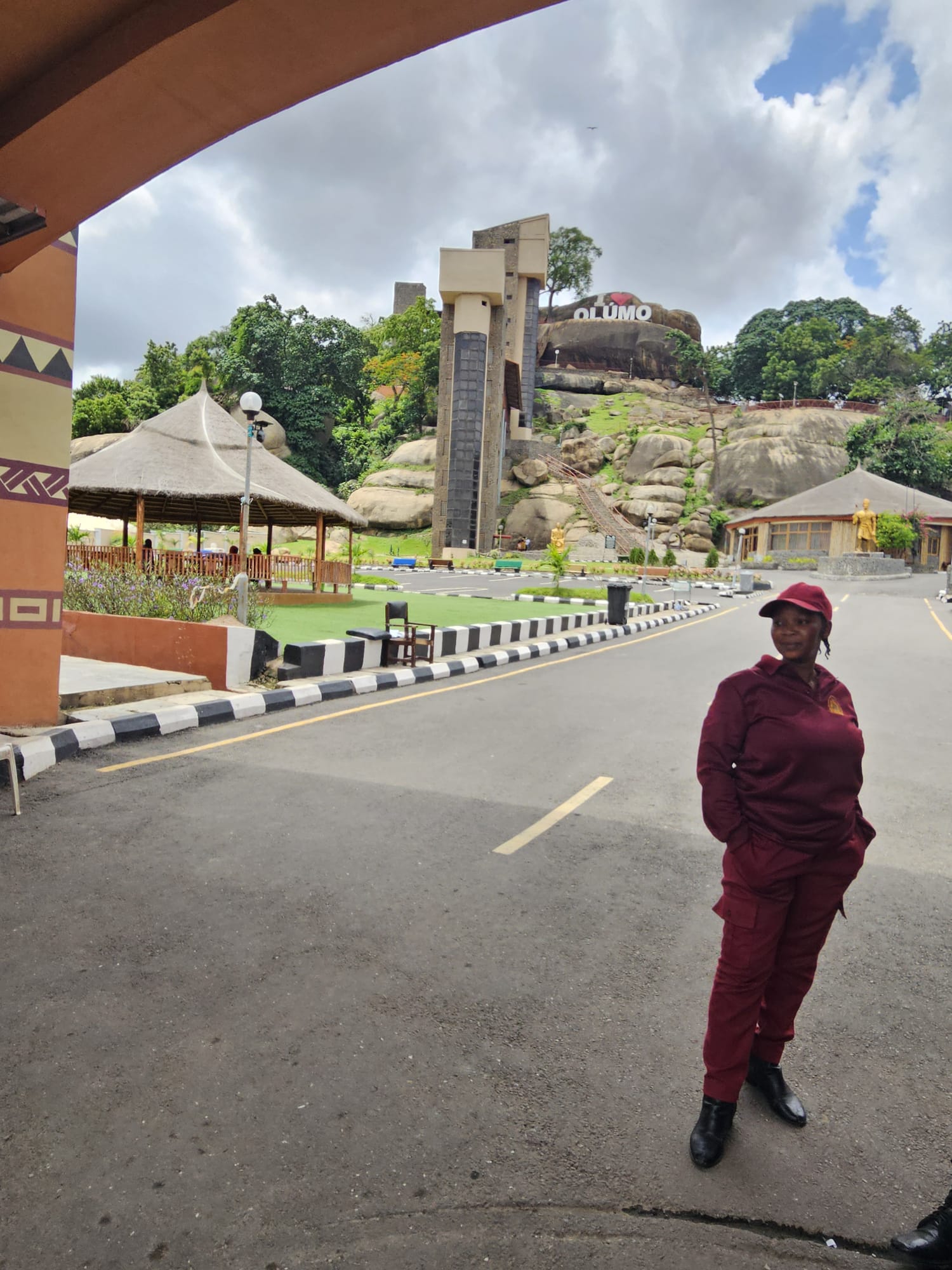
The day’s plan was simple: show me around the area. We started with the Olumo site.
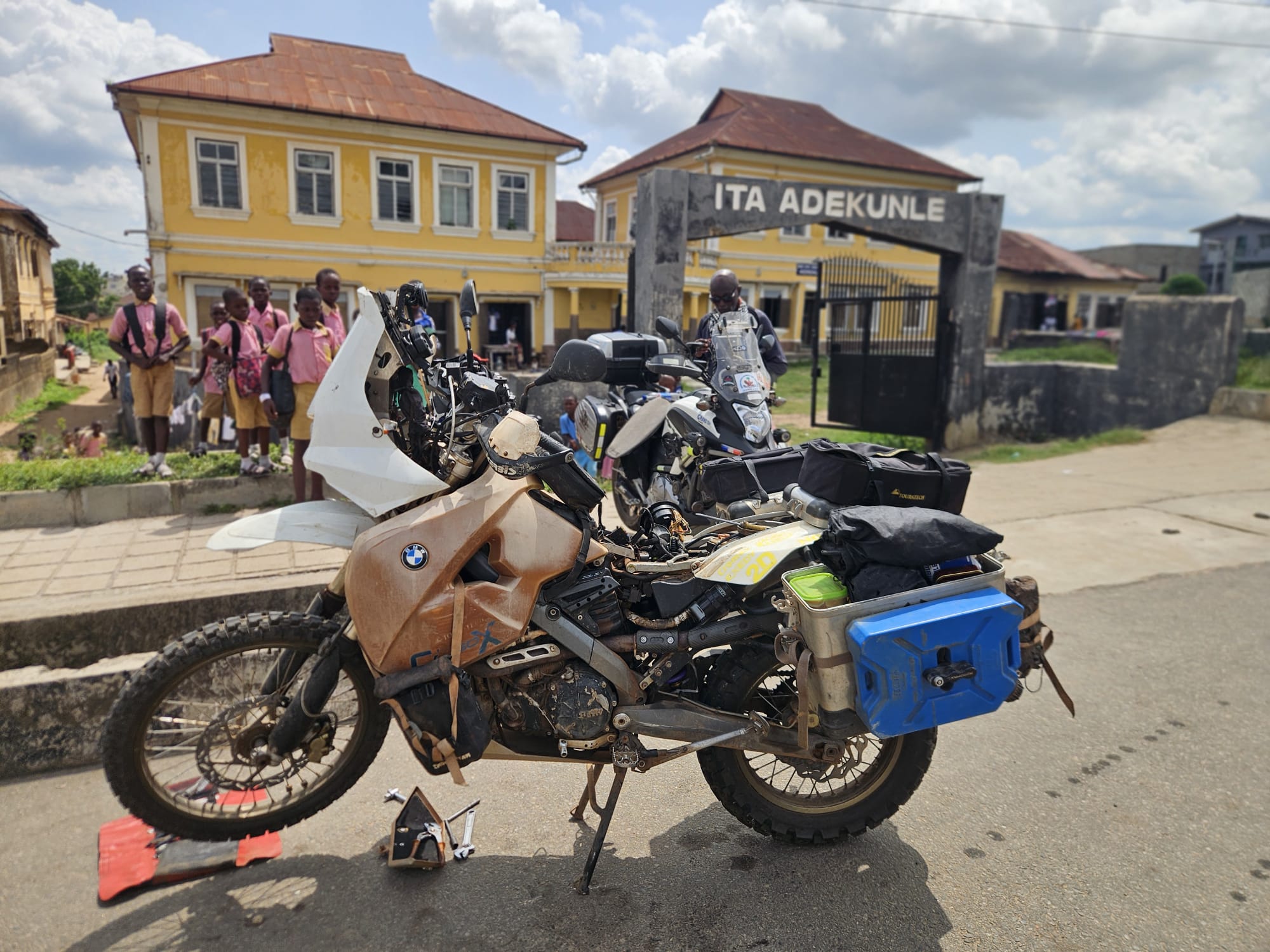
And then, just as we were about to leave, Lady Pink resumed her Ivorian antics: she flatly refused to start.
We tried push-starting her downhill.
No luck.
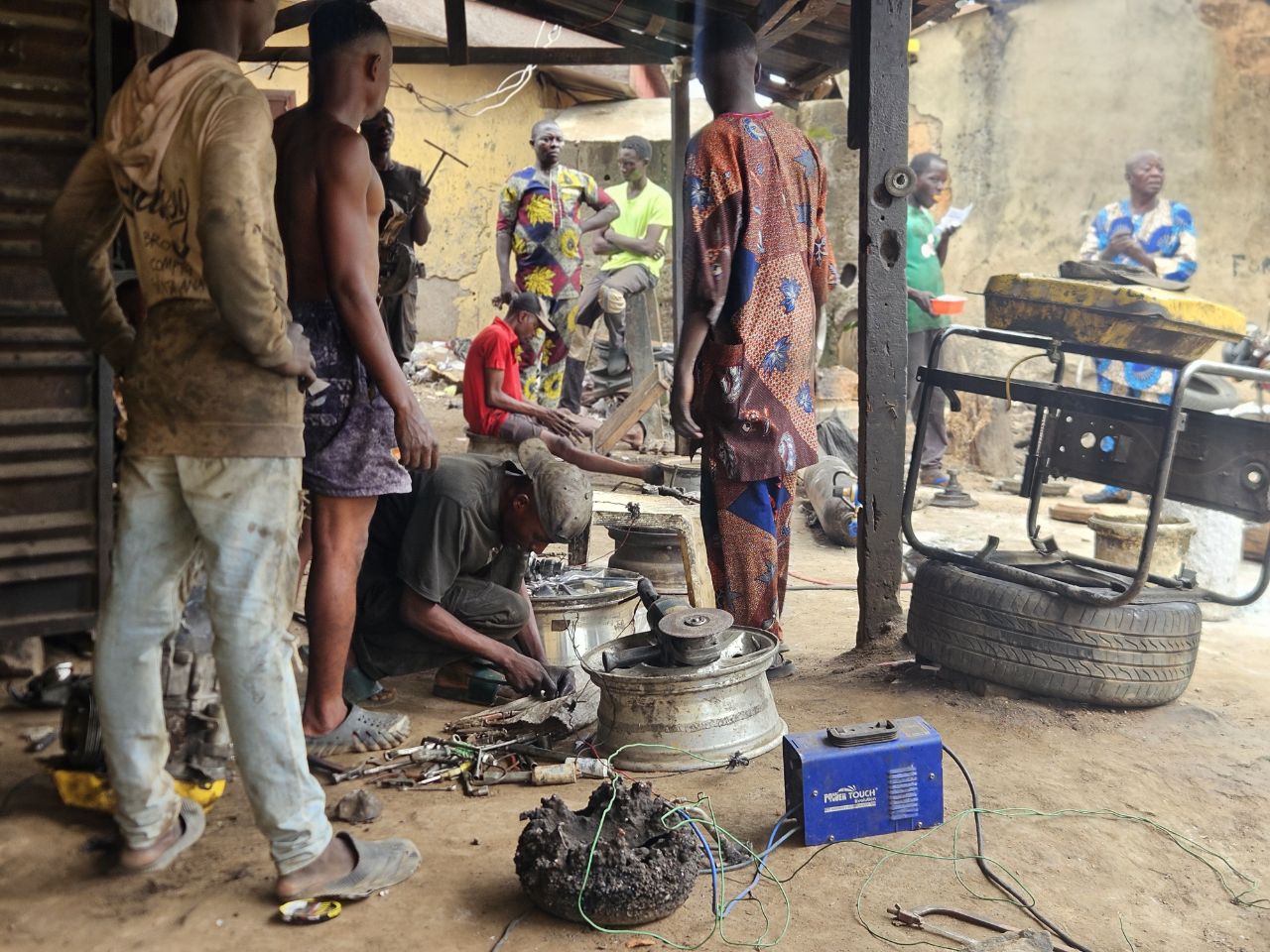
After checking, we found that fuel wasn’t reaching the engine. Another fuel-filter issue? I had replaced the filter a little over a year ago and had ridden only about 10,000 kilometers since then. I could probably have dealt with it myself, but the heat was crushing and I could feel another bout of low blood pressure coming on. I decided to sit in the shade while a mechanic was called in.
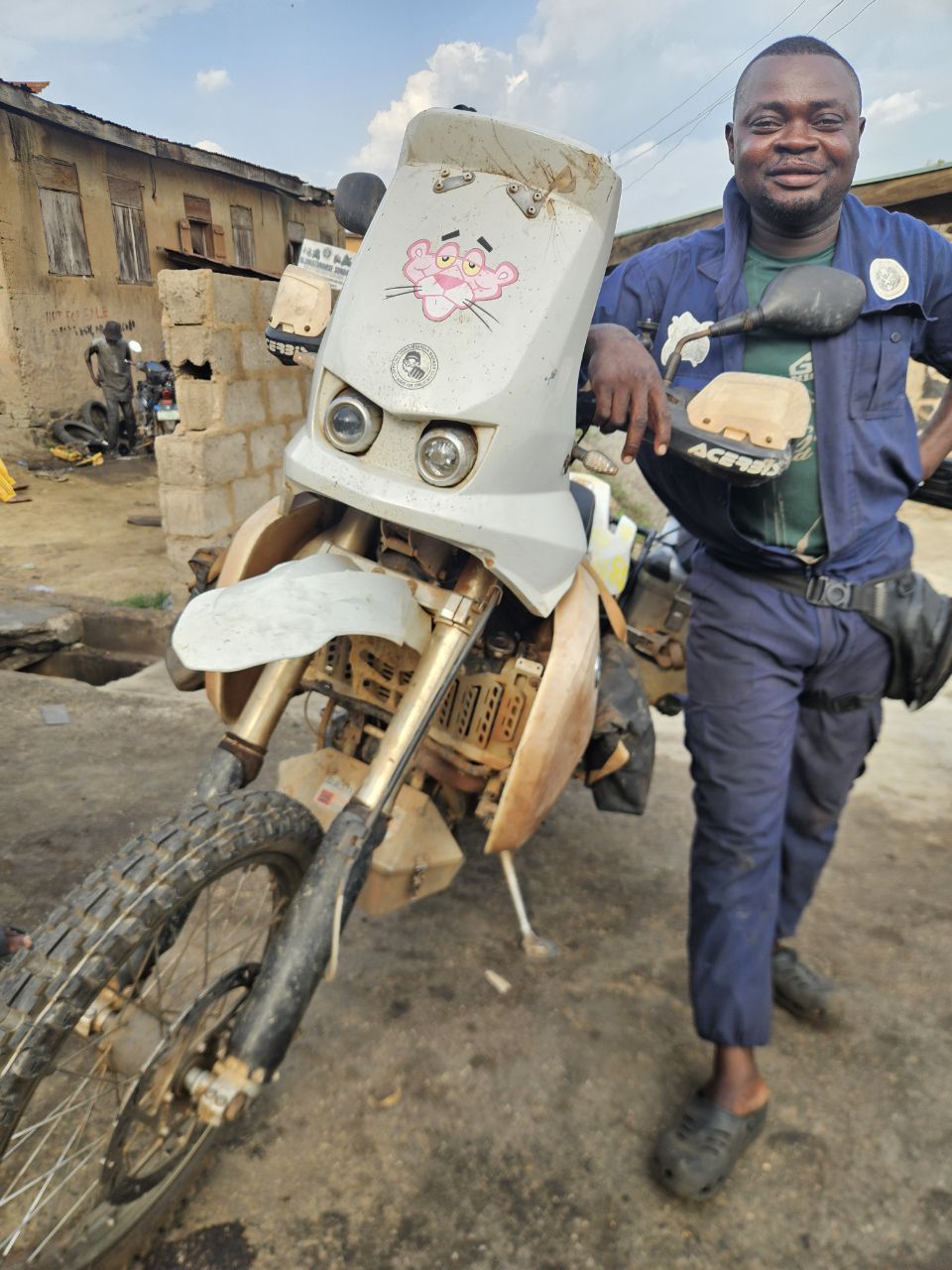
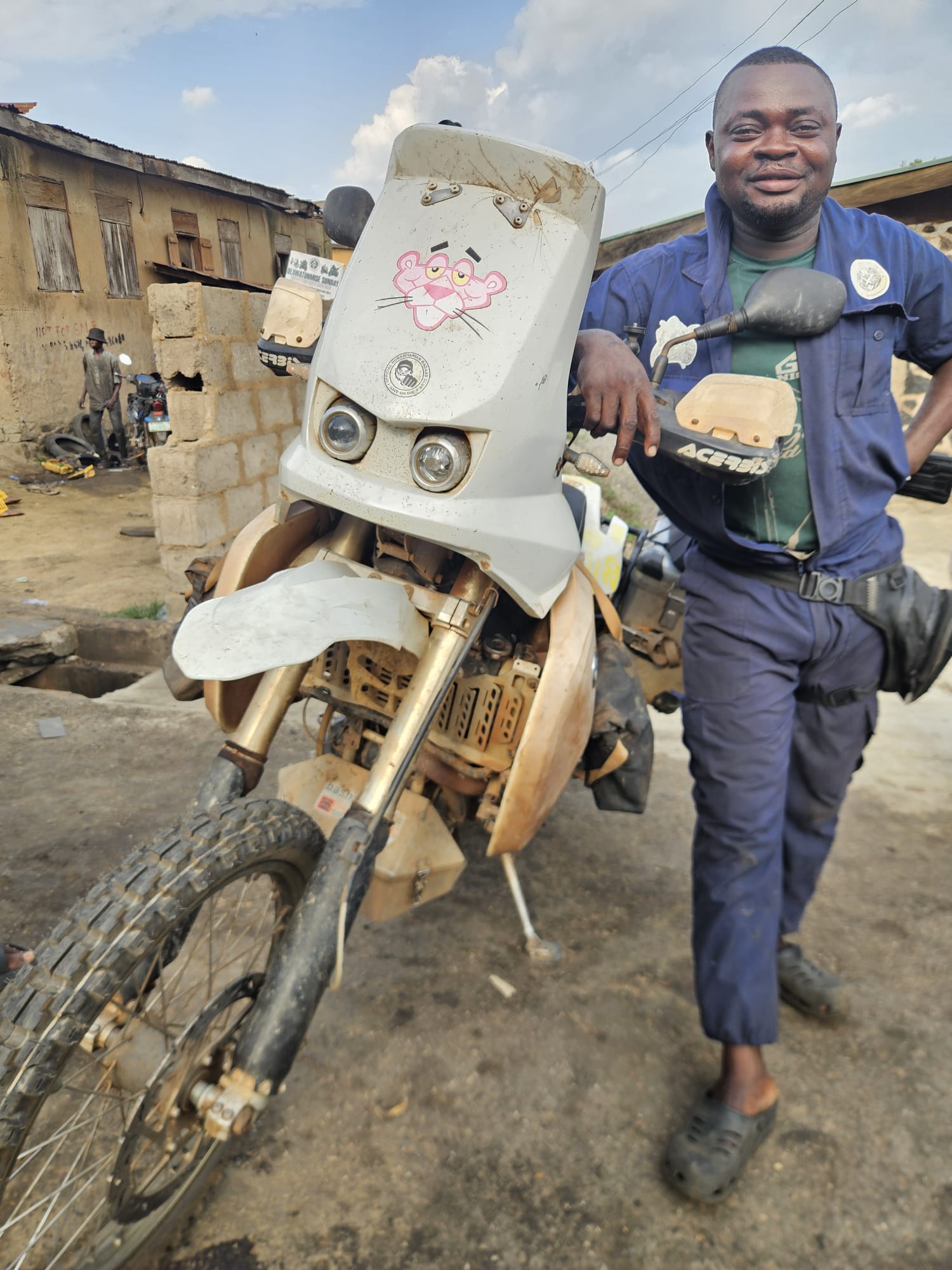
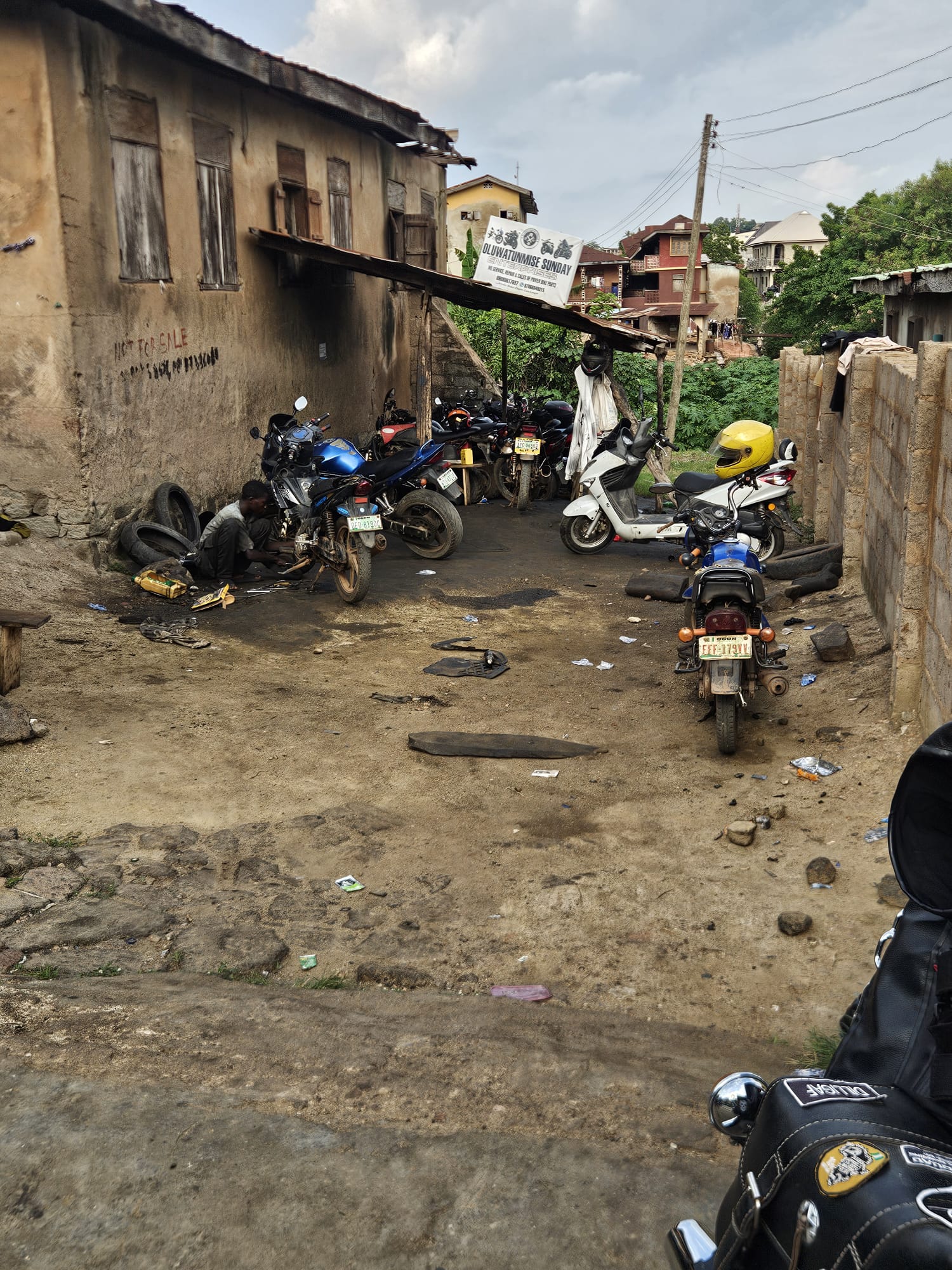
His name was Sunday.
Earlier that morning, he had already repaired my headlight issue, which kept blowing fuses. This time, the repair seemed to be holding, but experience has taught me caution: this was already the fourth attempt at fixing it. As long as I wasn’t riding at night, it wasn’t a major problem.
A motorcycle that refuses to start in the middle of an outing, however, is considerably more annoying.
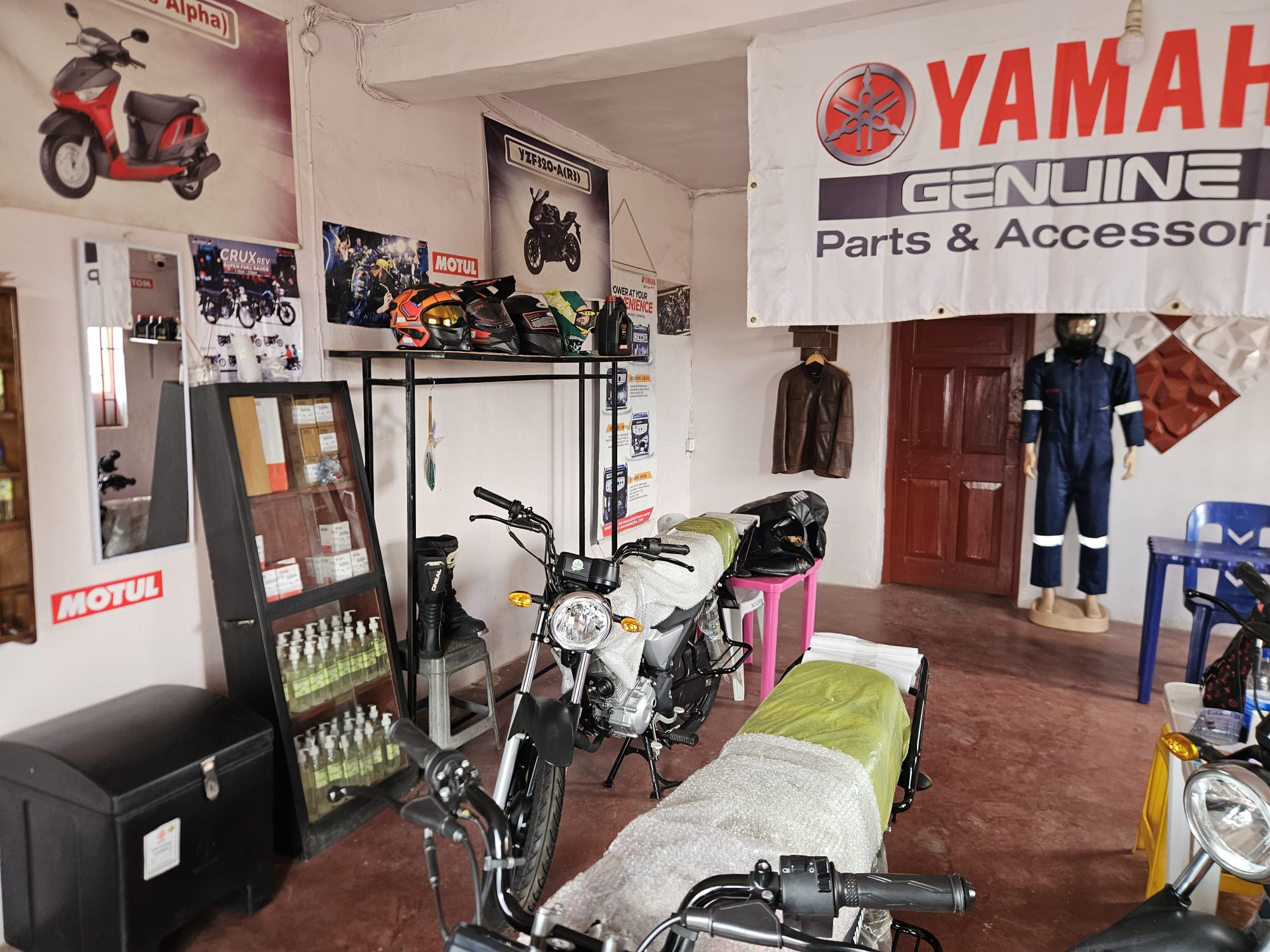
Sunday dismantled the fuel pump and quickly identified the likely cause: an oil seal was missing at the filter outlet, causing an internal leak inside the tank. The motorcycle still worked most of the time, but the defect made starting unpredictable, especially when the engine was hot.
To be safe, I decided to replace the fuel filter as well. I still had two spares.
What I didn’t have was the missing seal.
So it was decided that we would push the motorcycle to Sunday’s workshop. Off we went: me on my bike, while Sunday rode his little 125 cc machine and pushed Lady Pink along with his foot.
The operation started well. The entire group of riders escorted the convoy, clearing the way, securing obstacles, and smoothing traffic flow.
A nearly presidential organization.
Then came the moment when we had to make a U-turn on a four-lane road.
And that’s when things became epic.
The new carriageway climbed steeply uphill, and the poor little 125 simply didn’t have enough power. A second motorcycle had to come and help.
So, pushed by two motorcycles, I somehow managed to reach the top of the hill.
Unfortunately, I have no footage of this rather comical episode: I hadn’t brought the GoPro.
Definitely not a very good influencer.
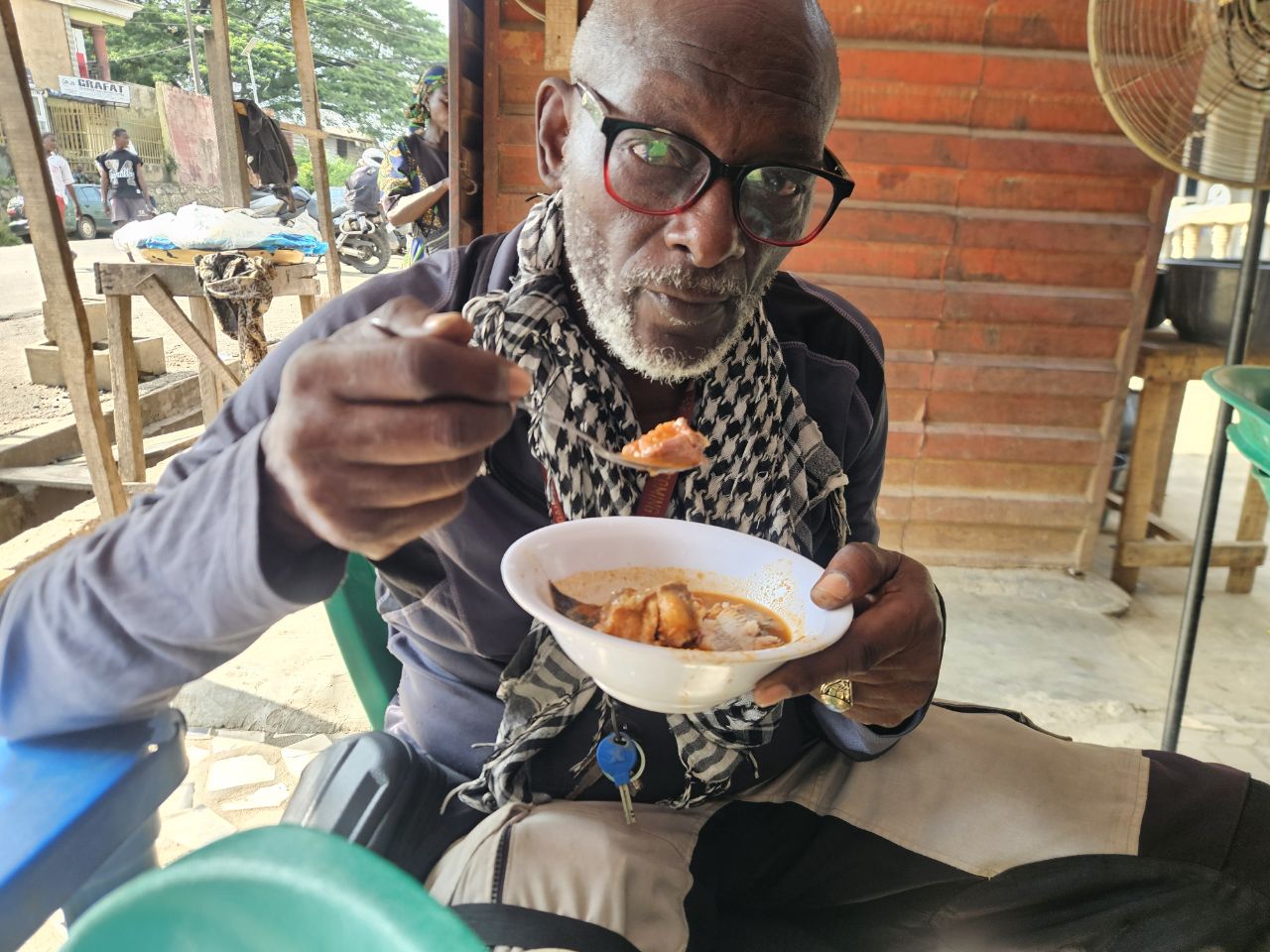
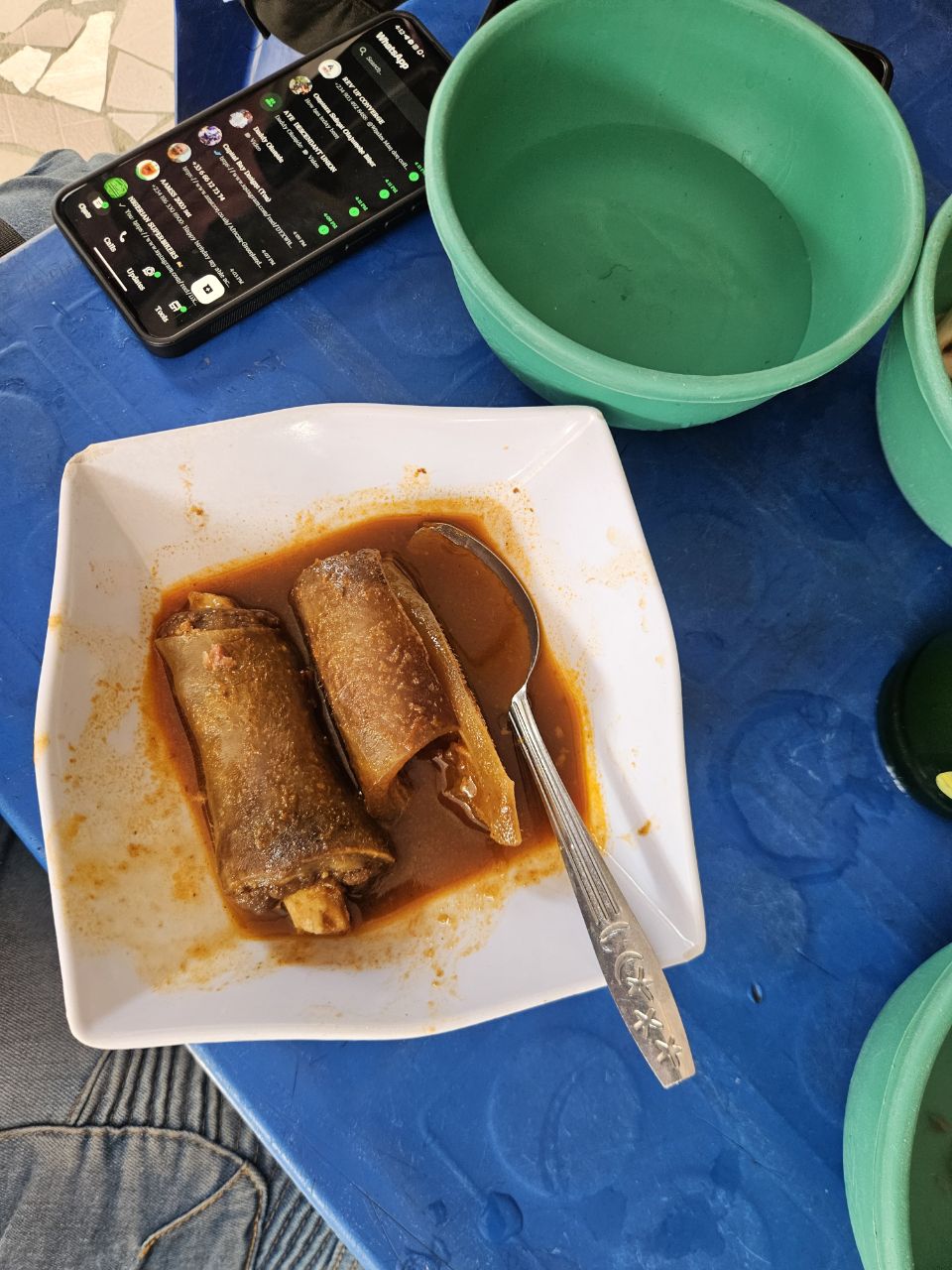
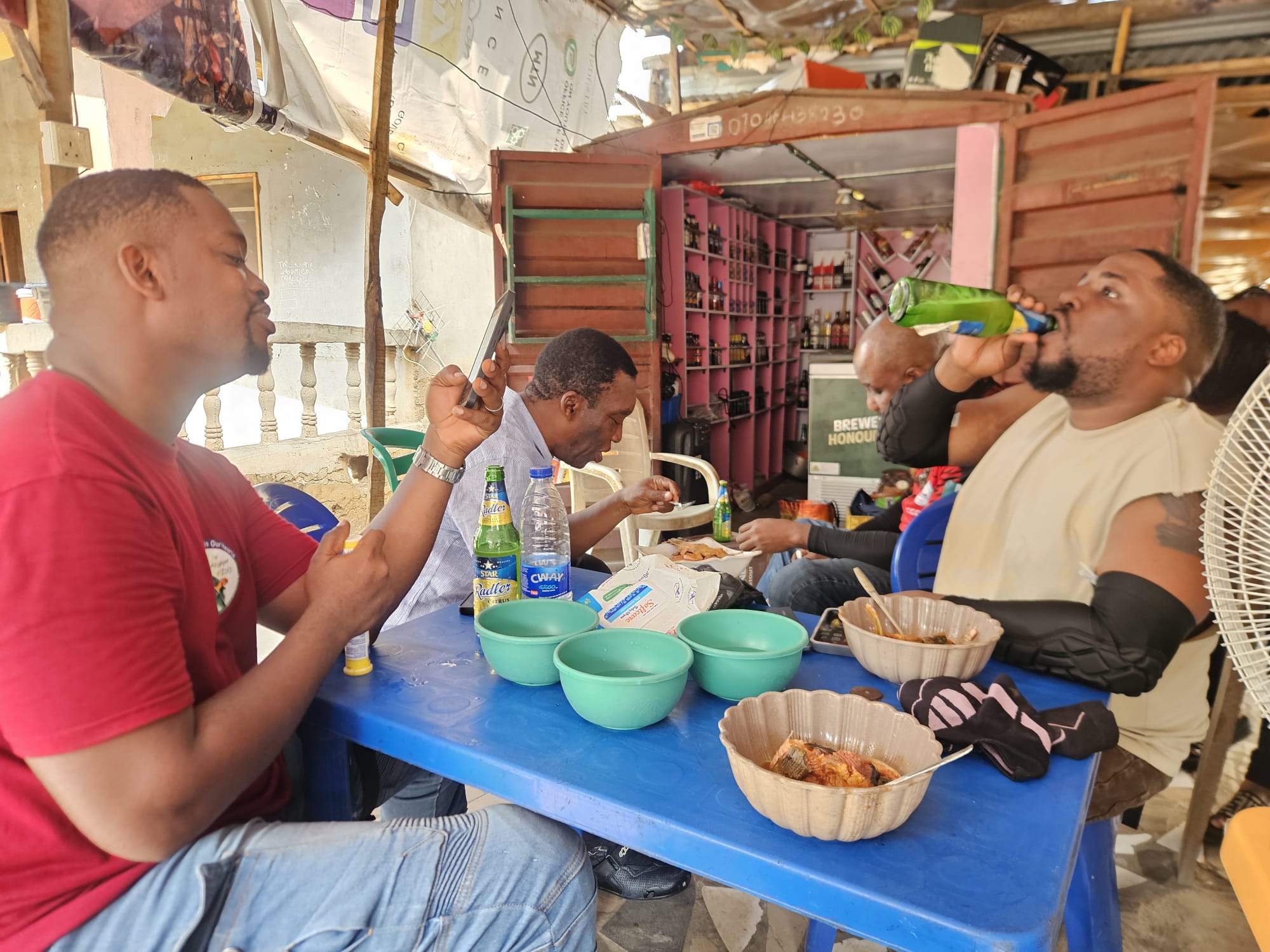
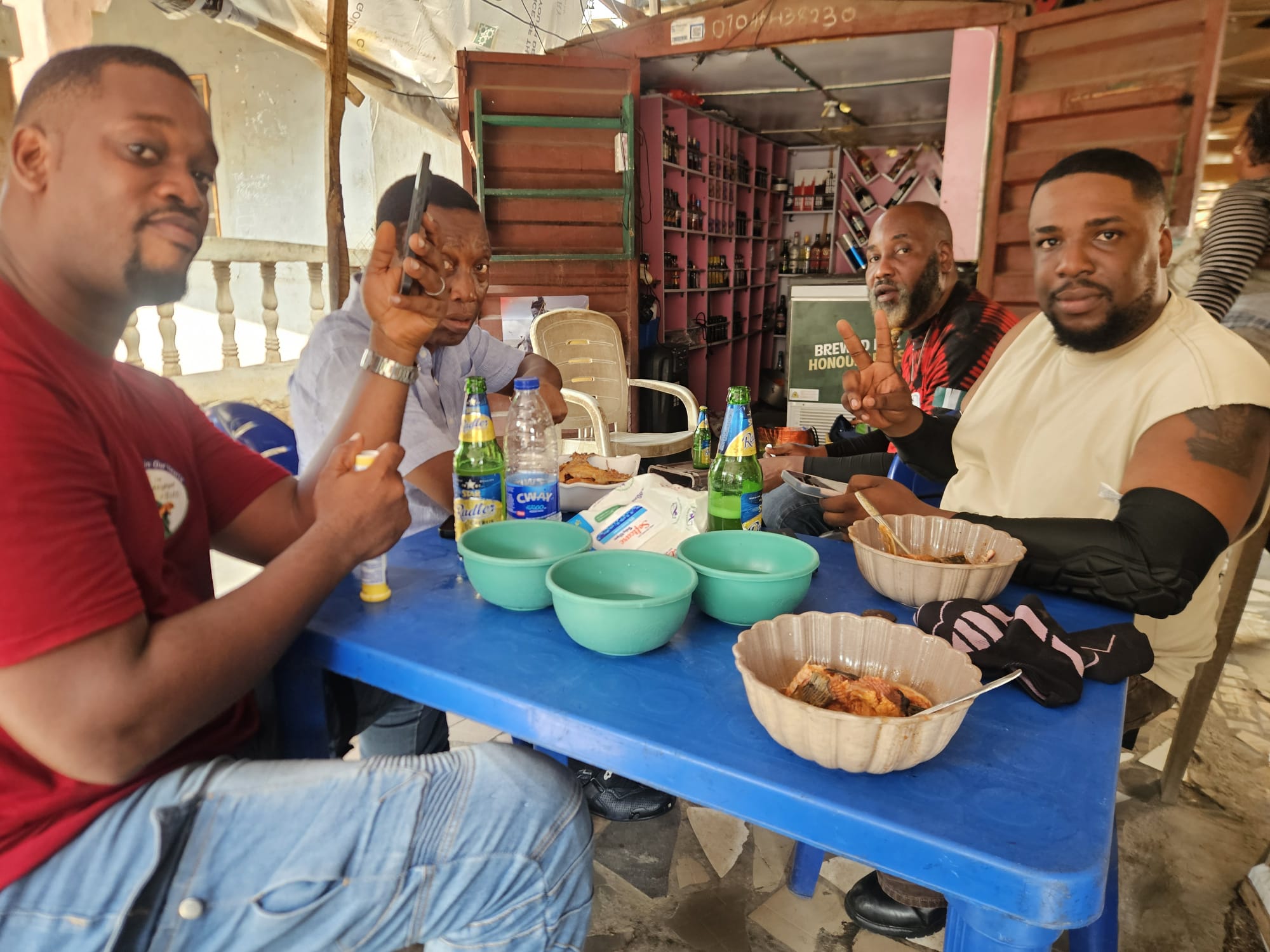
While Sunday worked on the bike, our merry band headed off for lunch at a Mama Put, one of those typical Nigerian roadside restaurants.
One dish immediately caught my attention.
At first, I couldn’t identify it: a sort of gelatinous cylinder with a bone running through the center.
The mystery was quickly solved.
It was cow tail.
And actually, it was quite good.
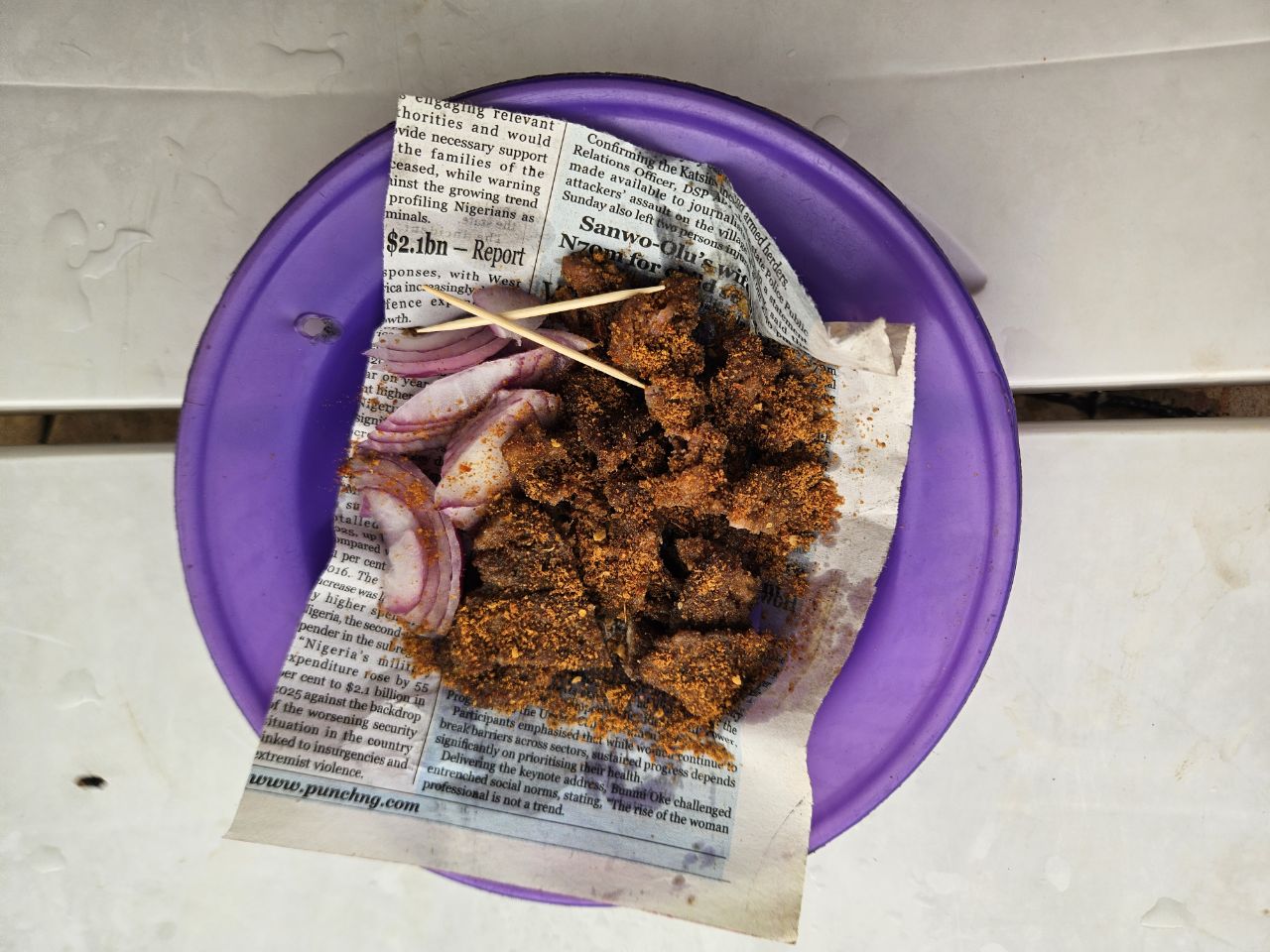
The sauce was fairly spicy—unsurprisingly, that’s almost a constant here. The texture was slightly chewy, which can be surprising, but served hot, it was very enjoyable.
Once the motorcycle was repaired, we set off again…
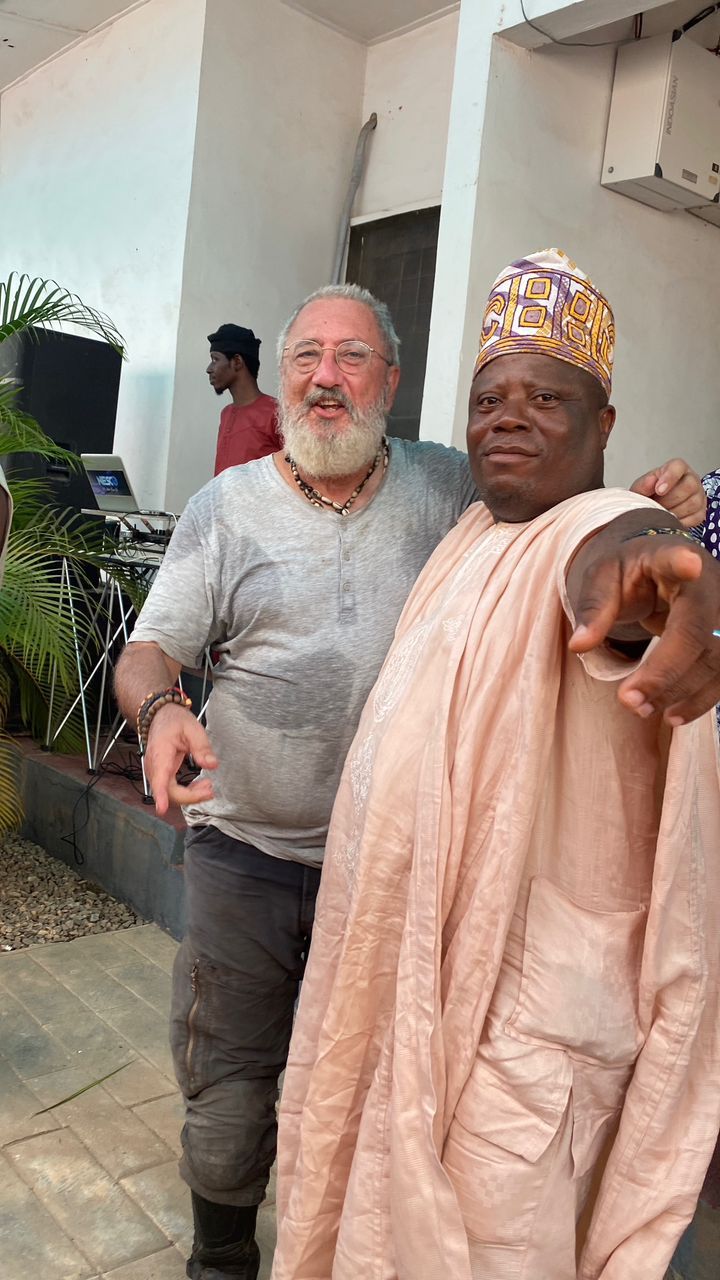
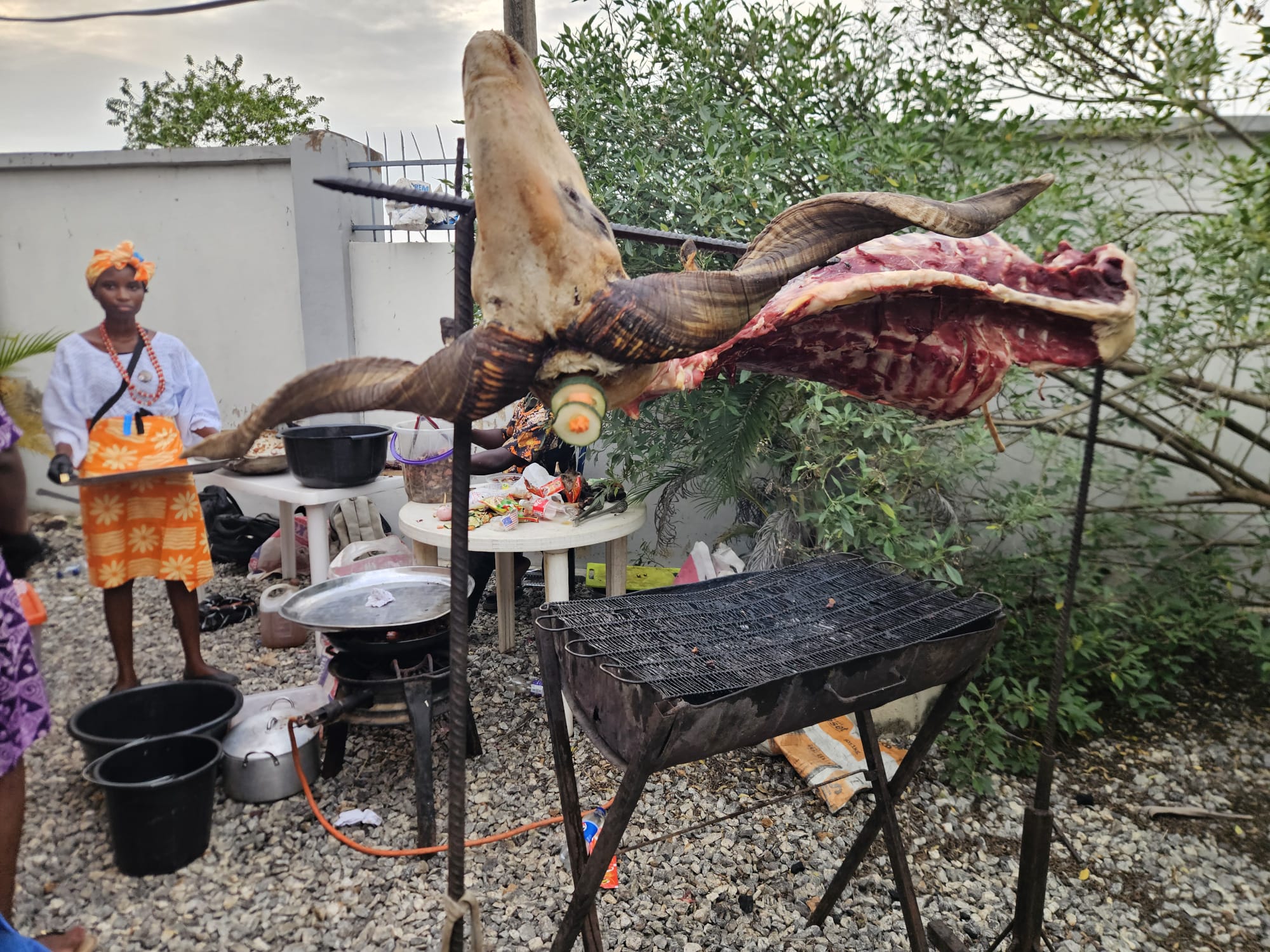
For a prince’s birthday party.
(That brought back memories…)
The Birthday Party
When we arrived, the celebration was clearly well underway. Only the skeleton and head of a roasted goat remained on the spit.
The atmosphere was festive.
The music was distinctly Western, featuring several classic rock hits from the 1960s and 1970s.
I was the only white person there, but I’m used to that. It was far from my first experience.
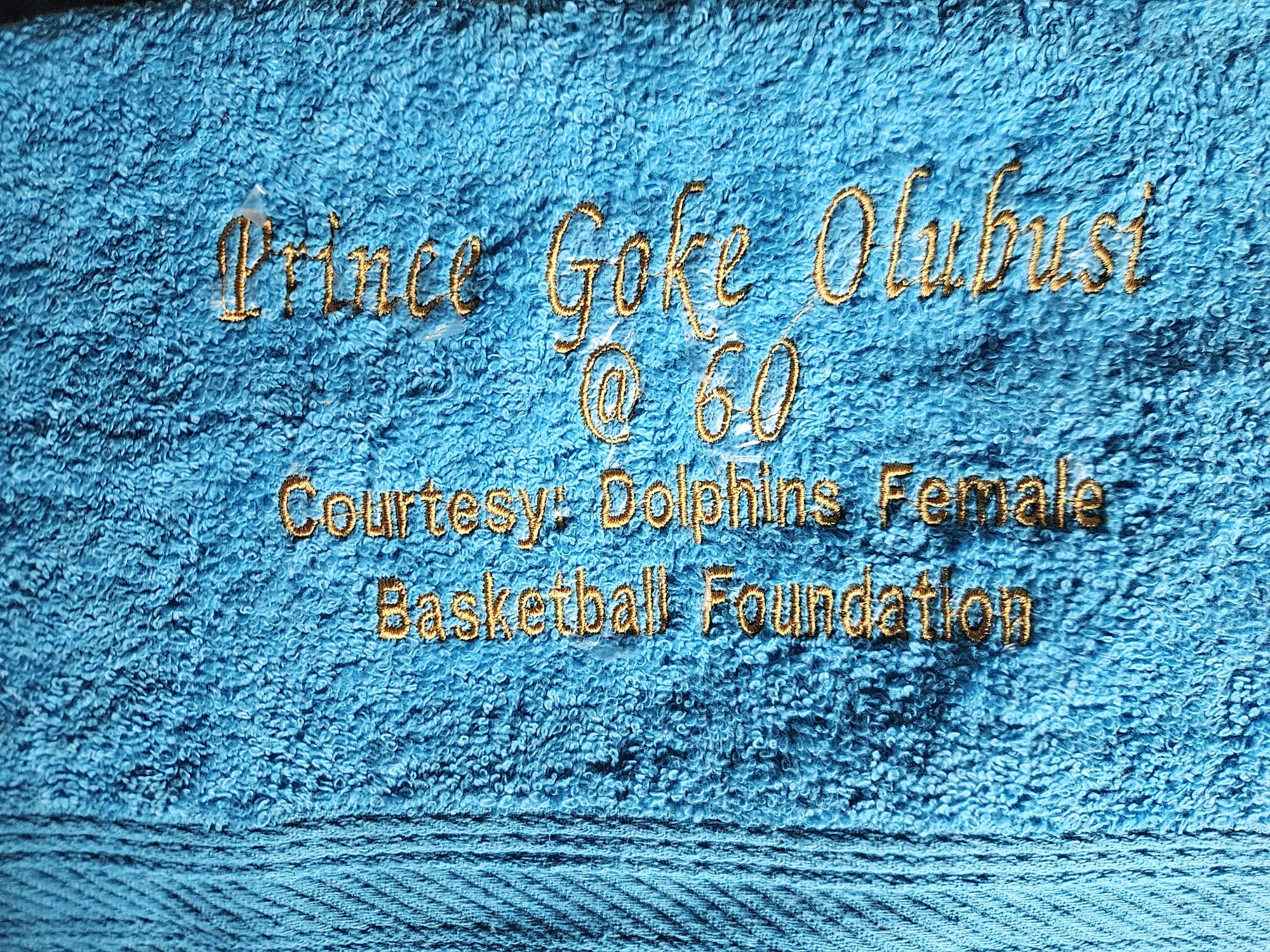
As we were leaving, the prince’s wife gave each of us a small gift bag containing:
- a monogrammed towel;
- two Pink Lady apples (you couldn’t make that up);
- a small bottle of water;
- some snacks.
May 21, 2026 – Evening at a Friend of Ibi’s
An evening spent with some of Ibi’s friends.
The guests spent much of the night discussing the creation of a new business venture.
Among those present were:
- our host, Pastor T., and his family (his wife, two sons, and a daughter);
- a financier;
- a priest and businessman. In Nigeria, the two roles do not seem incompatible. He arrived in a fully loaded Jetour SUV;
- Ibi, of course;
- and one of our host’s associates.
Even though I occasionally lost the thread of the discussion, it was fascinating to listen to them.
They talked about market research, marketing strategy, implementation, and business development.
The home of our host, a passionate golfer, was absolutely monumental.
A side of Africa that most travelers rarely get to see.
So thank you, Ibi.
May 22, 2026 – Leaving Abeokuta
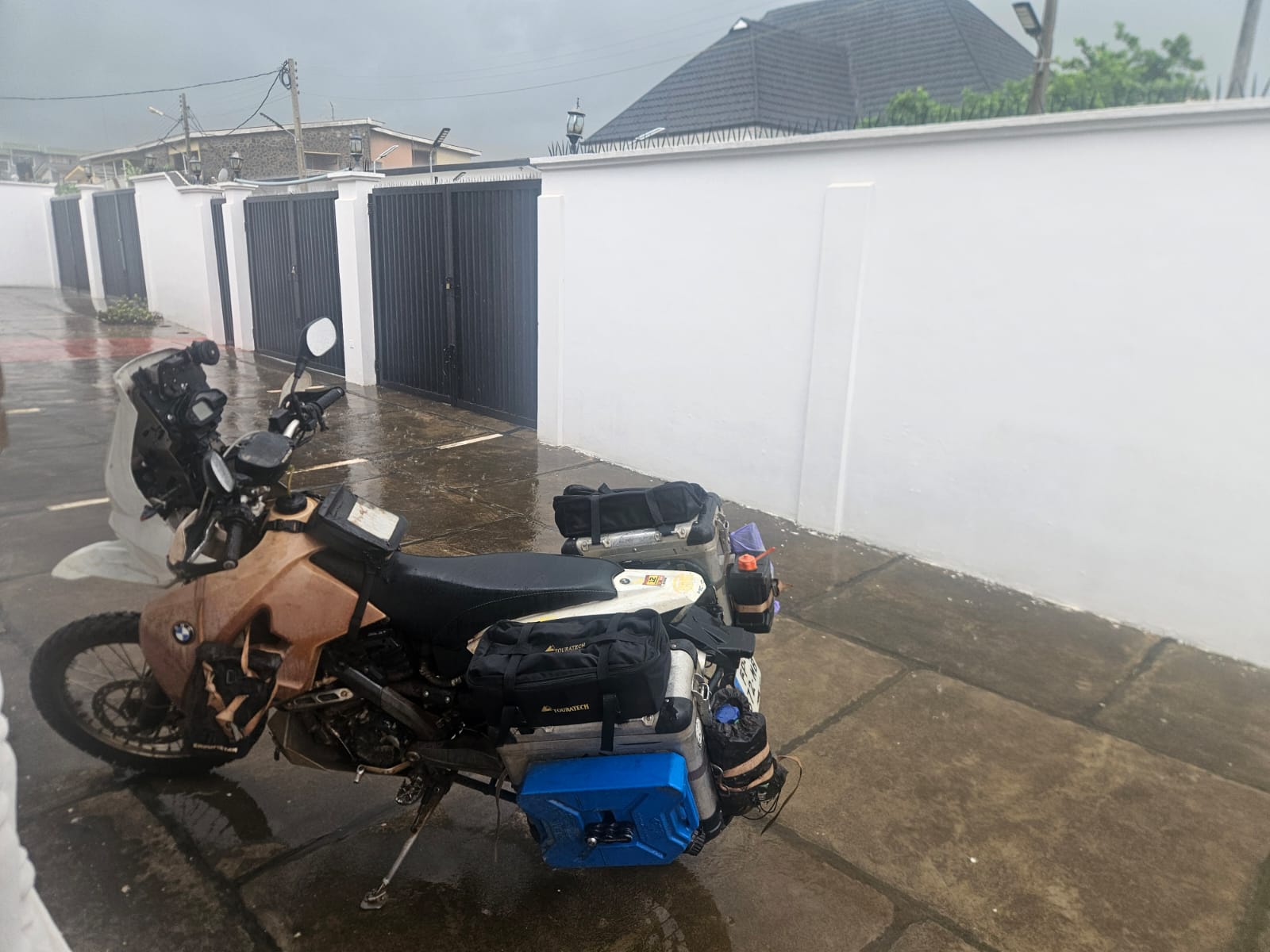
I had planned to leave that morning, but the rain was absolutely torrential.
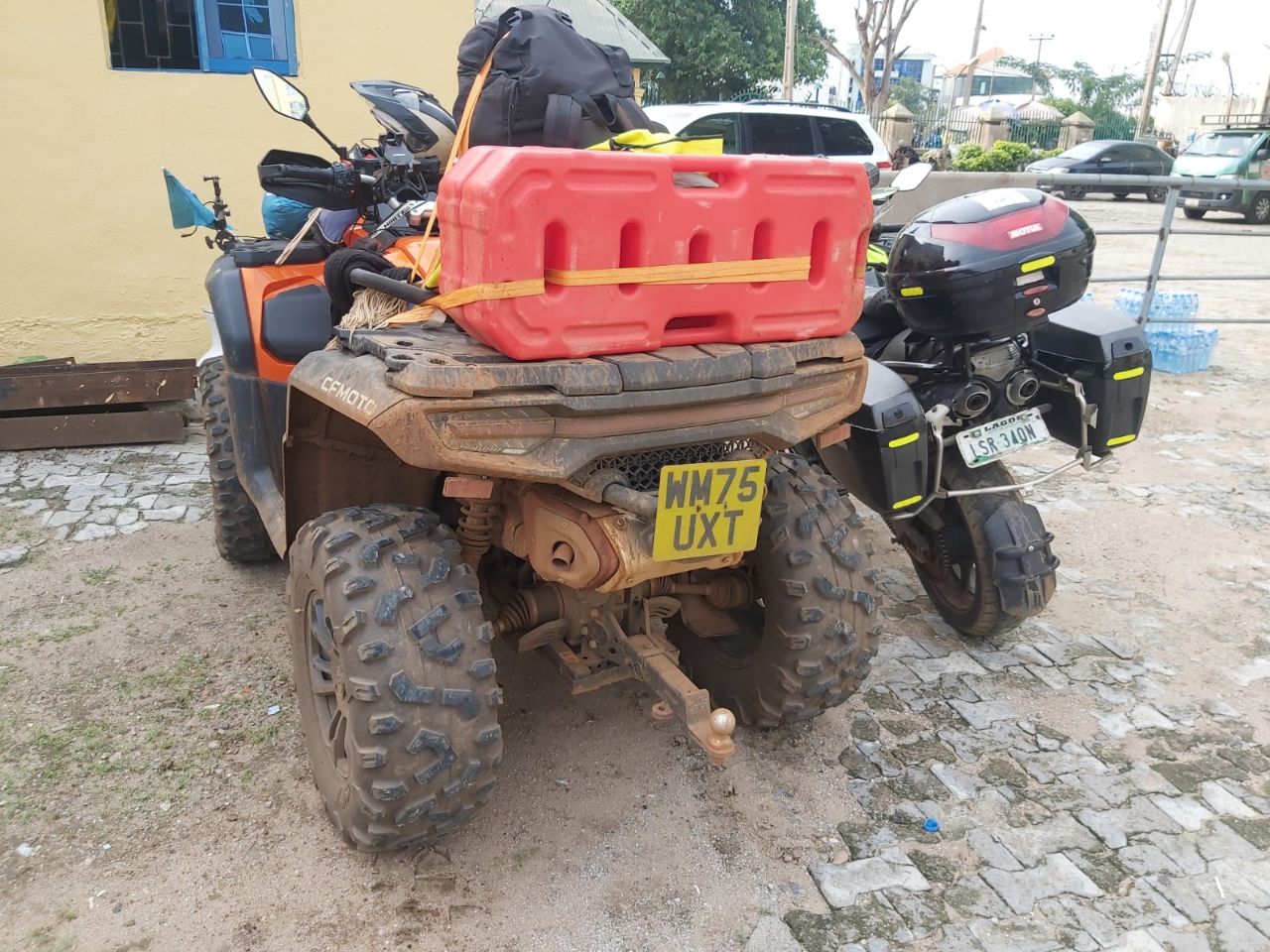
As a result, that evening I got to meet two travelers who held both Nigerian and British citizenship and had just arrived directly from Great Britain.
One was riding a motorcycle.
The other was driving a quad bike.
The latter planned to travel all the way to South Africa.
Tomorrow, however, I was definitely leaving.
With a touch of regret.
I would have liked to spend more time getting to know Ibi.
A rare character.
I hope our paths cross again someday.
May 23–26, 2026 – Between Abeokuta and Lokoja – Nigeria
“You Must Stay on the Roads!”
That was the very first response from Ibi, my Nigerian biker friend who had hosted me in Abeokuta, when I sent him an off-road video taken during my ride between Akure and Lokoja.
I left Abeokuta on May 23.
The day looked set to be uneventful.
I stopped only to fill both fuel tanks: the main one under the seat (9.5 liters) and the auxiliary tank in front of me (16 liters).
Unfortunately, I failed to keep an eye on the attendant—who was admittedly quite charming—and the result was immediate.
A large quantity of gasoline spilled all over me.
My trousers were literally soaked.
And guess what?
Gasoline on your balls burns.
A lot.
An immediate U-turn was required for a shower and a change of underwear.
As a result, my real departure did not take place until around 11 a.m.
The road was in good condition and I rode along peacefully.
At one point, however, I couldn’t avoid a particularly vicious pothole.
Internally, I winced, but I didn’t think much of it. I’d hit worse before without serious consequences.
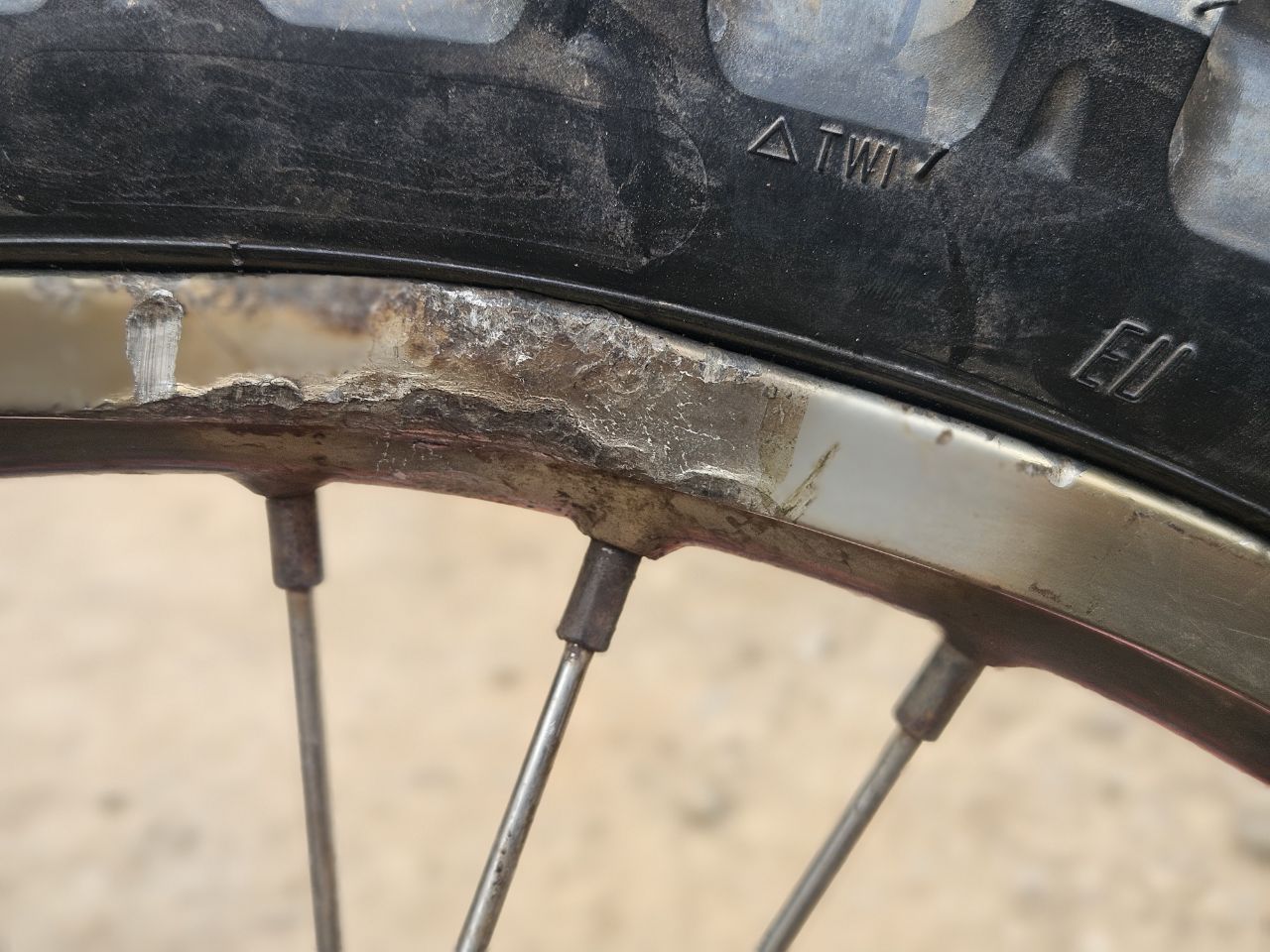
Unfortunately, when I reached my stop for the night near Akure, the damage became obvious.
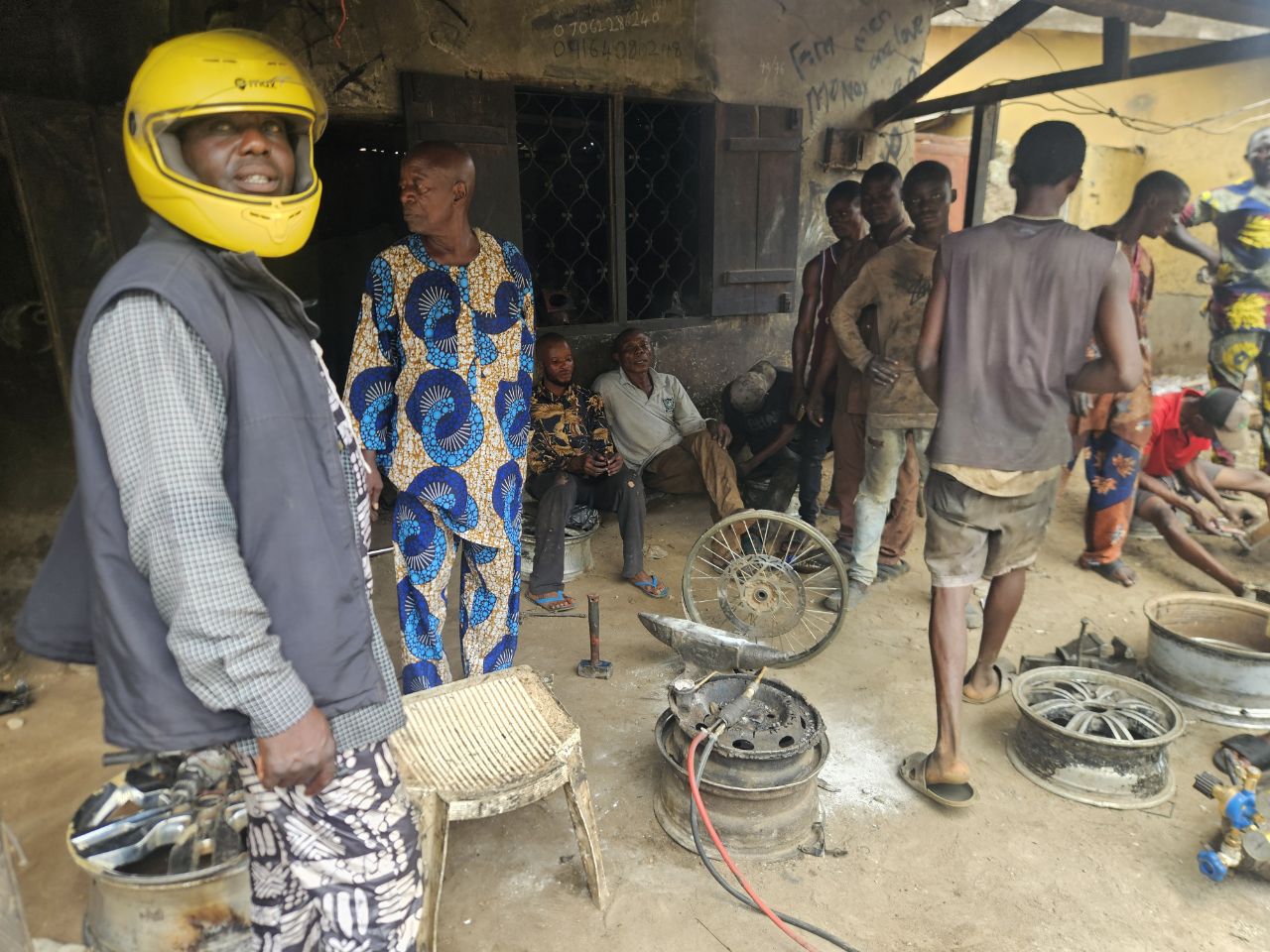
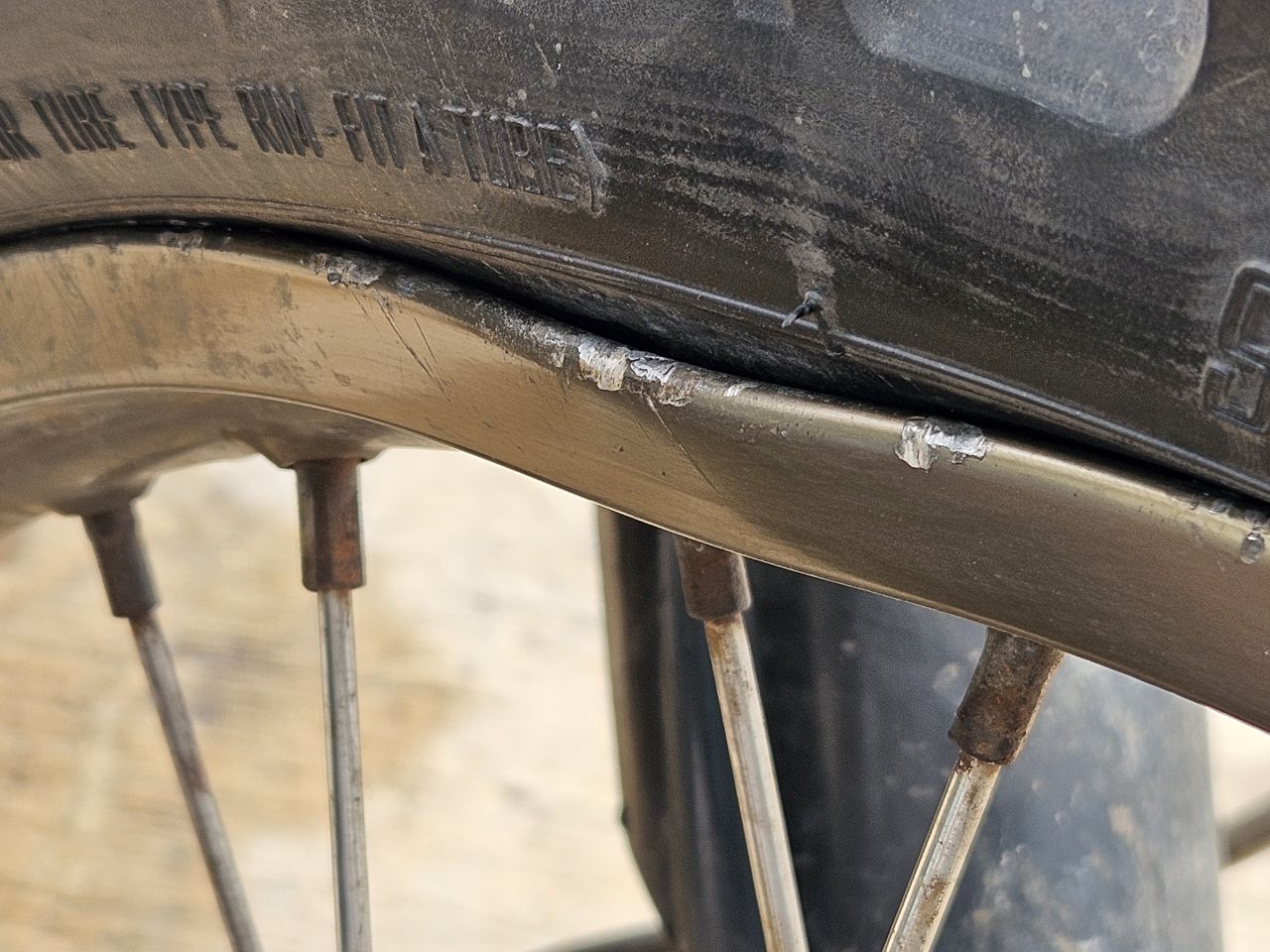
The front rim was bent.
The culprit?
Tyre pressure that was too low.
Normally, I ride with an intermediate pressure of 1.8 bar, suitable for both dirt roads and asphalt. For mostly off-road stages, I lower it further. For long road sections, I raise it to around 2.2 or 2.3.
Apparently, this time I had forgotten.
And I paid the price.
Traveling in Africa leaves very little room for mistakes or carelessness.
The place where I was staying was rather strange.
Absolutely huge, yet almost empty.
Its main occupants seemed to be peacocks.
Apart from their harsh cries, the place was peaceful and inexpensive (20,000 naira, roughly €13 per night with air conditioning).
I decided to stay there until Monday and try to get the rim straightened.
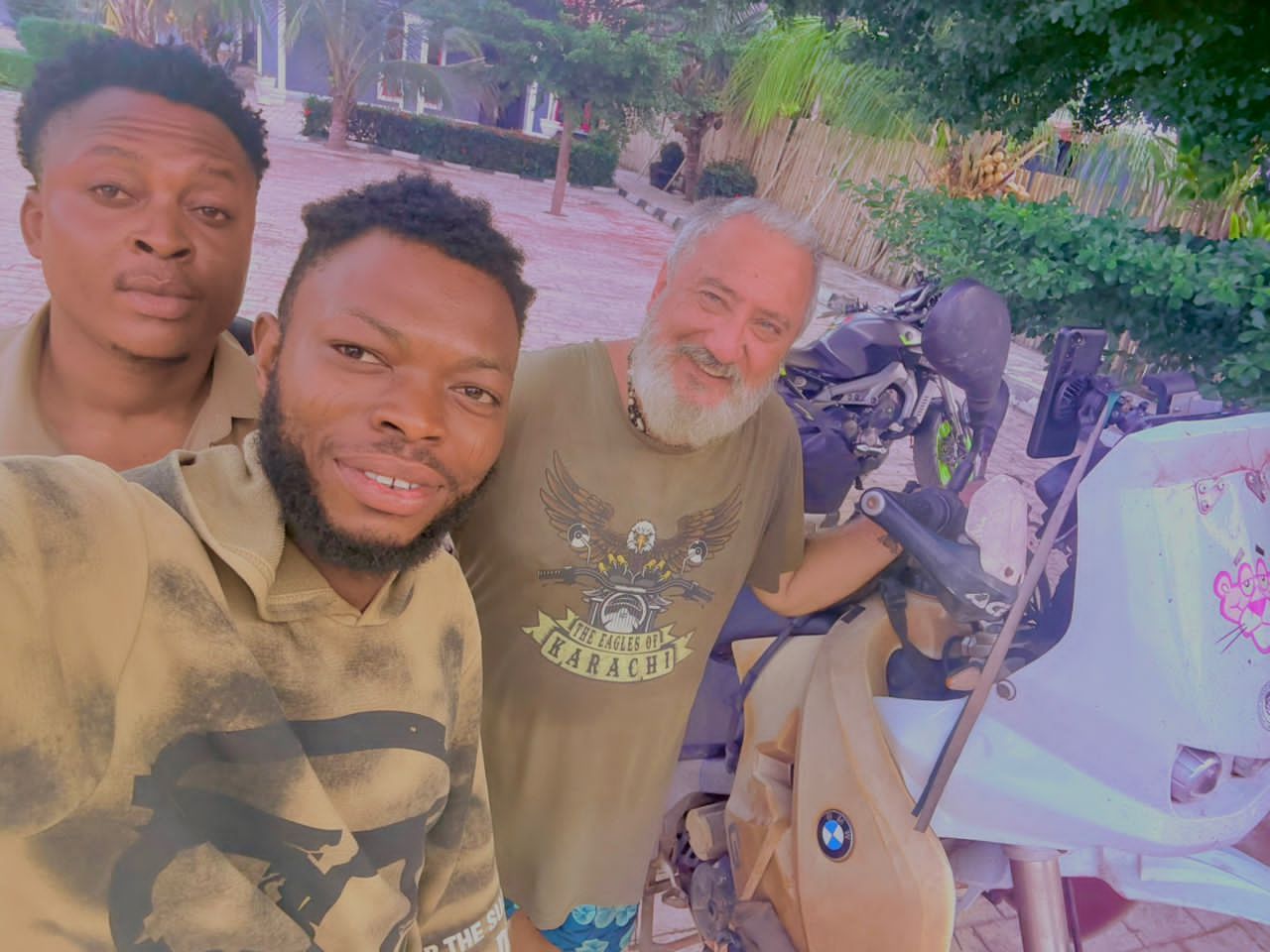
On Monday, thanks to two young bikers whose contact details I had obtained through Ibi, the job was done.
Many of my friends later pointed out that the operation may have weakened the rim. Heated and hammered aluminum can become brittle.
Still, for the time being, the bike was rideable.
The rim replacement could wait for another day.
Back on the Road
The following day, Tuesday, I set off again.
My destination was Lokoja, a little over 250 kilometers away.
My Nigerian biker friends had been very clear:
Don’t camp in Nigeria.
Stay on the roads.
I wasn’t about to argue.
I knew too little about the country, apart from the fact that it is one of the most populous nations in Africa.
So I simply followed Google Maps, which offered me two routes.
Without paying much attention, I selected the first one.
I started to suspect that this was not the main road when I noticed that traffic had dwindled to little more than a handful of 125 cc motorcycles.
No cars.
Certainly no trucks.
I hesitated and checked the GPS.
No mistake.
I was exactly where Google Maps wanted me to be.
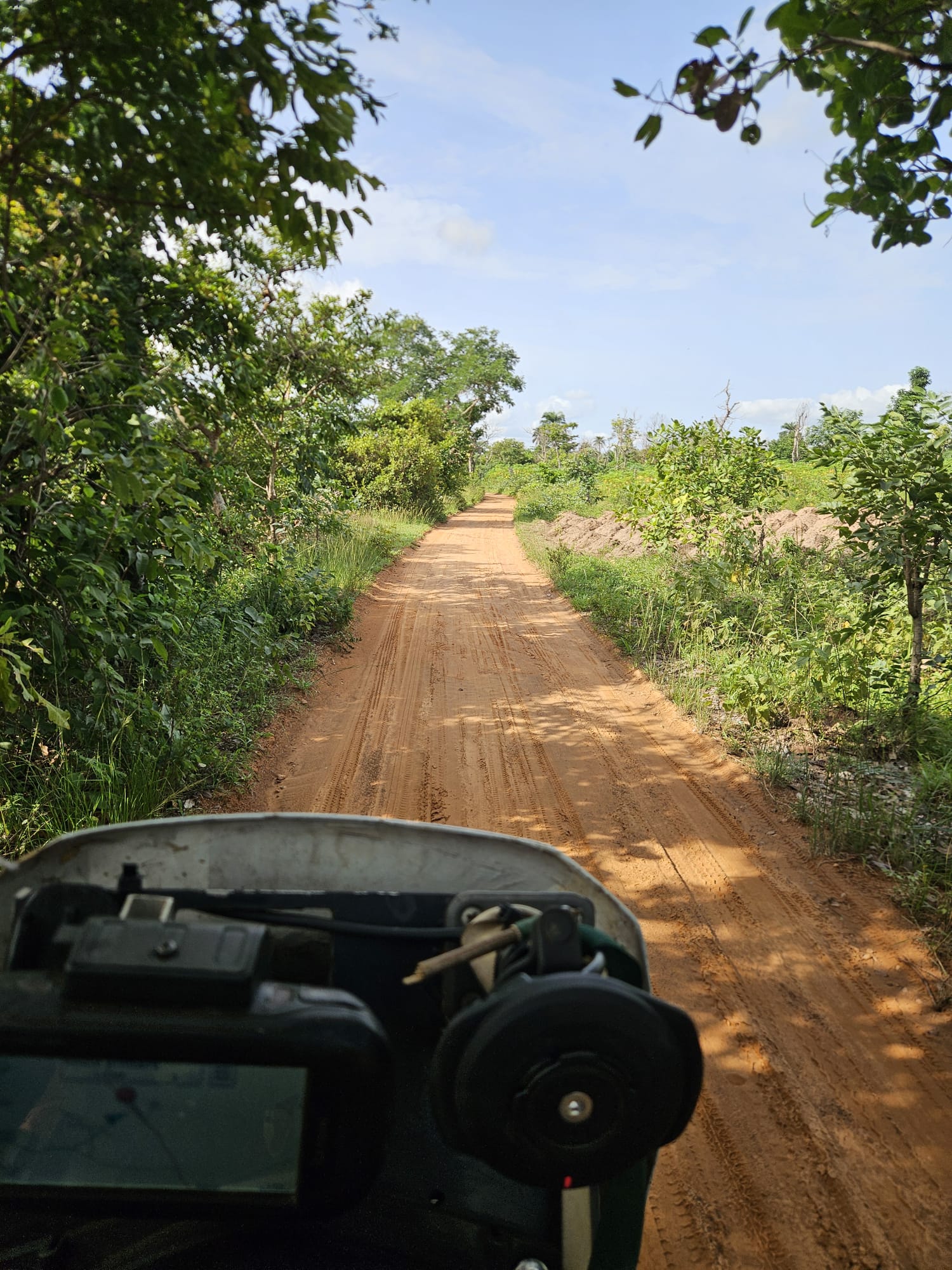
The road itself was actually in excellent condition, albeit narrow, and the rural scenery encouraged me to continue.
One detail, however, made me realize that I was truly off the beaten track.
The Man with the Machete
As I rode along peacefully, I spotted a man walking beside the road with a machete in his hand.
The moment he saw me approaching, he broke into a run and disappeared into the trees.
As I passed, I caught sight of him watching me from the forest, visibly terrified.
I carried on nonetheless.
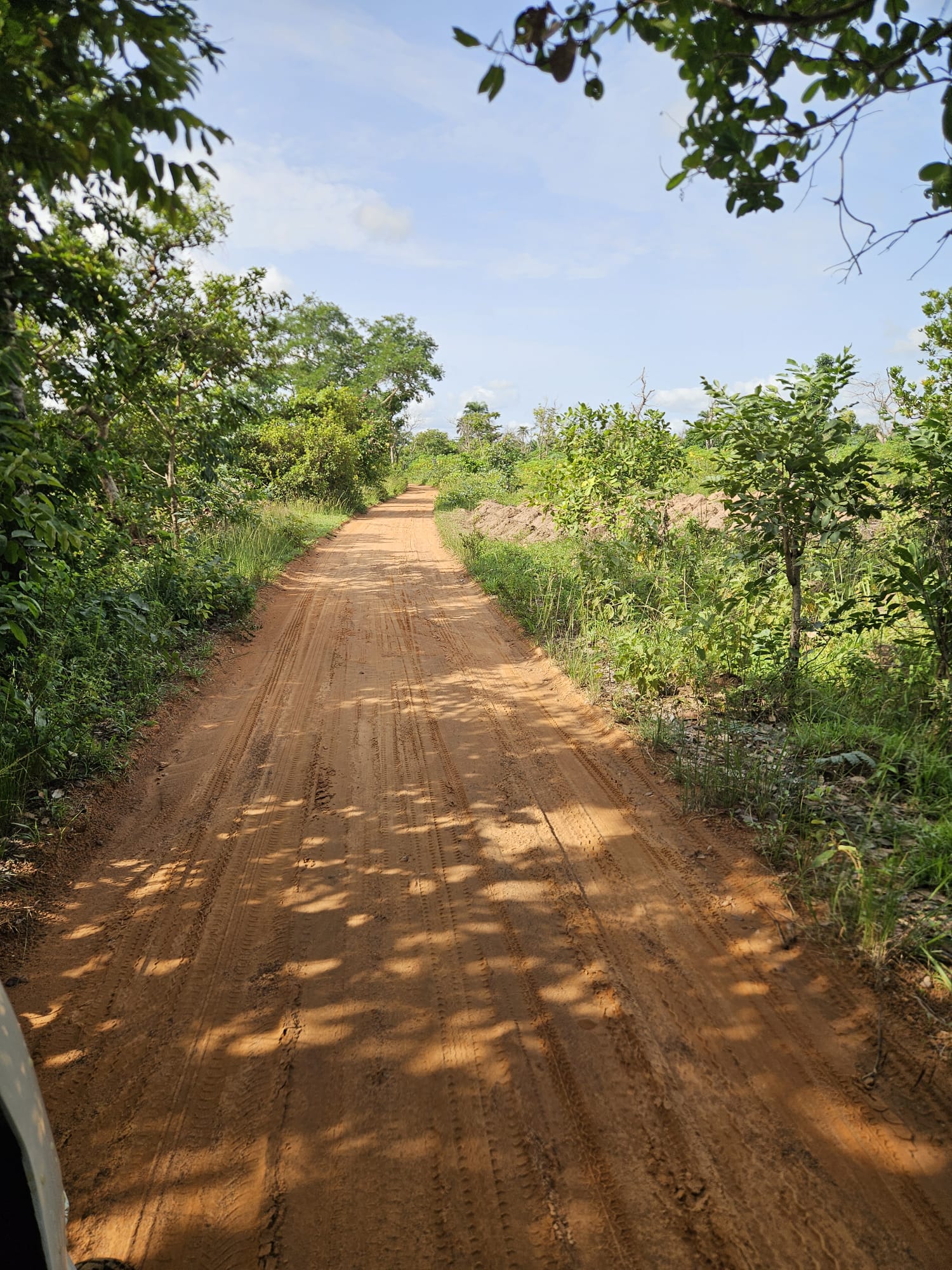
Then, suddenly, the asphalt ended and gave way to laterite.
The track looked decent enough, so I continued.
Soon I crossed a small bridge spanning a river.
I stopped for a moment.
The place was beautiful.
Beyond the bridge, however, the track became noticeably rougher.
Narrower.
Less traveled.
I hesitated.
At that moment, two men arrived on a small motorcycle.
They stopped beside me and stared in astonishment.
Apparently, white motorcycle tourists were not exactly common in the area.
I greeted them with a smile.
Always important.
They relaxed immediately and asked where I was heading.
“Okene.”
They confirmed that the track did indeed lead there.
I also understood that there were two possible routes: one shorter, the other easier.
A third rider arrived.
I decided to follow him.
He quickly disappeared into the distance.
He knew the terrain.
I didn’t.
Besides, I was heavily loaded and my tyre pressure was now 2.5 bar, far too high for sandy tracks.
The motorcycle felt unstable.
The Phantom Track
Before long, I reached an intersection.
The GPS instructed me to continue straight ahead.
Yet the track in front of me looked increasingly narrow.
To the left, on the other hand, another track appeared wider and more frequently used.
Curiously, it appeared neither on Google Maps nor on Maps.me.
A dilemma.
Fortunately, I still had a mobile signal.
I switched Google Maps to satellite view.
The track ahead was more direct, but barely visible.
The mysterious track to the left appeared much more clearly.
It seemed to connect with another laterite road.
Longer.
But probably easier.
At that moment another motorcyclist arrived.
I asked him.
The same mixture of astonishment and suspicion crossed his face when he saw me.
Then the smile did its magic.
He confirmed my intuition:
Straight ahead was shorter.
Left was easier.
I chose left.
Water Crossings
My overinflated tyres still made the bike feel nervous, but it remained manageable.
Then I encountered a large pool of water blocking the track.
Assuming it was shallow, I rode straight into it.
A mistake.
The motorcycle plunged unexpectedly deep.
Fortunately, momentum carried me through.
I came very close to dropping the bike.
Further on, another flooded section blocked the road.
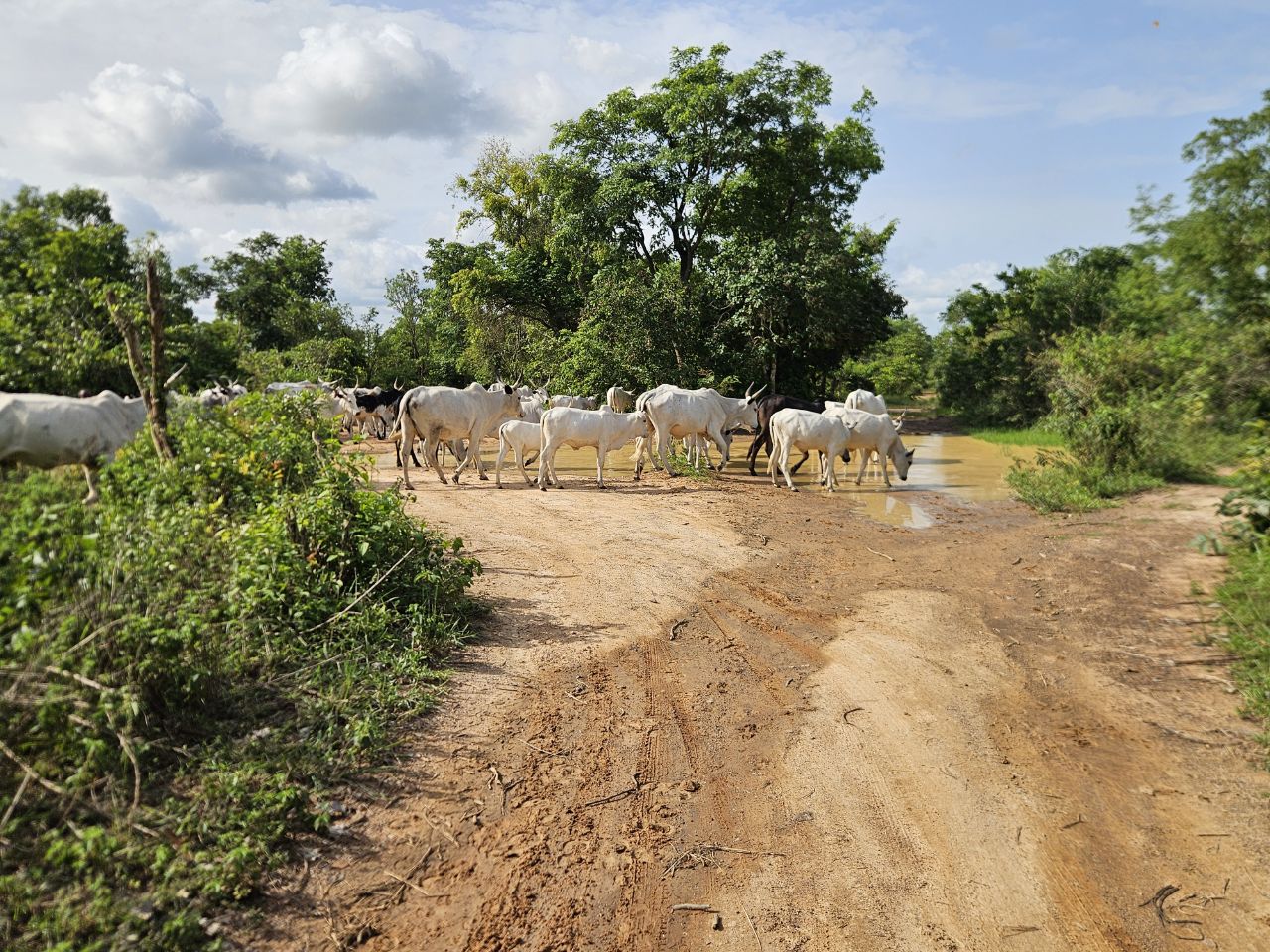
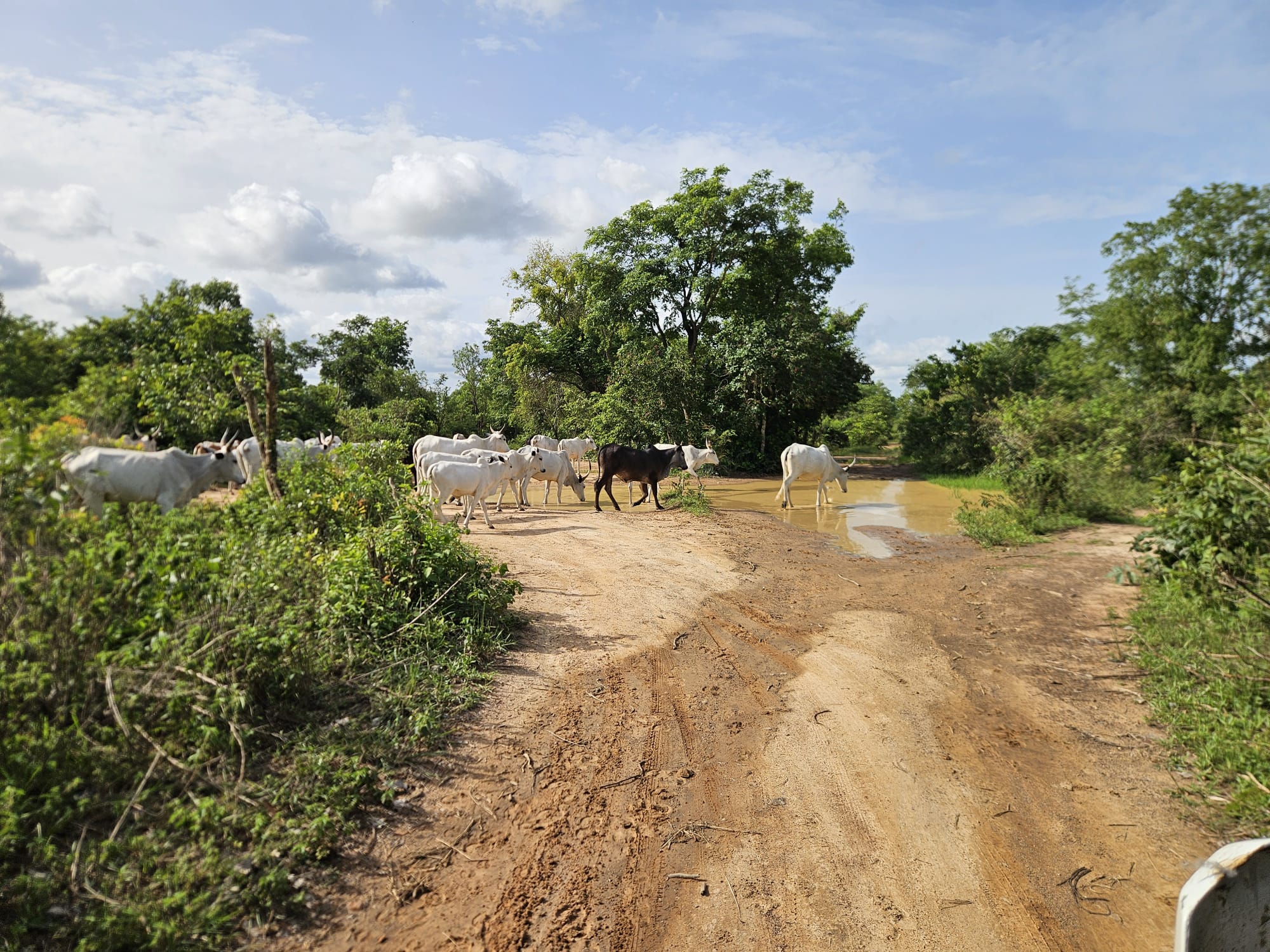
This time, however, a herd of cattle crossed before me.
I watched carefully.
The water only reached a certain height on their legs.
It didn’t look too deep.
So I waited for the entire herd to pass and followed.
The crossing turned out to be much wider than expected.
And the cattle had known exactly where the hidden hole was.
I didn’t.
Once again, though, I made it through without falling.
Young herders watched the scene from a distance.
No smiles.
No comments.
Just silent observation.
And perhaps a trace of suspicion.
The atmosphere here was definitely different from that of my first kilometers in Nigeria.
Armed Checkpoint
Soon I reached a somewhat larger route—a mixture of asphalt and dirt.
A “road-track.”
On the outskirts of a village, an armed group stopped me.
Police, I assumed.
Or perhaps a militia.
The first man was distinctly unfriendly.
No matter how much I smiled, he remained stern, suspicious, and mildly aggressive.
He wanted to search my luggage.
Still smiling, I protested jokingly.
He didn’t budge.
Fortunately, another man—perhaps a colleague, perhaps a superior—addressed me.
He was far more relaxed.
I turned my attention entirely to him and largely ignored the first officer.
A few minutes later, I was allowed to continue.
Okene
The ride to Okene passed without incident.
The atmosphere changed completely once again.
Within a few kilometers, I had gone from traditional rural Nigeria to a far more modern and bustling environment.
Then I noticed something unusual.
A ceremony—or what appeared to be one.
Nearly a hundred men were walking through the streets dressed in what looked like owl costumes.
Only their eyes were visible.
Each carried a long flexible staff more than three meters long.
They stopped cars and pretended to strike them with the staffs.
Strange.
Unfortunately, my camera’s memory card was full.
I have no footage of this curious spectacle.
Arrival in Lokoja
Once past Okene, the remainder of the journey was uneventful.
Almost monotonous.
I reached Lokoja shortly before nightfall.
That evening, I sent Ibi a short video clip from my off-road detour.
His response was immediate.
“You must stay on the roads.”
According to him, it was dangerous to venture off them.
The line separating friendly smiles from a kidnapping could be very thin.
As he put it:
“The situation can quickly change from smiles to an abduction.”
May 27, 2026 – Lokoja / Abuja
The night was a bit restless: people were partying in the hotel corridors until 1 a.m. As I leave, I can’t help mentioning it at reception.
The final stretch to Abuja, Nigeria’s capital, is fairly short: 200 km of good road, even motorway in places. That doesn’t mean I can afford to relax my attention.
A little after Lokoja, the road crosses the Niger River on a large four-lane bridge. For a brief moment, I let myself be distracted by the scenery. Only for a moment: right in the middle of the bridge, I suddenly spot a gaping manhole opening. No warning signs, nothing. I immediately abandon my contemplation and make sure the other covers are actually in place.
A little farther on, on another four-lane road, I notice a completely naked man wandering about in an erratic manner. He is neither the first nor the last unfortunate soul I have seen like this around the world.
I remember a family in Lahore, Pakistan, living on a sidewalk with nothing more than a tarp stretched above them and a few others spread out on the ground. That was their home. I passed by them several times. But what could I do? The children, however, were like children everywhere: playing with apparent carefreeness, at least on the surface.
Arriving in Abuja is impressive: a vast city of modern buildings and broad highways, sometimes as many as eight lanes wide. Traffic is relatively smooth, at least when I pass through.
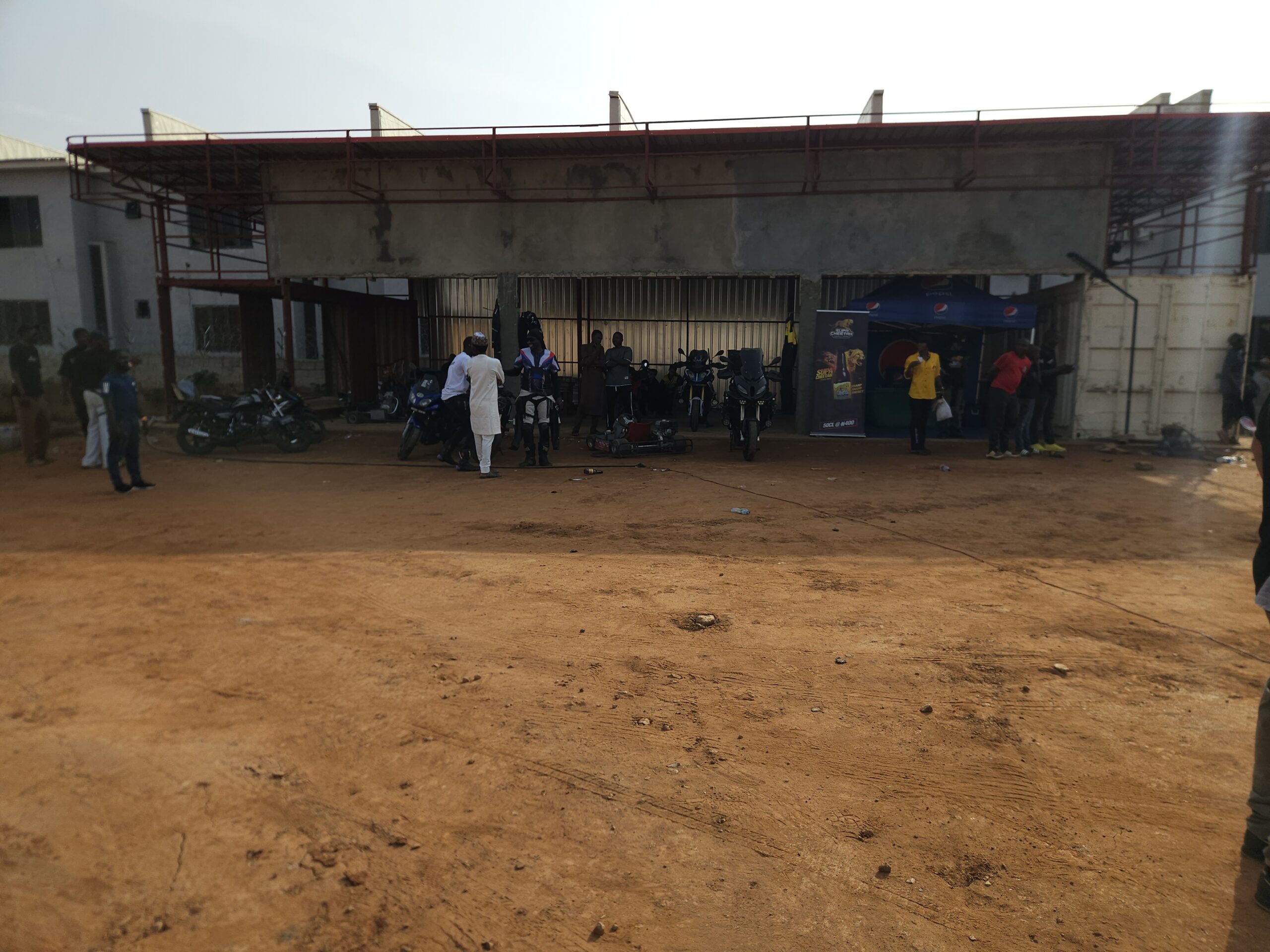
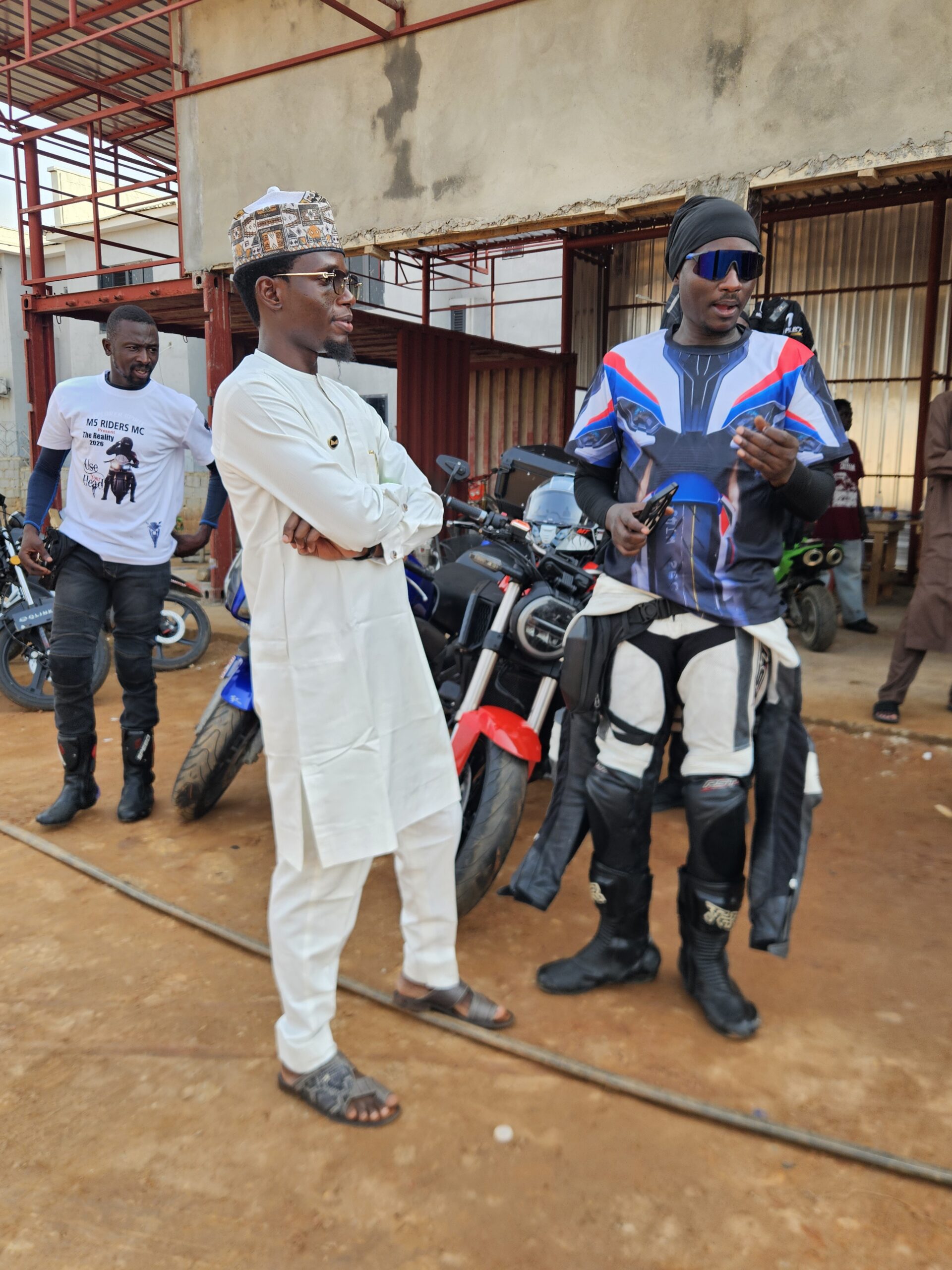
I have arranged to meet members of the Abuja Biker Club, located in one of the city’s upscale districts.
The club has its own facilities: two complete one-story buildings. Or, more accurately, a single building with two wings.
One side serves as a bar, restaurant, and nightclub where people can relax and enjoy a drink. The other functions as a hotel for visiting riders.
I am welcomed by Gomez—the club president (SCAN: Superbike Club Association of Nigeria)—and Queen, a well-known female rider here. Baptiste rode with her for part of his journey two years ago.
She now lives in Dakar and speaks fluent French and Portuguese.
Gomez generously puts a very spacious room at my disposal. The hospitality of Nigerian bikers is truly remarkable.
I decide to stay two or three days to rest and see whether I can get my wheel sorted out. I also need to define the next stage of my itinerary.
I am considering following the same route Baptiste took two years ago. It leads toward Garoua, in northern Cameroon. That would allow me to cross Cameroon from north to south and compare it with my trip twenty-three years ago.
Back then, we traveled through the country in July, during the rainy season, on muddy roads. Today everything has been paved. That changes everything.
So I spend Thursday thinking it over.
Thanks to Queen, I obtain the contact details of a Cameroonian officer stationed in Garoua. It is a valuable lead. He assures me the route is feasible and recommends the best way to go.
The connections between the two countries in that area are not paved, and since the rainy season has already started, it is better not to venture into terrain that could become problematic.
There is also the security issue. Boko Haram is not far away.
Still, I am fairly confident on that front. The motorcycle network is powerful, and one of its members is actually a king in that region.
Alas, while reviewing my schedule, I realize once again that I have lingered too long.
My DRC visa will expire if I delay any further.
And that route presents a major problem: it adds a 700-kilometre detour.
I therefore decide to take the shortest route south from Abuja.
That leaves me with three options:
- Gembu, but the rainy season is already well advanced and the route is made difficult by mud.
- Ekok, but several travelers have been turned back because they did not have the visa sticker in their passport. I only have the printed e-visa. In theory, I could have the sticker issued at the Cameroonian consulate in Abuja… but the machine is out of order.
- Calabar, with a boat crossing.
I contact the Cameroonian officer regarding Ekok. He assures me that he can get me through despite the missing sticker.
I decide to trust him.
According to Queen, he is well connected.
After Ekok, I will probably be placed under escort, as the region is affected by several separatist movements.
May 28–31, 2026 – Abuja
I decide to spend a few days in Abuja.
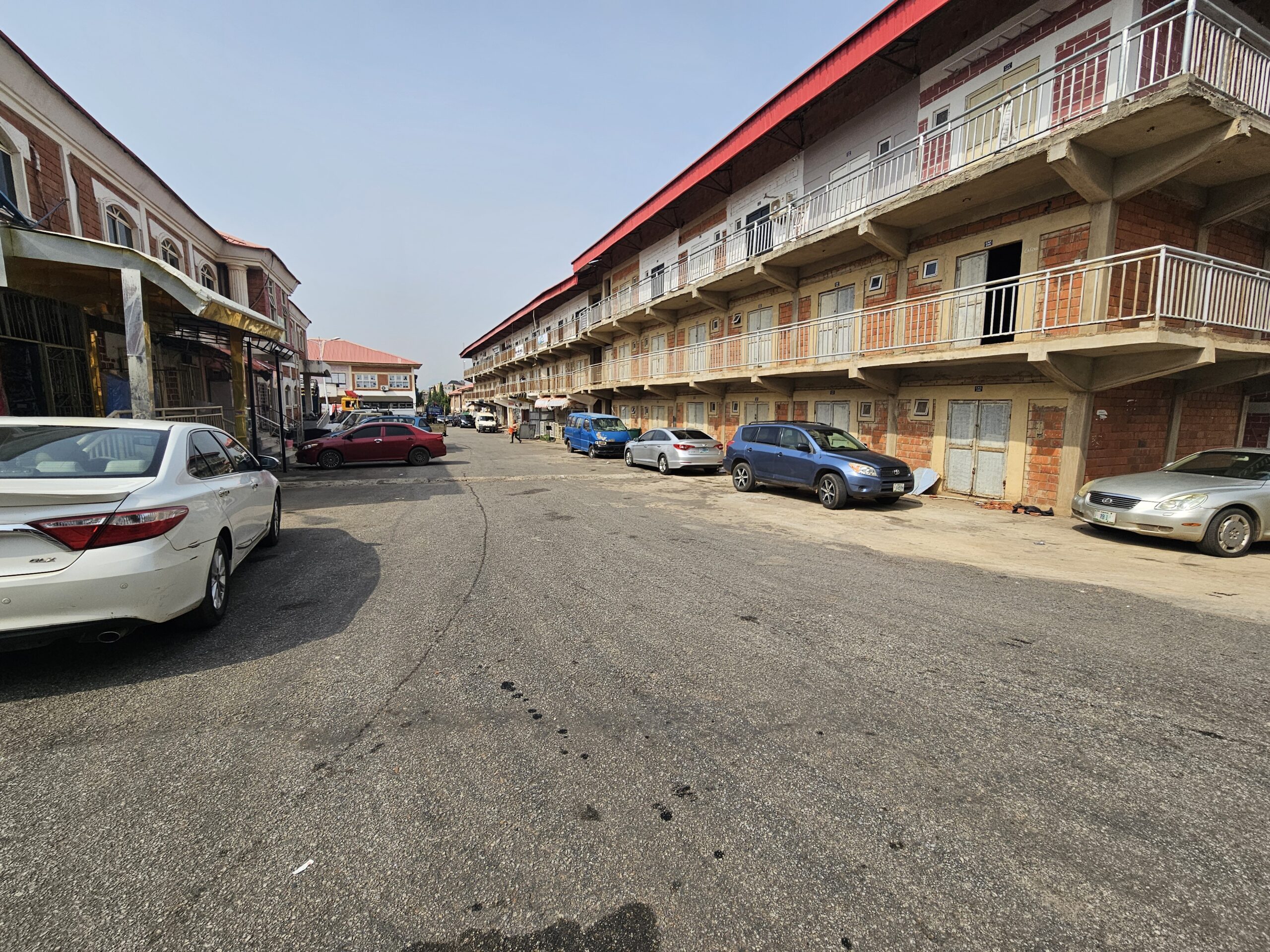
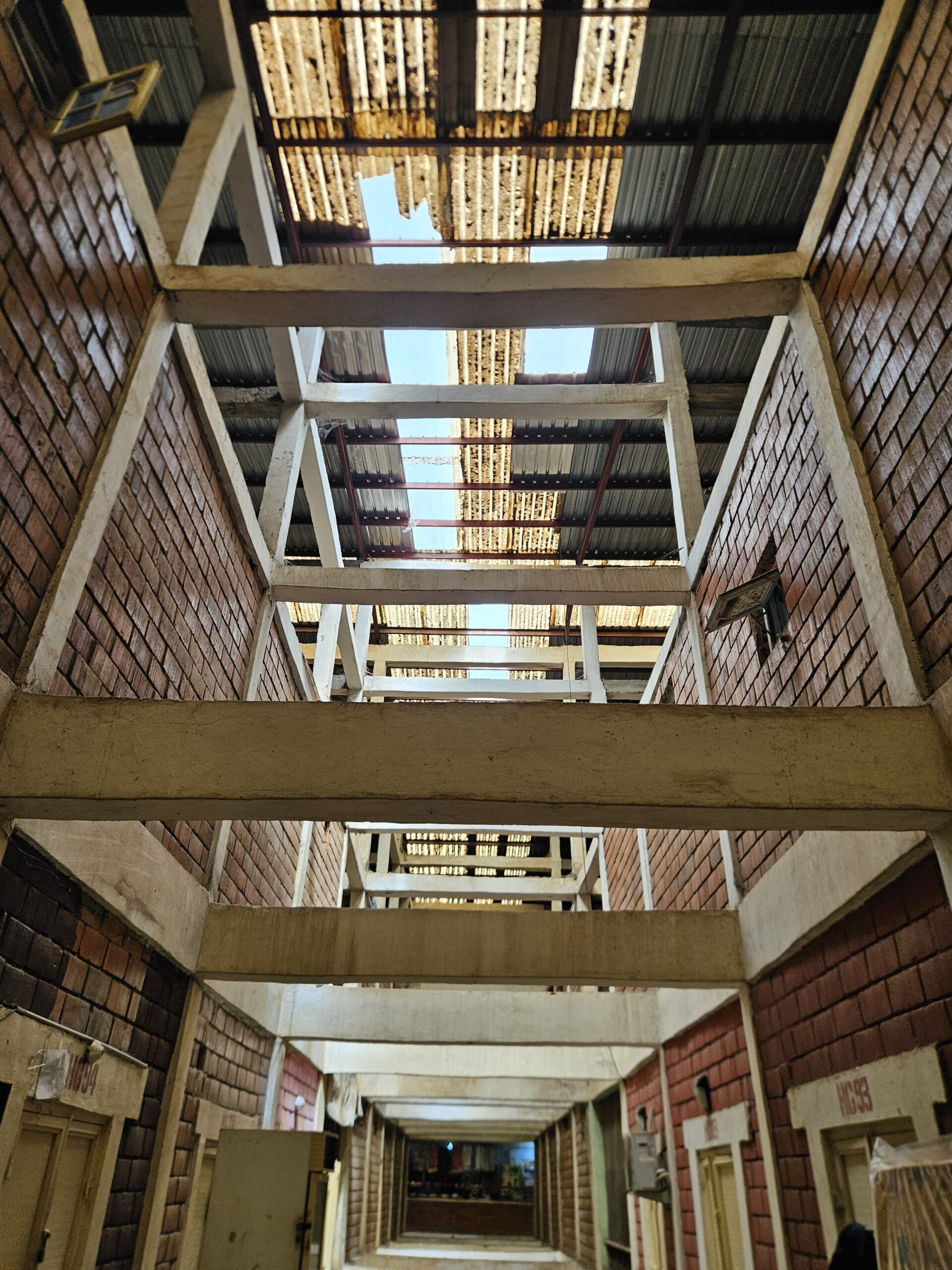
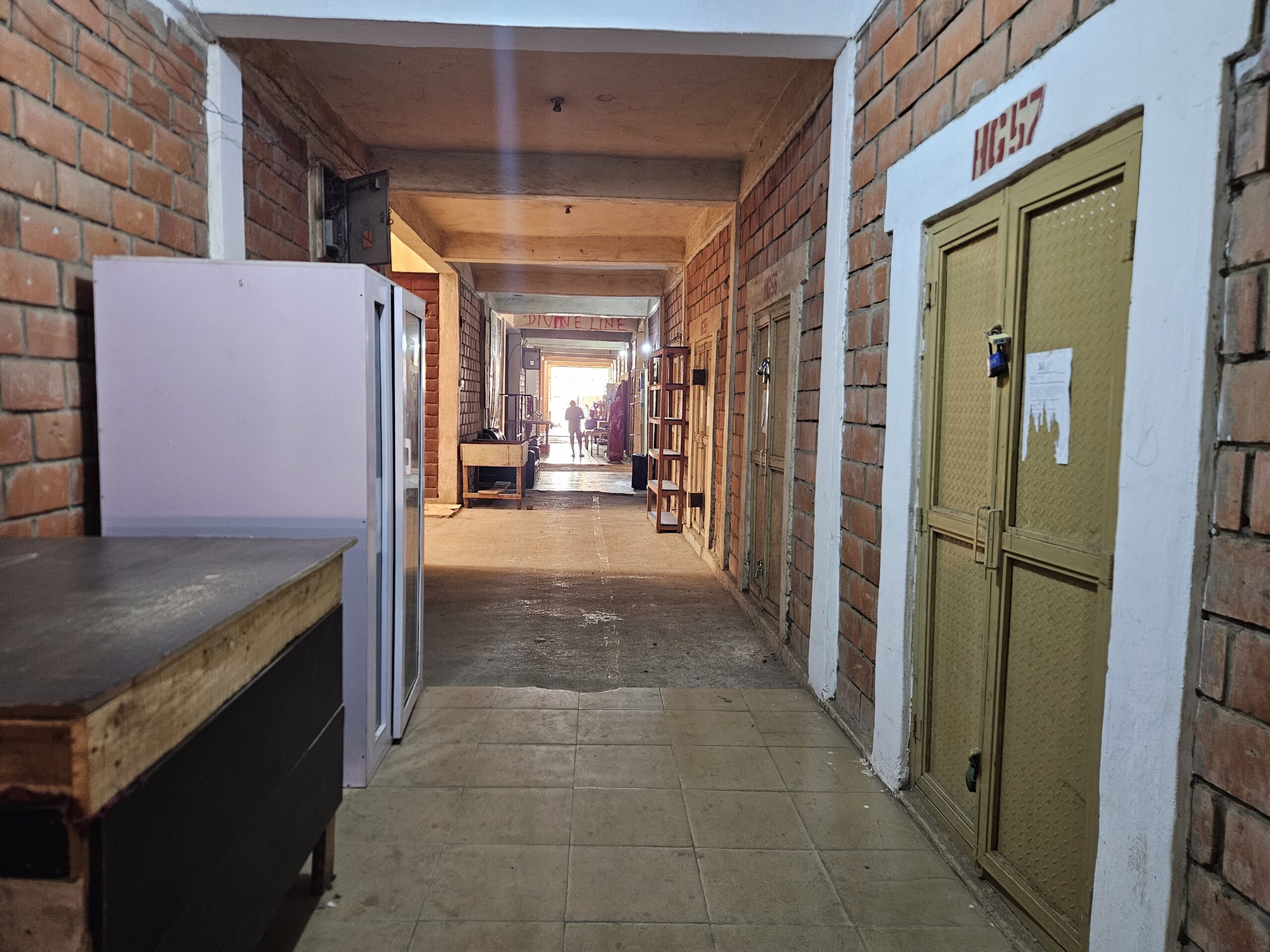
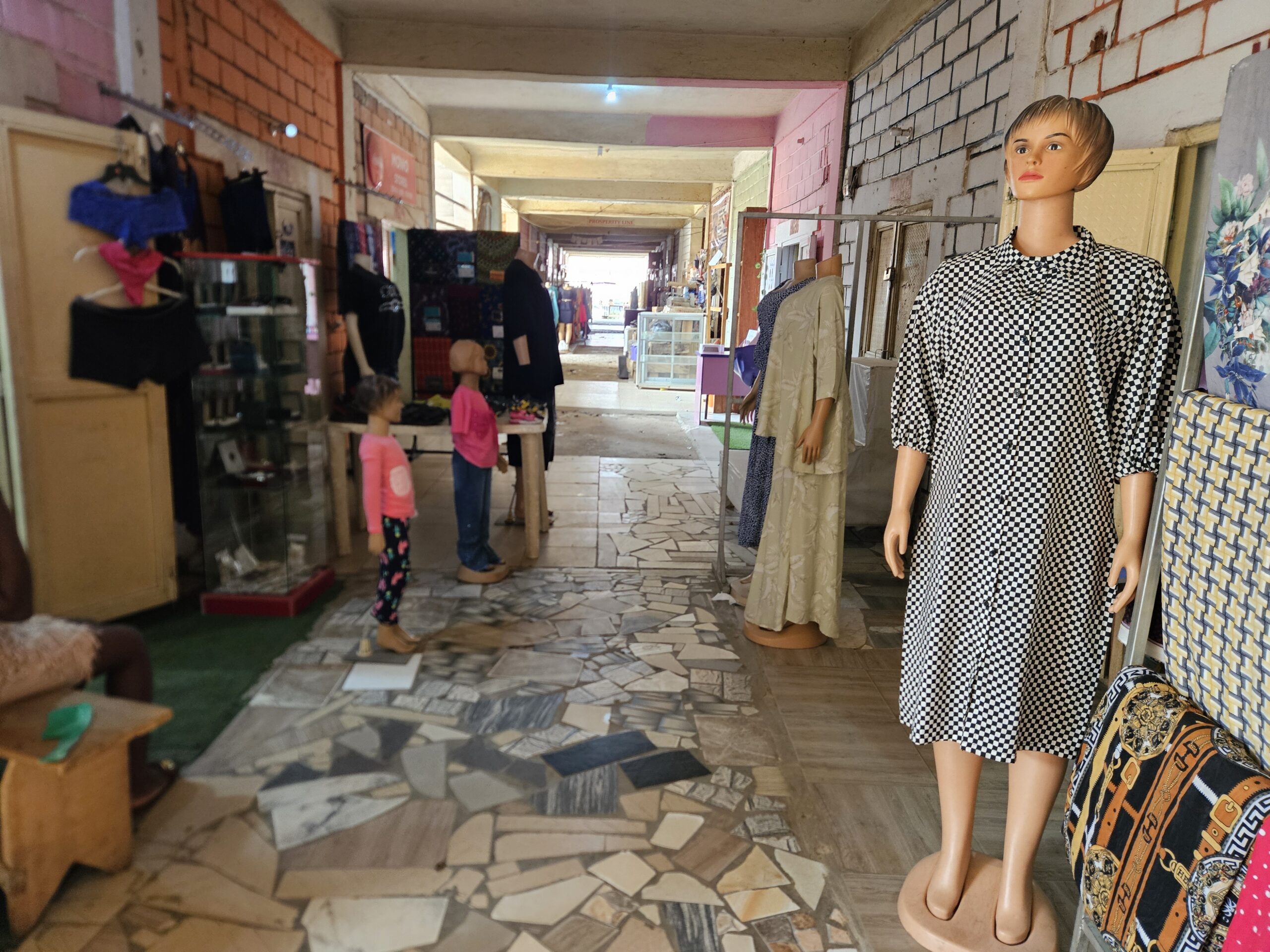
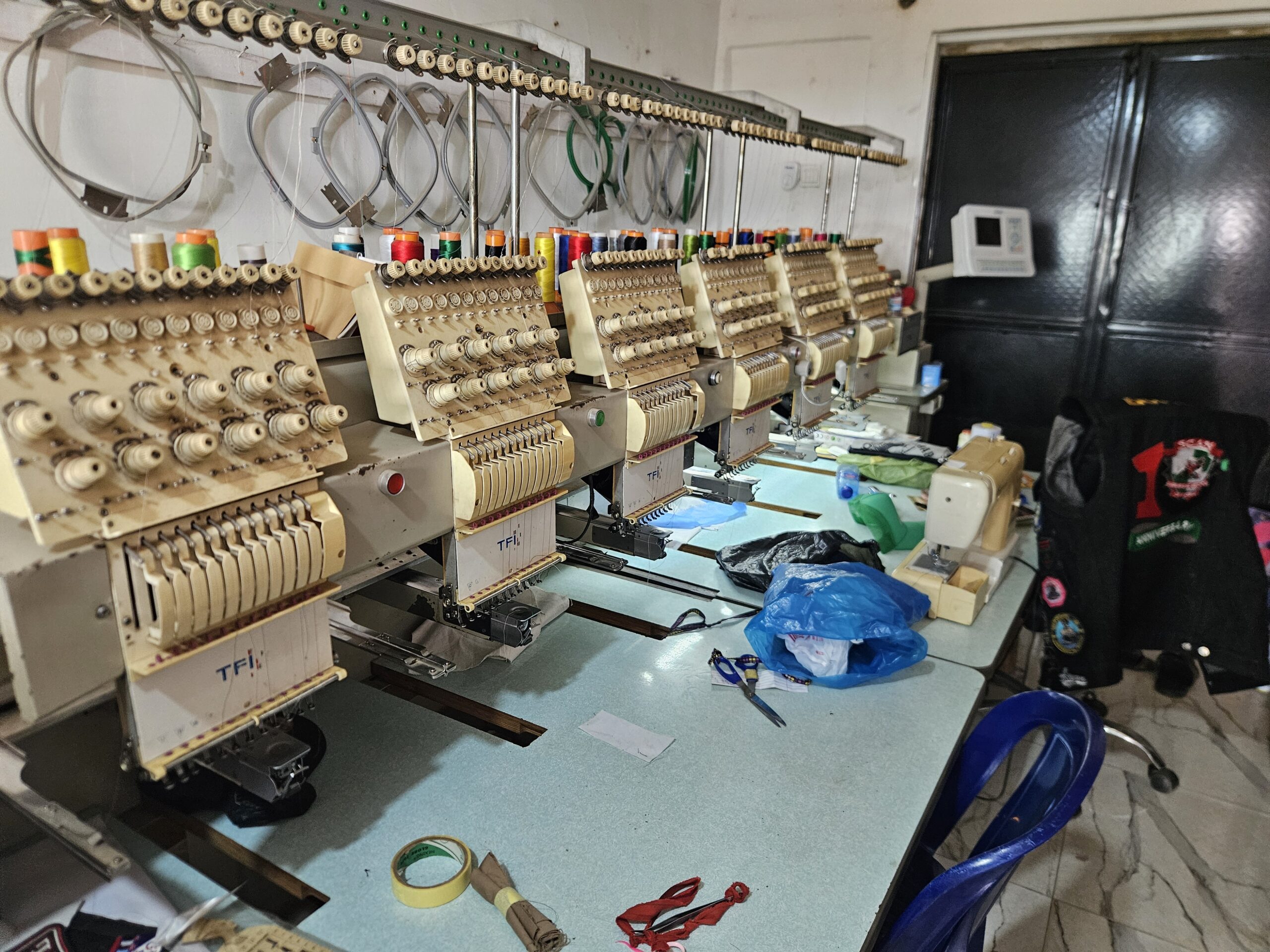
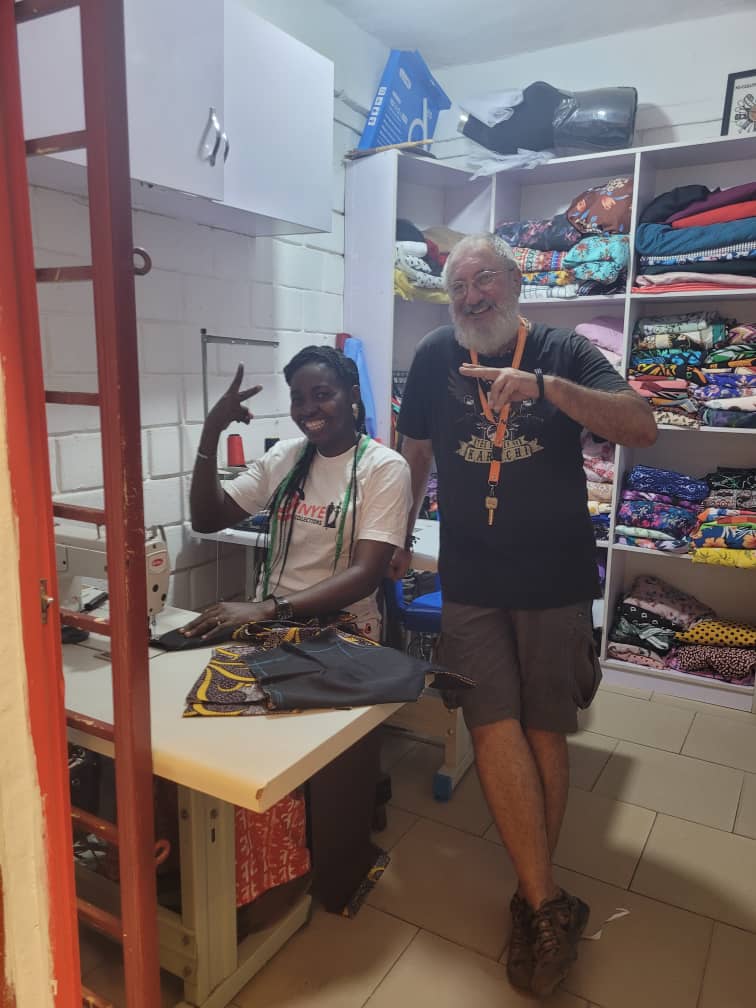
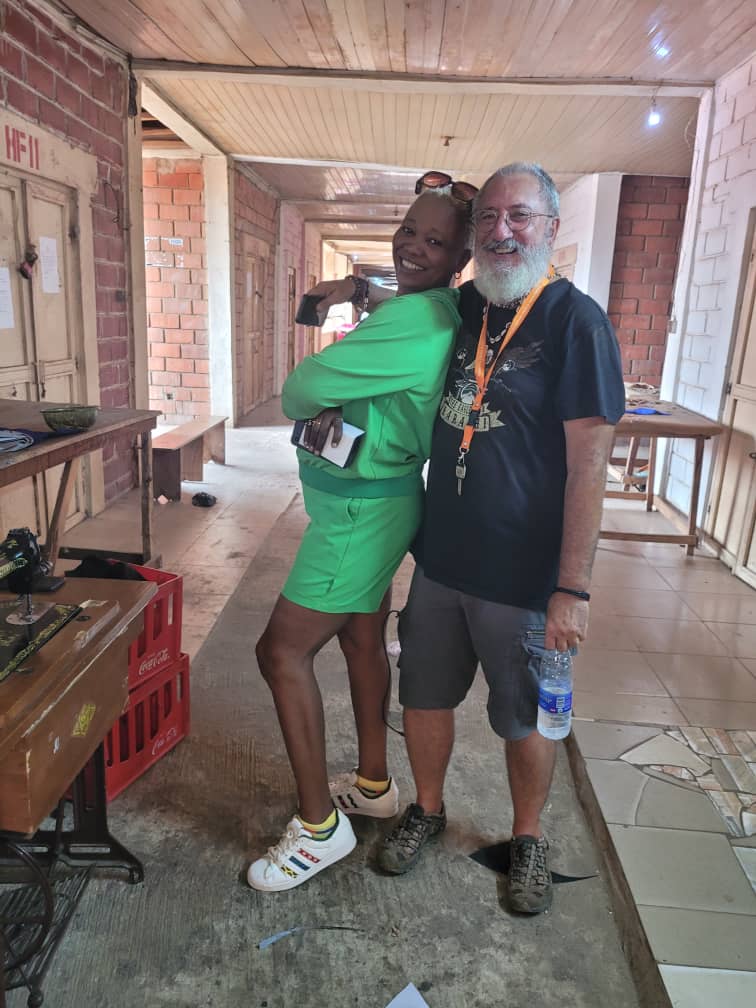
On Saturday, my motorcycle trousers are repaired for the umpteenth time in a sort of commercial complex filled with all kinds of shops, particularly tailoring workshops.
My guardian angel, Gomez, happens to own one of those workshops. That certainly helps!
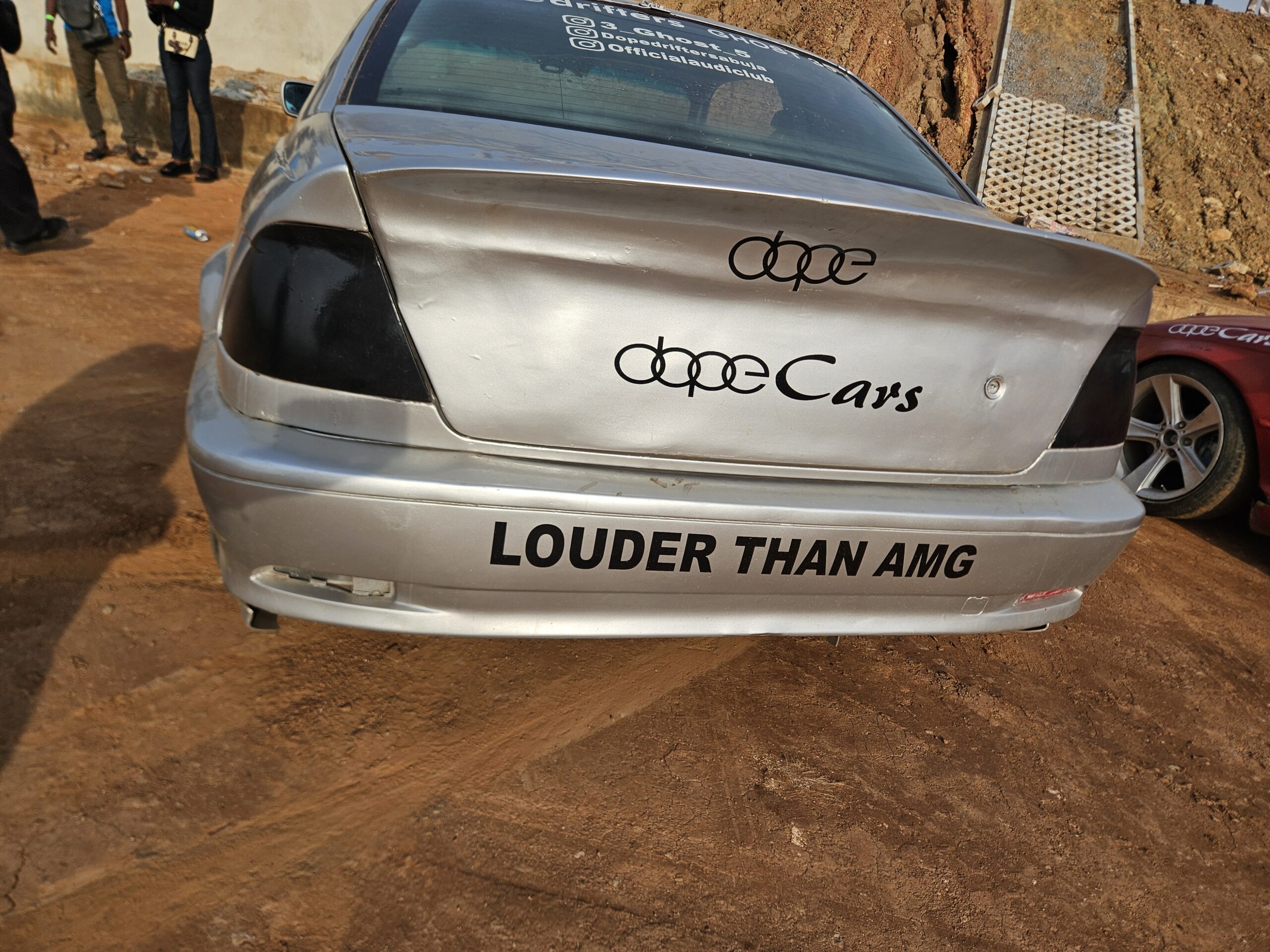
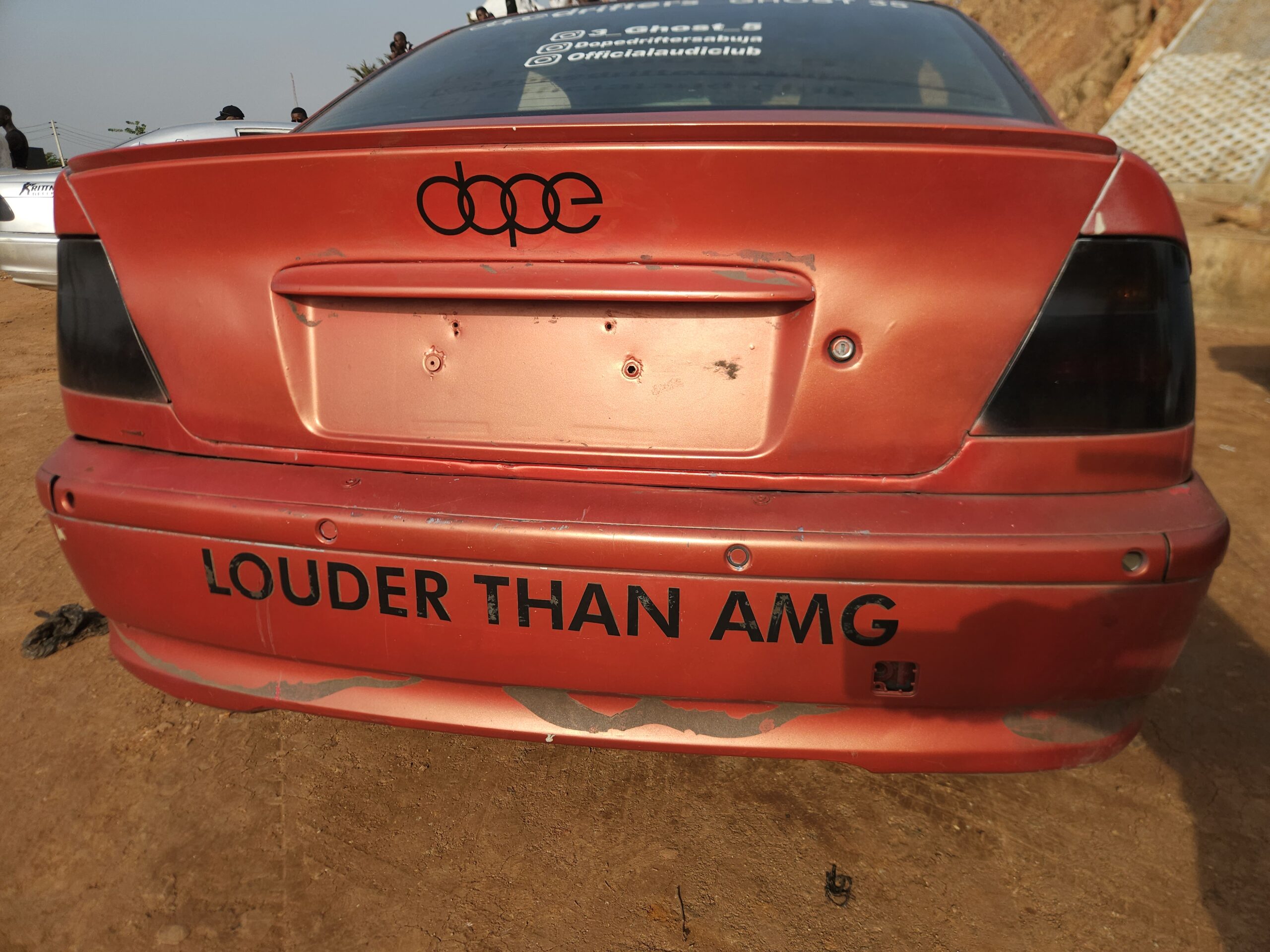
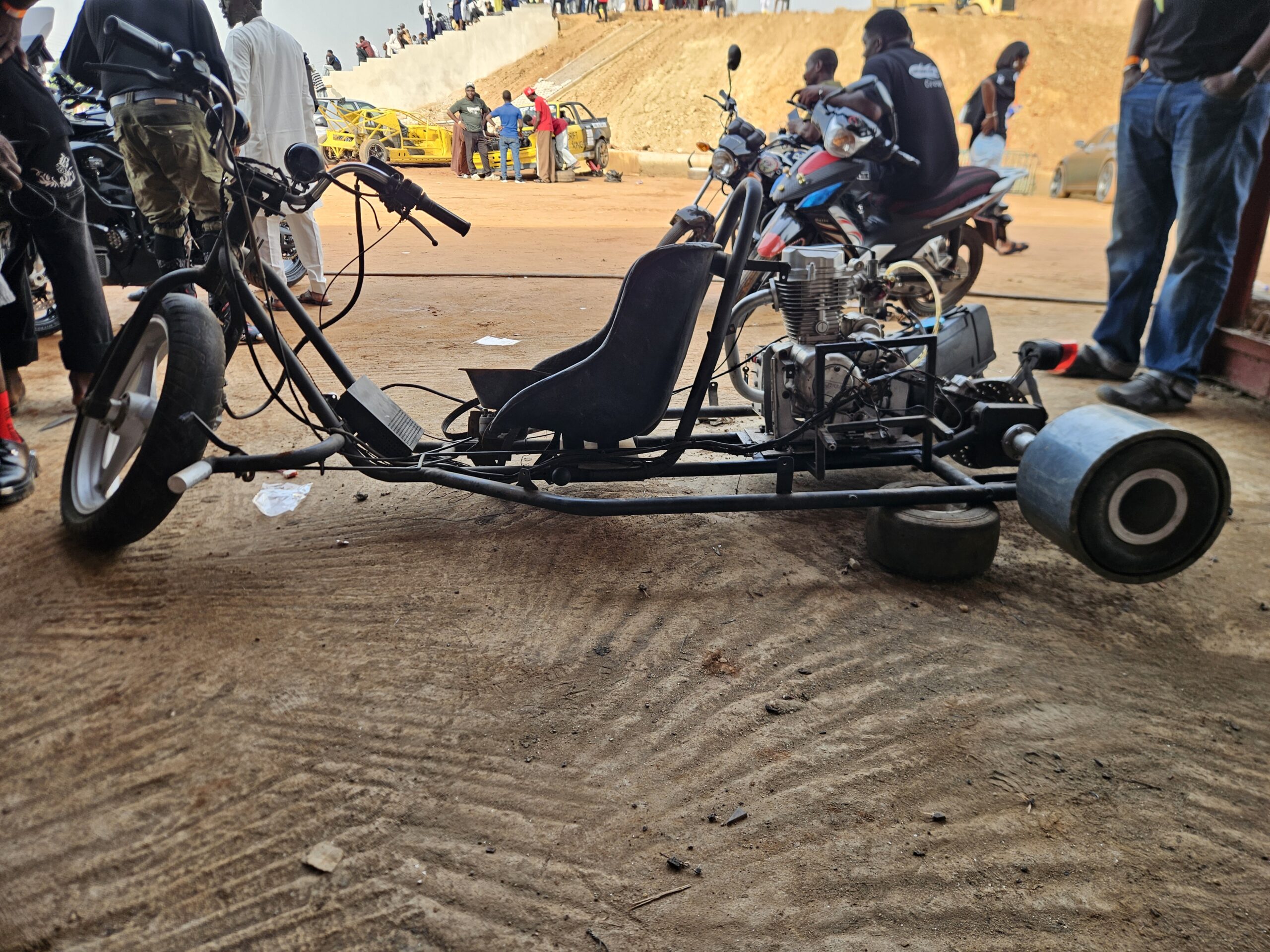
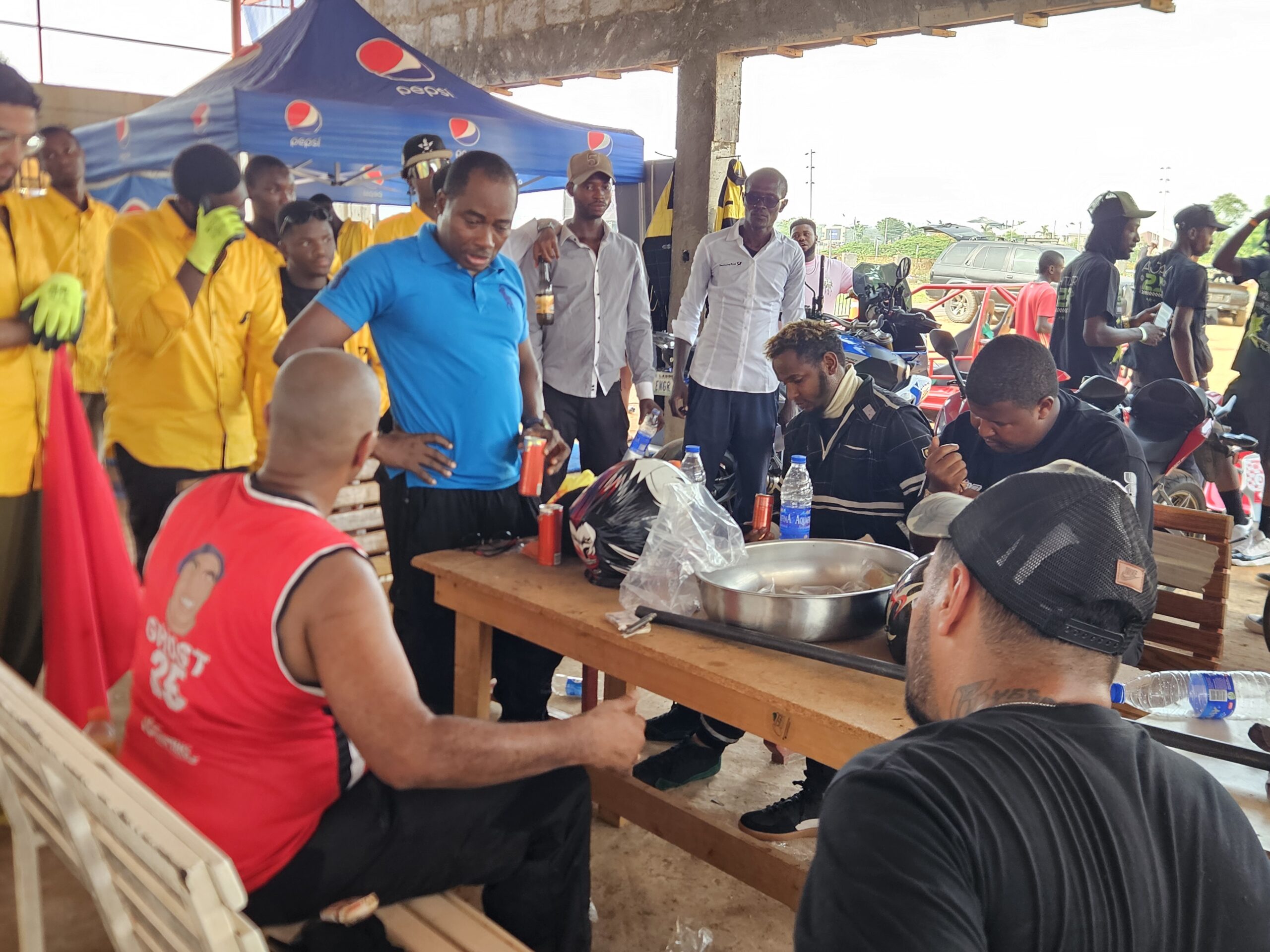
Later, he takes me to a drifting event. Once again, he is involved in the organization.
The atmosphere is a little crazy, especially in the evening when things end with burnouts and fireworks.
On Sunday, I wake up feeling a bit rough.
Between the drifting event the previous day, the nightclub, and the loud music blasting next door all night, I haven’t exactly had a restful sleep.
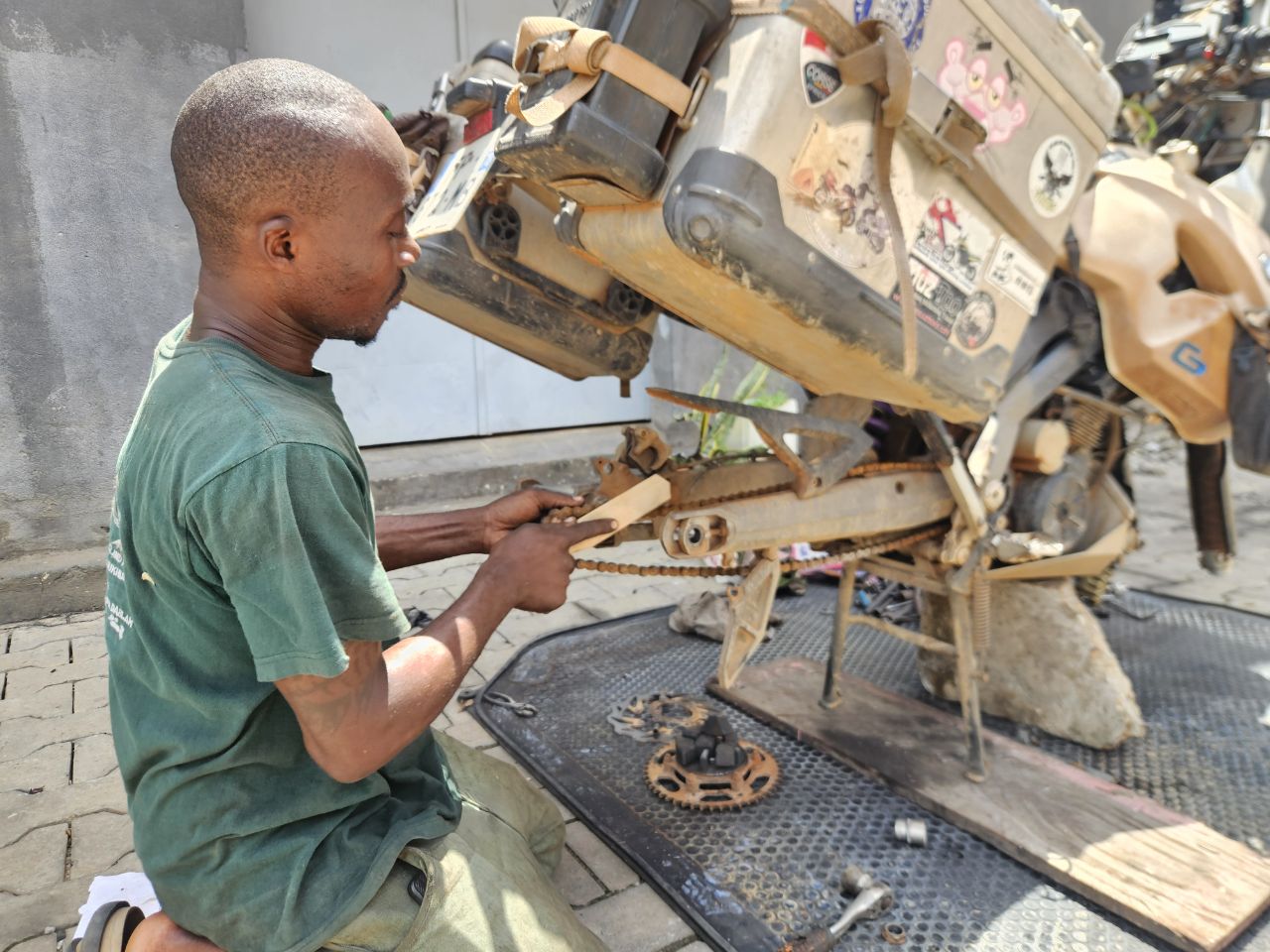
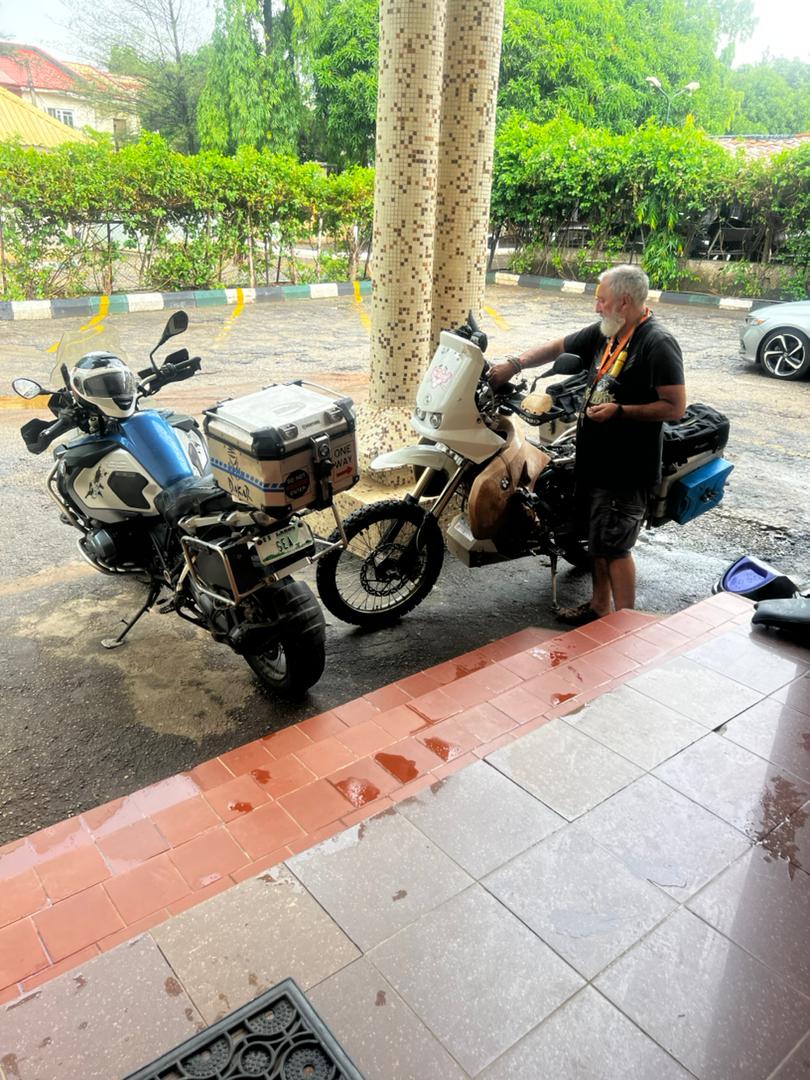
Once again, I decide to postpone my departure until the following day and use the extra time to perform some maintenance: chain, oil, and the usual checks.
Then comes the cold shower.
While checking the oil level, I notice a white mayonnaise-like residue on the oil filler cap.
I am surprised.
Granted, the bike has been consuming a small amount of coolant, but very little—about 10 cl per 1,000 km at most.
And above all:
- The engine runs perfectly.
- There is no white smoke coming from the exhaust.
I then remember the two large water holes I rode through a few days earlier—especially the first one.
Perhaps the bike swallowed a little water.
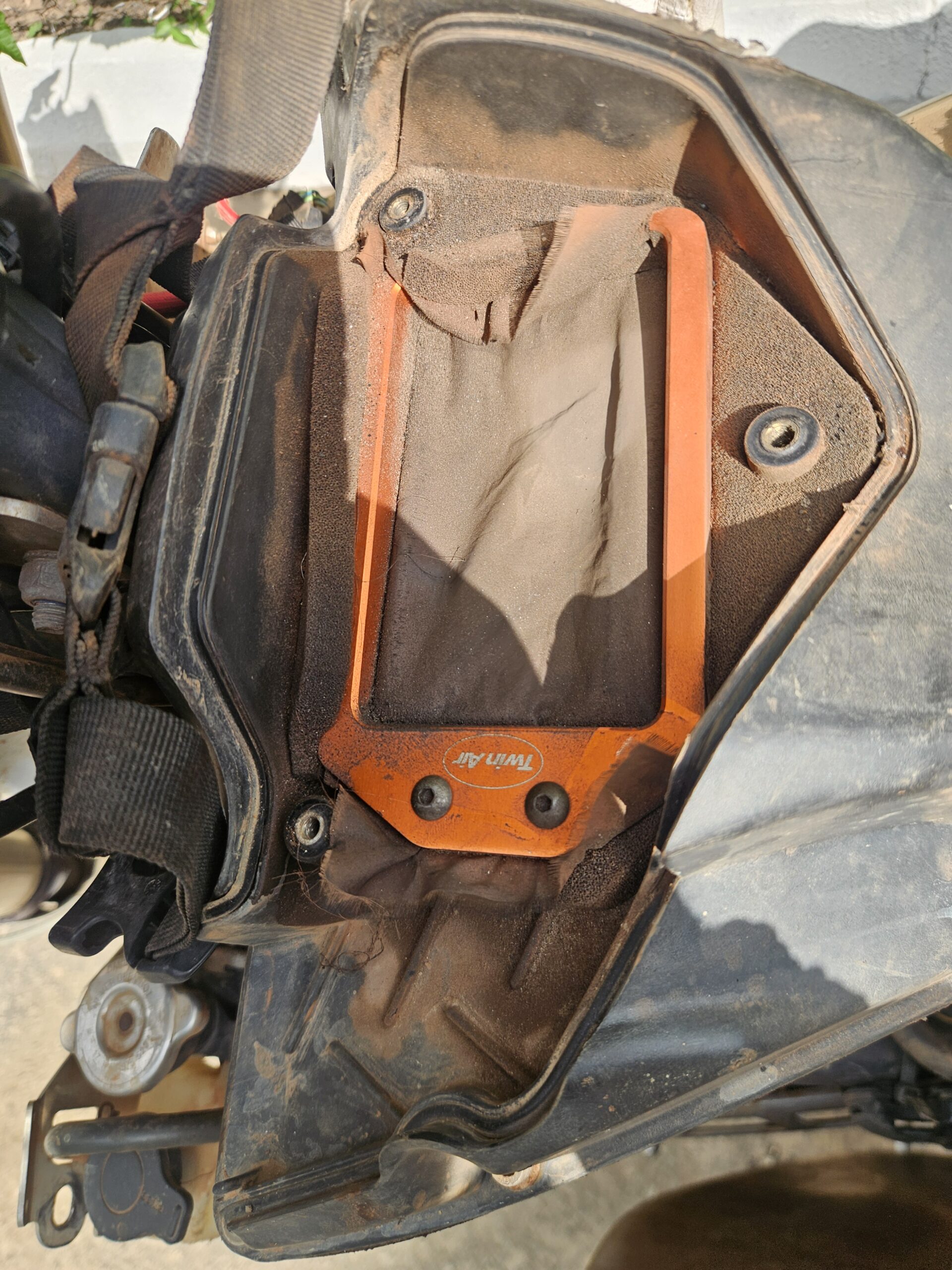
To be safe, I start by inspecting the air filter.
The pre-filter is dry and dirty, but is it dust or dried muddy water residue?
Water could have passed through while leaving the heavier particles behind.
I inspect the airbox and indeed find residual traces of water.
Nothing dramatic, but it clearly has no business being there.
I also notice a few marks on the skid plate near the airbox breather.
I decide to change the oil.
The previous oil change was only about 3,000 km ago.
I have spare filters, but no oil.
I call Gomez and ask whether someone can come the next morning.
Less than an hour later, two young mechanics arrive on motorcycles.
We perform the oil change by the light of an electric lamp.
The drained oil looks perfectly normal, which reassures me.
Still, changing it was the right decision.
However, another possibility keeps nagging at me—and I don’t like it at all.
It is possible that the water pump has started to wear out.
I do have a spare pump with me, but from experience I know replacing it is extremely complicated on this motorcycle because of one particularly badly positioned bolt.


No Comments