
Cet article est également disponible en :
28 August – 17 September 2026
I’m moving forward.
Slowly, but I’m moving forward.
I’m writing to you from Oyo, somewhere in the middle of Congo.
The President’s town.
I had already been here 23 years ago, coming from Gabon, via a pretty terrible track. Back then, it was a serious adventure: several days completely cut off from the outside world, with no telephone, no internet, and no way of communicating with anyone.
Another era.
So far away now that it almost feels like another life.
I arrived in Ouesso on the 22nd or 23rd of August. In my head, two or three days at most, and then I would be back on the road heading south.
In the end, I didn’t leave until 15 September.
What happened?
A motorcycle breakdown?
No such thing.
This time, Olivier is responsible for everything. Remember him? The forester I met in Yaoundé, the one who appears in the first episode of the “Causeries”.
Olivier simply gives me, via WhatsApp, the contact details of a former colleague and friend who works in Ouesso.
He works for WCS.
At first, I don’t really pay much attention to it. My objective is to head south. I’ve already hung around long enough.
But, out of curiosity, I Google WCS.
And then…
Good Lord.
This is getting interesting.
WCS stands for Wildlife Conservation Society, the Society for the Conservation of Wildlife.
In Congo, the organisation works in particular to protect forests and wildlife, especially in the great forest areas of the north.
Forest elephants, gorillas, chimpanzees, the fight against poaching, scientific research, park management, working with local communities, fundraising…
In short, exactly the kind of place likely to interest me.
WCS is particularly active in Nouabalé-Ndoki National Park, one of the great forest areas of Central Africa.
And the organisation wasn’t exactly founded yesterday: it was created in New York on 26 April 1895.
Today, it works in more than 50 countries, in cooperation with governments.
So I contact Arnaud, Olivier’s friend.
And thanks to him, I meet Flore, a French woman who works at the Bomassa base, about 200 km from Ouesso.
Bomassa.
Two hundred kilometres.
Several hours in a 4×4 on a more or less decent track.
So I choose the 4×4 rather than the motorcycle.
For two reasons.
The first is fuel.
I was extremely lucky to arrive at a petrol station at precisely the moment when a tanker was filling the underground tanks.
You don’t pass up an opportunity like that.
I park in front of the pump and wait.
Result: first in line.
But during periods of chronic shortage, the tanks can be empty within three or four days. Sometimes less. And the next tanker may not arrive for several weeks.
Then there’s the black market, of course.
But there, the price per litre becomes astronomical, with, as a bonus, fuel of decidedly questionable quality.
So I prefer to play it safe and use the motorcycle as little as possible.
Second reason: the track.
Two hundred kilometres of laterite, in the middle of the rainy season.
And I have some painful memories of crossing Cameroon 23 years ago, at exactly the same time of year.
Laterite almost all the way to Douala.
I have absolutely no desire to do that again.
In fact, on the way there, the track is relatively dry and I could easily have ridden it on the motorcycle.
But on the way back, after several days of rain, things would probably have been considerably less amusing.
So here I am in Bomassa.
I meet Flore.
She is in charge of tourism development.
Before that, at the Ouesso base, through her, I had met Chris, the communications officer.
And that’s when things begin to take a different turn.
During my first meeting with Chris, I tell him about a project idea.
They seem interested, in principle.
But there are a lot of people to convince.
And, above all, a lot of authorisations to obtain.
So Flore enables me to meet people who can help me understand the terrain and, incidentally, see whether my idea actually holds water.
I meet the park director, the customary chief of Bomassa and his predecessor.
I also meet Fafa, a tracker who accompanied Mike Fay on his famous 1999–2000 megatransect.
In Bomassa, Jean-Marie, an agroforester, acts as my guide.
Jean-Marie was one of the very first people to approach and habituate gorillas in the area.
Jean-Marie is Bantu, like Fafa.
The customary chiefs, on the other hand, are “Indigenous”, or Ba’Aka.
Lost already? A few explanations…
“Indigenous”
In this region, “Indigenous” refers to the Ba’Aka, what used to be called pygmies.
The term “pygmy” is now considered derogatory and has been abandoned in favour of “Indigenous”.
The Ba’Aka are often involved in scientific work as research assistants and bring with them a unique knowledge of the forest.
“Transect”
In ecology, a transect is quite simply a defined route through an environment, along which observations and measurements are systematically made.
In a forest, for example, you can define a route of 10, 50 or 100 kilometres and record animal and plant species, animal tracks, nests, droppings, footprints, trees, their density, different habitats, human activities…
The idea is to be able to compare observations all along the route.
So you don’t simply tell the story of what you saw: you collect data according to a defined method.
And in Bomassa, this word takes on a particular meaning.
Mike Fay’s Megatransect
In September 1999, Mike Fay set off from Bomassa to carry out a rather exceptional transect.
Departure: 20 September 1999, near Bomassa, in north-eastern Republic of Congo.
Arrival: 18 December 2000, on the Atlantic coast of Gabon.
Between the two: about 15 months, roughly 460 days, and nearly 2,000 kilometres on foot.
He crossed 13 major forest blocks in Congo and Gabon, accompanied in particular by Ba’Aka trackers and the famous Fafa, a Bantu tracker.
This is exactly the kind of story that interests me.
And my project idea begins to take shape.
Now I have to convince a lot of people and obtain the necessary authorisations, not only within WCS, but also at government level.
It’s not going to be easy.
But we decide to give it a try.
So I write a two-page presentation of the project, which Flore passes on to the director.
In the meantime, I go to Immigration to obtain a one-year multiple-entry visa.
Sometimes you have to be optimistic. The Saltimbanque’s adventures in Congo are, I hope, only just beginning.
On 15 September, after one last meal with Arnaud, I decide to get back on the road south.
The authorisations could take several months.
So I’m counting a little on Flore and Chris to “sponsor” my project.
Come what may.
And that’s how a stay that was supposed to last two or three days turned into nearly a month in Ouesso and the surrounding area.
During my stay, I also took the opportunity to record the second episode of my “Causeries” with Flore.
And, incidentally, to collect a few little anecdotes.
The Adultery Tree
It’s a small tree that grows in the area.
It lives in symbiosis — a mutually beneficial association — with particularly aggressive ants.
The tree provides them with a home and, in return, the ants protect it from various types of predators: other epiphytic plants, wood-boring insects, etc.
This tree was traditionally used by the Ba’Aka to punish adulterers.
They were tied to it.
In Bomassa, the Indigenous people and the Bantu villagers are also trying to get into agriculture.
The Ba’Aka are traditionally hunter-gatherers and live from what they find in the forest.
But for some time now, agricultural initiatives have been introduced.
Which, here, is no small matter.
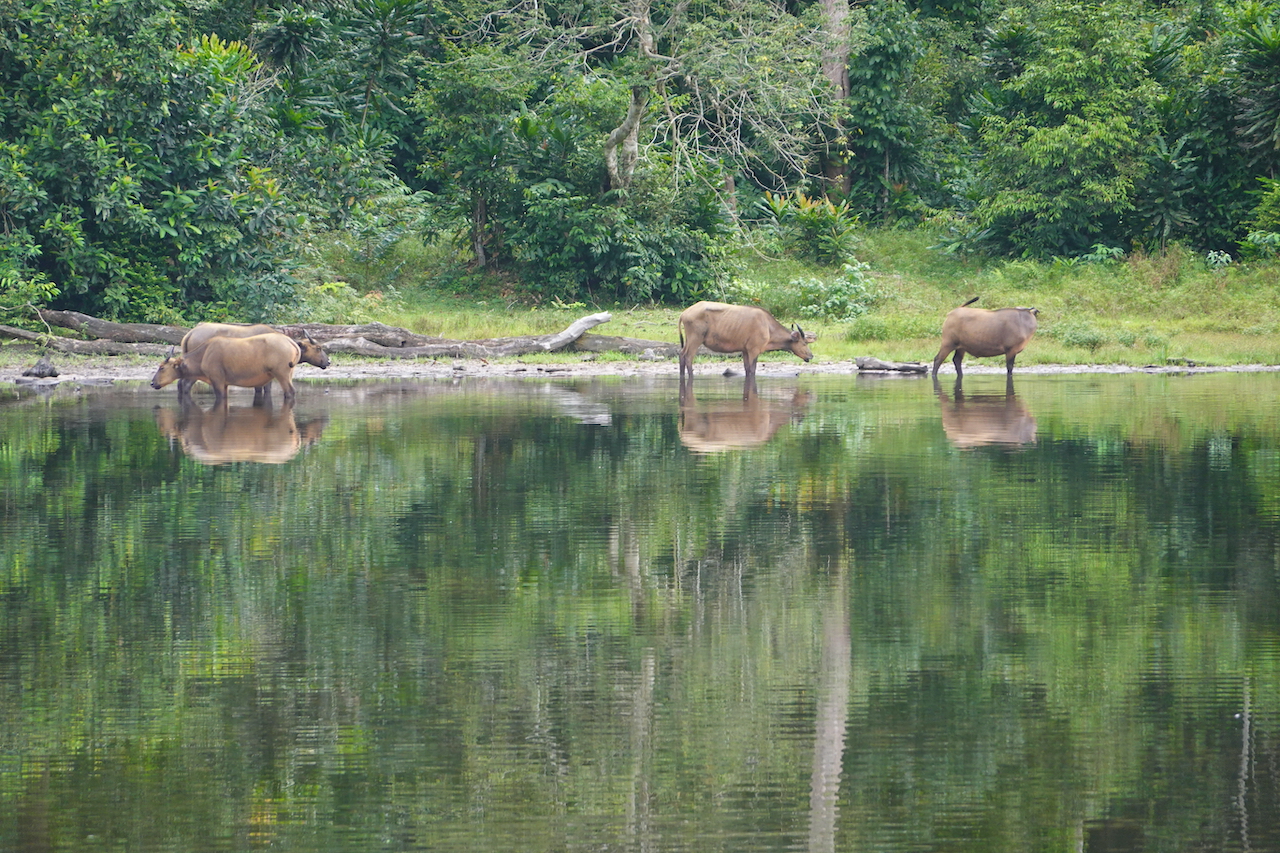
There are thousands of elephants in the forest.
And these neighbours are not particularly respectful of crops.
So the crops have had to be protected with electric fences.
We’re not very far from Jurassic Park. 😉
Note:
There are said to be around 3,000 elephants in Nouabalé-Ndoki National Park alone.
And many more if you take the whole region into account, just on the Congolese side.
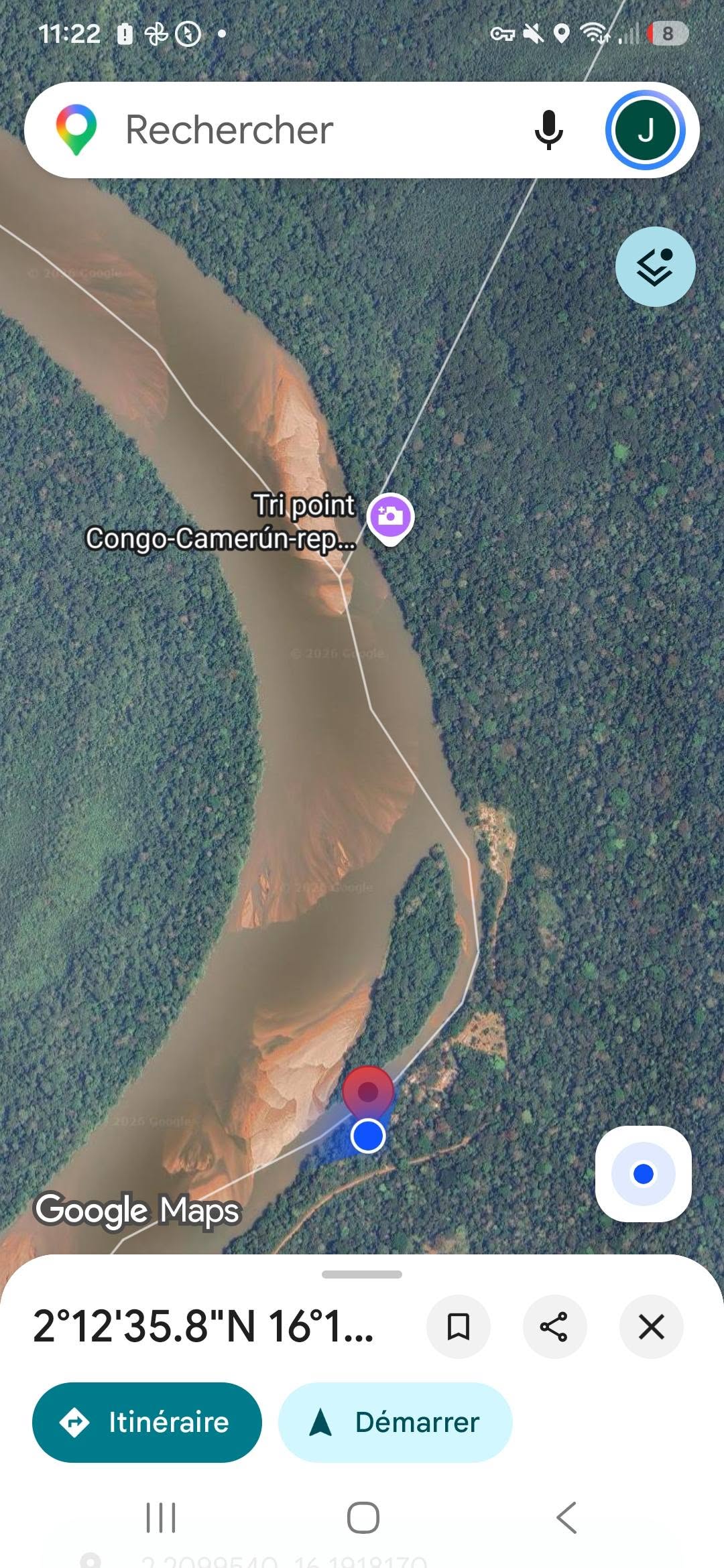
Because we are here at the junction of three countries: Congo, Cameroon and the Central African Republic.
Together, they form the Sangha Trinational, made up of three contiguous territories:
🇨🇬 Congo: Nouabalé-Ndoki National Park, 4,334 km².
🇨🇲 Cameroon: Lobéké National Park.
🇨🇫 Central African Republic: Dzanga-Sangha protected areas.
The Sangha Trinational has been listed as a UNESCO World Heritage Site since 2012.
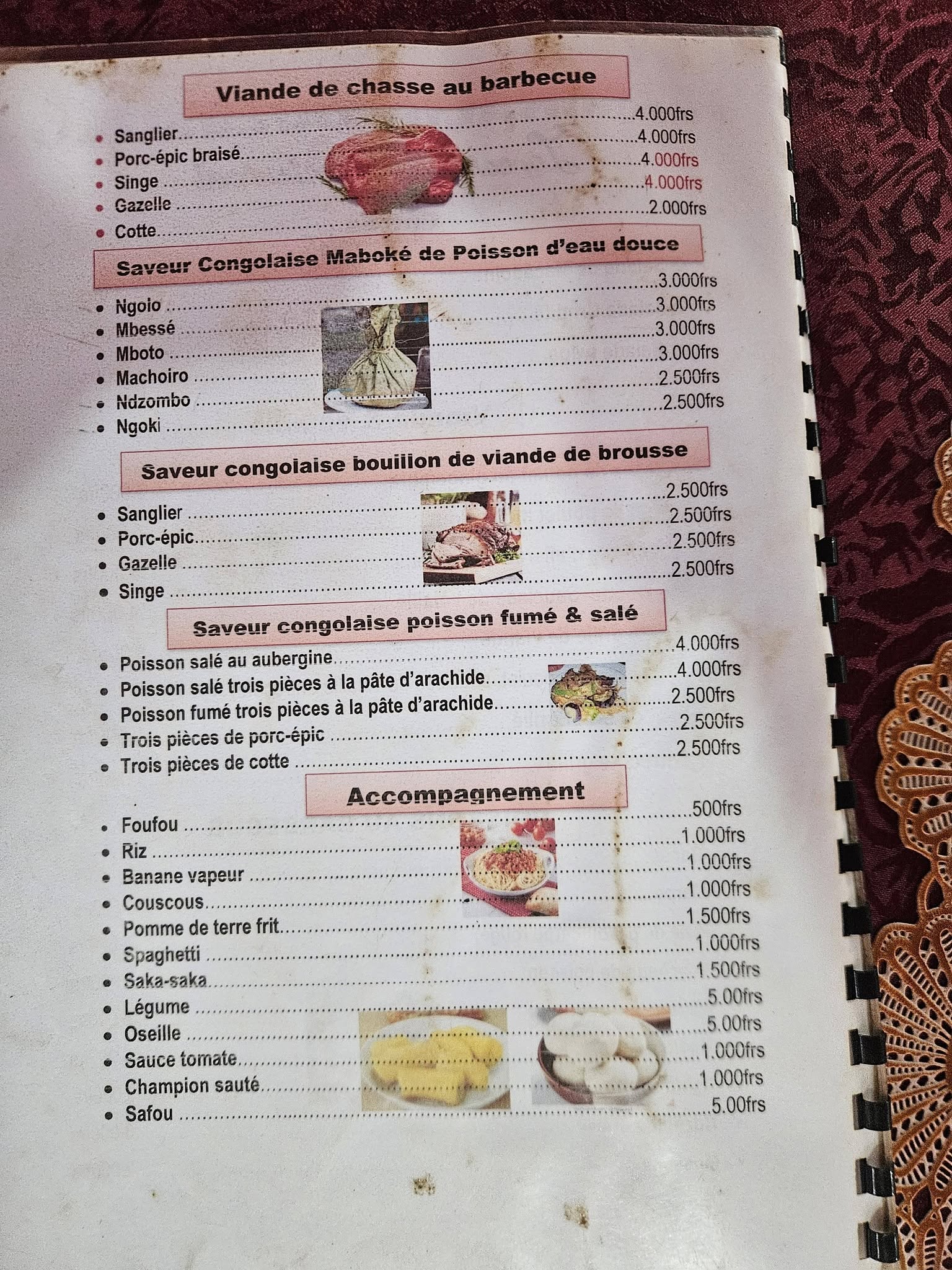
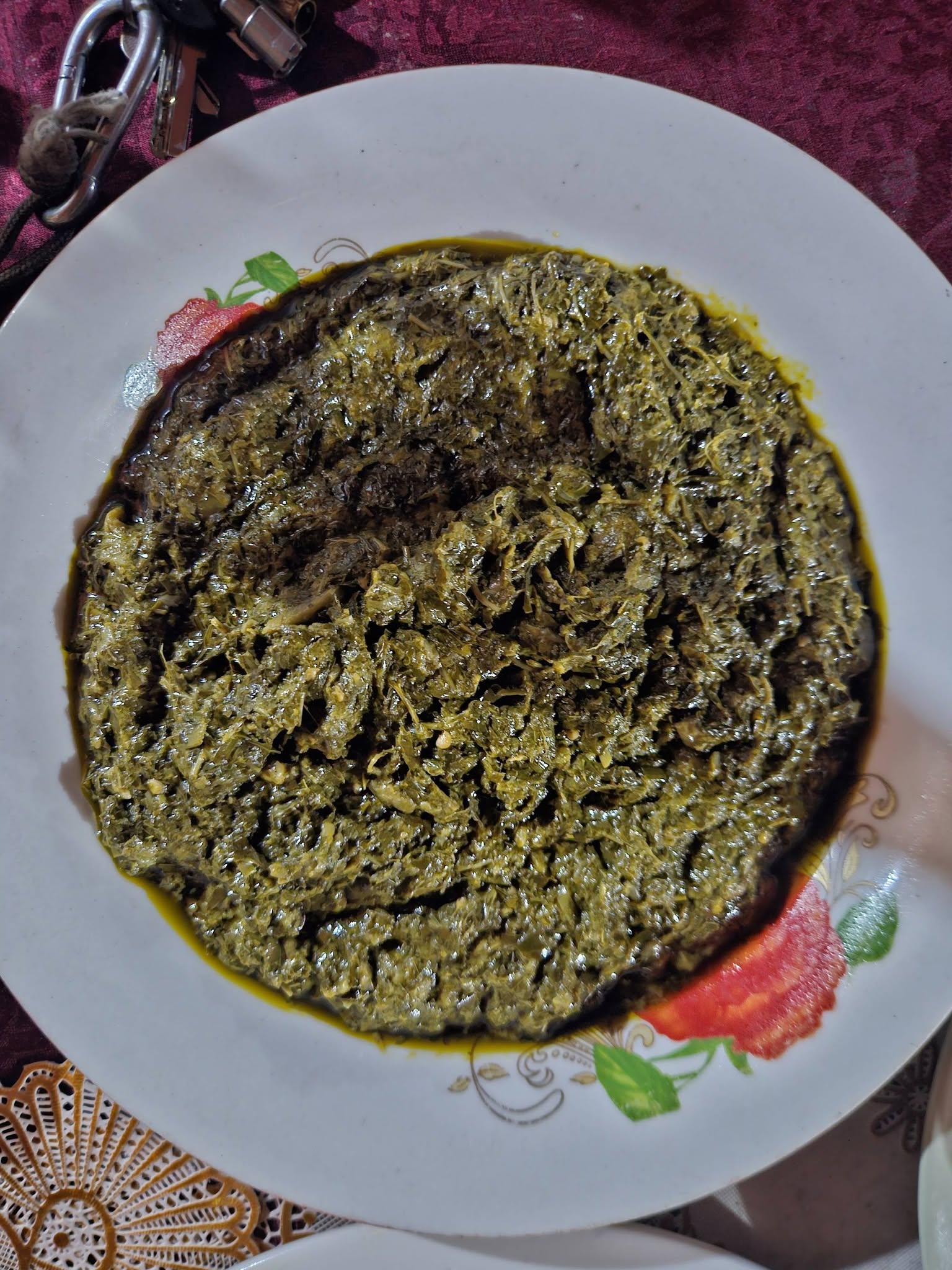
During my stay in Ouesso, I also had the opportunity to taste barbecued porcupine.
Not bad, I must say.
Especially with saka-saka, cassava leaves that look a little like spinach.
Name in Aka: Npondi.
A few days before my departure, a new prefect takes office.
He immediately declares war on the “Khadafis”, the illegal fuel dealers.
Their stocks are seized. More than 10,000 litres.
So, to fill up, you no longer go to petrol stations, which are empty, but to the town hall.
So, with a full tank, I leave on 15 September.
28 litres.
At 3.8 litres per 100 kilometres, that gives me about 700 kilometres of range.
Enough to see what happens.
There are a few checkpoints on the road, but nothing special.
In the evening, I stop at a sort of roadside eatery.
A man approaches me.
Apparently, he is the owner, although he himself is only passing through.
He is a Congolese diplomat in Douala and has invested in this little business.
He is also having a few rooms built behind it.
From the way he speaks, I have little doubt about his credentials.
He offers me a room.
But I have spotted, a few kilometres further on, some sort of shelter where people seem to receive guests, beside the river.
So I turn down his offer.
But when I get there, there’s nobody around.
I hesitate for a moment about turning back.
After all, it could always be useful to have a diplomat among my contacts.
But I feel like camping.
It’s been a very, very long time since I last did it.
So I carry on and stop a few kilometres further on, in what looks like an old quarry.
Not very pretty, but green enough: vegetation has already started reclaiming the place.
I set up camp and cook myself something to eat before going to sleep.
In the middle of the night, I wake up to relieve a natural need…
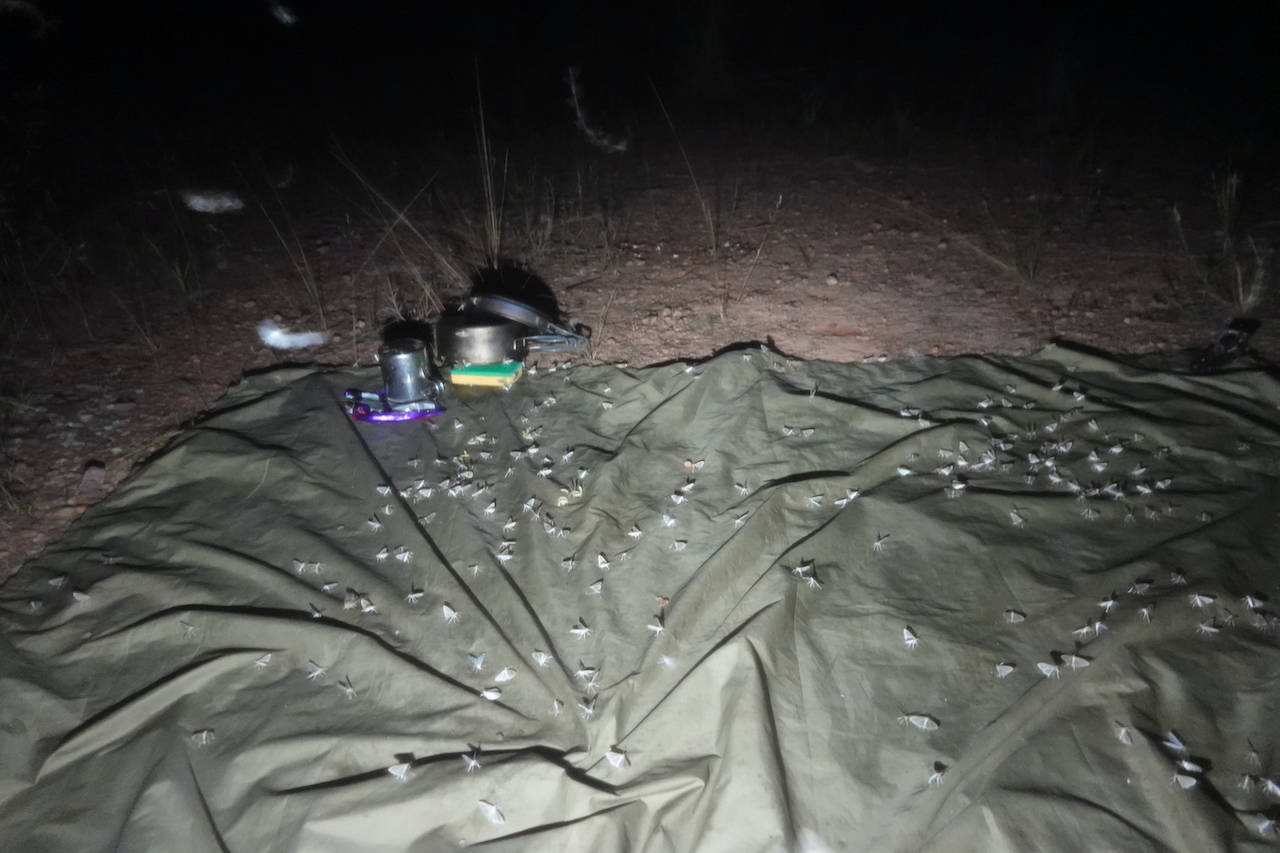
And there they are…
Hundreds of butterflies covering my tarp and, a little further away, my motorcycle.
Quite impressive.
In the morning, it’s drizzling. I make my coffee. Then I record the seventh episode of the Saltimbanque’s Anecdotes before getting back on the road.
Little by little, the great equatorial forest gives way to more open vegetation: a mosaic of savannahs, clumps of woodland and gallery forests.
At one point, I have to cross a bush fire. Thick smoke makes visibility almost impossible. As I try to switch on the camera, I switch it off instead.
Really not very clever.
Further on, I reach Makoua.
The town of the Equator.
While I’m filming a little video, a child comes over to ask me for a few coins.
I give him a little lecture.
Then I give him, and his friends, a small jar of Nutella.
Their big Nutella-covered smiles tell me the gift has been appreciated.
Then comes Edou.
The village just before Oyo.
The President’s village.
This is precisely where we reached the end of the track when coming from Gabon 23 years ago.
Back then, there was no tarmac. It only started at Oyo and continued all the way to Brazzaville.
We had been taken in by a Frenchman called Jacquet.
He was in charge of setting up a cassava-processing plant.
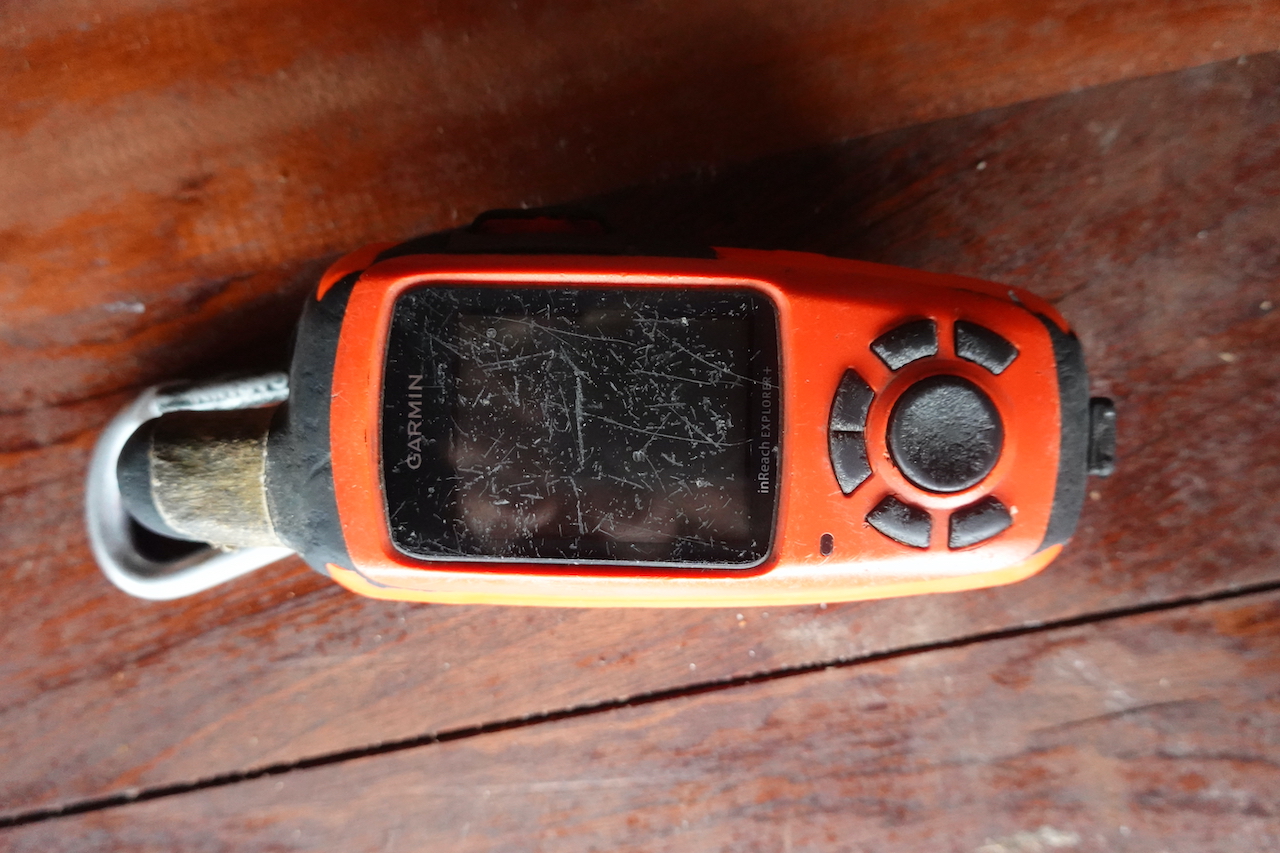
I still have the GPS coordinates.
So I decide to go and have a look.
And I discover a fairly substantial complex.
I vaguely recognise the house where we had stayed.
Back then, there was nothing. Absolutely nothing. Just that house.
According to the soldiers guarding the site today, the complex and the factory are no longer operating.
The barracks are still there.
So are the installations.
The gate.
The guardhouse.
Everything is still there.
But nothing works anymore.
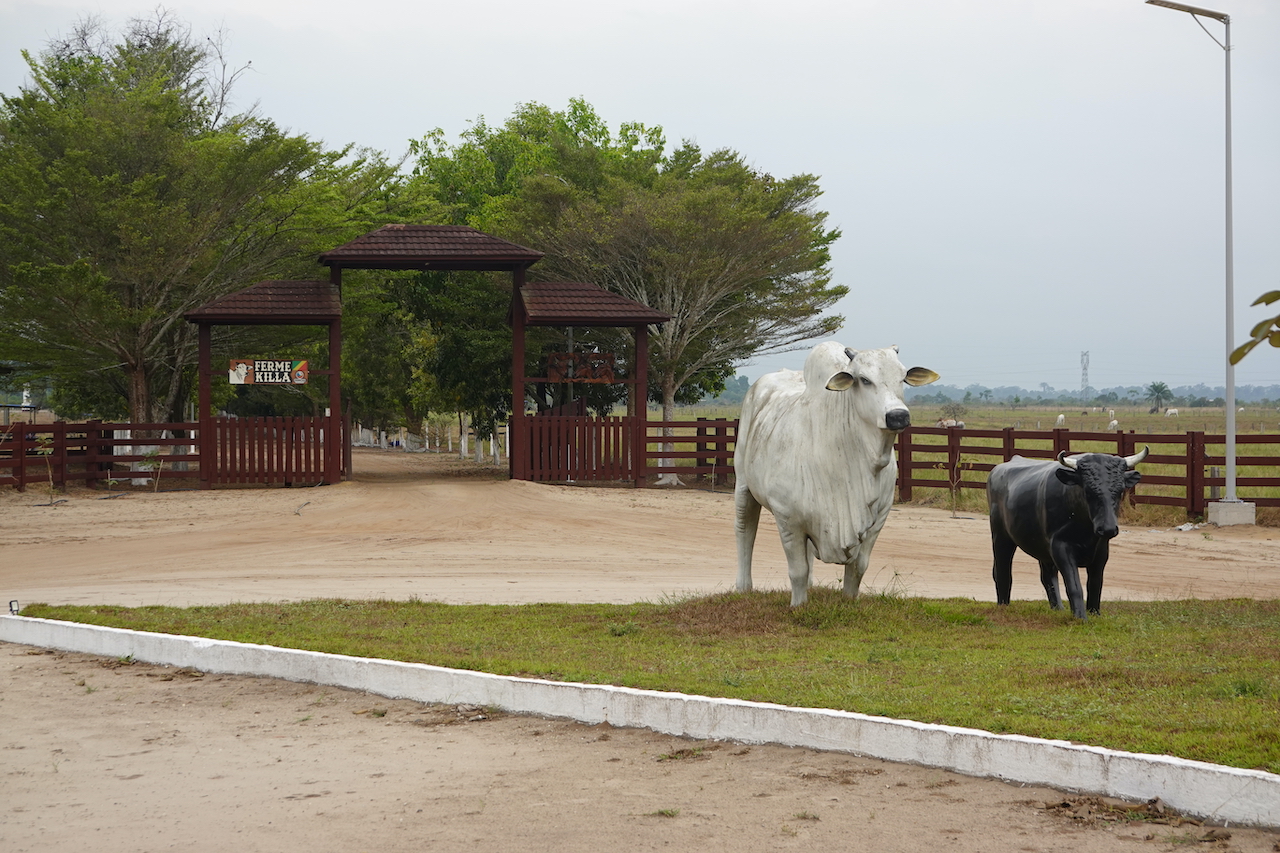
Before arriving, I also crossed an area where there are several large farms.
The area has clearly become a zone of pasture and extensive cattle farming.
At the entrance to some properties, there are life-size, or even larger-than-life, statues of cows.
I saw Normandy cows, traditional cattle, some sort of zebus and a few black bulls that look like fighting bulls.
There is also a slaughterhouse.
Later, I would learn that all these properties reportedly belong to the President.
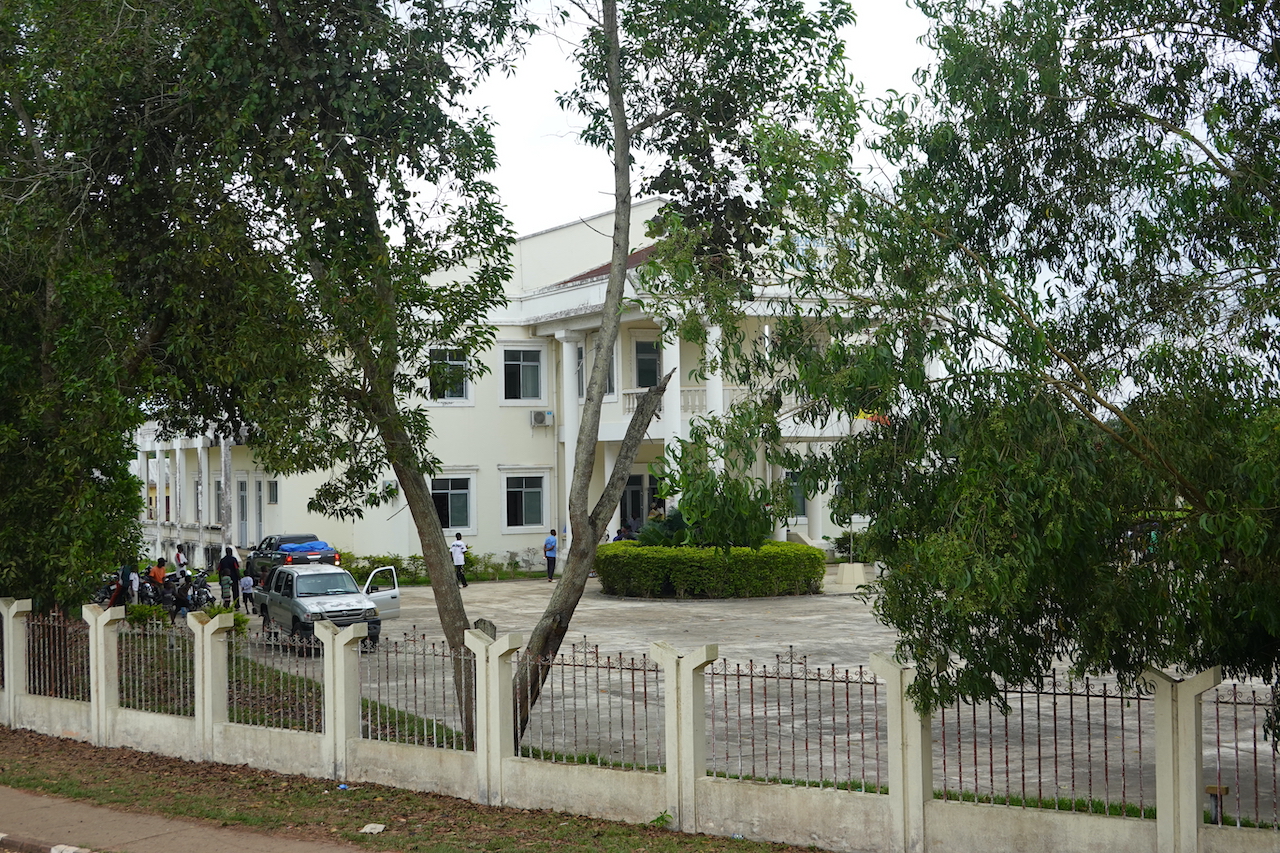
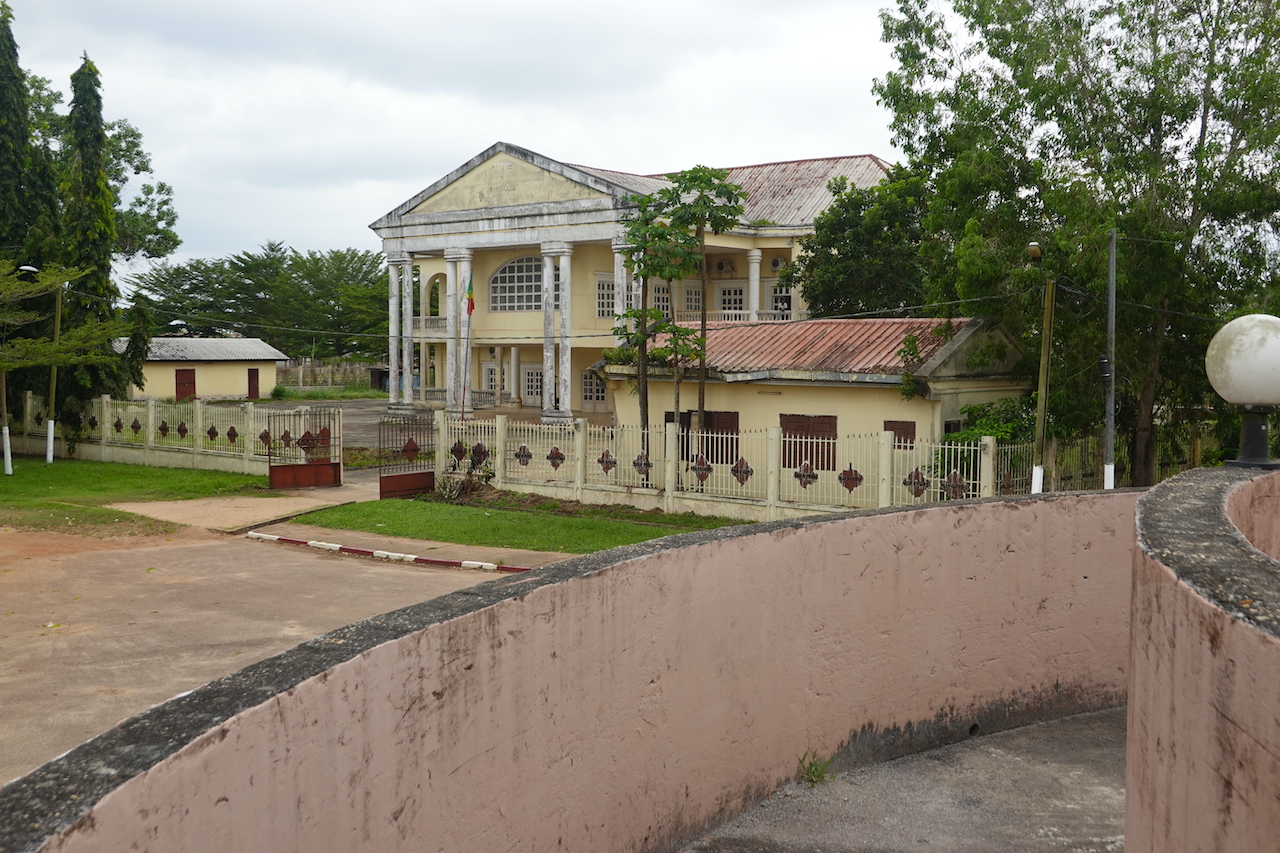
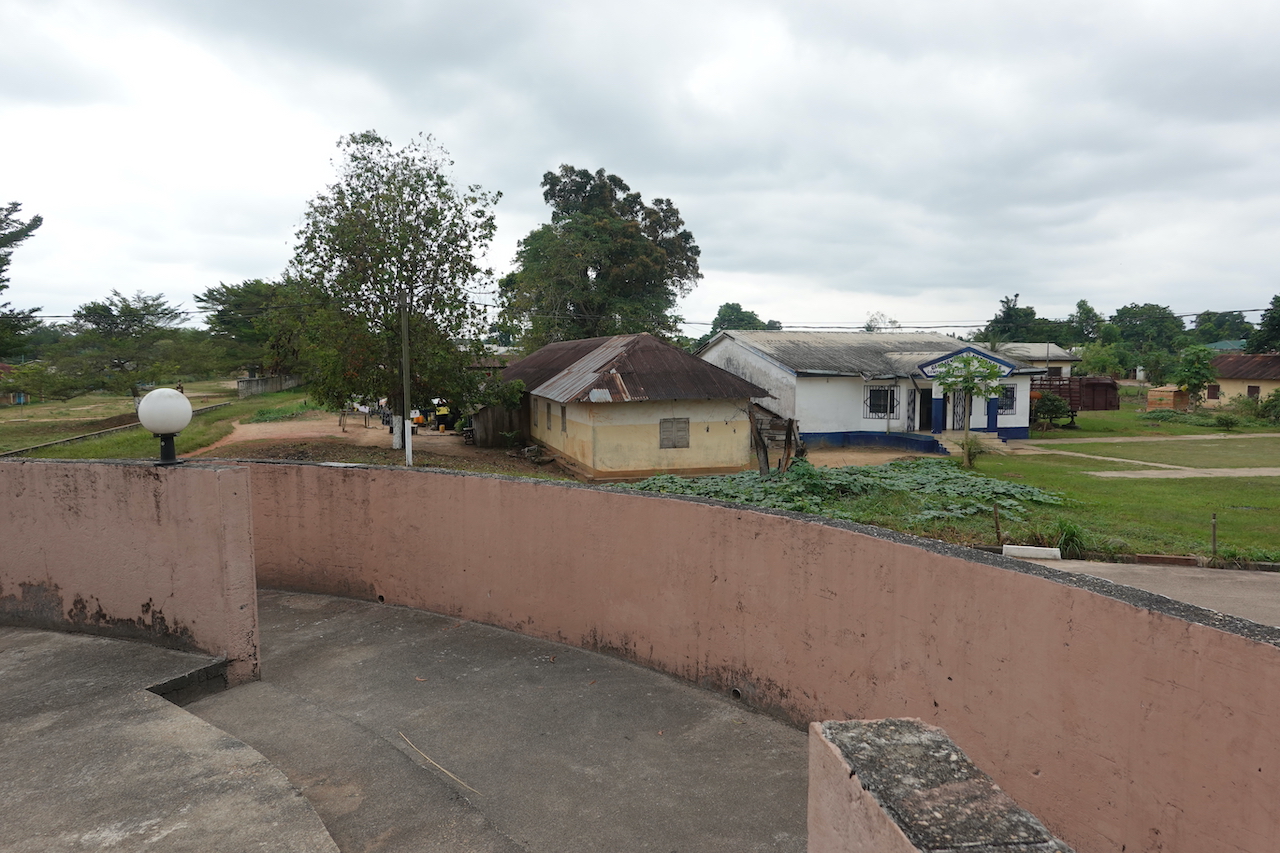
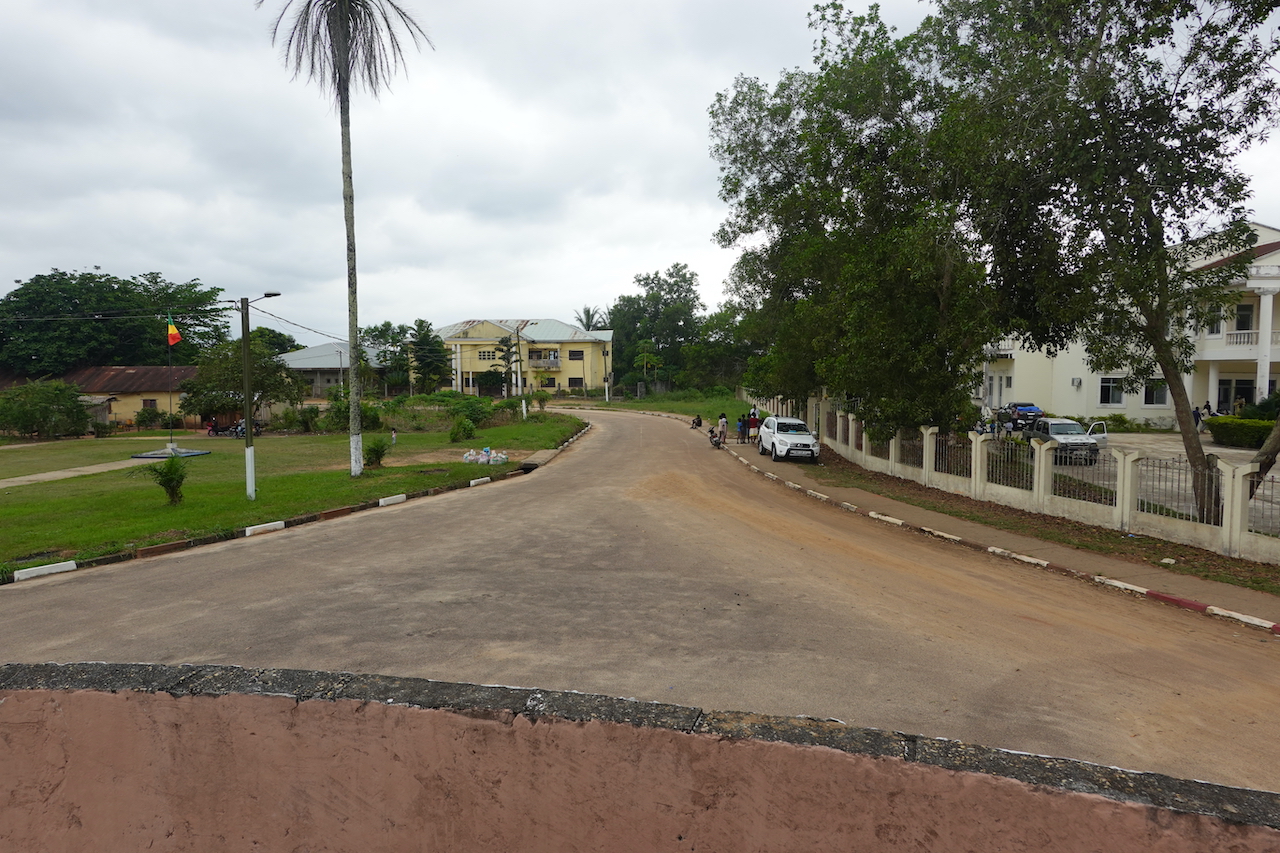
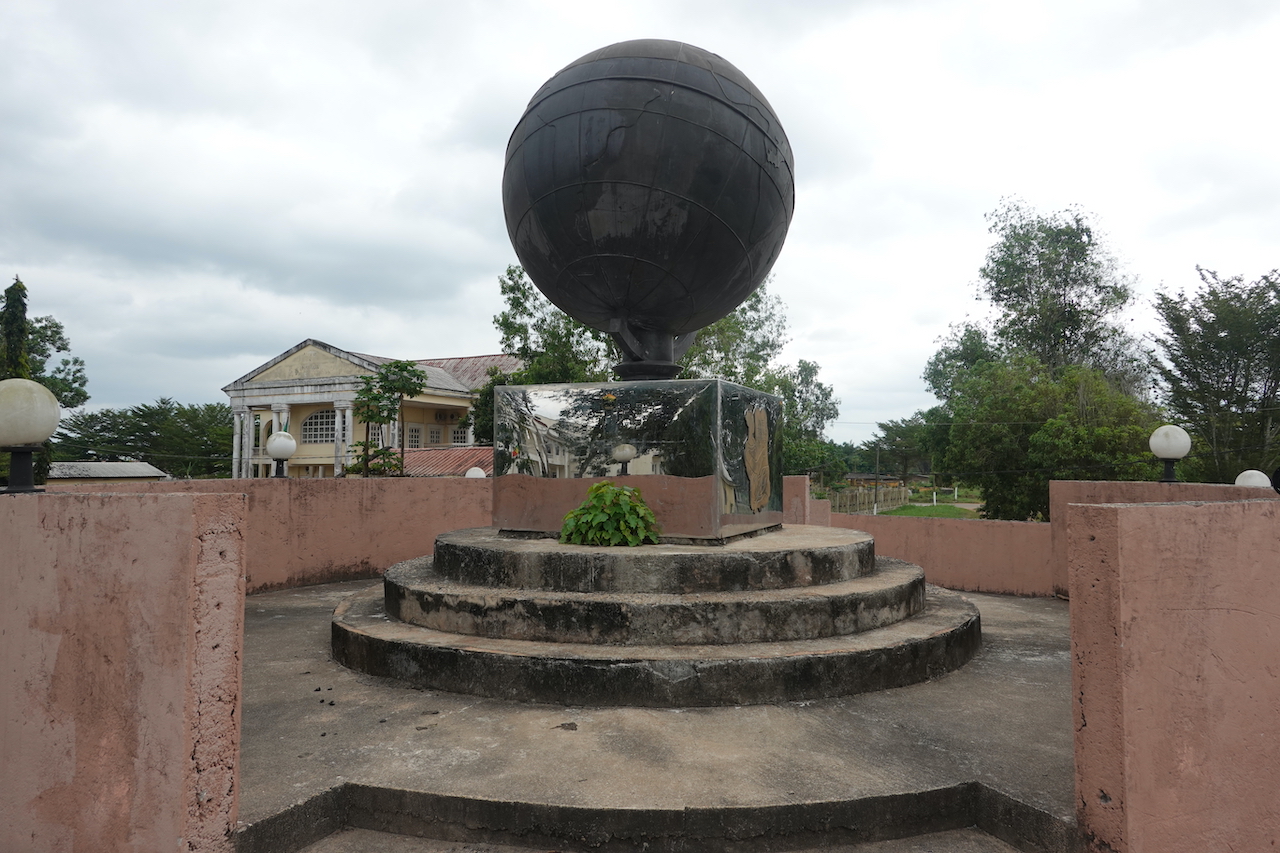
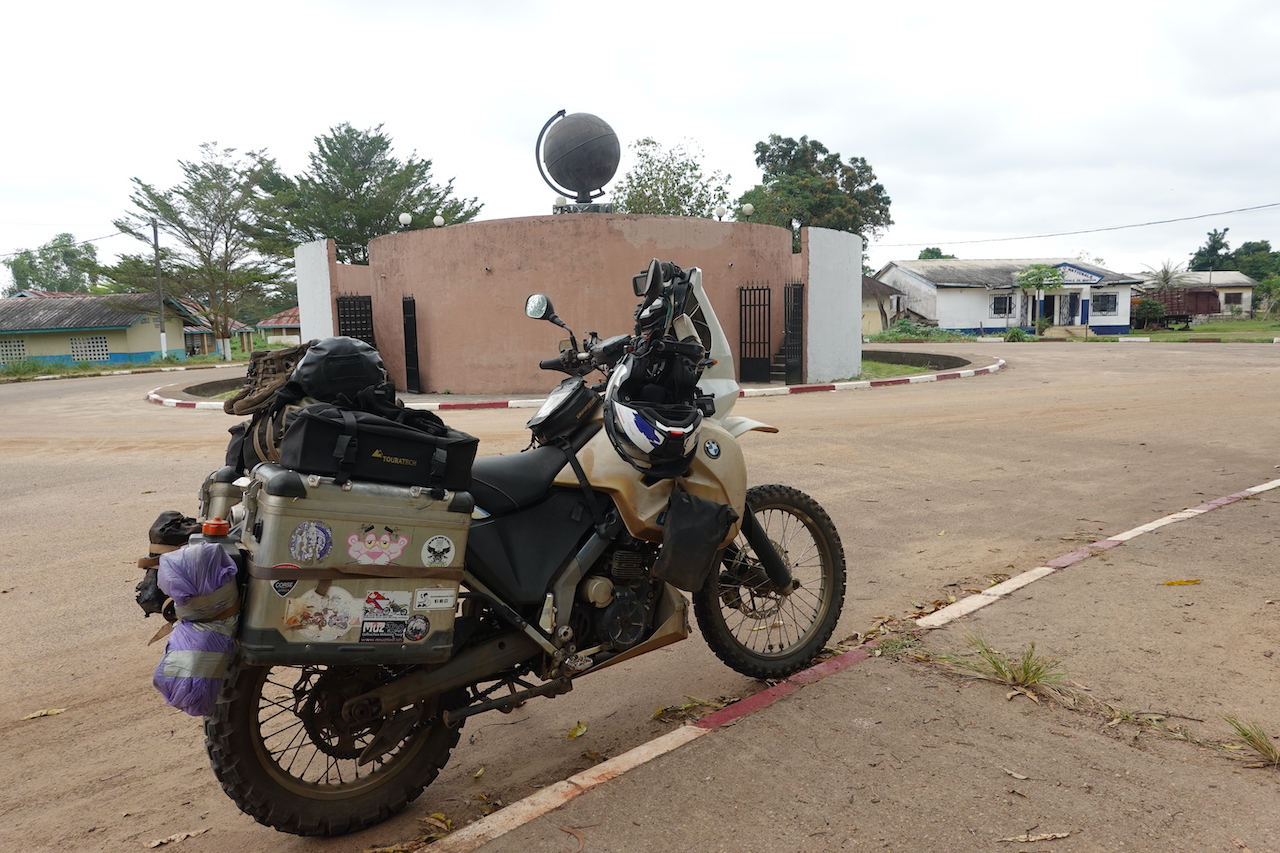
Oyo at last.
And there, I am literally stunned.
The Oyo I knew no longer exists.
It has become a visibly rather industrial area.
Very, very far from what I knew 23 years ago.
There is still one general problem in the region: fuel.
And here, even the black market seems to have run out of petrol.
So I decide to go to a guesthouse I had spotted.
I take a tiny room for 5,000 CFA francs.
It’s not exactly…
Let’s just say it’s basic. In the finest style of the establishments I used to stay in back in the 1960s and 70s.
The great era of the first backpacking adventurers.
Shared shower.
But there’s hot water, which is already quite something.
And the toilets are clean.
The owner is an old Lebanese man who barely speaks French, despite having arrived here more than 60 years ago.
In the room next to mine is the only other Westerner in the hotel.
Finn.
German.
29 years old. Thin, almost ascetic.
Big beard.
He left Germany in May 2024.
And he made it all the way here on foot.
Yes.
On foot.
Not hitchhiking. Not public transport. No!
On foot!
Stages of 20 or 30 kilometres a day.
Little by little.
Finn smokes a lot, which surprises me a little for someone who walks so much. Later that evening, as I pass his room, a particular smell makes me think he may not smoke only cigarettes.
But while he and I are talking, a large 4×4 arrives.
Two white men in their fifties or sixties get out.
The kind of characters who interest me.
I strike up a conversation.
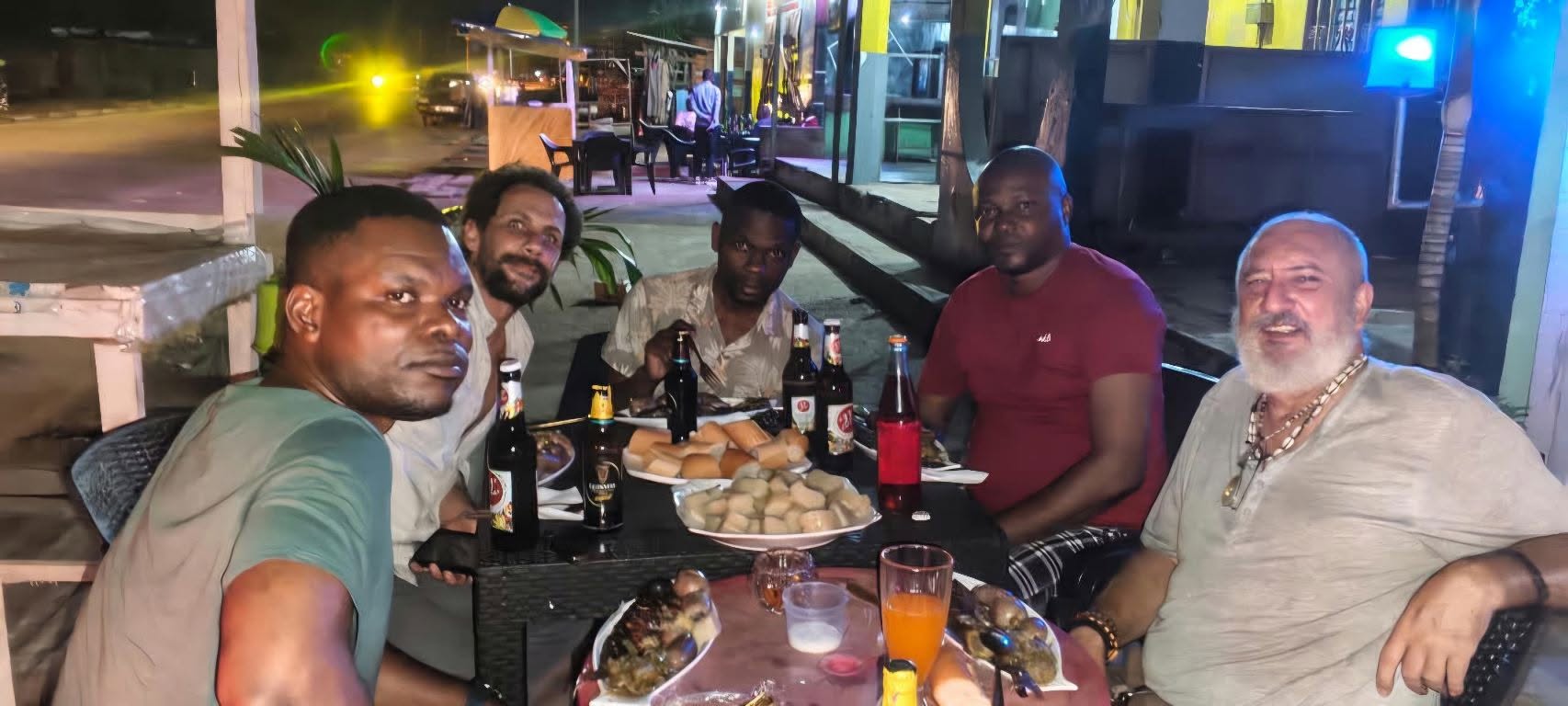
And very quickly, the four of us are sitting around a table.
A few beers.
Finn speaks extremely refined French and can therefore take part in the conversation.
As for the rest…
It was one of those evenings Africa knows how to produce.
I’ll keep the names of these two characters to myself.
A certain amount of discretion is called for.
The first arrived here at the age of 30, in 2001.
So I could quite easily have crossed paths with him 23 years ago.
He tells me that Jacquet, the Frenchman who had taken us in back then, has been dead for a long time.
Completely Africanised, perhaps even bewitched by Africa, he eventually became a taxi driver not far from here.
The only white taxi driver in the region.
The other was practically born in Africa.
At first, he simply tells me he is an entrepreneur.
But something tells me his story doesn’t stop there.
There are the tattoos on his forearms.
One in particular catches my eye: an octopus.
Diver?
Yes.
Ex-combat diver, to be precise.
Operations all over the world.
He remains very evasive about his past.
Very evasive.
But I have the feeling that I’m seeing only the tip of the iceberg.
The President is arriving on Friday.
So I decide to stay until then.
Not just for the fuel.
I want to get a feel for the atmosphere during his visit.
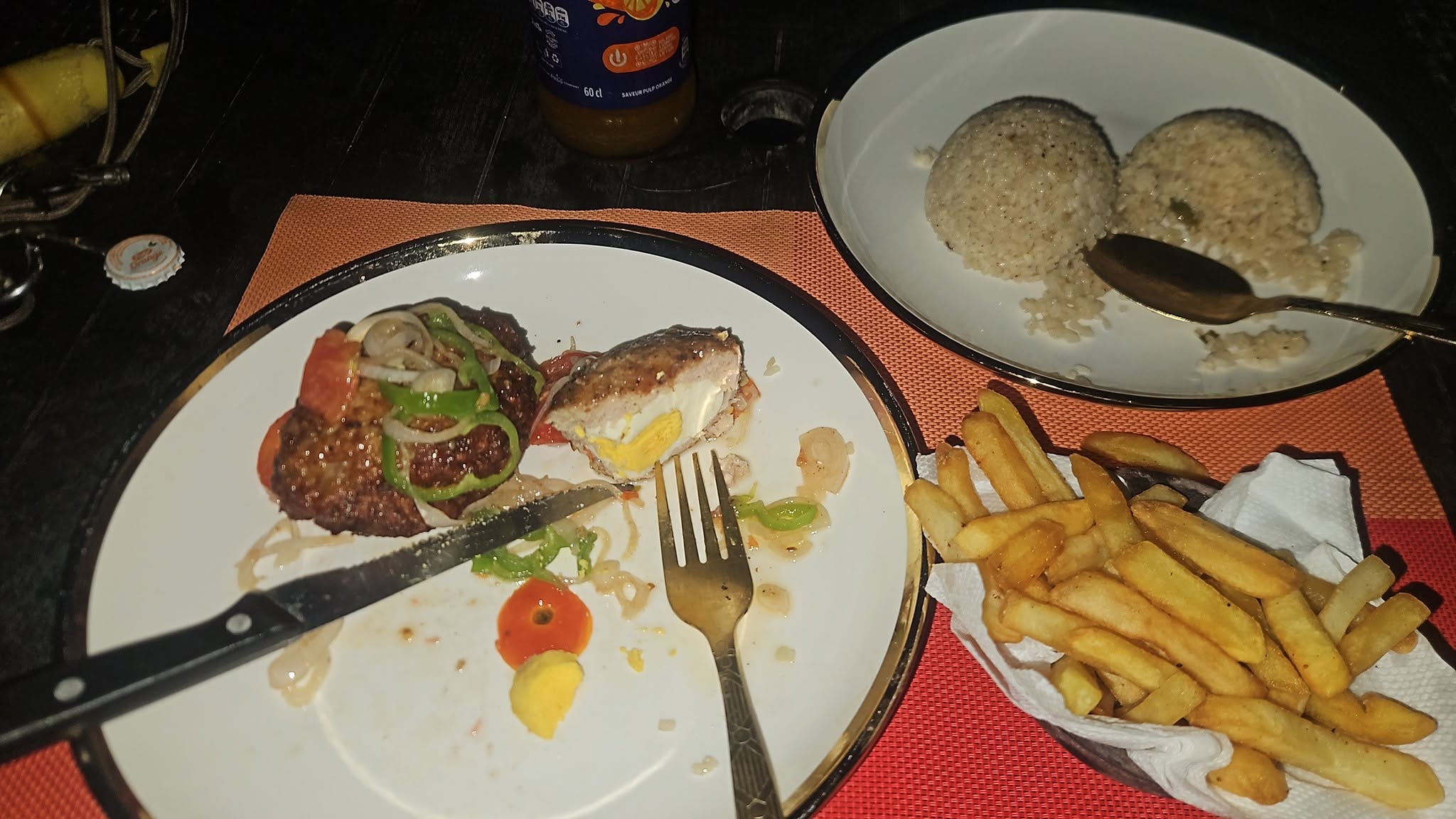
And after the previous evening, I also intend to buy a few beers for Finn and the two Frenchmen.

No Comments